Peak climbing season, minimum viewing odds: what summer haze does and how to work around it.
Sometimes, but August is one of the toughest viewing months of the year. Long-term records put full visibility around 10-12% of days: heat haze, humidity, and afternoon thunderstorms hide the mountain most of the time. Climbers still get their season (it peaks now), and early mornings offer the best chance of a clear silhouette. Our logger starts measuring August this year, and live numbers will replace the historical ones as readings arrive.
도쿄 출발 인기 투어 및 교통편


제휴 링크: 추가 비용 없이 수수료를 받을 수 있습니다.
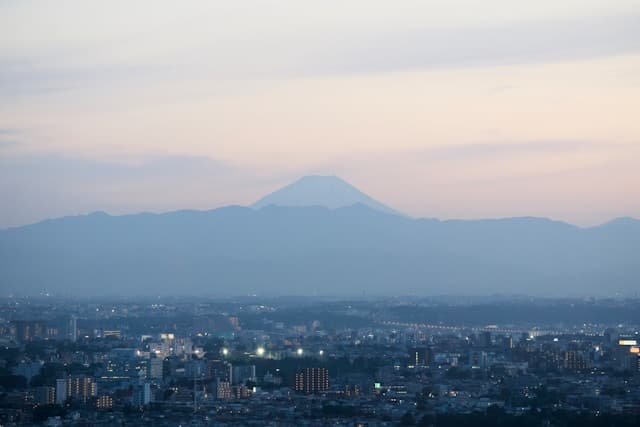
Hot, humid air scatters light and dissolves distant outlines, so even a cloudless August sky often shows no mountain from Tokyo. Closer in, daytime heating builds cumulus that caps the summit by late morning and frequently turns to thunderstorms by afternoon.
The physics gives you one loophole: overnight cooling. The hour around dawn is calm, marginally drier, and delivers most of the month’s successful sightings.
This is peak season on the trails, with school holidays and the Obon travel week in mid-August filling huts, buses, and lakeside hotels. Book everything early and expect traffic around the Five Lakes on weekends.
The Yoshida Fire Festival on August 26-27 closes the climbing summer in Fujiyoshida with torches down the main street, a worthwhile evening even on a hazy day.
Average visibility score by month, from our measurements
– = soon: our logger started in March 2026 and fills these in automatically.
Nearly all clear August views happen in the first hours of the day. By late morning the summit usually wears a cloud cap.
From the Five Lakes or the 5th Station the mountain survives haze that erases it from 100 km away. Plan close-range viewpoints, not skyline panoramas.
Mid-August brings Japan’s summer travel peak. Prices, traffic, and hut availability all suffer for about a week.
On a month with 1-in-8 odds, checking the live feed before a two-hour trip is not optional. Five seconds of footage saves a wasted morning.