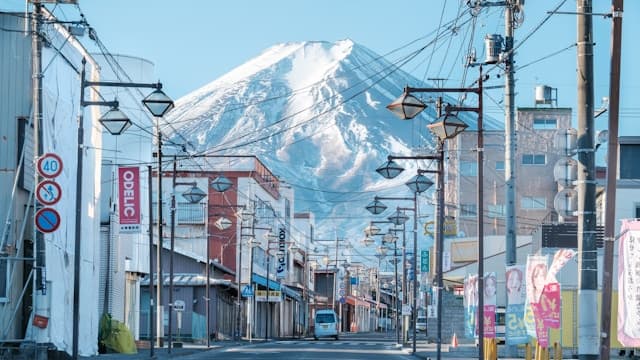
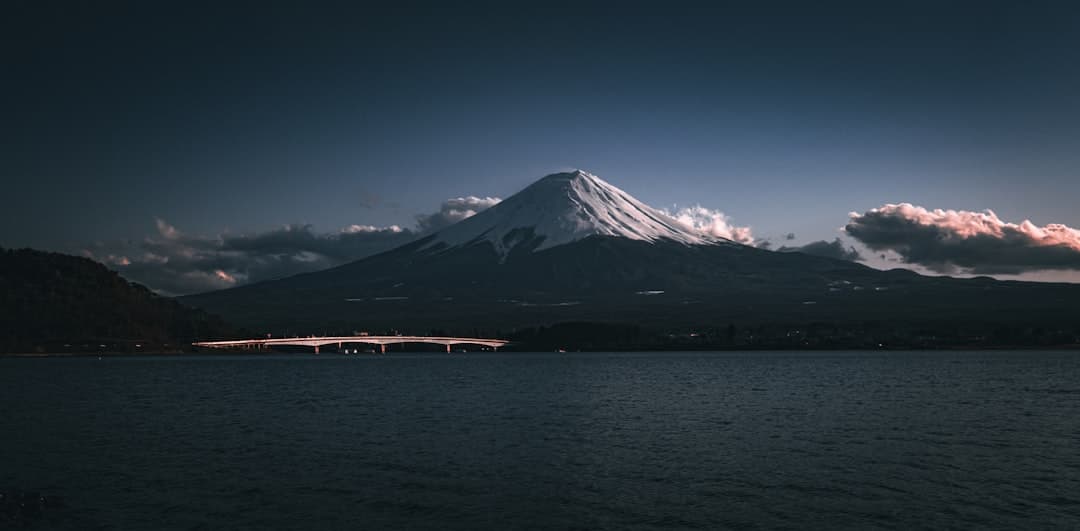
The statistically clearest month of the year, with the snow cap at its deepest.
Yes, and with better odds than any other month. Long-term observations from Fuji City rate February highest of the year, with the mountain fully visible on roughly 79% of days. Cold, dry air, a deep snow cap, and the tail of the Diamond Fuji window at Lake Yamanaka (through February 20) make it the safest bet on the calendar. Our logger starts measuring February in 2027, and live numbers will appear here then.
ทัวร์และการเดินทางยอดนิยมจากโตเกียวไปฟูจิ


ลิงก์พันธมิตร: เราอาจได้รับค่าคอมมิชชั่นโดยไม่มีค่าใช้จ่ายเพิ่มเติมสำหรับคุณ
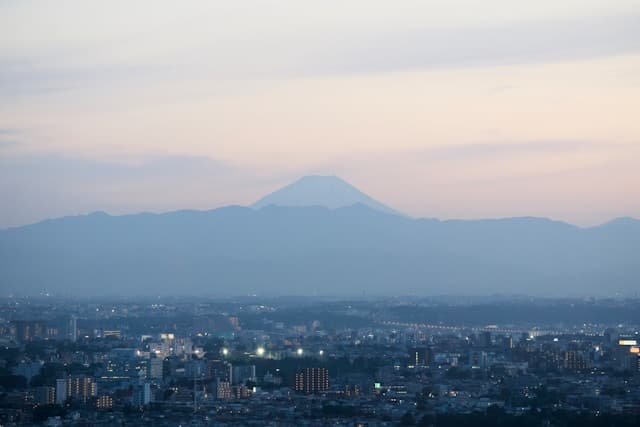
The winter pressure pattern that dries out the Pacific side of Japan holds through February, but with slightly longer days than January and a sun angle that lights the south face nicely by mid-morning. Haze stays near its annual minimum, so views hold up from distance: Tokyo, Yokohama, even the Boso Peninsula on the best days.
Crowds remain low outside of Chinese New Year week, and lakeside hotels keep winter pricing. For a trip planned months ahead with no flexibility, February is the strongest single choice of the year.
Lake Yamanaka runs its Diamond Fuji Weeks event in early February, matching the alignment window that closes around February 20. Plum blossoms open mid-month at lower elevations, a quieter preview of the sakura crowds two months later.
Onsen towns around the lakes are at their best when the air hurts your face. An outdoor bath at Kawaguchiko or Yamanakako with the snow cap in view is a legitimately better experience in February than in any warm month.
Average visibility score by month, from our measurements
– = soon: our logger started in March 2026 and fills these in automatically.
With roughly 4 in 5 days delivering full visibility, February forgives inflexible schedules. Still, mornings beat afternoons for sharpness.
The Lake Yamanaka alignment window closes around the 20th. After that the sunset point slides off the summit until autumn.
North-shore roads can hold ice and snow. Fujikyu trains and highway buses run reliably and drop you at the main viewpoints.
Sub-zero mornings drain phone and camera batteries fast. Keep spares in an inside pocket.