计划前往富士山吗?
从东京出发的热门行程和交通方式
新仓山浅间公园一日游
以富士山为背景的五重塔,加上河口湖
在Klook查看 →
富士山全日导览游
东京出发,英语导游全日行程
在Klook查看 →
富士山摄影景点之旅
一日游遍富士山最上镜的观景点
在Klook查看 →
东京到富士山高速巴士
直达河口湖站的巴士
在Klook查看 →
联盟链接:我们可能会获得佣金,但不会增加您的任何费用。
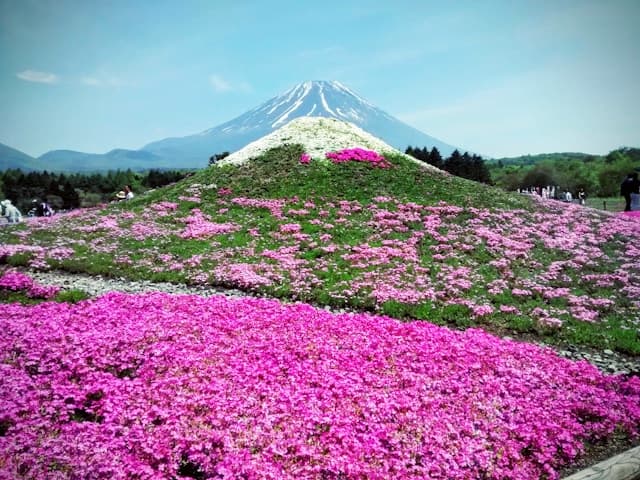
The strongest month our cameras have measured so far, with pink moss fields at its feet.
Yes. May is the best full month our logger has measured so far, averaging 75/100 across 247 readings, with 24 of 31 clear mornings. The last of the snow cap still marks the summit, the shibazakura (pink moss) fields bloom into late May, and the only real planning hazard is Golden Week crowds from April 29 to May 5.
从东京出发的热门行程和交通方式
联盟链接:我们可能会获得佣金,但不会增加您的任何费用。
Average visibility score for each measured day (May 2026)
Scores are computed from live weather and camera data around Mt. Fuji, logged every 3 hours since March 2026. This page updates automatically as new readings arrive.
Average score by hour (JST), measured every 3 hours
May sits in a sweet spot: warm enough for comfortable mornings at the lakes, early enough that the rainy season has not arrived. High-pressure spells bring runs of clear days, and fresh green forests replace the browns of early spring around every viewpoint.
The snow line climbs through the month, but the cap usually stays visible into late May, so the classic white-topped profile holds for most visits.
Across 247 readings, May averaged 75/100, ahead of April and far ahead of June, which collapses when the rainy season arrives. The morning advantage persists, with the best scores clustering before mid-morning.
If you are choosing between late spring and early summer for a trip, our numbers say the answer plainly: go in May, not June.
Average visibility score by month, from our measurements
– = soon: our logger started in March 2026 and fills these in automatically.
April 29 to May 5 brings Japan’s biggest domestic travel wave. Visit after May 6 for the same weather with half the crowds and normal prices.
The Fuji Shibazakura Festival near Lake Motosu runs to late May. Pink moss fields with the snow-capped cone behind them are a May-only composition.
May afternoons are better than summer ones, but the sharpest views still come before mid-morning.
The rainy season typically starts in early-to-mid June. If your dates can slide, slide them earlier, not later.