Is Mt Fuji a Volcano? Active Status, Eruption History & Facts
Is Mt Fuji a volcano? Yes, it's an active stratovolcano that last erupted in 1707. Learn about its eruption history, current status, and what scientists predict for the future.

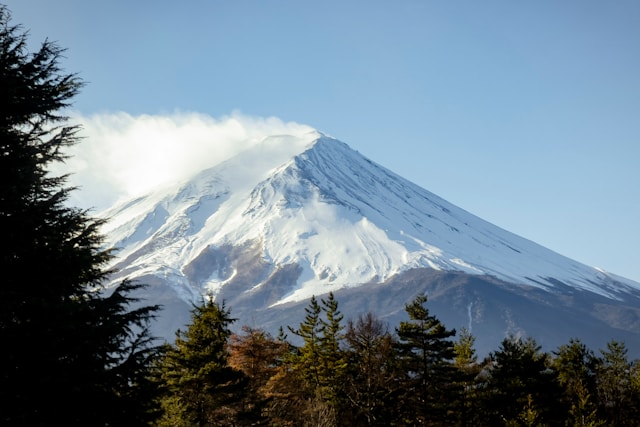
Is Mt Fuji a volcano?
Yes, Mt Fuji is an active stratovolcano and Japan's highest peak at 3,776 meters. Although currently dormant, it last erupted in 1707 during the famous Hōei eruption. Scientists classify Mt Fuji as active because it could erupt again, and the volcano is monitored 24 hours a day by seismic stations.
Mt Fuji's perfect conical shape has made it one of the world's most recognized mountains and a symbol of Japan. But many visitors drawn by its beauty are surprised to learn they are looking at an active volcano that has erupted at least 15 times in recorded history.
Understanding Mt Fuji's volcanic nature adds depth to any visit. The mountain's iconic symmetry results from thousands of years of volcanic activity, and the same forces that created its beauty could reshape it in the future. This guide covers everything about Mt Fuji's volcanic status: its formation, eruption history, current monitoring, and what scientists predict.
Table of Contents
- Mt Fuji's Volcanic Classification
- Formation and Geology
- Eruption History
- The 1707 Hōei Eruption
- Current Volcanic Status
- Will Mt Fuji Erupt Again?
- Frequently Asked Questions
- Visiting Mt Fuji Today
Mt Fuji's Volcanic Classification
Mt Fuji is classified as an active stratovolcano, also known as a composite volcano. Stratovolcanoes build their distinctive steep, conical shapes through alternating layers of lava flows, volcanic ash, and debris deposited over many eruptions.
The Global Volcanism Program at the Smithsonian Institution lists Mt Fuji as the largest active stratovolcano in Japan. Despite not erupting since 1707, geologists consider it active because:
- Volcanic systems can remain dormant for centuries between eruptions
- Seismic monitoring detects ongoing activity beneath the surface
- The mountain meets all criteria for potential future eruption
The distinction matters because dormant volcanoes can awaken. Mt Fuji was considered dormant until the 1990s, but deep low-frequency earthquakes detected between 2000-2001 reminded scientists that the volcano remains very much alive.
Key Volcanic Statistics
| Characteristic | Detail |
|---|---|
| Volcano type | Stratovolcano (composite) |
| Status | Active (currently dormant) |
| Summit elevation | 3,776.24 meters (12,389 feet) |
| Base diameter | 40-50 kilometers |
| Base circumference | 125 kilometers |
| Summit crater diameter | 500 meters |
| Summit crater depth | 250 meters |
| Last eruption | 1707-1708 |
Formation and Geology
Mt Fuji's iconic appearance belies a complex geological history. The mountain we see today is actually three volcanoes stacked on top of each other, built over hundreds of thousands of years.
The Three Volcanoes of Mt Fuji
According to the University of Tokyo Earthquake Research Institute, Mt Fuji consists of three successive volcanic cones:
Komitake (oldest layer) The foundation volcano formed over 100,000 years ago and now comprises the northern slopes of the mountain.
Ko-Fuji (Old Fuji) Built atop Komitake approximately 100,000 years ago, this middle layer significantly increased the mountain's height.
Shin-Fuji (New Fuji) The current surface volcano began forming around 10,000 years ago and continues today. This youngest layer gives Mt Fuji its famous symmetrical appearance.
Tectonic Setting
Mt Fuji sits at a remarkable geological junction where three tectonic plates meet: the Pacific Plate, the Eurasian Plate, and the Philippine Sea Plate. This location along the Pacific Ring of Fire explains both the mountain's existence and its ongoing volcanic potential.
The Pacific Plate subducts (slides beneath) the Philippine Plate, generating the magma that feeds Mt Fuji. This same process drives volcanic and seismic activity throughout Japan.
Eruption History
Historical records document at least 15 eruptions of Mt Fuji since 781 AD, averaging roughly one eruption every 83 years. However, eruption frequency has varied dramatically throughout history.
Documented Eruptions
| Period | Notable Eruptions |
|---|---|
| 781 AD | First historically documented eruption |
| 800-802 AD | Major eruption with lava flows |
| 864-866 AD | Jōgan eruption, created Aokigahara forest |
| 937 AD | Significant ash eruption |
| 1033 AD | Eruption recorded in historical texts |
| 1083 AD | Minor eruption |
| 1435 AD | Small eruption after long dormancy |
| 1511 AD | Brief eruption |
| 1707-1708 AD | Hōei eruption (most recent) |
The volcano has shown no confirmed eruptive activity for over 300 years, making the current dormant period the longest in recorded history. However, three unconfirmed eruptions were reported between 1708 and 1854.
Pre-Historic Activity
Before written records, geological evidence reveals extensive volcanic activity. The Younger Fuji volcano (Shin-Fuji) experienced a particularly active period from 11,000 to 8,000 years ago, with voluminous lava flows accounting for four-fifths of its total volume.
The 1707 Hōei Eruption
The most recent eruption remains one of the most significant volcanic events in Japanese history. The Hōei eruption began on December 16, 1707, and continued until February 24, 1708.
What Triggered the Eruption
Scientists believe the Hōei eruption was triggered by the massive Hōei earthquake that struck 49 days earlier. This magnitude 8.6-8.7 earthquake occurred along the Nankai Trough, causing stress and compression of Mt Fuji's magma chambers that eventually led to eruption.
Scale and Impact
The Hōei event ranks as Mt Fuji's largest eruption in the Holocene epoch (the past 11,700 years). On the Volcanic Explosivity Index, it scored 5 out of 8, classified as "very large" and comparable to the 1980 Mount St. Helens eruption.
Key statistics:
- 800 million cubic meters of volcanic ash released
- Ash reached Edo (Tokyo), 100 kilometers away
- Cities blanketed in over 4 centimeters of ash
- Atmosphere so clouded residents lit candles during daytime
- No lava flows, purely explosive eruption
- Famine effects lasted approximately a decade
While no official death toll exists, many residents suffered respiratory problems from the ash, and agricultural devastation caused widespread famine. The eruption created a new crater (the Hōei crater) on Mt Fuji's southeastern slope, which remains visible today.
Current Volcanic Status
Despite over 300 years of quiet, Mt Fuji is not sleeping peacefully. Modern monitoring reveals ongoing activity beneath the surface.
Scientific Monitoring
Japan takes Mt Fuji's volcanic potential seriously. According to the Japan Meteorological Agency, the volcano is monitored 24 hours a day by more than 20 seismic stations. Scientists track:
- Seismic activity and earthquake patterns
- Ground deformation using GPS and satellite measurements
- Gas emissions, particularly CO2 levels
- Temperature changes in vents and hot springs
Recent Activity Signs
Several indicators suggest Mt Fuji remains volcanically active:
Deep low-frequency earthquakes: Between 2000-2001, clusters of deep earthquakes beneath Mt Fuji raised concerns among scientists. These earthquakes typically indicate magma movement.
2011 Tohoku earthquake effects: The massive 2011 earthquake increased pressure on Mt Fuji's magma chamber. Studies showed internal pressure had risen significantly, though not to eruption-threatening levels.
Ongoing gas emissions: Scientists monitor CO2 emissions from the volcano. Levels below 5 gCO2/m³/day indicate relative stability, while higher levels suggest increased activity.
Will Mt Fuji Erupt Again?
The scientific consensus is clear: Mt Fuji will almost certainly erupt again at some point. The question is when, not if.
Statistical Probability
With 15 eruptions in approximately 1,200 years of recorded history, Mt Fuji has averaged one eruption every 83 years. The current 300+ year dormant period is anomalous, not normal. Statistically, the volcano is overdue.
However, volcanic systems do not follow predictable schedules. Some volcanoes remain dormant for thousands of years before reactivating. Scientists cannot predict exactly when Mt Fuji will erupt, only that it eventually will.
Potential Consequences
A repeat of the 1707 Hōei eruption would have severe consequences for modern Japan. The Tokyo Metropolitan Government has prepared detailed scenarios:
- Over 30 million people in the greater Tokyo area could be affected
- Ash fall would disrupt transportation, including closing airports
- Power outages from ash on transmission lines
- Water supply contamination
- Economic damage estimated at $16 billion or more
Evacuation Planning
Japan maintains updated evacuation plans for surrounding prefectures. The plans account for different eruption scenarios and include designated evacuation routes and shelters. Signs throughout the Fuji region indicate evacuation directions.
Frequently Asked Questions
Is it safe to climb Mt Fuji?
Yes, climbing Mt Fuji during the official climbing season (July-September) is safe. The volcano is constantly monitored, and authorities would close the mountain at any sign of impending eruption. Over 300,000 people climb Mt Fuji each year without volcanic incident.
When did Mt Fuji last erupt?
Mt Fuji last erupted on December 16, 1707, in the Hōei eruption. The eruption continued until February 24, 1708, making it over 300 years since the last confirmed volcanic activity.
Is Mt Fuji more dangerous than other Japanese volcanoes?
Mt Fuji presents unique risks due to its proximity to Tokyo and surrounding population centers. However, Japan has 111 active volcanoes, and several others have erupted more recently. Mt Ontake erupted in 2014, killing 63 people. The danger from any volcano depends on eruption style, population proximity, and warning time.
Could Mt Fuji erupt without warning?
Modern monitoring makes a completely surprise eruption unlikely. Scientists would detect precursor signs such as increased seismic activity, ground deformation, or gas emissions. However, the warning period could be short, ranging from days to weeks rather than months.
Visiting Mt Fuji Today
Mt Fuji's volcanic nature should not deter visitors. The mountain's beauty, cultural significance, and excellent monitoring make it a safe and rewarding destination.
When visiting, you can observe volcanic features firsthand:
- The summit crater, 500 meters wide and 250 meters deep
- The Hōei crater from the 1707 eruption on the southeastern slope
- Volcanic rock and ash layers along climbing trails
- Lava caves in the Aokigahara forest area
For the best views of Mt Fuji's volcanic profile, visit viewing locations around the Fuji Five Lakes. Check our visibility forecast before traveling, as the mountain hides behind clouds more often than not.
The best time to see Mt Fuji is during winter months when clear, dry air provides optimal visibility. Ironically, the same volcanic geology that created Mt Fuji also generates the hot springs (onsen) throughout the region, perfect for warming up after cold-weather viewing.
Check Current Visibility
Planning to see Mt Fuji's volcanic silhouette?
Check Mt Fuji Visibility - Real-time visibility score updated every 15 minutes.
Also explore visibility for Mt. Rainier in Seattle and Denali in Alaska.
More Articles
Paradise Mt Rainier: The Complete Visitor Guide for Every Season
Plan your trip to Paradise at Mt Rainier with trail details, parking tips, wildflower timing, and visibility forecasts.
How Far Is Mt. Rainier from Seattle? Distance, Drive Times, and Routes
Mt. Rainier is 59 miles from Seattle. Get drive times, routes to every entrance, and total trip costs.
Mount Rainier National Park Guide: Seasons, Areas and Odds
Mount Rainier National Park guide: fall 2026 closures, fees, the five park areas, and 10 years of cloud data on when you will actually see the mountain.