Northern Lights in AbiskoVisible Tonight?
Real-time aurora forecast updated every 15 minutes
Activity is close, but 100% cloud cover blocks the sky over Abisko tonight.
Verify with the live sky camera →Wednesday night looks better: Kp 3.0 forecast with 8% cloud, a naked-eye chance.
Aurora tours in Abisko
Local guides chase clear sky; on marginal nights that mobility is the difference.
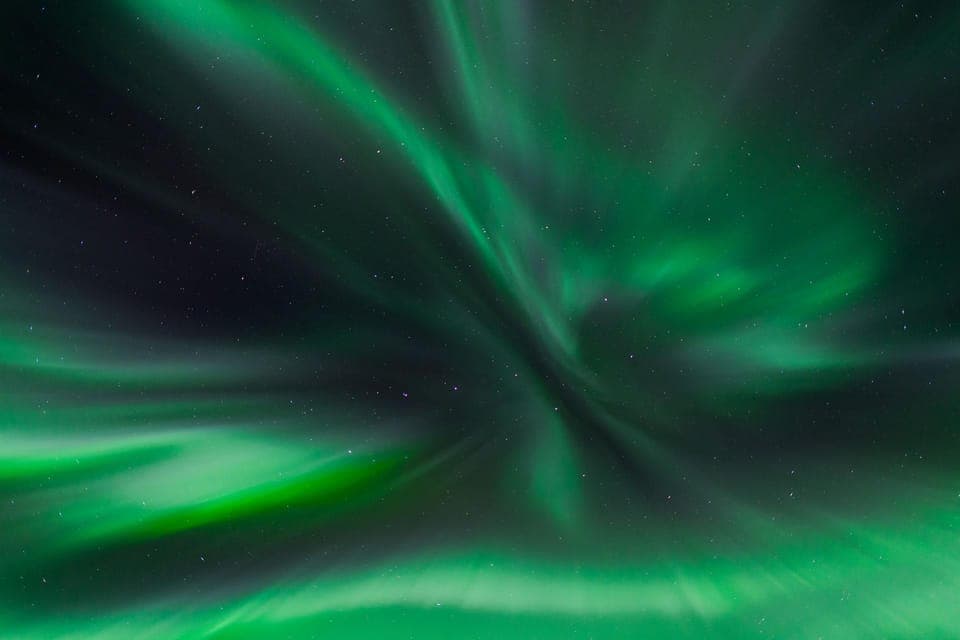
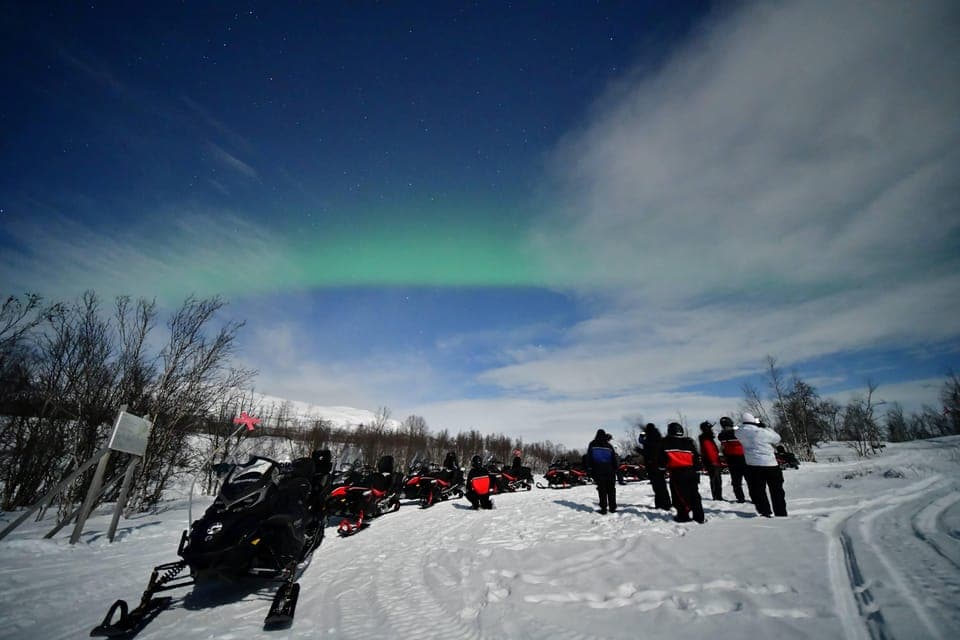
Affiliate links: we may earn a commission at no extra cost to you.
Tonight, Hour by Hour
The four things that must line up over Abisko, and how each hour of the night looks.
Kp 3.0 now, Kp 1 needed here
100% cloud cover around 4 AM
Dark from 2 AM
Certified dark sky; moon 12% lit
All times shown in Abisko local time (GMT+2), not your device time.
10-Night Aurora Outlook
Planning a trip to Abisko? Peak activity, cloud cover, and darkness for the nights ahead.
Kp ~ marks nights beyond NOAA's precise 3-day forecast, estimated from the 27-day outlook. Treat the far nights as a rough guide, not a promise.
Chasing by car?
Most Abisko trips start at Kiruna airport, an hour east: picking up a car there covers the transfer and every dark lay-by on the E10.
Affiliate links: we may earn a commission at no extra cost to you.
Find a base for your aurora trip
Compare accommodation near your viewing area. Check the exact property location and plan how you will reach dark skies.
Affiliate links: we may earn a commission at no extra cost to you.
Seeing the aurora in Abisko
Abisko is one of the best places on Earth to see the northern lights, and its famous "blue hole" is why. A rain shadow off the mountains around Lake Torneträsk keeps a patch of sky clear here even when the whole region is clouded over, so the Abisko aurora forecast usually comes down to activity rather than weather. Sitting at 68 degrees north directly under the auroral oval, the lights appear over Abisko on most dark, clear nights.
Our verdict is not a Kp number. The Kp index is a global, three-hour average, and treating it as a promise is the single biggest reason people drive out and see nothing. Instead we check four things for Abisko specifically: whether forecast activity reaches the level this latitude needs, whether the sky will be clear, whether it will actually be dark, and how much moonlight and local light pollution will wash out. Only when all four line up do we say yes.
Why Abisko is one of the best places on Earth for the aurora
Abisko is one of the best aurora spots on Earth because it combines two things almost nowhere else has together: a position at 68 degrees north directly under the auroral oval, and a microclimate that keeps its sky clear. Under the oval you do not need a geomagnetic storm; on an ordinary Kp 1 night the aurora usually appears somewhere overhead, and a Kp 3 night can fill the whole sky.
The practical result is that in Abisko the forecast question is rarely whether there is activity. It is whether the sky is clear, and thanks to the blue hole it usually is. That is why the verdict above leans so heavily on cloud cover and darkness: those are the two things that actually decide your night this far north.
The blue hole: Abisko's clear-sky advantage
The blue hole of Abisko is a microclimate that keeps a patch of sky clear even when the surrounding region is clouded over. Moist Atlantic air coming off the Norwegian coast is wrung out by the Scandinavian mountains, so by the time it reaches the Torneträsk valley it has dropped most of its cloud, leaving a rain-shadow window of clear sky roughly over the lake.
This is Abisko's single biggest advantage over coastal aurora towns. Tromsø, about 90 km to the northwest, sees far more cloud because it sits on the wet side of the same mountains, while Abisko sits on the dry side. It is the reason people travel here specifically: not for more aurora activity, which is similar across the region, but for a far better chance of a clear sky to see it through.
The Aurora Sky Station, the lake, and the season
The signature Abisko experience is the Aurora Sky Station, reached by a 20-minute chairlift up Mount Nuolja to a viewing deck and cafe at 900 metres. It opened in 2007 and sits above much of the valley's stray light and any low haze, though on a clear night you do not need it: the lakeshore right by the STF mountain station gives a dark, open horizon north over Torneträsk.
The season runs from early September to early April, with the equinoxes in September and March statistically strongest. From late May to mid July the midnight sun keeps the sky bright around the clock and no aurora is visible, while midwinter brings polar night, when the sun barely rises and viewing can start in the afternoon. If you are reading this in summer, that is why the verdict above talks about the season instead of an hourly forecast.