Northern Lights in ReykjavikVisible Tonight?
Real-time aurora forecast updated every 15 minutes
Kp 4.7 activity, 0% cloud, and dark skies line up around 10 PM.
Verify with the live sky camera →Thursday night looks better: Kp 2.3 forecast with 11% cloud, a camera chance.
Aurora tours in Reykjavik
Choose the outing that fits your trip, then check dates and pickup with the operator. Sightings depend on the sky.
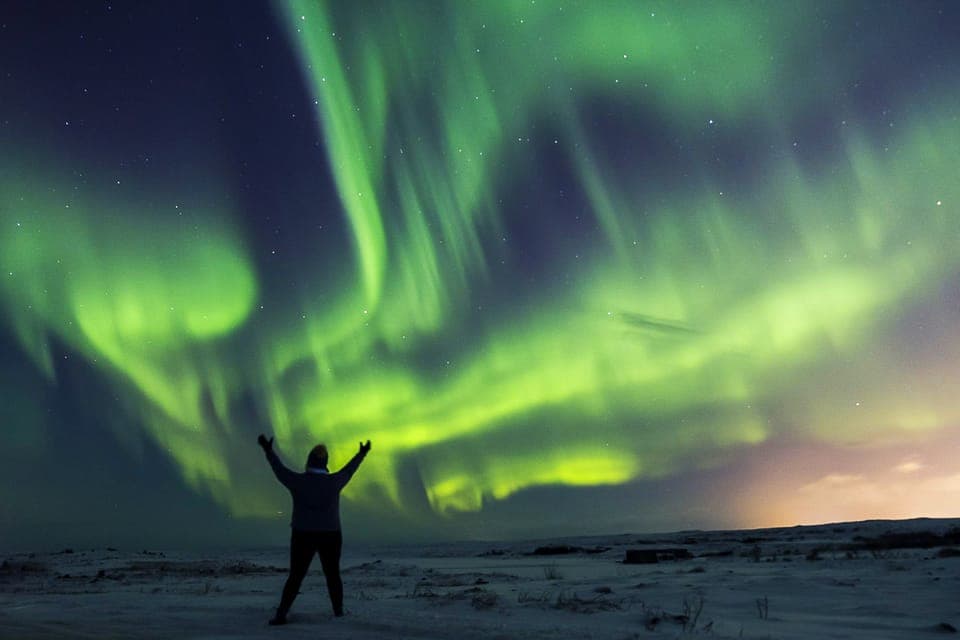
Northern lights by coach
Reykjavik · 4 hours
A guided evening outside the city, with photo stops and hot cocoa. Check the pickup option.
- No sighting? One free bus retry, not a refund.
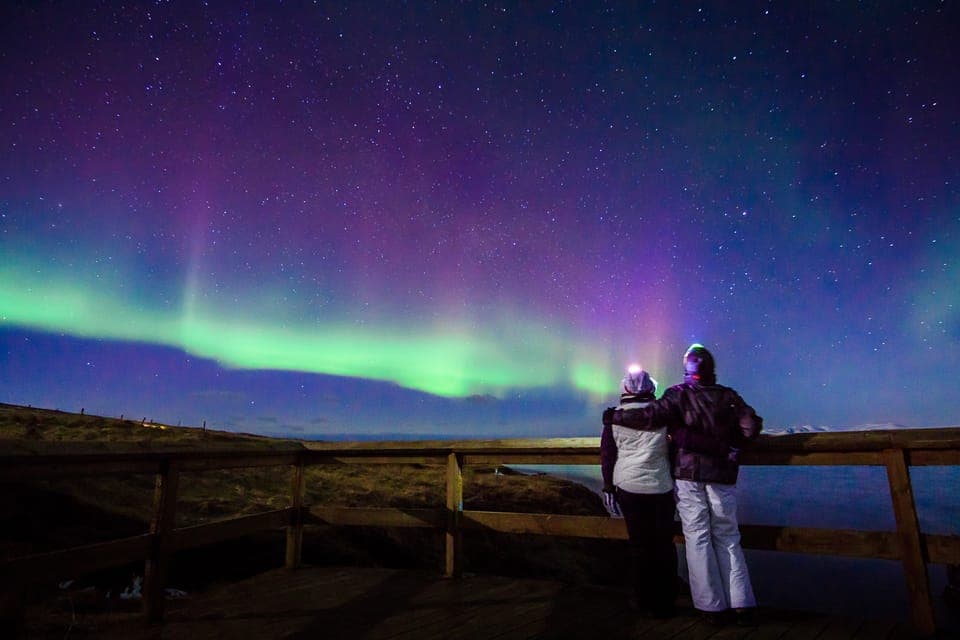
Small-group minibus chase
Reykjavik · 4 hours
Choose a smaller group with pickup included for an evening searching for clear skies.
- No sighting? The free retry is on the bus tour.
Affiliate links: we may earn a commission at no extra cost to you. Check current package terms before booking.
Tonight, Hour by Hour
The four things that must line up over Reykjavik, and how each hour of the night looks.
Kp 4.7 now, Kp 3 needed here
0% cloud cover around 10 PM
Dark from 8 PM
Some local light glow; moon 11% lit
All times shown in Reykjavik local time (GMT), not your device time.
10-Night Aurora Outlook
Planning a trip to Reykjavik? Peak activity, cloud cover, and darkness for the nights ahead.
Kp ~ marks nights beyond NOAA's precise 3-day forecast, estimated from the 27-day outlook. Treat the far nights as a rough guide, not a promise.
Chasing by car?
Iceland aurora hunting is a driving game: the Ring Road puts you under whichever sky is clear tonight.
Affiliate links: we may earn a commission at no extra cost to you.
Find a base for your aurora trip
Compare accommodation near your viewing area. Check the exact property location and plan how you will reach dark skies.
Affiliate links: we may earn a commission at no extra cost to you.
Seeing the aurora in Reykjavik
Reykjavik is far enough north that activity is rarely the limiting factor: Kp 2 to 3 is usually plenty. Iceland's real gatekeeper is its fast-moving Atlantic cloud, which is why locals check cloud maps before Kp. This page does both for you and answers in plain language.
Our verdict is not a Kp number. The Kp index is a global, three-hour average, and treating it as a promise is the single biggest reason people drive out and see nothing. Instead we check four things for Reykjavik specifically: whether forecast activity reaches the level this latitude needs, whether the sky will be clear, whether it will actually be dark, and how much moonlight and local light pollution will wash out. Only when all four line up do we say yes.
When to go: aurora season in Iceland
Aurora season in Iceland runs from late August through mid-April. At 64 degrees north the country is close enough to the auroral oval that raw activity is seldom the problem: on a dark, clear night even a modest Kp 2 or 3 usually puts a band somewhere in the sky. The two best stretches are the equinox weeks in late September and late March, when displays run statistically strongest and the roads out to Þingvellir and Reykjanes are still easy to drive.
Summer is the off-season, but not for the reason the high Arctic has one. Reykjavik sits just south of the Arctic Circle, so the sun does set in June; it simply never drops far enough below the horizon for the sky to go properly dark from about mid-May to early August. Through those weeks even a severe geomagnetic storm is invisible, which is why the verdict above switches to talking about the season instead of showing an hourly forecast.
Iceland's real gatekeeper: the weather
The single thing standing between you and the aurora in Iceland is almost never the sun, and rarely the Kp number. It is the cloud. North Atlantic weather moves fast and lands in patches: a low can pour over Reykjavik while the sky sits clear over the Reykjanes peninsula half an hour away, then swap the two an hour later. This is why Icelanders check the cloud forecast first and treat the geomagnetic number as a secondary detail, and why the verdict above leans so heavily on cloud cover and darkness.
The move that follows is simple: do not wait for the hole in the clouds to arrive over you, drive to it. On a given night Þingvellir to the east or Kleifarvatn and the Reykjanes coast to the south is often clear when the capital is buried, and the hourly cloud numbers on this page are there to tell you which way to point the car. A willingness to move 30 to 60 minutes is the biggest single difference between the people who see the lights and the people who watch cloud from a hotel window.
How to read tonight's forecast and where to go
From Reykjavik the activity bar is low: Kp 2 to 3 under a dark, clear sky is usually all it takes, and big storms can even push the brightest part of the show south of the city. So read the verdict the way a local reads the Met Office map: the Kp number is the entry ticket, and cloud cover and darkness are the actual forecast. The other half of the job is getting out of the city glow. Grótta Lighthouse on the tip of Seltjarnarnes is about 15 minutes from downtown and dark enough for strong displays, Þingvellir National Park is roughly 45 minutes east, and Kleifarvatn on the Reykjanes peninsula is about 40 minutes south and frequently clear when the capital is not.
Whether to book a tour or self-drive comes down to the cloud, not the aurora. On a night the forecast calls clear, driving yourself to Grótta, Þingvellir, or Kleifarvatn is cheap, flexible, and just as effective as any tour. On a marginal night the guided trips earn their price: the operators chase clear sky across the whole southwest, sometimes an hour or more from town, and many rebook you for free if the lights never show. A rental car plus the hourly cloud numbers above does the same job, as long as you are willing to follow the gap instead of hoping one opens overhead.