Northern Lights in FairbanksVisible Tonight?
Real-time aurora forecast updated every 15 minutes
Activity is close, but 96% cloud cover blocks the sky over Fairbanks tonight.
Verify with the live sky camera →Wednesday night looks better: Kp 3.3 forecast with 24% cloud, a naked-eye chance.
Aurora tours in Fairbanks
Choose the outing that fits your trip, then check dates and pickup with the operator. Sightings depend on the sky.
Tour or self-drive? Plan your night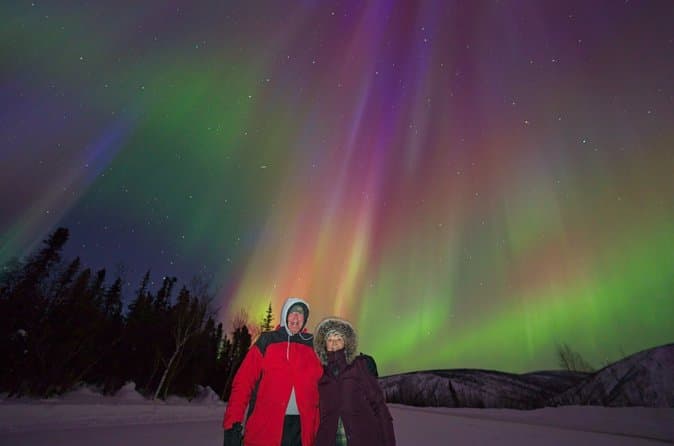
Aurora chase with photos
Fairbanks · 8–12 hours
For a night focused on finding the lights, with a flexible route and photos included.
- Hotel pickup offered; expect a late return.
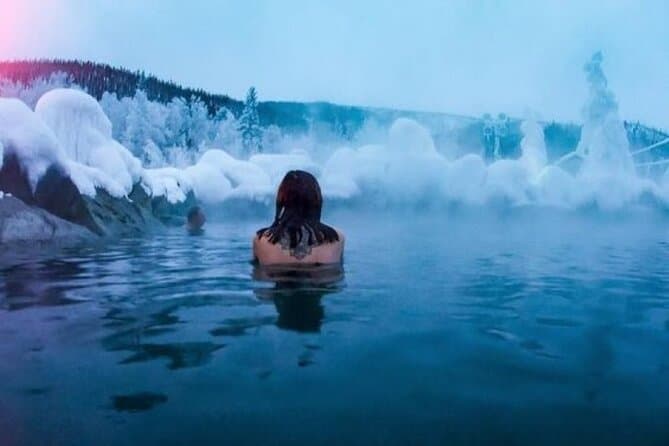
Chena Hot Springs & aurora
Fairbanks · About 10 hours
Combine a hot-springs visit with a search for the lights on the same outing.
- Pickup offered; bring swimwear for the springs.
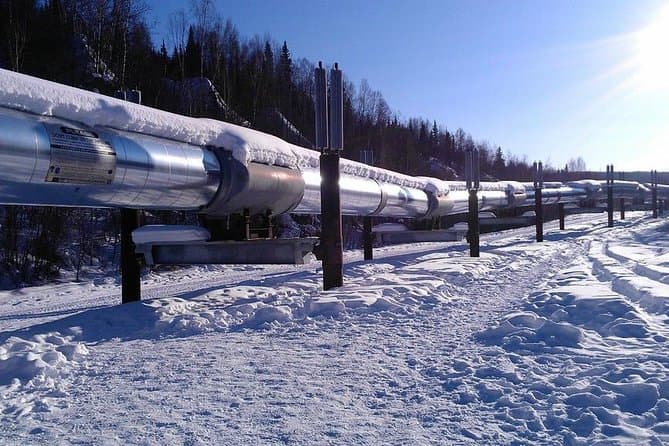
Arctic Circle & aurora
Fairbanks · 12–14 hours
A full-day road trip across the Arctic Circle, with aurora viewing on the return journey.
- Pickup offered; set aside the whole day and night.
Affiliate links: we may earn a commission at no extra cost to you. Check current package terms before booking.
Tonight, Hour by Hour
The four things that must line up over Fairbanks, and how each hour of the night looks.
Kp 3.7 now, Kp 2 needed here
96% cloud cover around 10 PM
Dark from 9 PM
Some local light glow; moon 13% lit
All times shown in Fairbanks local time (AKDT), not your device time.
10-Night Aurora Outlook
Planning a trip to Fairbanks? Peak activity, cloud cover, and darkness for the nights ahead.
Kp ~ marks nights beyond NOAA's precise 3-day forecast, estimated from the 27-day outlook. Treat the far nights as a rough guide, not a promise.
Plan your Fairbanks aurora night
Use the hourly forecast before choosing a night
Look for darkness and lower cloud cover in the hourly forecast, then check again before leaving. The outlook is guidance, not a scheduled display. If your trip allows it, leave another evening available instead of relying on one night.
Check tonight’s hourly conditionsChoose a tour or drive yourself
A tour with pickup can suit you if you would rather avoid the late-night drive or want photography help. Choose an aurora chase for a viewing-focused outing, or Chena Hot Springs if you also want the springs. Self-driving is an option if you are equipped for the weather and comfortable with local roads; check legal parking and access before leaving.
Compare Fairbanks tours and pickupLocal planning guidance: Explore Fairbanks viewing locations and driving advice.
Chasing by car?
Cleary Summit, Murphy Dome, and the Chena Hot Springs Road are all self-drive spots: a car turns this forecast into a chase plan.
Affiliate links: we may earn a commission at no extra cost to you.
Find a base for your aurora trip
Compare accommodation near your viewing area. Check the exact property location and plan how you will reach dark skies.
Affiliate links: we may earn a commission at no extra cost to you.
Seeing the aurora in Fairbanks
Fairbanks sits directly under the auroral oval, which is why it is the aurora capital of the United States. On a clear, dark night here you do not need a storm; even quiet Kp 1 to 2 activity is often overhead. The real question in Fairbanks is clouds and darkness, not Kp.
Our verdict is not a Kp number. The Kp index is a global, three-hour average, and treating it as a promise is the single biggest reason people drive out and see nothing. Instead we check four things for Fairbanks specifically: whether forecast activity reaches the level this latitude needs, whether the sky will be clear, whether it will actually be dark, and how much moonlight and local light pollution will wash out. Only when all four line up do we say yes.
When to go: aurora season in Fairbanks
Aurora season in Fairbanks runs from late August through mid-April. It is not that the sun goes quiet in summer: at nearly 65 degrees north the sky simply never gets dark enough from late April to late August, so even a severe storm stays invisible against the midnight sun. Real darkness returns in the second half of August, and the statistically strongest displays cluster around the September and March equinoxes, when Earth's field couples most efficiently with the solar wind.
The two ends of the season have very different characters. September offers milder nights, open lakes and rivers for reflections, and aurora that appears before the deep cold sets in, at the cost of a shorter dark window. Deep winter from December through February is savagely cold but delivers long, dark, often crystal-clear nights with far more viewing hours, and March is a local favorite for pairing those long nights with easier road and travel conditions.
Under the oval: clouds and ice fog, not Kp
The single best thing Fairbanks has going for it is its latitude. It sits at nearly 65 degrees north, directly beneath the auroral oval, the ring of aurora that encircles the pole even on quiet nights. That means you do not need a geomagnetic storm: on an ordinary Kp 1 to 2 night the lights are usually somewhere overhead, and a Kp 3 night can fill the whole sky. It also means the common advice to wait for high Kp is backwards here, because a strong storm can push the brightest part of the oval south of the city.
So the Fairbanks forecast question is almost never whether there is activity: it is whether the sky is clear and dark, and whether you can get above the town. The local wrinkle is ice fog, a shallow layer of frozen haze that pools over the Tanana valley on the coldest nights and can gray out an otherwise clear sky. The answer is elevation: a 20-minute climb to Cleary Summit or a drive out to Murphy Dome lifts you out of the murk and the city glow into clear, colder air. That is why the verdict above puts its weight on cloud cover and darkness rather than the Kp number.
How to read tonight's forecast and where to go
Start with the verdict at the top of the page: it folds geomagnetic activity, cloud cover, and darkness into one answer, and in Fairbanks the activity is rarely the part that fails. Read the hourly cloud numbers and the dark window instead, because if it is clear and genuinely dark, some aurora is very likely to show, usually building toward solar midnight around 1 to 2 am local. Displays arrive in substorms, bursts of 15 to 40 minutes with quiet gaps between them, so give it at least two hours and let your eyes dark-adapt for 15 minutes without looking at your phone.
For where to stand, the whole game is getting above the city glow and the ice fog with an open northern horizon. Cleary Summit, about 20 miles up the Steese Highway, is the classic high pull-off; Murphy Dome, northwest of town, gives the wide 360-degree view photographers prefer. Closer in, Chena Lakes Recreation Area near North Pole is a flat, dark, easy drive for nights when you do not want to climb a ridge, and Creamer's Field can work in town when the display is bright enough to beat the glow. Whichever you choose, confirm the north is open and dark, then dress for standing still in serious cold.