Northern Lights in AnchorageVisible Tonight?
Real-time aurora forecast updated every 15 minutes
Kp 3.7 is well below the Kp 5 that Anchorage needs, so the aurora stays too far north tonight.
Verify with the live sky camera →No clear chance in the next 10 nights; forecasts update several times a day, so check back.
Aurora tours in Anchorage
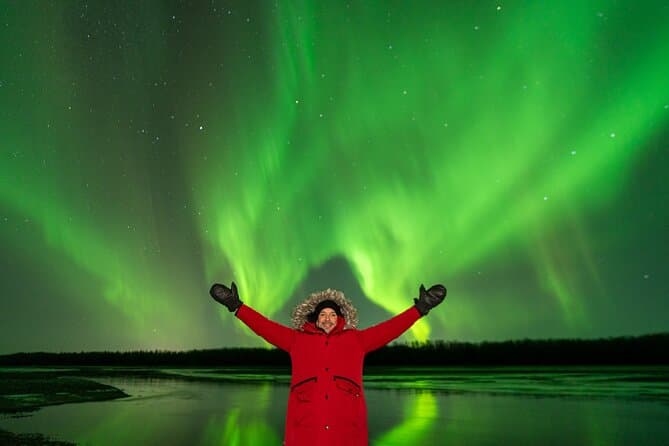
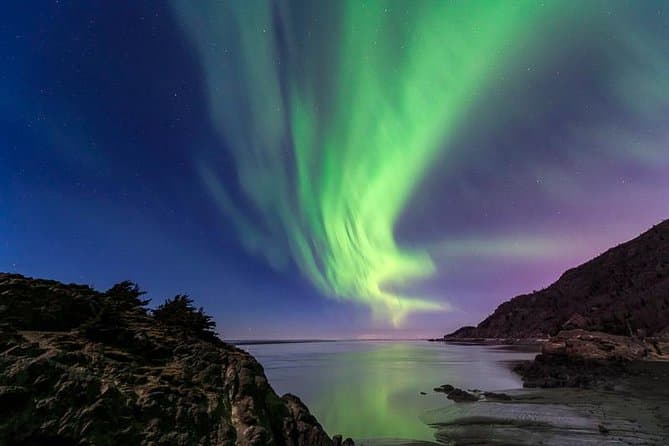
Local guides chase clear sky; on marginal nights that mobility is the difference.
Affiliate links: we may earn a commission at no extra cost to you.
Tonight, Hour by Hour
The four things that must line up over Anchorage, and how each hour of the night looks.
Kp 3.7 now, Kp 5 needed here
6% cloud cover around 12 AM
Dark from 9 PM
City glow raises the bar; moon 12% lit
All times shown in Anchorage local time (AKDT), not your device time.
10-Night Aurora Outlook
Planning a trip to Anchorage? Peak activity, cloud cover, and darkness for the nights ahead.
Kp ~ marks nights beyond NOAA's precise 3-day forecast, estimated from the 27-day outlook. Treat the far nights as a rough guide, not a promise.
Chasing by car?
The good sky is out the Glenn Highway toward Palmer and Hatcher Pass: a car gets you under it in under an hour.
Affiliate links: we may earn a commission at no extra cost to you.
Find a base for your aurora trip
Compare accommodation near your viewing area. Check the exact property location and plan how you will reach dark skies.
Affiliate links: we may earn a commission at no extra cost to you.
Seeing the aurora in Anchorage
The northern lights in Anchorage are a realistic catch several nights a month, more than almost any other big US city, because the town sits near 61 degrees north under the edge of the auroral oval. The catch is city glow and the wall of the Chugach Mountains: on a good night you drive out and up, to the Hillside or north toward Palmer, to trade streetlights for a dark northern horizon. At Kp 3 the aurora can already show over the peaks, and a strong storm fills the whole sky.
Our verdict is not a Kp number. The Kp index is a global, three-hour average, and treating it as a promise is the single biggest reason people drive out and see nothing. Instead we check four things for Anchorage specifically: whether forecast activity reaches the level this latitude needs, whether the sky will be clear, whether it will actually be dark, and how much moonlight and local light pollution will wash out. Only when all four line up do we say yes.
When to go: aurora season in Anchorage
Aurora season in Anchorage runs from late August through mid-April. The limit in summer is not the sun going quiet, it is darkness: near 61 degrees north the sky simply never gets dark enough from late May through late July, so even a strong storm is lost in the midnight-sun twilight. As real night returns in late August, the same activity that was invisible in June suddenly shows over the mountains.
The strongest stretches are historically around the September and March equinoxes, when Earth's magnetic field couples most efficiently with the solar wind. Through the current solar maximum Anchorage has been getting photographable aurora on a handful of nights in a typical month, with several bigger storms a year reaching easy naked-eye strength. Those large nights usually show up in the multi-night outlook above two or three days ahead.
Why you drive out and up from Anchorage
The two things working against Anchorage are city glow and the Chugach Mountains, so the local move is to drive out and up. The city puts a dome of light over the northern sky, and the mountains block part of the low horizon where the aurora often sits, which is why a display that reads camera-only downtown can look far brighter from a dark pullout 30 minutes away. Gaining elevation on the Hillside also lifts you above much of the haze and light.
The reliable escapes each point at a dark horizon. Glen Alps and Flattop climb the Hillside for a view back over the city, Point Woronzof opens north across Cook Inlet, and the Glenn Highway toward Palmer reaches the wide, unlit Knik River flats, Eklutna Lake, and the high bowls of Hatcher Pass. South of town, Turnagain Arm and Portage Valley give open water and big sky when the weather cooperates. When in doubt, drive until the streetlights are behind you and the northern horizon is dark.
How to read tonight's aurora forecast in Anchorage
From a dark spot near Anchorage you generally need about Kp 3 for a naked-eye show, and less for your camera, while from inside the city the bar rises toward Kp 5. Locals know the Kp number is only the entry ticket: a clear northern horizon and true darkness matter just as much, which is why the verdict above folds cloud cover and twilight into one answer instead of leaving you to juggle three apps.
On a promising night, head out early, give it two full hours, and let your eyes dark-adapt for 15 minutes without checking your phone. Displays come in substorms, bursts of 15 to 40 minutes with quiet gaps between them, so patience pays. Point night mode at the northern horizon now and then, because the camera will pick up an approaching display before your eyes do. For higher-latitude odds on a dedicated aurora trip, compare the Fairbanks and Alaska forecasts too.