The Kp Index, Explained: Why the Aurora Number Is Not a Promise
The kp index is a 0 to 9 scale of geomagnetic activity. Here is what the aurora number really means, and why a high value is no promise.

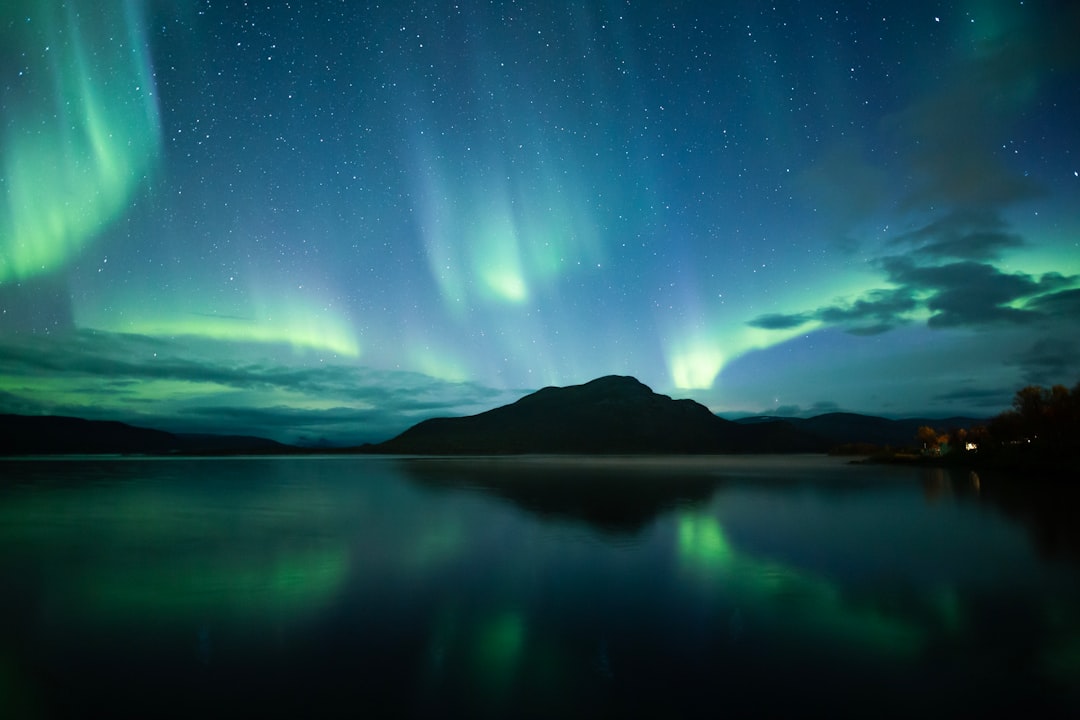
What is the kp index?
The kp index is a planetary measure of geomagnetic activity on a scale from 0 to 9, calculated every three hours from a worldwide network of magnetometer stations. A value of 0 to 4 means quiet to unsettled conditions, while 5 or higher marks a geomagnetic storm, the point at which the aurora starts pushing toward lower latitudes. It is the single most-quoted aurora number, and on its own it still cannot tell you whether you will see the northern lights tonight. Check the live verdict for your exact location instead.
Every time the sun throws a flare at Earth, the same scene plays out online. Someone posts a screenshot of a Kp forecast, the number is high, and the caption reads "aurora tonight." Thousands of people drive somewhere dark, look north, and see nothing. They were not lied to. The trouble is that the kp index was never built to answer the question they were actually asking. It measures how disturbed Earth's magnetic field is, globally, in three-hour chunks. It says nothing about whether the sky over your head is dark, clear, and lit with color.
This post explains what the number really is, how it maps to storm levels, and, most importantly, why a big Kp and an empty sky go together far more often than the headlines admit.
Table of Contents
- What Is the Kp Index, and Where Does the Number Come From?
- The Kp Index Scale and NOAA's Geomagnetic Storm Levels
- Why a High Kp Index Still Means You Might See Nothing
- What Kp Index Do You Need for the Northern Lights?
- Estimated Kp, the 3-Day Forecast, and Real-Time Solar Wind
- From Kp to a Verdict: The Four Things That Have to Line Up
- Frequently Asked Questions
What Is the Kp Index, and Where Does the Number Come From?
The Kp index is a single number, from 0 to 9, that describes how much Earth's magnetic field is being disturbed across the whole planet during a three-hour window. The "p" stands for planetary. It was introduced by the German geophysicist Julius Bartels in 1949, who named it the planetarische Kennziffer, and it has been recorded continuously ever since.
Here is how the number is built. A network of magnetometer observatories around the world each measures how far the local magnetic field swings away from a normal quiet day. Those swings become a local K value from 0 to 9. The planetary Kp is then the standardized mean of the K values from 13 observatories located between 44 and 60 degrees geomagnetic latitude, deliberately chosen to sit below the auroral zone so that local auroral currents do not skew the global picture. The official index is produced by GFZ Potsdam in Germany, which delivers it to the international geomagnetic index service.
Two details matter for anyone chasing aurora. First, the scale is quasi-logarithmic, so the steps are not evenly spaced. A jump from Kp 2 to Kp 5 is not a bit more activity, it is roughly a tenfold larger deviation in the magnetic field. Second, you will see thirds. Kp is reported in steps like 5-, 5, and 5+, which modern feeds often write as decimals such as 4.67, 5.00, and 5.33. For real-time use, NOAA's Space Weather Prediction Center publishes an "estimated Kp" derived within minutes from a smaller set of ground stations, including Sitka in Alaska, Fredericksburg in Virginia, Hartland in the UK, and Niemegk in Germany. That estimated value is what almost every aurora app shows you.
The Kp Index Scale and NOAA's Geomagnetic Storm Levels
On the kp index scale, 0 to 4 covers quiet to active conditions, and 5 through 9 are the five levels of geomagnetic storm, which NOAA labels G1 through G5. The two scales line up cleanly: Kp 5 is a G1 storm, and each step up the Kp ladder is the next G-level. A storm is not just an aurora event; the same disturbance can nudge power grids, satellites, and GPS accuracy, which is why NOAA tracks it as space weather rather than a light show.
The table below maps the NOAA G-scale to Kp, roughly how often each level occurs across an 11-year solar cycle, and what it tends to mean for aurora reach.
| Kp | NOAA storm level | Roughly how often (per 11-year cycle) | What it means for the aurora |
|---|---|---|---|
| 0 to 4 | Below storm level | Most days | Oval sits over the far north; aurora for Arctic latitudes only |
| 5 | G1 (Minor) | ~1,700 events (900 days) | Reaches the northern-tier US and Scotland |
| 6 | G2 (Moderate) | ~600 events (360 days) | Visible across the northern US and much of the UK |
| 7 | G3 (Strong) | ~200 events (130 days) | Pushes into the central US |
| 8 | G4 (Severe) | ~100 events (60 days) | Seen across large parts of the US and Europe |
| 9 | G5 (Extreme) | ~4 events (4 days) | Continent-wide displays, like the May 2024 storm |
Notice how steep the drop-off is. A minor G1 storm shows up hundreds of nights per cycle, but a G5 like the May 2024 event, the one that painted the sky pink over Florida and Mexico, happens only a handful of times in eleven years. The rarity is exactly why a G5 becomes a global news story while the far more common G1 slips by unnoticed by most people, even though it lights up the sky somewhere every few nights. Even a severe storm is no sure thing: its strongest hours often land in someone else's daytime, as our breakdown of solar storm northern lights timing across Solar Cycle 25 shows.
Why a High Kp Index Still Means You Might See Nothing
A high kp index tells you the planet's magnetic field is disturbed, not that the aurora is above you right now. That gap is the single most common reason people come home disappointed, and it comes down to four things the number quietly leaves out.
Kp is global. It is one value for the entire Earth. A Kp 6 might describe a storm whose brightest activity is sitting over Siberia or the middle of the Pacific while your sky stays quiet. The number cannot know where you are standing, so it cannot promise the oval is overhead.
Kp is a three-hour average. The aurora does not glow steadily; it erupts in bursts called substorms that last roughly 15 to 40 minutes, with quiet gaps between them. A single Kp value smooths all of that into one figure for a three-hour block. A "Kp 6" window can be one spectacular 20-minute surge followed by two hours of nothing, and the number looks identical either way. If you glance outside during a lull and give up, the report still says Kp 6.
Kp is a rear-view mirror. The estimated Kp on your app describes fluctuations the magnetometers have already recorded. By the time a "Kp 6 now" alert lands on your phone, the substorm that caused it may already be fading. This is why chasers who understand the physics behind what causes the northern lights watch upstream solar wind data instead of waiting for the Kp number to catch up.
Kp is silent on the sky itself. This is the big one. The index knows nothing about your clouds, your twilight, the moon, or your city's light pollution. A perfect Kp 7 under a thick marine layer is invisible. So is a strong storm during a Nordic summer, when the sky never gets dark. NASA's own space weather scientists stress that geomagnetic activity is only one ingredient; local conditions decide whether photons ever reach your eyes.
Put those together and the viral "Kp 7 tonight" post starts to look like what it is: a global, three-hour, backward-looking average being sold as a personal guarantee. It is a genuinely useful number. It is just not the answer to "will I, standing here, see the aurora in the next hour."
What Kp Index Do You Need for the Northern Lights?
The Kp index you need for the northern lights depends almost entirely on your latitude. Under the auroral oval a quiet Kp 1 will do; a southern city may need a once-a-decade Kp 9. The reason is geometry. The aurora lives in a ring around the magnetic pole, and a rising Kp widens that ring toward the equator. The farther south you are, the bigger the storm has to be before the ring reaches you.
Here is a practical guide to the kp index and northern lights by location, based on the naked-eye threshold under a genuinely dark sky.
| Where you are | Kp usually needed (naked eye, dark sky) | Live example |
|---|---|---|
| Directly under the oval (Arctic) | Kp 1 to 2 | Fairbanks, Tromsø |
| Iceland and far northern Scandinavia | Kp 2 to 3 | Reykjavik |
| Upper Peninsula, Minnesota North Shore, Scottish Highlands | about Kp 5 | Michigan, Scotland |
| Northern-tier US and most of the UK | about Kp 6 | Washington State, the UK |
| Mid-latitude US, southern England | Kp 7 or higher | Seattle |
| Low-latitude US states | Kp 8 to 9 (severe storm) | n/a |
Two things bend this table. Direction is one: a strong storm can actually push the brightest part of the oval south of a far-north spot like Fairbanks, so bigger is not always better if you are already sitting under it. Light pollution is the other. City glow effectively raises the bar by a step or two, which is why watching from inside a metro like Seattle or Minneapolis needs a noticeably larger storm than a dark shoreline at the very same latitude. Drive an hour to a dark north-facing horizon and the Kp you need drops.
Estimated Kp, the 3-Day Forecast, and Real-Time Solar Wind
There are three different Kp numbers you will run into, and mixing them up is why so many people watch the wrong one. Each serves a different purpose and a different time horizon.
The estimated Kp is the nowcast: the near-real-time value NOAA computes for the three-hour block that just ended. It answers "how active has it been," which is useful but always slightly behind the moment.
The 3-day forecast is the planning tool. NOAA SWPC issues a predicted Kp for each three-hour block over the next three days and updates it a few times a day as new solar data arrives. This is where a storm from an Earth-directed solar eruption usually shows up a day or two ahead, and it is the number worth watching when you are deciding whether to keep a night free.
The real edge, though, comes from upstream. Spacecraft such as DSCOVR and ACE sit about 1.5 million kilometers sunward of Earth at a spot called L1, sampling the solar wind before it arrives. Because that wind takes roughly 15 to 60 minutes to travel from L1 to us, a sudden shift in its magnetic orientation gives genuine short-notice warning that a substorm is coming, well before it ever registers in the Kp average. That lead time is the difference between reading about a display and standing under it.
No single one of those numbers answers the practical question by itself. A forecast that says Kp 6 in three days is meaningless if that night is cloudy or moonlit where you live. That is the whole case for a location-specific verdict over a bare Kp figure, and it is what our live northern lights forecast is built to give.
From Kp to a Verdict: The Four Things That Have to Line Up
Our forecast starts from the Kp index, then checks the three things Kp ignores: clouds, darkness, and sky washout from the moon and light pollution. Only when all four line up over your specific spot is the aurora truly visible to the naked eye. Our live aurora forecast runs that four-factor check for your exact location.
The four factors work like a checklist:
- Activity. Is the forecast Kp reaching the level your latitude actually needs? The threshold is set per location, so Fairbanks passes on a quiet night while a mid-latitude city needs a real storm.
- Clouds. Is the sky clear enough to see through? The most common reason a strong Kp produces nothing is a layer of cloud that the number never sees.
- Darkness. Is the sun far enough below the horizon? At high latitudes in summer this fails completely, the midnight-sun problem that hides even a G5 storm behind lingering twilight.
- Sky washout. Is a bright moon or heavy light pollution drowning out faint color? Both raise the effective activity you need.
Instead of handing you a raw number to decode, the tool returns a plain-English answer: Not tonight, Camera only, or Yes, naked eye. That middle tier matters. At mid-latitudes a great many displays are camera-only, where a phone on a long exposure captures clear green and pink while your eyes register a faint gray glow. Knowing that before you drive out is the difference between a fair expectation and a letdown. Once you have your verdict, our guide on how to see the northern lights covers the rest: where to stand, when to arrive, and how long to wait out the quiet spells.
It is the same philosophy we apply to a completely different subject on the other side of the world, where a live score tells you whether Mt. Fuji is visible today rather than making you infer it from a raw weather report. A single measurement is a starting point, never the answer.
Frequently Asked Questions
What is a good Kp index to see the northern lights?
There is no universal good number, because it depends on where you are. Under the auroral oval in places like Fairbanks or Tromsø, Kp 1 to 2 is plenty. In the northern-tier US or the UK you generally want Kp 6 or higher, and from a mid-latitude city you need a strong Kp 7-plus storm and a drive to dark skies. Match the number to your latitude, not to a headline.
Is a higher Kp index always better?
Not if you are already far north. A higher Kp widens the auroral oval toward the equator, which is great for mid-latitude viewers but can actually push the brightest band south of Arctic locations that normally sit right under it. For most people below about 55 degrees latitude, higher is better; directly beneath the oval, a moderate value overhead often beats a severe storm.
What Kp index is a geomagnetic storm?
A geomagnetic storm begins at Kp 5, which NOAA classifies as a G1 minor storm. From there, Kp 6 is G2, Kp 7 is G3, Kp 8 is G4, and Kp 9 is a G5 extreme storm. Anything Kp 4 or below is considered unsettled to active, not a storm.
How accurate is the Kp index forecast?
The 3-day Kp forecast is reasonably reliable for flagging that a storm is coming, especially within 24 to 48 hours once an Earth-directed eruption is in transit, but the exact timing and peak of a substorm are hard to pin down that far out. The sharpest short-term signal comes from real-time solar wind measured at L1, which offers roughly 15 to 60 minutes of warning. Even a perfect forecast, though, cannot see your local clouds, which is why we fold them into the final verdict.
Ready to skip the number-decoding? Pull up the live northern lights forecast, search your city or tap "use my location," and get a straight answer for tonight: not tonight, camera only, or yes, naked eye.
More Articles
What Causes the Northern Lights? The Science Behind the Aurora Borealis
What causes the northern lights? The sun sends charged particles that hit our atmosphere near the poles. The full science, in plain English.
How to See the Northern Lights: A Practical Field Guide
How to see the northern lights: the four-factor field checklist, activity, clouds, darkness, and moonlight, that decides every aurora night.
How Long Do Northern Lights Last? Minutes, Hours, and Whole Nights
Northern lights can brighten for minutes, recur over hours or accompany a multi-day storm. Learn what limits the time you can actually watch.