What Causes the Northern Lights? The Science Behind the Aurora Borealis
What causes the northern lights? The sun sends charged particles that hit our atmosphere near the poles. The full science, in plain English.

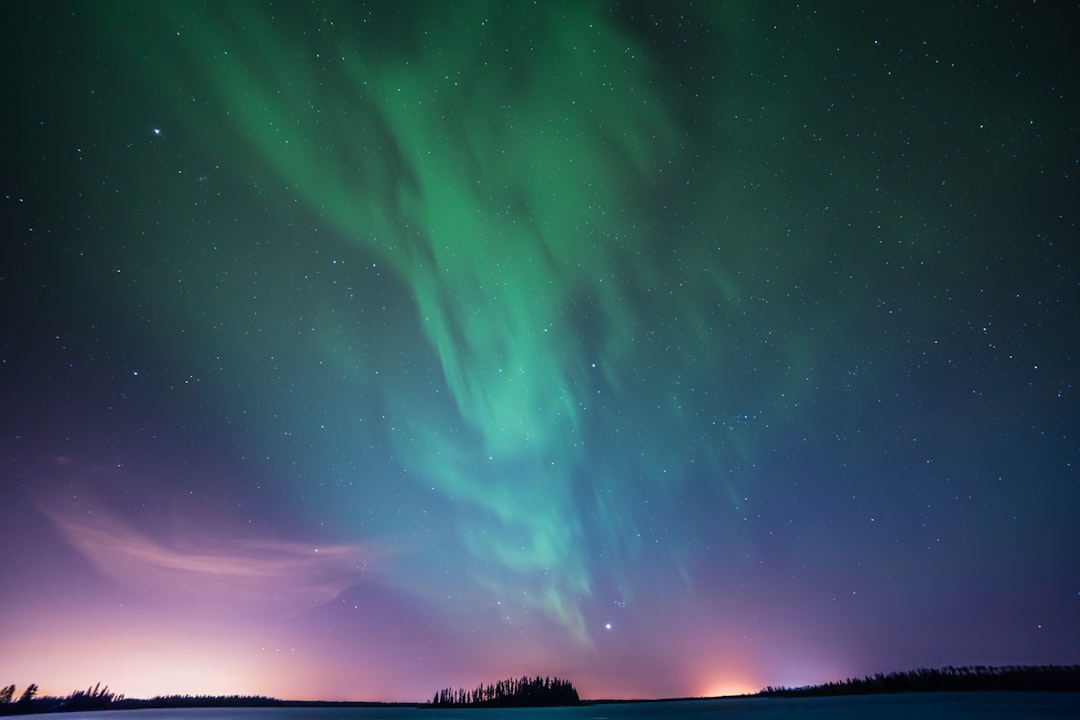
What causes the northern lights?
The northern lights are caused by charged particles from the sun colliding with oxygen and nitrogen high in Earth's atmosphere. Our planet's magnetic field steers those particles toward the poles, where they make the gas glow green, red, and violet. Knowing the science is one thing; knowing whether you can see it tonight is another. Get a plain answer for your exact spot with our live northern lights forecast.
The aurora borealis looks like magic, but it is a physics experiment running 60 miles over your head. A star 93 million miles away throws a piece of itself at the planet, Earth's magnetic field catches it, and the sky lights up. Every curtain of green you have ever seen in a photo is the visible end of that chain.
This is a plain-language explainer for what causes the northern lights, from the sun down to the color your eyes register. And because we build a live aurora tool, we will do what most science explainers skip: connect the physics to whether you, standing in a specific field on a specific night, will actually see anything.
Table of Contents
- What Causes the Northern Lights?
- It Starts With the Sun
- How the Particles Reach Earth
- The Magnetosphere and the Auroral Oval
- Why the Northern Lights Glow: The Colors
- From the Physics to Your Own Eyes
- Why a Big Storm Is Not a Guarantee
- Why Now Is a Great Time: Solar Cycle 25
- Frequently Asked Questions
What Causes the Northern Lights?
The northern lights are caused by charged particles from the sun striking oxygen and nitrogen atoms in Earth's upper atmosphere, which makes those gases release energy as light. That light, seen from the ground as shifting green and red curtains, is the aurora borealis in the north and the aurora australis in the south.
The full cause is a chain of events, and every link matters. The sun releases a stream of electrically charged particles. Those particles cross the solar system and reach Earth. Our planet's magnetic field deflects most of them but channels some down toward the magnetic poles. There, roughly 60 to 200 miles up, the particles slam into atmospheric gas and transfer their energy. The gas glows. That glow is the aurora.
So when people ask what makes the northern lights, the honest one-sentence answer is: the sun, filtered through Earth's magnetic field, exciting the air. The rest of this article walks that chain from top to bottom, because each step decides where the aurora appears, what color it turns, and how far south a storm can push it.
It Starts With the Sun
The northern lights start at the sun, which constantly releases charged particles into space through three channels: the steady solar wind, faster streams from coronal holes, and explosive coronal mass ejections. Understanding these three is the key to understanding why some nights are quiet and others fill the sky.
The solar wind is the baseline. The sun is so hot that its outer atmosphere, the corona, boils off continuously, sending a thin stream of electrons and protons outward in every direction at roughly 300 to 800 kilometers per second. This wind never stops. It is the reason a faint auroral glow rings the poles even on calm nights.
Coronal holes are cooler, less dense gaps in the corona where the sun's magnetic field opens out into space. High-speed solar wind pours out of these holes, and because the sun rotates about once every 27 days, the same hole can sweep past Earth on a schedule, producing recurring bumps in activity. These streams are milder than a full storm but reliable.
Coronal mass ejections, or CMEs, are the heavy hitters. A CME is a cloud of about a billion tons of solar plasma blasted off the sun, often alongside a solar flare, the intense burst of radiation you may have seen in headlines. When people talk about a solar flare and the northern lights in the same breath, this is the link: the flare is the flash, and the CME hurled out with it is what actually reaches Earth and lights up the sky a day or two later. A big Earth-directed CME is what turns an ordinary night into a once-a-year show.
How the Particles Reach Earth
Charged particles from the sun cross roughly 93 million miles of space and reach Earth in about one to three days, carried outward by the solar wind and CMEs. The exact timing depends on how fast the eruption was moving when it left the sun.
Most coronal mass ejections travel around 1,000 kilometers per second and arrive in two to three days. The fastest, most violent Earth-directed CMEs can cover the distance in as little as 15 to 18 hours, according to NOAA's Space Weather Prediction Center. That gap between "we saw it leave the sun" and "it hit us" is exactly what makes a multi-day aurora forecast possible.
The final warning comes from closer to home. About a million miles upstream of Earth, satellites sit at a spot called L1 and measure the solar wind as it streams past. When they detect a jump in speed and a southward flip in the magnetic field embedded in that wind, they hand forecasters a genuine 15 to 60 minute heads-up before the aurora responds. That upstream data is what our live aurora verdict leans on for tonight's timeline.
The Magnetosphere and the Auroral Oval
Earth's magnetic field, called the magnetosphere, deflects most of the incoming solar wind but funnels a fraction of the particles down toward the magnetic poles, which is why the aurora forms a ring, not a random scatter. That ring is called the auroral oval, and it is the single most important idea for understanding where the lights appear.
Picture the planet's magnetic field as invisible lines looping out of the south magnetic pole and back into the north. Charged particles find it very hard to cross those lines but very easy to slide along them. So particles that get trapped in the magnetosphere spiral down the field lines and are delivered, funnel-like, to the regions around each magnetic pole. The result is a glowing oval roughly centered on the magnetic pole, present almost all the time, described in NOAA's aurora overview.
The oval is not fixed. On a quiet night it sits far north, hovering over places like northern Scandinavia and interior Alaska. When a storm dumps energy into the magnetosphere, the oval swells and pushes toward the equator, which is how the northern lights end up over Michigan, Germany, or, during the strongest storms, Texas. This is also why the far north sees aurora so easily: towns like Fairbanks and Tromsø sit directly under the resting oval and need almost no geomagnetic activity at all, while a viewer in the lower 48 needs a storm big enough to drag the oval south to them.
Why the Northern Lights Glow: The Colors
The northern lights glow because incoming particles excite oxygen and nitrogen atoms, and as those atoms settle back down they release the extra energy as light at very specific wavelengths. The color you see is a direct readout of which gas got hit, and how high up.
When an energetic electron collides with an oxygen or nitrogen atom, it kicks one of the atom's electrons into a higher-energy state. That state is unstable. Anywhere from under a second to almost two minutes later, depending on the state, the electron drops back, and the atom sheds the difference as a single particle of light, a photon, of an exact color. Aurora is not a smeared rainbow; it is a set of pure emission lines, each tied to one atom and one energy jump.
| Color | Emitting gas | Wavelength | Altitude | When you see it |
|---|---|---|---|---|
| Green | Atomic oxygen | 557.7 nm | ~100 to 150 km | The classic, most common aurora color |
| Deep red | Atomic oxygen | 630.0 nm | above ~200 km | Tall red tops during stronger storms |
| Blue / violet | Nitrogen | 427.8 nm | lower borders, sunlit tops | Bright, very active displays |
| Pink / magenta fringe | Nitrogen | mixed bands | ~90 to 100 km | The lower edge of curtains in strong storms |
In practice that gives the aurora a short palette. Atomic oxygen produces the familiar green at 557.7 nanometers, around 100 to 150 km up, and a deep red at 630.0 nanometers higher than about 200 km, where the air is thin enough for its slow-emitting state to release light before a collision cancels it. Nitrogen supplies the blue and violet tones and the pink fringe along the bottom of bright curtains. Which of those colors you actually see depends heavily on your eyes and your latitude, and our guide to aurora borealis colors explains why red is often the first color seen far south of the oval and why faint aurora looks grey to the naked eye.
From the Physics to Your Own Eyes
Understanding what causes the northern lights does not tell you whether you will see them tonight, because a sighting depends on four separate conditions lining up over your exact location at the same time. The physics is universal; the view from your backyard is not.
We built our whole aurora tool around this gap, and it comes down to four factors:
- Activity. Geomagnetic activity, measured by the Kp index, has to be strong enough to drag the auroral oval down to your latitude. Fairbanks needs almost none. Michigan needs a solid storm. Southern England needs a rare monster.
- Clouds. The aurora happens far above the weather, around 60 to 200 miles up, so a single deck of low cloud hides the entire show. This is the number one reason people who "did everything right" still see nothing.
- Darkness. The sun has to be far enough below the horizon for the sky to go truly dark. At high latitudes in summer it never does, which is why aurora season shuts off from roughly May through July even when the sun is throwing storms.
- Sky washout. A bright moon and local light pollution both wash out faint aurora the same way they wash out the Milky Way. A camera-only glow in a city can be an obvious naked-eye curtain from a dark rural field an hour away.
Only when all four line up is the aurora genuinely visible to the naked eye. Our live aurora forecast checks each one for your coordinates and returns a plain verdict: "Not tonight," "Camera only," or "Visible to the naked eye." And if you want to turn this science into an actual plan for a night out, our companion guide on how to see the northern lights walks through the practical steps.
This is the same idea behind everything we build. Whether the question is aurora tonight or whether Mount Rainier is out from Seattle, the interesting problem is never the weather in the abstract. It is whether a specific person, in a specific place, can see the thing.
Why a Big Storm Is Not a Guarantee
A powerful solar storm and a high Kp number do not guarantee a show where you are, because Kp is a single global, three-hour average of geomagnetic activity that says nothing about your clouds, your darkness, or your latitude. This is the most common way people get burned by viral "Kp 7 tonight!" headlines.
The Kp index runs from 0 to 9 and summarizes how disturbed Earth's magnetic field is, worldwide, over a three-hour block. It is genuinely useful as a signal of overall storm strength. But it is a planet-wide, backward-looking snapshot, not a promise about your sky. A Kp 7 can describe a burst of activity that already ended twenty minutes ago, or one centered over Siberia while you stand under solid overcast in Ohio. We wrote a full explainer on what the Kp index really measures and where it misleads people, because it is the single most misunderstood number in aurora watching.
The fix is not to ignore Kp. The fix is to translate it for your specific spot and then check the other three factors. A modest storm on a crystal-clear, moonless night from a dark shore can beat a "huge" storm seen through city haze and clouds. That translation, from a raw global number to a yes-or-no answer for your location, is exactly what a good tool should do for you, and what a raw Kp map never will.
Why Now Is a Great Time: Solar Cycle 25
We are living through the peak of Solar Cycle 25, which NASA and NOAA declared had reached solar maximum on October 15, 2024, making the stretch from 2024 through 2026 the strongest run of aurora years in two decades. If you have ever wanted to see the northern lights, the sky is currently as cooperative as it has been in a generation.
The sun runs on an 11-year rhythm. Activity climbs from a quiet minimum to a busy maximum, then falls again, and the number of sunspots, flares, and CMEs rises and falls with it. Solar Cycle 25 has run hotter than forecasters first predicted. As of late 2025 the sun was averaging around 31 percent more sunspots per day than the previous cycle did at the same stage, which you can watch update on NOAA's solar cycle progression tracker.
The proof arrived in the sky. In May 2024 a barrage of CMEs produced a G5 storm, the strongest to hit Earth in about 20 years, and pushed naked-eye aurora as far south as the southern United States, a display some researchers rank among the most widespread in centuries. NASA and NOAA note that the maximum phase, and the elevated storm chances that come with it, continue for roughly a year or more past the peak before the sun settles into its declining phase. In practical terms, the back half of the 2020s will still be active, but the current window is the sweet spot.
That is why now is the moment to go. The far-north classics like Tromsø and Reykjavik sit under the oval and deliver almost any clear night in season, while an active sun means lower-latitude spots like the Michigan shoreline light up far more often than they would in a quiet year. The cause is firing on all cylinders. The only remaining job is to be standing somewhere dark and clear when it does.
Frequently Asked Questions
What are the northern lights, exactly?
The northern lights, or aurora borealis, are glowing curtains of light in the night sky caused by charged particles from the sun exciting gases in Earth's upper atmosphere. The same phenomenon happens around the South Pole, where it is called the aurora australis. What you see is atmospheric oxygen and nitrogen releasing energy as colored light, mostly green, at altitudes of roughly 60 to 200 miles.
Do solar flares cause the northern lights?
Solar flares are closely linked to the northern lights, but the flare itself is not what lights up your sky. A flare is a burst of radiation on the sun; the aurora is usually driven by the coronal mass ejection that erupts alongside it. The CME is the cloud of charged particles that takes one to three days to reach Earth and trigger the display, so a big flare is often an early warning that a strong aurora may follow.
What makes the northern lights different colors?
The color depends on which gas the particles hit and at what altitude. Oxygen produces the common green at 557.7 nanometers and a rarer deep red high in the atmosphere. Nitrogen produces blue and violet tones and the pink fringe along the bottom of bright curtains. Because each color is a precise emission line from a specific atom, the aurora appears in distinct hues rather than a continuous rainbow. Our aurora borealis colors guide covers each hue in detail.
Why do the northern lights only happen near the poles?
Earth's magnetic field funnels solar particles along its field lines toward the magnetic poles, so the aurora forms an oval ring centered on each pole. On quiet nights that oval stays far north, over places like Alaska and northern Norway. During strong geomagnetic storms the oval expands toward the equator, which is the only time the lights become visible from mid-latitudes.
Can you predict where the northern lights will be visible?
Yes, within limits. Forecasters can flag an incoming storm one to three days ahead from Earth-directed CMEs, and satellites a million miles upstream give a 15 to 60 minute final warning. Whether you personally see it still depends on local clouds, darkness, and light pollution, which is why our tool combines all of those into a single location-specific verdict instead of a raw Kp number.
The northern lights are the visible end of a chain that begins on the surface of a star and ends with oxygen glowing over your head. Everything in between, the solar wind, the CME, the magnetosphere, the auroral oval, decides where and when the sky lights up. But the cause is only half the story.
The other half is you, a clear sky, and a dark horizon at the right hour. When the science is firing, that is the part worth getting right. Check whether the aurora is visible from your exact location tonight with our live northern lights forecast, and let the sun handle the rest.
More Articles
The Kp Index, Explained: Why the Aurora Number Is Not a Promise
The kp index is a 0 to 9 scale of geomagnetic activity. Here is what the aurora number really means, and why a high value is no promise.
How to See the Northern Lights: A Practical Field Guide
How to see the northern lights: the four-factor field checklist, activity, clouds, darkness, and moonlight, that decides every aurora night.
Aurora Borealis Colors: What Each One Means and Who Sees It
Aurora borealis colors explained: why green dominates, why red is only rare up north, and why your eyes see less color than your camera does.