Hakone Onsen: Day Baths, Fuji Views and Tattoo Rules
A Hakone onsen guide for day visitors: 2026 prices, which baths can see Mt. Fuji, the hours that matter, and which places accept tattoos.
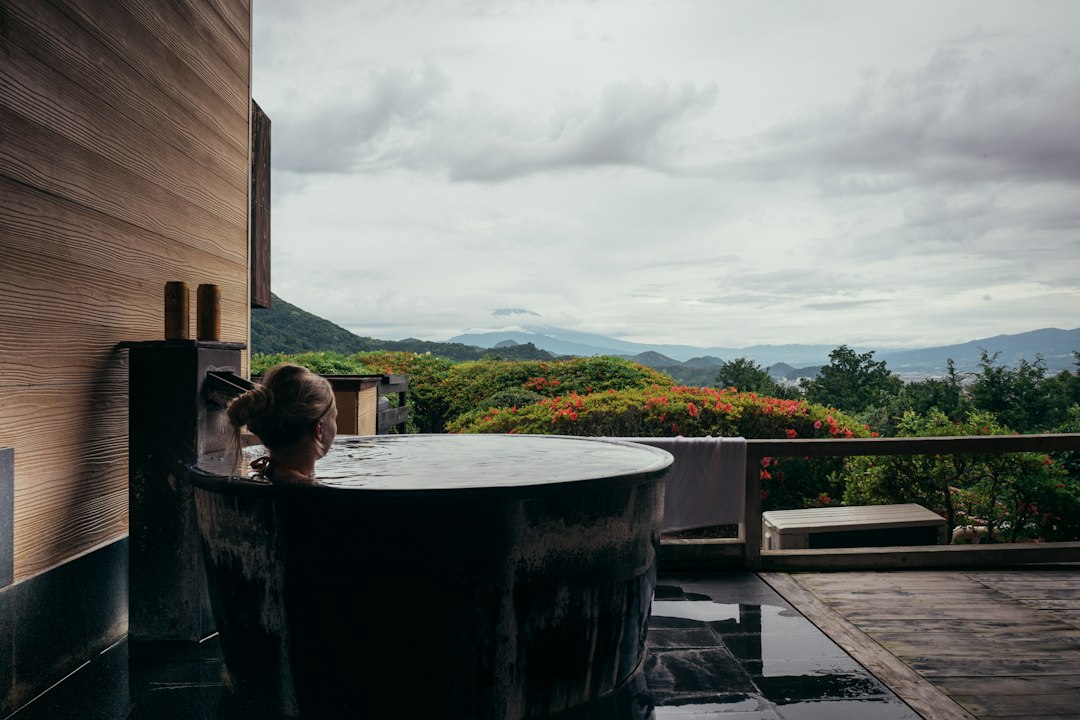
Hakone onsen means bathing in the hot springs of the Hakone caldera, about 80 minutes from Shinjuku by Romancecar, and you don't need a ryokan booking to do it. Hakone had 345 hot spring sources as of 2016, spread across about twenty named spa areas. Dozens of them sell day entry, mostly for about ¥1,000 to ¥2,600.
The hard part is choosing. The baths differ in four ways that matter: the water, whether Mt. Fuji is in view, the opening hours, and whether you can get in with a tattoo. The tables below set those side by side, using official 2026 prices and a terrain model of what each bath can actually see.
Hakone Onsen Day Baths Compared
The most practical Hakone onsen for day visitors are Tenzan and Hakone Yuryo near Hakone-Yumoto, Yunessun's Mori no Yu in Kowakudani, Mount View Hakone in Sengokuhara, and two Fuji-view baths by Lake Ashi: Ryuguden Honkan and Hotel Green Plaza Hakone. Prices below are adult rates from each facility's own site as of October 2026, and they include Hakone's ¥50 day bathing tax where the facility says so.
| Bath | Area | Water | Adult price | Hours | Tattoos | Mt. Fuji |
|---|---|---|---|---|---|---|
| Tenzan Tohji-kyo | Okuyumoto | Clear, alkaline (one source pH 9.3) | ¥1,450, cash only | 9:00 to 23:00 | Allowed for one person per group | No |
| Hakone Yuryo | Tonosawa, near Yumoto | Clear | ¥1,700 to ¥1,800 weekdays, ¥2,000 to ¥2,200 weekends | 10:00 to 20:00 (21:00 weekends) | Allowed since April 2025 | No |
| Kappa Tengoku | Hakone-Yumoto | 100% source water, no reheating or dilution | ¥900 | 10:00 to 20:00 (21:00 weekends) | Ask at the desk | No |
| Yunessun Mori no Yu | Kowakudani | Clear | ¥1,500 to ¥1,800 by date | 11:00 to 20:00 | Only if fully covered by two official seals | No |
| Mount View Hakone | Sengokuhara | Milky sulphur, piped from Owakudani | ¥1,200, cash only, 90 minutes | 11:00 to 15:00 | Not stated | No |
| Ryuguden Honkan | Hakone-en, Lake Ashi | Takokawa spring | ¥2,300 weekdays, ¥2,600 weekends and holidays | 9:00 (8:00 weekends) to 20:00 | May be restricted | Yes |
| Hotel Green Plaza Hakone | Ubako, Sengokuhara | Clear, own source | ¥1,600, towels included | 13:00 to 18:00 Fri to Tue, 15:00 to 18:00 Wed and Thu | Refused | Yes |
Last entry is usually an hour before closing. Mount View Hakone sells day entry only within its 11:00 to 15:00 window. Yunessun prices change with its A, B and C calendar dates, and a combined pass with the swimsuit water park costs ¥3,500 to ¥4,000.
A few notes the table can't hold:
- Tenzan is the closest thing in Hakone to a traditional bathhouse built purely for soaking: stone pools along the Sukumo River, up the valley from Hakone-Yumoto station. It turns away groups of more than six adults and has no ATM nearby, so bring cash.
- Hakone Yuryo runs a free shuttle from Hakone-Yumoto station, a 3-minute ride. It also rents 19 private open-air baths for two hours, from ¥10,400 for two people on a weekday. Couples and families who want to bathe together book these.
- Yunessun is a water park first. Mori no Yu is its separate, nude, gender-split onsen zone. Choose it if you have children who want the swimsuit side.
- Mount View Hakone is one of the cheapest ways to try Hakone's famous milky water without staying the night. Towels cost ¥200 each.
Which Hakone Onsen Can See Mt. Fuji?
Only baths on the south and east shore of Lake Ashi and on the Ubako slope can see Mt. Fuji. Baths in the Hayakawa valley, from Yumoto up through Miyanoshita, Kowakudani and Gora, sit behind ridges that hide the mountain.
That comes from a line-of-sight model we ran on Japan's 10-metre GSI elevation data, tracing the ground from each location to Fuji's 3,776-metre summit with Earth's curvature and refraction included. The full table is in our Hakone ryokan guide. For the two Fuji-view day baths in this guide, the numbers look like this:
| Day bath | Distance to Fuji's summit | Fuji above the blocking ridge |
|---|---|---|
| Hotel Green Plaza Hakone (Ubako) | 28.4 km | About 2,320 m |
| Ryuguden Honkan (Hakone-en) | 30.6 km | About 1,440 m |
| Gora, for comparison | 31.6 km | About -520 m (hidden) |
| Hakone-Yumoto, for comparison | 37.0 km | Blocked by the valley walls |
Green Plaza had the largest clearance of any point we tested in Hakone. Most of the cone, from well below the snow line, rises above the western rim of the caldera. From Ryuguden the view runs across the water, and less of the mountain shows.
So if a Hakone onsen listing near Yumoto or Gora shows Fuji, the photo was taken somewhere else.
One caveat. The model uses bare-earth elevation, so trees and buildings are not included, and a sightline from the hotel does not guarantee one from every corner of the bath. Both facilities name Fuji or the lake view as a selling point, which agrees with the terrain.
The Opening Hours Problem with Fuji-View Baths
The best Fuji-view day bath in Hakone opens at 13:00 at the earliest, and Mt. Fuji is most often visible in the early morning. That mismatch decides whether you will actually see the mountain from the water.
The longest public record of Fuji's daily visibility comes from Fuji City, which has logged the mountain from city hall at 08:00, 12:00 and 16:00 every day since 1990. Over 1991 to 2025 it was fully visible at 08:00 on 36.6% of days, at noon on 23.3%, and at 16:00 on 22.5%. That is one viewpoint south of the mountain, not a measurement for Lake Ashi. Hakone sees the same daily pattern, though: morning air is cleaner, and cloud builds on Fuji's slopes as the day warms.
Put the opening hours against that curve:
| Bath | Earliest entry | Where it falls on the visibility curve |
|---|---|---|
| Ryuguden Honkan | 8:00 weekends, 9:00 weekdays | Close to the best hours of the day |
| Hotel Green Plaza Hakone | 13:00 (15:00 Wed and Thu) | After the morning advantage has gone |
The practical rule follows. If you want Fuji from the bath on a day trip, Ryuguden in the morning is the better bet, even though Green Plaza has the bigger view. Green Plaza pays off mainly on afternoons that stay clear, which the forecast can tell you about, and for its overnight guests, who can use the bath at dawn. (A note on hours: the town tourism association lists a shorter 13:00 to 15:00 window on weekends, but Green Plaza's own 2026 calendar shows 13:00 to 18:00 on weekends and keeps the short window for 30 December to 2 January only. The day bath also closes for most of June and from 11 to 15 January 2027, so check the calendar on its day-use page.)
Season matters more than the hour. Pooled over 1991 to 2025, Fuji City's 08:00 records show the mountain fully visible on only about 10 to 15% of mornings from June to August, against about 60% in December and January. Our best time to see Mt. Fuji guide has every month. A summer visit to a Fuji-view bath is mostly a lake-view bath.
On the morning itself, check the live Mt. Fuji visibility forecast before you choose. It scores each hour using cloud cover, humidity and haze in our weighted atmospheric model. A high score at 9:00 means head to the lake first. A low score all day means pick the bath with the best water and skip the view.
Hakone's Hot Spring Water, and How to Read the Label
Hakone onsen water comes in three broad types: clear, mild springs in the lower valley; milky, acidic sulphur water made at Owakudani; and simple sulphur water piped to Lake Ashi. Where you bathe decides which one you get.
Clear water (Yumoto, Tonosawa, Miyanoshita, Kowakudani). These areas draw on their own wells. About half of Hakone's sources are simple springs, and a quarter are sodium chloride springs, according to the Kanagawa Hot Spring Research Institute. Tenzan's source No. 74 is a pH 9.3 alkaline spring and, according to Tenzan, the only source in Hakone with a permit for drinking. Alkaline water feels slippery on the skin. It is the gentlest choice for first-timers and children.
Milky water (Gora and Sengokuhara). Owakudani has volcanic heat but little natural spring water, so steam is drawn from wells there and mixed with groundwater, and the result is piped downhill. This is the cloudy, sulphur-smelling water most people picture when they think of Hakone. It still counts legally as a natural hot spring. Mount View Hakone is a day-use option with it.
Lake Ashi water. The lakeshore had no hot spring until 1966, when water was piped in from Yunohanazawa on Mt. Komagatake. Ryuguden draws on its own Takokawa source, which first flowed in 1987.
Japan's Hot Springs Act requires public baths to display the water's composition, usually as a hot spring analysis table (温泉分析書) near the changing room. Three labels on it tell you most of what you need:
- 泉質 (spring type). 単純温泉 is a simple spring, mild and clear. 硫黄泉 or 酸性 means sulphur or acidic: milky, smelly, and harder on sensitive skin and on silver jewellery.
- pH. Under the national classification, 8.5 and above is alkaline, which feels slippery. Below 3 is acidic.
- 源泉かけ流し (kakenagashi). Water flows straight from the source and is not recirculated. Kappa Tengoku, for example, advertises 100% source water with no reheating or dilution.
Our ryokan guide covers which areas get which water for an overnight stay.
Fitting a Hakone Onsen into the Loop
The easiest way to fit a Hakone onsen into a day trip is to bathe at the end, near Hakone-Yumoto, after the lake and ropeway. Tenzan, Hakone Yuryo and Kappa Tengoku are all within a short shuttle or walk of the station where the Romancecar leaves for Tokyo.
Most day visitors ride the Hakone loop: train to Gora, cable car and ropeway over Owakudani, boat across Lake Ashi, bus back. Each bath sits at a different point on that loop:
| Point on the loop | Bath nearby | Best for |
|---|---|---|
| Hakone-Yumoto (start or end) | Tenzan, Hakone Yuryo, Kappa Tengoku | Ending the day before the train home |
| Kowakudani (bus or Tozan train area) | Yunessun Mori no Yu | Families, rainy days |
| Ubako ropeway station | Hotel Green Plaza Hakone, 3 minutes' walk | A Fuji view on a clear afternoon |
| Hakone-en (lake shore) | Ryuguden Honkan | A Fuji view in the morning |
| Sengokuhara (bus) | Mount View Hakone | Milky water, but only until 15:00 |
The visibility forecast should decide the order. On a clear morning, go to Lake Ashi first, because Fuji is the thing that disappears. Bathe at Ryuguden while the mountain is still out, then work back toward Yumoto. On a grey morning, nothing at the lake is worth rushing for. Go straight to Tenzan or Yuryo and soak while the rain does its worst.
That rain is not unusual. Hakone's AMeDAS station averaged 3,561 mm of precipitation a year over 1991 to 2020, about 1.8 times Odawara's total at the foot of the mountains. September is the wettest month. An open-air bath in light rain is one of the better things to do in Hakone in bad weather, and a hot spring doesn't close for a downpour. The ropeway and lake boats sometimes do.
If you plan to bathe and see Fuji on the same trip, staying a night still beats any day-trip sequence. Overnight guests can soak after dark and be at the lake by 8:00. Our guide to seeing Mt. Fuji from Hakone lists the daytime viewpoints.
Tattoos at Hakone Onsen
Tattoo rules at Hakone onsen vary by facility, from a full ban to no restriction at all, so check each bath rather than assuming. Here is what each one says in its own published rules:
- Hakone Yuryo removed its tattoo restriction on 1 April 2025. This is the simplest option in Hakone.
- Tenzan admits a person with tattoos if they are the only one in the group. Groups with more than one tattooed member are turned away, and the small Oku-no-yu bath, reserved for guests renting its private rooms, excludes tattoos.
- Yunessun allows tattoos in Mori no Yu only if they are completely covered by two of its official cover seals, sold on site. In the swimsuit park, a rash guard or similar covering is enough.
- Ryuguden Honkan says tattooed guests "may be restricted". Ask before paying.
- Hotel Green Plaza Hakone refuses tattooed bathers outright.
Private baths (kashikiri) get around the question. Hakone Yuryo's 19 private baths are the easiest to book as a day visitor. Policies change, and Yuryo's 2025 change shows they can move fast, so check the official page on the day.
Onsen Etiquette in Hakone
Hakone onsen etiquette is the same as anywhere in Japan: wash before you enter, bathe nude, and keep your towel out of the water. The details that trip up first-timers:
- Wash fully at the seated showers first, hair included, and rinse off all the soap.
- No swimwear. Yunessun's water park is the exception, and it is not an onsen bath.
- Towel and long hair stay out of the water.
- No phones or cameras in the bathing area.
- Children past a set age or height use the bath for their own sex. Yunessun, citing prefectural rules, sets it at age 7; Tenzan asks children over 110 cm to switch.
Before You Go: Bathing Tax, Closures and Cash
A Hakone day bath costs a little more than the sign suggests in some places, closes without much warning in others, and often only takes cash. Plan around three things.
Bathing tax. Hakone charges a bathing tax of ¥50 per person for day visitors and ¥150 per night for overnight guests. Children under 12 are exempt. Tenzan and Ryuguden include it in their posted prices; elsewhere it may be added at the desk.
Closures. Tenzan closes for about five days each December. Most baths close irregularly for maintenance, so check the facility's site the week you go. Milky-water baths depend on the Owakudani supply. In July 2021, a landslide there damaged the supply facilities and cut hot spring water to around 50 inns in Gora and Sengokuhara, as Kanagawa Shimbun reported. The Japan Meteorological Agency's Hakoneyama page shows the current volcanic alert level.
Cash. Tenzan and Mount View Hakone accept cash only. Carry enough yen for the bath, towel rental and the bus.
Hakone Onsen FAQ
How much does a Hakone onsen cost for a day visit?
Most Hakone day baths cost about ¥1,000 to ¥2,600 for an adult. Mount View Hakone is ¥1,200, Tenzan ¥1,450 and Hotel Green Plaza ¥1,600 with towels. Ryuguden Honkan, the Fuji-view lake bath, is ¥2,300 on weekdays. Private baths for two start around ¥10,400 for two hours at Hakone Yuryo.
Is there a Hakone onsen with a view of Mt. Fuji?
Yes. Hotel Green Plaza Hakone at Ubako and Ryuguden Honkan at Hakone-en both sell day entry to baths that can see Mt. Fuji. No bath in Hakone-Yumoto, Miyanoshita, Kowakudani or Gora can, because ridges block the line of sight.
Can men and women bathe together at a Hakone onsen?
Public baths in Hakone are split by sex. Couples and families who want to bathe together book a private kashikiri bath, such as Hakone Yuryo's, or a ryokan room with its own open-air bath.
Is a Hakone onsen worth it if Mt. Fuji is hidden?
Yes. Most of Hakone's best baths have no Fuji view anyway, so a cloudy day costs you nothing at Tenzan or Hakone Yuryo. The onsen is the best part of Hakone that doesn't depend on the weather.
Choosing Your Bath
For most people, one rule covers it. If the Fuji forecast is good in the morning, take the lake bath at Ryuguden early and finish in Yumoto. If it isn't, go straight to Tenzan or Hakone Yuryo and let the weather do what it likes. For milky water, get to Mount View Hakone before 15:00. With tattoos, start at Hakone Yuryo.
The Hakone overview covers the loop, fares and month-by-month conditions. If you are weighing Hakone against the Fuji Five Lakes, our Kawaguchiko onsen guide covers the lakeside baths on the north side of the mountain, where Fuji stands much closer.
More Articles
Hakone: Where Fuji Shows, How the Loop Runs, When to Go
Hakone is a volcanic caldera 80 minutes from Tokyo. Which parts actually see Mt. Fuji, which way to ride the loop, and 2026 prices for each leg.
Hakone Ryokan: Where to Stay, Fuji Views and Onsen Water
Choosing a Hakone ryokan? Terrain data shows which areas can see Mt. Fuji, where each area's bath water comes from, and how to time the stay.
Mt. Fuji from Hakone: Best Viewpoints and Visibility Guide
Can you see Mt. Fuji from Hakone? Yes, on about half of all days. Here are the best viewpoints, when to go, and how to check conditions.