Hakone Ryokan: Where to Stay, Fuji Views and Onsen Water
Choosing a Hakone ryokan? Terrain data shows which areas can see Mt. Fuji, where each area's bath water comes from, and how to time the stay.

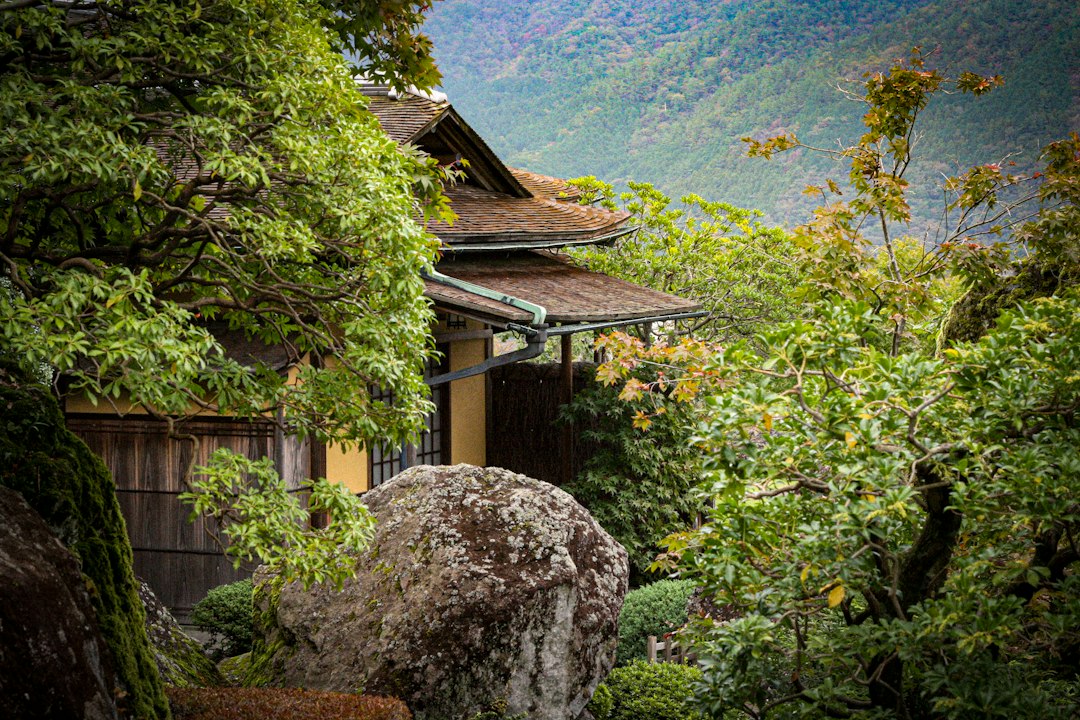
A Hakone ryokan is really three decisions made at once: which valley you sleep in, which water fills the bath, and whether Mt. Fuji can physically be seen from the window. Booking sites blur all three together. Photos of Fuji appear on listings for inns that sit in valleys with a mountain ridge between them and the summit.
This guide separates them. We ran a terrain line-of-sight check from every major ryokan district to Fuji's summit, traced where each area's hot spring water actually comes from, and lined up check-in and check-out times with the hours when Fuji is most often visible. Pick the area first. The inn comes second.
Hakone Ryokan Areas at a Glance
Hakone's ryokan cluster in five areas, and they differ more in water, terrain and access than in price. Every area has budget inns and luxury ones. What changes is the bath, the view and how long it takes to reach you with luggage.
| Area | Character | Fuji from ground level | Typical bath water | Getting there |
|---|---|---|---|---|
| Yumoto and Tonosawa | Gateway town, river valley, most ryokan | No | Clear springs from local sources | Walk or taxi from Hakone-Yumoto station |
| Miyanoshita and Kowakudani | Historic inns, gorge views | No | Mostly clear springs from local sources | Hakone Tozan train |
| Gora | Upscale inns, art museums, cable car base | No | Local springs plus milky water piped from Owakudani | Tozan train terminus |
| Sengokuhara | Highland plain, pampas grass, galleries | Mostly no | Milky Owakudani water and clear Ubako water | Bus only |
| Lake Ashi (Motohakone, Hakone-machi, Hakone-en, Ubako) | Lakeshore, shrine, cruise piers | Yes, from most of the south and east shore | Sulphur water piped from Yunohanazawa, or local springs | Bus, or free inn shuttles |
The Fuji column comes from the terrain model in the next section, and it is the one to check before anything else if the view matters to you.
Which Hakone Ryokan Areas Can Actually See Mt. Fuji?
Mt. Fuji is visible from the south and east shore of Lake Ashi and the Ubako slope, and it is hidden by terrain from Yumoto, Miyanoshita, Kowakudani, Gora and central Sengokuhara. That is the result of a line-of-sight calculation we ran on Japan's 10-metre GSI elevation model, sampling the ground every 20 metres along the straight line from each location to Fuji's 3,776-metre summit, with Earth's curvature and standard atmospheric refraction included. The observer sits 15 metres above ground, roughly a third- or fourth-floor window.
"Summit clearance" below is how many vertical metres of Fuji rise above the nearest blocking ridge. A negative number means the summit sits that far below the skyline.
| Location | Ground elevation | Distance to summit | Summit clearance | Verdict |
|---|---|---|---|---|
| Hakone-Yumoto station | 99 m | 37.0 km | Blocked by valley walls | No view |
| Tonosawa | 164 m | 36.1 km | Blocked by valley walls | No view |
| Miyanoshita (Fujiya Hotel) | 438 m | 32.8 km | About -390 m | No view |
| Miyanoshita (Hakone Ginyu) | 401 m | 33.1 km | About -60 m | No view; summit just under the ridge |
| Kowakudani | 668 m | 31.7 km | Blocked by the slope behind | No view |
| Gora station | 545 m | 31.6 km | About -520 m | No view |
| Sengokuhara village | 665 m | 27.5 km | About -2,240 m | No view |
| KAI Sengokuhara | 686 m | 28.1 km | About -920 m | No view |
| Togendai (north tip of Lake Ashi) | 735 to 739 m | 28 km | About -160 to -420 m, depending on the exact spot | No view at ground level |
| Ubako (Hotel Green Plaza) | 876 m | 28.4 km | About +2,320 m | Strong view |
| Hakone-en (Ryuguden, The Prince) | 738 to 744 m | 30.3 to 30.6 km | +1,440 to +1,630 m | Strong view |
| Motohakone (Hotel de Yama) | 746 m | 31.8 km | About +1,560 m | Strong view |
| Motohakone port | 729 m | 32.7 km | About +1,190 m | Good view |
| Hakone-machi port | 727 m | 33.0 km | About +830 m | Upper cone visible |
| Hakone-machi hillside (Yoshimatsu) | 741 m | 33.3 km | About +720 m | Upper cone visible |
Three things stand out.
The whole Hayakawa valley is blind. From Yumoto up through Tonosawa, Miyanoshita, Kowakudani and Gora, Fuji sits west-northwest behind either the valley's own walls or Hakone's central volcanic cones. These are the areas with the most ryokan and the best rail access, so a Fuji photo on a listing here was taken somewhere else. Across a grid of 2,021 points covering the whole caldera, the valley floors returned no sightline at all. A few hillside spots high above Yumoto catch a narrow slot up the valley, and that is it.
Sengokuhara is mostly blocked. The caldera's western rim rises to about 1,100 metres barely two or three kilometres from the village, so it swallows Fuji whole. Hotels on the Ubako slope above the lake's north end escape this because they sit 200 metres higher and further south. Hotel Green Plaza markets itself as the Hakone hotel with the best Fuji view, and the geometry backs it up: it had the largest clearance of any point we tested.
Lake Ashi's south and east shore is the Fuji zone. From Hakone-en, Motohakone and Hakone-machi the mountain stands across the water above the western rim. The further south you go, the less of the cone shows. At Hakone-machi roughly the top 800 metres clears the ridge, enough for the snow cap in winter but not much more.
Two honest caveats. The elevation model is bare earth, so trees and neighbouring buildings are not included, and a Fuji view from the lobby does not mean one from every room. And a result close to the skyline, like Hakone Ginyu's -60 m, can change with the exact position or a few floors of height. Ask the property which room categories face Fuji, in writing, before you pay.
Even a perfect sightline is only half the question. The other half is whether the mountain is out that morning, which the live Mt. Fuji visibility forecast answers hour by hour. For the viewpoints you can reach during the day, see our full guide to seeing Mt. Fuji from Hakone.
Where Hakone Ryokan Bath Water Comes From
Hakone ryokan draw on three kinds of water: natural springs tapped locally, spring water manufactured at Owakudani from volcanic steam, and sulphur water piped across the mountains to Lake Ashi. The source decides colour, smell and how the bath feels, and listings rarely say which one you are getting.
Hakone has 345 hot spring sources flowing about 19,500 litres per minute, close to 60% of Kanagawa Prefecture's total, according to the Kanagawa Hot Spring Research Institute (figures as of March 2016). Simple springs make up about half of them and sodium chloride springs about a quarter. Sulphur springs occur only on and around the central cones.
Yumoto, Tonosawa, Miyanoshita and Kowakudani mostly use their own wells. Expect clear, mild water with little smell. It is the gentlest introduction for first-time bathers.
Gora and Sengokuhara are different. Owakudani has plenty of volcanic heat but little natural spring water, so the Hakone Onsen Supply company, founded in 1930, makes it: groundwater is sprayed into the steam, and the heated water is piped downhill. The result is milky, acidic water with a sulphur smell, and it legally counts as a natural hot spring because the heat and minerals come from the volcano. The Hakone Tourism Association notes that Sengokuhara's supply is centrally managed from two sources: milky water from Owakudani and clear water from Ubako. KAI Sengokuhara, for example, uses the slightly cloudy acidic Owakudani water.
Lake Ashi had no spring of its own until 1966, when water was piped from Yunohanazawa, high on the eastern slope of Mt. Komagatake. Ashinoko Onsen is classed as simple and simple sulphur water. Ryuguden, on the Hakone-en shore, draws on its own Takokawa source, the youngest of Hakone's seventeen named springs, which first gushed in 1987 and opened in 1993.
Manufactured water has one weakness: the pipeline. On 3 July 2021, heavy rain triggered a landslide at Owakudani that damaged the supply facilities and cut hot spring water to around 50 inns in Sengokuhara and Gora, as Kanagawa Shimbun reported. Volcanic unrest can do the same, which is why the Japan Meteorological Agency's Hakoneyama page is worth a glance before a Gora or Sengokuhara stay. Hakone's own tax rules acknowledge this. The town waives the bathing tax whenever an inn's water stops being hot spring water because of volcanic activity or a landslide.
If the onsen is the whole point of your trip, a Yumoto or Miyanoshita inn with its own source carries less supply risk. If you want the milky, sulphurous water Hakone is famous for, book Gora or Sengokuhara and accept the small risk.
Hakone Ryokan Worth Knowing, by What You Want
The right Hakone ryokan depends on whether you are paying for the view, a private bath, history or convenience. These are properties whose claims we could check against official sources. Prices move by season and meal plan, so compare your own dates.
For Mt. Fuji from the room or bath
- Ryuguden (Hakone-en). A Prince property on the Lake Ashi shore. Its lakeside Japanese rooms all face the lake, and three annex rooms have their own indoor hot spring bath, according to the official room list. Guests get a free shuttle from Odawara Station's west exit, about 50 minutes. Check-in has been 15:00 since 1 April 2026. The neighbouring day bath, Ryuguden Honkan, lets non-guests try the Fuji-facing water for ¥2,300 on weekdays and ¥2,600 on weekends and holidays.
- Hotel Green Plaza Hakone (Ubako). Technically a resort hotel rather than a ryokan, but it has Japanese-style rooms, a Fuji-view open-air bath and a live Fuji camera on its official site. Our terrain model gave it the widest view of any point in Hakone.
- Yoshimatsu (Hakone-machi). A small inn on the hillside above the southern shore. From here the upper cone clears the rim, so expect a smaller Fuji than at Ubako. Ask the inn directly about transfers and which rooms face Fuji.
For a private open-air bath without Fuji
- Hakone Ginyu (Miyanoshita). Every room has a terrace with its own open-air bath facing the Hayakawa valley, according to the inn's English site. The view is forested gorge rather than Fuji, and that is the point.
- KAI Sengokuhara. A 16-room Hoshino Resorts inn built around an art theme, with an open-air bath in every room using milky Owakudani water.
For history
- Gora Kadan. Built on the grounds of a summer villa that belonged to the imperial Kan'in family, and a Relais & Châteaux member.
- Hakone Kowakien Mikawaya Ryokan (Kowakudani). Founded in 1883. Its main building is a Registered Tangible Cultural Property, and Sun Yat-sen stayed here.
For convenience on a short stay
- Yoshiike Ryokan (Yumoto). About seven minutes' walk from Hakone-Yumoto station, with a large Japanese garden and baths open to day visitors.
The Fujiya Hotel in Miyanoshita, opened in 1878, often appears on ryokan lists. It is a Western-style hotel, with Miyanoshita hot spring water in all 120 guest rooms, and it has no Fuji view from the valley floor.
If you are weighing Hakone against the Fuji Five Lakes, our Kawaguchiko onsen guide covers inns where Fuji stands 17 to 19 km away rather than 28 to 33, with the whole cone in view instead of only its top.
Time Your Hakone Ryokan Stay Around the Morning
A ryokan stay is the cheapest way to be in position during the hours when Fuji is most often visible, because check-out is typically 10:00 or 11:00. Day-trippers from Tokyo rarely reach Lake Ashi before late morning, by which point the odds have already fallen.
The longest public record of this pattern comes from Fuji City, which has logged Fuji's visibility from the 8th floor of its city hall at 08:00, 12:00 and 16:00 every day since 1990. Over 1991 to 2025, the mountain was fully visible at 08:00 on 36.6% of days, at noon on 23.3%, and at 16:00 on 22.5%. Those are observations from one viewpoint in Fuji City, not measured odds for Hakone, but a similar morning advantage is a reasonable expectation from Lake Ashi. Our visibility scoring model weights cloud cover, humidity and haze to estimate the same thing for any given day.
Direction matters too. From Lake Ashi, Fuji sits at a bearing of about 300 degrees, west-northwest. The morning sun comes from behind you and lights the snow face on. In December the sun sets far to the south-west, around 240 degrees, so winter afternoons side-light the cone. Around the June solstice it sets near 299 degrees, close enough behind the mountain that summer evenings turn Fuji into a silhouette, if it is out at all.
Season sets the baseline. December and January are the best months, and June to August the worst, when Fuji City's 08:00 records show the mountain fully visible on only about 10 to 15% of mornings. Our best time to see Mt. Fuji guide has the full month-by-month data. A Fuji-view room booked for August is mostly a lake-view room.
Practical timing for a Fuji-view stay:
- Book a cancellable rate for a date between November and February.
- Check the Mt. Fuji forecast a few days out, before the cancellation deadline, not on arrival day.
- Set an alarm for sunrise. Look out of the window before the bath.
- If the morning is clear, go straight to the lakeshore or ride the Hakone Ropeway early. Leave the museums for when cloud builds.
Arriving: Luggage, Shuttles and the Dinner Clock
Most Hakone ryokan serve dinner at a fixed time, so the arrival plan matters as much as the room. Kaiseki dinners are often booked in set seatings, with the last seating often around 19:00 to 19:30. Arriving after that can mean losing a meal you have already paid for.
Luggage. Hakone's buses and the Tozan train are narrow and crowded, and suitcases make both miserable. The Hakone Carry Service at Hakone-Yumoto station takes bags from 8:30 to 12:00 and delivers them to partner inns from 15:00. On the way back, hand bags to your inn's front desk by 10:00 and collect them at Yumoto station between 13:30 and 18:30. From April 2026 the fare is ¥1,500 per bag up to 140 cm and 15 kg, and ¥2,500 up to 200 cm and 30 kg. Online booking is outbound only. Check that your inn is on the partner list before relying on it.
Shuttles. Several Lake Ashi properties, including Ryuguden, run free guest shuttles, but they need advance notice and run only in set windows. If you are coming from Kawaguchiko rather than Tokyo, our Hakone to Kawaguchiko route guide shows the bus connections in reverse.
Transport passes. The Hakone Freepass covers the Tozan train, buses, ropeway and cruise. A two-day pass from Shinjuku costs ¥7,100. If you are also visiting the Fuji Five Lakes, compare it with the Fuji Hakone Pass.
Tax. Expect a bathing tax of ¥150 per person per night on your bill, set by Hakone Town. Children under 12 are exempt.
Tattoos and privacy. Shared baths at many ryokan still restrict tattoos. A room with its own bath, or a reservable private bath (kashikiri), avoids the question entirely. It is also the easiest option for couples and families who want to bathe together.
Hakone Ryokan FAQ
Can you see Mt. Fuji from a Hakone ryokan?
Yes, but only from certain areas. Inns on the south and east shore of Lake Ashi and on the Ubako slope have a clear line of sight. Inns in Yumoto, Miyanoshita, Gora and most of Sengokuhara are blocked by terrain, whatever the listing photos suggest.
What is the best area to stay in Hakone?
For Fuji views, stay at Lake Ashi. For easy train access and short stays, choose Yumoto. For milky sulphur water and museums, choose Gora. For quiet highland scenery and autumn pampas grass, choose Sengokuhara.
Is one night in a Hakone ryokan enough?
One night covers the dinner, the evening bath and one morning chance of seeing Fuji. Two nights give you a second morning chance at a clear sighting, plus a full day to explore without luggage.
How much does a Hakone ryokan cost?
Ryokan rates are usually quoted per person with dinner and breakfast included, not per room. That makes them look expensive next to hotel room rates. Private open-air baths and Fuji-facing rooms carry the highest premiums, and weekends, autumn foliage season and New Year cost the most.
Choosing Your Hakone Ryokan
If Fuji matters, book on Lake Ashi's south or east shore or the Ubako slope, in winter, with a cancellable rate. Check the live visibility forecast before the deadline passes. If the onsen matters more, choose the water first: clear and mild in Yumoto and Miyanoshita, milky and sulphurous in Gora and Sengokuhara. Either way, get your bags on the Carry Service and be at the inn well before the last dinner seating.
More Articles
Mt. Fuji from Hakone: Best Viewpoints and Visibility Guide
Can you see Mt. Fuji from Hakone? Yes, on about half of all days. Here are the best viewpoints, when to go, and how to check conditions.
Hakone Ropeway: Fares, Route, Mt. Fuji Views and When It Closes
The Hakone Ropeway now charges one flat fare. Real 2026 prices, exactly where Mt. Fuji appears, and the closures nobody warns you about.
Kawaguchiko Onsen: Day-Use Baths and Fuji-View Ryokan
Compare Kawaguchiko day-use onsen and overnight ryokan, with room-view advice for Konansou and Kogetsu and booking tips for a Fuji stay.