·18 min read

Kawaguchiko Station: The Complete Gateway Guide to Mt. Fuji

Kawaguchiko Station guide: Tokyo access, train times, fares, sightseeing buses, and how to time your arrival for the clearest Mt. Fuji views.

Elena Mori
Elena MoriMountain Visibility Specialist
Kawaguchiko Station: The Complete Gateway Guide to Mt. Fuji

Kawaguchiko Station (河口湖駅) is the terminus of the Fujikyu Railway Line and the busiest rail gateway to Mt. Fuji's northern face. Direct trains from Shinjuku land here in 1 hour 55 minutes, dropping you 4 kilometers from Lake Kawaguchi with the summit rising due south. This guide covers what you actually need: how to get there from Tokyo, what waits the moment you step off the train, and the part most guides skip, which is how to time your arrival so the mountain is still visible when you arrive. Numbers below are pulled from our own weighted atmospheric model, which records a Mt. Fuji visibility score at 15-minute intervals.

What is Kawaguchiko Station?

Kawaguchiko Station is the terminal station of the Fujikyu Railway Line in Fujikawaguchiko, Yamanashi Prefecture, sitting at 857 meters (2,812 feet) elevation. It is the primary transit hub for visitors heading to Lake Kawaguchi, the Fuji Five Lakes region, and Mt. Fuji's Subaru Line 5th Station. Direct trains from Shinjuku take 1 hour 55 minutes. Check the live Mt. Fuji visibility forecast before you board so you know whether the mountain will actually be out when you arrive.

Table of Contents

  1. Why Kawaguchiko Station Matters
  2. How to Get to Kawaguchiko Station from Tokyo
  3. Choosing the Right Transport Option
  4. Timing Your Arrival for Mt. Fuji Visibility
  5. Inside Kawaguchiko Station: Facilities and Layout
  6. Sightseeing Buses from Kawaguchiko Station
  7. What to Do Near Kawaguchiko Station
  8. Onward to Mt. Fuji 5th Station
  9. Frequently Asked Questions

Why Kawaguchiko Station Matters

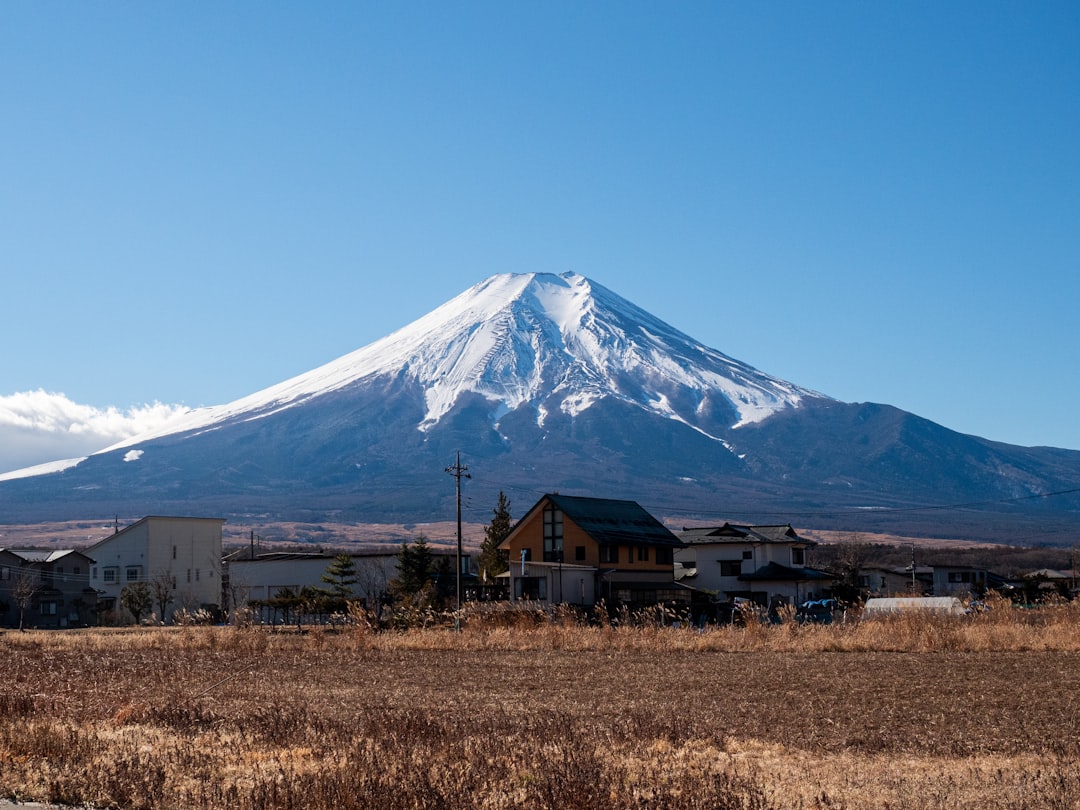
Kawaguchiko Station is the single most important entry point to the Fuji Five Lakes (Fujigoko) for foreign travelers, a region that the Japan National Tourism Organization treats as Yamanashi's flagship destination. The station sits on the northern shore of Lake Kawaguchi about 4 kilometers from the lake itself, and Mt. Fuji rises directly to the south. On clear days you can see the summit framed perfectly by the station's wooden eaves the moment you walk out the front doors, which is why so many Instagram shots are tagged at this exact spot.

The station is privately operated by Fujikyu Railway, not JR. That distinction matters because the Japan Rail Pass does not cover the final stretch from Otsuki Station to Kawaguchiko. Two outdoor island platforms handle local Fujikyu trains, the Fujisan View Express, and the JR-Fujikyu through-service known as the Fuji Excursion. Buses, taxis, rental cars, and sightseeing coaches all stage from the forecourt outside, making this a true multi-modal hub.

Nearly all the bus routes you will use to reach lakeside viewpoints, the Chureito Pagoda, Oshino Hakkai, or the climbing trailhead at the 5th Station start or pass through here. If your itinerary involves Mt. Fuji from the Yamanashi side, it almost certainly involves Kawaguchiko Station.

How to Get to Kawaguchiko Station from Tokyo

The fastest direct route to Kawaguchiko Station from Tokyo is the Fuji Excursion limited express train from Shinjuku, which takes 1 hour 55 minutes and costs 4,200 yen one way. There are three main alternatives depending on budget and timing.

Option 1: Fuji Excursion Train (Direct, Fastest)

The Fuji Excursion runs four daily round trips between Shinjuku and Kawaguchiko with no transfers required. According to the official Fujikyu Railway timetable, morning departures from Shinjuku are typically scheduled at 7:30, 8:30, 9:30, and 11:30. The 4,200 yen one-way fare breaks down as 2,580 yen basic fare plus 1,620 yen limited express fee. All seats are reserved, so book ahead during cherry blossom and autumn foliage seasons.

The train couples with JR Chuo Line limited express services (Kaiji or Azusa) between Shinjuku and Otsuki, then splits off to run independently down the Fujikyu Line. On the right side of the train, Mt. Fuji becomes visible somewhere around Otsuki on a clear day.

Option 2: JR Chuo Line + Fujikyu Transfer (Cheapest with JR Pass)

If you hold a Japan Rail Pass or JR Tokyo Wide Pass, the cheaper route is to take a JR Chuo Line limited express (Kaiji or Azusa) from Shinjuku to Otsuki, then transfer to a local Fujikyu Line train. The JR portion is covered by your pass. Beyond Otsuki you pay 1,170 yen basic fare plus a small limited express supplement if you take the Fujisan View Express. Total journey time is around 2 hours 30 minutes.

Local trains take 100 minutes Shinjuku to Otsuki for 1,410 yen if you skip the limited express, then 55 minutes on the Fujikyu Line to Kawaguchiko. This is the slowest but cheapest train option.

Option 3: Highway Bus from Shinjuku

The Keio and Fujikyu joint highway bus runs between Shinjuku Bus Terminal (Busta Shinjuku) and Kawaguchiko Station roughly twice an hour. The journey takes about 1 hour 45 minutes in light traffic and costs 2,200 yen one way. Buses also depart from Tokyo Station Yaesu South Exit and Shibuya.

Highway buses are the budget winner, but they are vulnerable to weekend traffic and have less luggage flexibility than the train. Reserve seats in advance through the Kosoku Bus Net website during peak seasons.

Option 4: From Haneda or Narita Airport

Keikyu Bus operates a direct airport limousine between Haneda Airport and Kawaguchiko Station via Shinagawa Station. The journey takes about 2 hours 35 minutes and costs roughly 2,520 yen. From Narita, the most common path is a Narita Express or Skyliner to Shinjuku, then the Fuji Excursion or a highway bus from there. Total journey time from Narita to Kawaguchiko runs 4 to 5 hours depending on connections.

Choosing the Right Transport Option

The best transport option from Tokyo to Kawaguchiko Station depends on whether you value time, cost, or comfort. The numbers below cut through the marketing copy.

Option Travel Time One-Way Cost Best For
Fuji Excursion (direct) 1 hr 55 min 4,200 yen Day-trippers, peak season
JR Chuo + Fujikyu local 2 hr 30 min 2,580 yen JR Pass holders, flexible timing
Highway bus from Shinjuku 1 hr 45 min 2,200 yen Budget travelers, no rush
Haneda direct bus 2 hr 35 min 2,520 yen Airport arrivals, heavy luggage

If your trip is a Tokyo-based day trip and you want to be at Lake Kawaguchi by mid-morning, the Fuji Excursion at 7:30 AM is the smartest single choice. It puts you on the platform around 9:25, which still falls within the morning visibility window for Mt. Fuji (more on that below). For a deeper breakdown of one-day itineraries, see our guide to a Mt. Fuji day trip from Tokyo.

If you are flexible and have a JR Pass, the Chuo Line plus Fujikyu transfer wins on cost. If you are arriving with luggage straight from Haneda, the direct airport bus saves you a Shinjuku transfer and the headache of pulling suitcases through Busta Shinjuku at peak hour.

Timing Your Arrival for Mt. Fuji Visibility

The single most useful thing you can do before booking your train to Kawaguchiko is check whether the mountain will actually be out when you arrive. Most guides skip this entirely, leaving you to roll the dice. Our weighted atmospheric model has been logging a Mt. Fuji visibility score every 15 minutes since 20 March 2026, and the patterns it shows already overturn some of the standard "go early" advice you will read elsewhere.

The cause of the day-to-day variability is straightforward atmospheric physics. Overnight, the air around the mountain cools and stabilizes. Solar heating after sunrise drives warm, moist air up the slopes, condensing into the famous cap clouds that often wrap the summit by midday in warmer months. In spring and autumn, frontal systems and humidity gradients matter more than convection, and the "morning is always best" rule starts to break down.

What our visibility log actually shows

Our model assigns each 15-minute snapshot a score from 0 to 100, then bins it into four bands: excellent (90+), good (70-89), fair (50-69), and poor (under 50). The score combines cloud cover at three altitudes, humidity, horizontal visibility distance, precipitation probability, and wind. None of it is human feedback. It is a deterministic function of the atmospheric observations, documented in full on the methodology page.

Across 487 snapshots between 20 March and 20 May 2026, the model placed Mt. Fuji in the "good" or "excellent" band on 67.6% of readings, with 45.2% landing in "excellent" outright. Average horizontal visibility was 19.3 kilometers, and one in six snapshots cleared 30 kilometers.

Spring 2026 month Snapshots "Good" or better Average score (0-100)
March (from 20th) 91 57.1% 65.2
April 239 64.4% 71.1
May (to 20th) 157 79.0% 81.6

Spring visibility climbs sharply month over month as winter haze clears and before summer humidity builds. May 2026 was the clearest month the log has recorded for Fuji so far.

Time of day, with the caveat

Conventional travel guides recommend an early arrival on the assumption that summer-pattern cap clouds form by late morning. Our spring 2026 log tells a slightly different story for that window. Between 5 AM and 9 AM Japan time, 67.2% of snapshots scored 70 or higher. Between noon and 5 PM, that figure was 71.9%. For spring trips, the afternoon penalty competing guides warn you about does not show up in our data. The reliable bad windows are late evening (21:00 JST, 62%) and the small hours (03:00 JST, 59%), neither of which matters for a day-tripper.

The "morning is always best" rule remains correct in the canonical summer climbing window, when stable conditions favor early hours. For spring, autumn, and any clear winter day, midday and early afternoon are at least as reliable. The practical move is to check the live Mt. Fuji visibility forecast for your specific travel date rather than trust a blanket rule.

For a deeper breakdown of seasonal odds and how the score is computed, see our Mt. Fuji visibility guide and the full methodology page.

The View from the Station Itself

Few visitors realize Kawaguchiko Station is itself a respected Mt. Fuji photo spot. The Fujikyu Railway officially lists it as a designated viewing point along the line. Step out the main entrance, look south, and the summit rises cleanly above the wooden gable of the station building. Local photographers shoot the station's distinctive timber facade with Fuji behind it before sunrise, when the building lights are still on and the eastern sky glows.

If you only have a few minutes between transfers, walk to the small plaza directly in front of the station and look up. On a clear winter morning, you do not need to go any further to know whether to commit to the day's itinerary.

Inside Kawaguchiko Station: Facilities and Layout

Kawaguchiko Station is small but well-equipped, with everything a traveler needs within a 60-second walk of the platforms. The building runs east-west with a single main entrance on the south (Mt. Fuji) side.

Luggage Storage

Coin lockers line the inside concourse and the area immediately outside the south entrance. Standard small lockers cost 400 to 500 yen per day. Large lockers (80cm high, 35cm wide, 57cm deep) cost 800 yen and accept eight 100-yen coins or IC card payment. During cherry blossom and autumn weekends, station lockers fill by 10 AM. For larger suitcases or multi-day storage, the Fujikan Building directly in front of the station has bigger lockers at the rear, and the JTB Tourist Base Kawaguchiko (a 1 to 2 minute walk) offers staffed luggage storage.

Tourist Information Center

The information desk inside the main concourse is staffed in English, Chinese, and Korean during peak hours. They sell sightseeing bus passes, hand out bilingual route maps, and can call ahead to hotels if your check-in is delayed. The desk also stocks the current bus timetables, which change seasonally and are worth grabbing the moment you arrive.

Food and Shopping

Inside the station you will find a small café, a souvenir shop selling Fuji-themed goods, and ekiben (station lunch boxes). For a proper meal, the area immediately around the station has half a dozen options including Hoto Fudo (the famous Yamanashi noodle hot pot) and several casual ramen shops. Most are open from 10 AM to 7 PM.

Train Information

The Fujikyu Railway operates three train types into Kawaguchiko Station: standard local trains, the Fujisan View Express (a tourist-oriented limited express with panoramic windows), and the through-running Fuji Excursion from Shinjuku. The Fujisan View Express requires a 200 to 900 yen supplement on top of the basic fare and is worth it on a clear day for the carriage's large windows.

Sightseeing Buses from Kawaguchiko Station

The Kawaguchiko sightseeing buses run on a color-coded loop system from the station forecourt, and a single 2-day unlimited pass covers all four lines. Buses depart from numbered terminals directly outside the south entrance.

Red Line: Lake Kawaguchi Loop

The Red Line is the most useful line for first-time visitors. It departs every 15 minutes and circles the eastern and northern shores of Lake Kawaguchi, stopping at the Mt. Fuji Panoramic Ropeway base station, the Kubota Itchiku Art Museum, the Music Forest, and the Oishi Park viewpoint at the lake's north shore. Oishi Park is the classic lavender-and-Fuji photo spot in July.

Green Line: Saiko Loop

The Green Line runs every 30 minutes around Lake Saiko, stopping at the Iyashi no Sato traditional thatched-roof village and the Saiko Bat Cave. Slower-paced and less crowded than the Red Line, this is the better choice if you have already seen Lake Kawaguchi or you are chasing a quieter atmosphere.

Blue Line: Western Lakes (Shoji, Motosu)

The Blue Line covers the more remote western lakes, Shojiko and Motosuko, plus the village of Narusawa. Buses run roughly every 1 to 2 hours, so check the timetable before committing. Motosuko is the lake featured on the back of the 1,000-yen banknote, and the dedicated viewing platform offers one of the most iconic Mt. Fuji shots in Japan.

Bus Pass Pricing

A 2-day unlimited pass costs 1,700 yen for adults and 850 yen for children, valid on all three sightseeing lines plus several connecting routes. The pass pays for itself after about three rides. Buy it at the bus ticket counter to the right of the station's south entrance or directly from the driver on board.

Beyond the sightseeing buses, regular service buses connect Kawaguchiko Station to Fujisan Station (the next major station up the line), Gotemba Outlets, and onward to Hakone. If you are continuing to view Mt. Fuji from Hakone, the cross-region bus from Kawaguchiko is the most direct path.

What to Do Near Kawaguchiko Station

Most travelers head straight for the lake, but several worthwhile stops sit within a 20-minute walk of Kawaguchiko Station.

Lake Kawaguchi (4 minutes by car, 25 minutes on foot)

The lake itself is the main attraction. The northern shore at Oishi Park offers the unobstructed Fuji-and-water shot every guidebook features, but the closer southern shore near the Kachi Kachi Yama ropeway is more accessible from the station. Boat tours depart from the eastern shore. The lake is one of the best Mt. Fuji viewing locations for a reason.

Mt. Fuji Panoramic Ropeway

A 7-minute walk from the station puts you at the ropeway base. The 3-minute cable car climbs to a viewing platform 1,075 meters above sea level, with panoramic Fuji and Lake Kawaguchi views from the top. Round trip costs 1,000 yen for adults.

Kawaguchiko Music Forest Museum

A 20-minute Red Line bus ride from the station, this European-style garden and music-box museum is one of the few attractions in the area that works on a cloudy day. Reasonable plan B when Fuji is hiding.

Onsen Day-Use

Several day-use hot springs sit within walking distance of the station, including Kaiun no Yu and Fujiyama Onsen. After a cold winter morning chasing Fuji views, soaking with the mountain visible from the outdoor bath is a deeply satisfying way to end the day.

Fuji-Q Highland

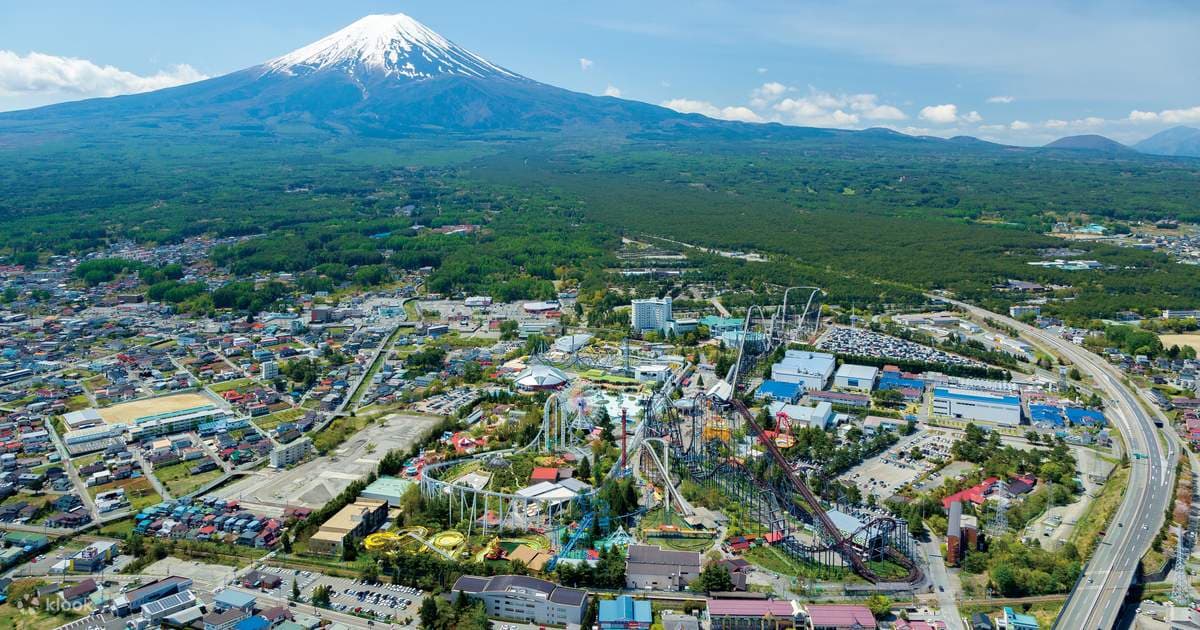
Two stops back down the Fujikyu Line from Kawaguchiko Station (about 7 minutes by local train), Fuji-Q Highland is one of Japan's most extreme amusement parks. Worth a day if you have one to spare and travel with thrill-seekers.

Onward to Mt. Fuji 5th Station

Buses from Kawaguchiko Station reach Mt. Fuji's Subaru Line 5th Station in approximately 50 minutes. The Fujikko-go climbing bus operated by Fujikyu Bus is the standard option, costing roughly 1,570 yen one way or 2,300 yen round trip per adult.

During the climbing season (early July to early September), buses run every 30 to 60 minutes from 6 AM until early evening. Outside climbing season, service is reduced but still operates daily as long as the Subaru Line road is open. The road typically closes from late November through April for winter snow.

Private cars face restrictions on the Subaru Line from mid-July to early September. During this window, the road is bus-only above the Fujihokuroku Parking lot. If you are planning to climb, the Mt. Fuji climbing season guide covers route choices and the night-climb logistics in detail.

For non-climbers, the 5th Station is still worth the bus ride. The lookout sits at 2,300 meters elevation with broad views, several shrines, restaurants, and the visitor center. On a clear afternoon when clouds have already swallowed the summit from Kawaguchiko, you can sometimes pop above the cloud layer at the 5th Station and see the peak right above you.

Frequently Asked Questions

How far is Kawaguchiko Station from Mt. Fuji?

Kawaguchiko Station sits about 15 kilometers north of Mt. Fuji's summit as the crow flies. By road, the Subaru Line 5th Station (the highest point reachable by vehicle) is roughly 30 kilometers from Kawaguchiko Station, a 50-minute drive or bus ride. The station itself is at 857 meters elevation, while Fuji's summit reaches 3,776 meters.

Is Kawaguchiko Station covered by the Japan Rail Pass?

No. Kawaguchiko Station is operated by Fujikyu Railway, not JR, so the Japan Rail Pass does not cover the section between Otsuki and Kawaguchiko. You will need to pay the 1,170 yen basic fare for this segment separately, plus any limited express supplement. The JR Tokyo Wide Pass, however, does cover the full Shinjuku-Kawaguchiko route including the Fujikyu portion.

Can you see Mt. Fuji from Kawaguchiko Station?

Yes, Mt. Fuji is visible directly from Kawaguchiko Station on clear days. The mountain rises south of the station building and is famously framed by the wooden eaves of the entrance facade. Across 487 snapshots from our weighted atmospheric model between 20 March and 20 May 2026, the score landed in the "good" or "excellent" band (70 or higher out of 100) on 67.6% of fifteen-minute observations. Check the live Fuji visibility forecast before traveling to see the current odds for your specific date.

What is the last train from Kawaguchiko Station to Tokyo?

The last Fuji Excursion direct train from Kawaguchiko to Shinjuku departs around 5:36 PM, arriving in Shinjuku at roughly 7:30 PM. After that, you need to take a Fujikyu local train to Otsuki and transfer to a JR Chuo Line service. The last JR connection from Otsuki to Shinjuku runs until around 11 PM, but verify on the day as schedules shift seasonally. Highway buses run later, with the final Shinjuku-bound bus typically leaving around 8 to 9 PM.

Planning Your Day at Kawaguchiko Station

The smartest single move is to decide your day from the platform. Walk straight out the south entrance, look south, and confirm with your own eyes whether Mt. Fuji is out. Our spring 2026 data suggests roughly two thirds of arrivals in the 9 AM to 5 PM range will get a clear view, but the variance day to day is large and worth checking against the live Fuji visibility forecast before you commit to the rest of your itinerary.

If the mountain is out, head straight to the Red Line bus for Oishi Park or the ropeway before convective clouds build. If clouds have already won, swap to the indoor-friendly plan: the Music Forest, the Kubota Itchiku Museum, or an onsen, and check the Mt. Fuji visibility forecast for tomorrow to see if a return visit is worth booking.

Before you board your train back to Tokyo, the live Mt. Fuji visibility tool at isitvisible.com can confirm whether a sunset return trip might still be worth a delay. Kawaguchiko Station's last direct train gives you until late afternoon to make that call.

More Articles