Mount Fuji Height: How Tall Is Japan's Iconic Peak?
Mount Fuji height is 3,776.24 meters (12,389 feet), making it Japan's tallest mountain and one of the most recognizable peaks in the world.

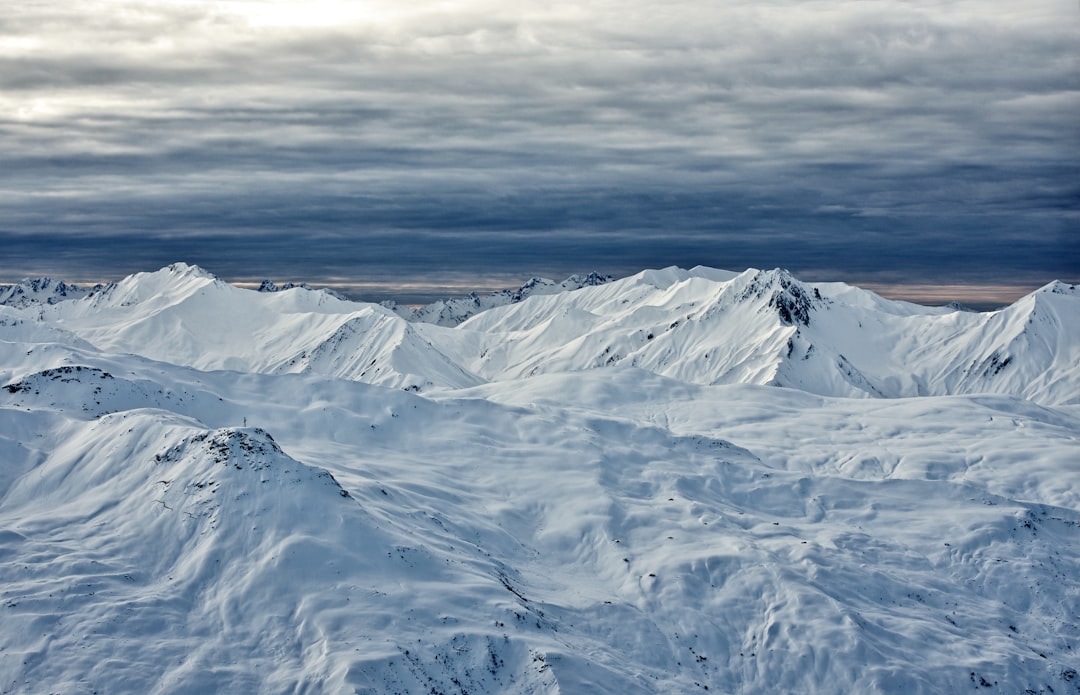
How Tall Is Mount Fuji?
Mount Fuji height is 3,776.24 meters (12,389 feet) above sea level, making it the tallest mountain in Japan and one of the most prominent volcanic peaks in Asia. Its summit stands 583 meters higher than Japan's second-tallest mountain, Kita-dake, and its perfect topographic prominence means it rises entirely on its own — not as part of a larger range. Check our real-time Mt. Fuji visibility forecast to see if the summit is clear right now.
Table of Contents
- How Tall Is Mount Fuji?
- Mount Fuji Height in Context: Japan's Other Mountains
- Physical Dimensions Beyond the Summit
- Elevation by Zone: Base to Summit
- How Height Affects Visibility from Tokyo
- Climbing Mount Fuji: The Height Challenge
- Frequently Asked Questions
- Planning Your Visit
How Tall Is Mount Fuji?
Mount Fuji height measures 3,776.24 meters (12,389 feet) at its summit, a figure formally established by the Geospatial Information Authority of Japan through precise geodetic surveys. The mountain is classified as an active stratovolcano — a conical peak built up from alternating layers of lava, ash, and volcanic debris over hundreds of thousands of years.
The summit sits above the snow line for roughly five months per year, typically from late October through early April. That snowcap, combined with Fuji's near-perfect symmetrical cone, is what makes the mountain instantly recognizable from distances of over 100 kilometers on a clear day.
At 3,776 meters, Fuji reaches into the lower jet stream altitudes. Weather at the summit diverges sharply from conditions at sea level. On a day when Tokyo is warm and humid, the peak can experience temperatures well below freezing and wind speeds that make standing difficult. Understanding the mountain's height is inseparable from understanding why visibility from the ground varies so dramatically — and why checking current visibility conditions before planning any Fuji excursion matters.
Mount Fuji Height in Context: Japan's Other Mountains
Japan has more than 100 peaks above 2,000 meters, yet Mount Fuji stands apart. The gap between Fuji and the country's second-tallest peak, Kita-dake in the Southern Alps (3,193 meters), is 583 meters — a margin larger than the full height of many prominent European hills.
| Mountain | Elevation | Range |
|---|---|---|
| Mount Fuji | 3,776 m (12,389 ft) | Fuji Volcanic Zone |
| Kita-dake | 3,193 m (10,476 ft) | Southern Alps |
| Oku-Hotaka-dake | 3,190 m (10,466 ft) | Northern Alps |
| Aino-dake | 3,189 m (10,463 ft) | Southern Alps |
| Yari-ga-take | 3,180 m (10,433 ft) | Northern Alps |
Every mountain in Japan's top 10 except Fuji formed through tectonic uplift — granite and sedimentary rock pushed skyward over millions of years. Mount Fuji is the exception: a volcanic peak that built itself from the inside out through repeated eruptions. This volcanic origin explains the mountain's solitary cone shape, rising dramatically from relatively flat lowlands rather than as part of a connected alpine ridge.
Beyond Japan, Fuji holds the distinction of being the second-highest volcano on any Asian island. For comparison, Mt. Rainier in Washington State stands at 4,392 meters — taller than Fuji — while Denali in Alaska reaches 6,190 meters, nearly twice Fuji's height. Each mountain's altitude directly shapes its visibility behavior, which is why dedicated forecasts exist for each.
Physical Dimensions Beyond the Summit
Mount Fuji's height is just one dimension of its scale. The mountain is exceptionally wide at its base, spanning roughly 40 to 50 kilometers (25 to 30 miles) in diameter and measuring approximately 125 kilometers (78 miles) in circumference. That breadth gives Fuji its gently sloping profile when viewed from a distance — the peak rises gradually rather than sharply, which contributes to its unmistakable silhouette.
The summit crater adds another layer of scale. At the top, the crater spans approximately 780 meters (2,560 feet) in diameter and sinks to a depth of around 250 meters (820 feet). Eight named peaks ring the crater rim, with Kengamine being the highest at the true summit elevation of 3,776 meters. Pilgrims and climbers who reach the top traditionally circle the crater rim — a walk of about 3 kilometers — to complete a ritual called "お鉢巡り" (ohachi-meguri). This cultural significance contributed to Fuji's inscription as a UNESCO World Heritage Site in 2013.
One of Fuji's most remarkable geographic features is its topographic prominence. The mountain's prominence equals its full height — 3,776 meters — because Fuji rises entirely from its own base without connecting to any higher terrain. This complete isolation is part of why the mountain is so visible from such great distances, and why it dominates the horizon in every direction from the surrounding lowlands.
Elevation by Zone: Base to Summit
Mount Fuji's height creates distinct elevation zones, each with its own climate, vegetation, and practical significance for visitors. Understanding these zones matters whether you're planning to climb or simply hoping to photograph the peak from below.
Sea Level to 1,500 Meters: Lowland Approaches
The mountain's base begins near sea level on both the Shizuoka (southern) and Yamanashi (northern) sides. Towns like Fujiyoshida and Fujinomiya sit at around 800 to 1,000 meters elevation, already providing dramatic upward views of the peak. The Fuji Five Lakes region on the northern side, including Kawaguchiko at about 830 meters, offers the most photographed perspectives of the mountain rising above the water. Our best Mt. Fuji viewing locations guide covers these spots in detail.
1,500 to 2,400 Meters: The Fifth Stations
The four Fifth Stations — staging points for climbers — sit at varying elevations across the mountain's flanks:
| Fifth Station | Elevation | Trail |
|---|---|---|
| Gotemba | 1,440 m (4,724 ft) | Gotemba Trail |
| Subashiri | 1,970 m (6,463 ft) | Subashiri Trail |
| Yoshida (Fuji Subaru Line) | 2,305 m (7,562 ft) | Yoshida Trail |
| Fujinomiya | 2,380 m (7,808 ft) | Fujinomiya Trail |
The Fujinomiya Fifth Station, the highest of the four, sits more than 600 meters above sea level higher than the lowest starting point. Even at these mid-mountain elevations, temperatures drop significantly, clouds frequently form, and the views back down toward the lowlands can be extraordinary — weather permitting.
2,400 to 3,776 Meters: The Climbing Zone
Above the Fifth Stations, vegetation gives way to volcanic rock, and the mountain's weather becomes increasingly unpredictable. Mountain huts along the main routes operate during the official climbing season from early July through early September. Above 3,000 meters, altitude sickness becomes a real concern for climbers ascending too quickly, a direct consequence of Fuji's substantial height.
How Height Affects Visibility from Tokyo
Mount Fuji's height of 3,776 meters is the reason it can be seen from Tokyo, approximately 100 kilometers to the northeast. At that distance, the mountain's summit clears the curvature of the Earth and any intervening terrain, appearing as a white-capped cone above the horizon on clear days.
In practice, however, seeing Mt. Fuji from Tokyo is not guaranteed. The mountain is clearly visible on only around 80 days per year from most Tokyo viewpoints. Atmospheric haze, humidity, and cloud cover block the view far more often than clear air allows it. The mountain's height works against visibility in summer when the peak forces moist air upward, generating its own cloud formation — a phenomenon called a lenticular cloud that can cap the summit on otherwise clear days.
Winter is when Mount Fuji's height becomes a visual advantage. Cold, dry continental air allows visibility of 100 kilometers or more, and the snowcapped summit against a blue sky is what most people picture when they imagine the mountain. December and January offer the best odds for long-distance views, with summer being the worst season due to Japan's humid rainy period (tsuyu) in June and July.
The mountain's isolation and height also make it a useful weather reference for local residents. When Fuji disappears behind clouds, experienced locals know rain is likely. When the summit is sharp and clear, fair weather usually holds.
Climbing Mount Fuji: The Height Challenge
The full vertical rise from the Yoshida Fifth Station to the summit spans approximately 1,471 meters of elevation gain — the equivalent of climbing more than four Eiffel Towers stacked end to end. From the lowest starting point at the Gotemba Fifth Station, the gain is closer to 2,336 meters. From sea level on the Fujinomiya side, climbers ascending the entire mountain gain the full 3,776 meters.
For most climbers using the Fifth Stations, the ascent typically takes 5 to 7 hours, with the descent taking 3 to 4 hours via the designated downward trails. The Mt. Fuji hike demands preparation proportional to the mountain's height: temperature differences of 20°F or more between the Fifth Station and summit are common, and wind at the top regularly exceeds 30 km/h even during the climbing season.
Altitude sickness is the primary health concern at Fuji's elevation. Above 2,500 meters, some climbers experience headaches, nausea, and fatigue, particularly those who ascend quickly. The recommended approach is to spend time acclimatizing at the Fifth Station before beginning the climb, and to take the ascent slowly. The official Mt. Fuji climbing guide covers route conditions and regulations in detail. Our Mt. Fuji weather forecast is an essential resource for identifying calm, clear windows within the climbing season.
The mountain's height also means summit conditions can change with little warning. A sunny morning at the Fifth Station does not guarantee clear skies by the time you reach the top three to four hours later. Early morning climbs starting before dawn are popular precisely because summit conditions tend to be clearest around sunrise, before afternoon clouds build against the mountain's upper slopes.
Frequently Asked Questions
How tall is Mount Fuji in feet and meters?
Mount Fuji stands 3,776.24 meters (12,389 feet) tall. It is Japan's highest mountain and has a topographic prominence equal to its full height, meaning it rises entirely from its own base without connecting to any higher surrounding terrain.
Is Mount Fuji taller than Mt. Rainier?
No. Mt. Rainier in Washington State reaches 4,392 meters (14,411 feet), making it about 616 meters taller than Mount Fuji. However, Fuji is taller than the majority of prominent peaks worldwide and is the highest mountain in Japan by a margin of 583 meters. Check our Mt. Rainier visibility forecast if you're curious about that peak.
Can you see Mount Fuji from Tokyo because of its height?
Yes — Mount Fuji's height of 3,776 meters allows it to be visible from Tokyo (roughly 100 kilometers away) on clear days. In practice, clear views occur on about 80 days per year, primarily in winter. Check our live Mt. Fuji visibility forecast for today's conditions.
At what elevation do you start climbing Mount Fuji?
Most climbers start from one of four Fifth Stations, ranging from 1,440 meters (Gotemba route) to 2,380 meters (Fujinomiya route). The most popular starting point is the Yoshida Fifth Station at 2,305 meters, reachable by bus from Tokyo in roughly 2.5 hours.
Planning Your Visit
Understanding Mount Fuji's height helps you prepare for any visit, whether you plan to climb or simply view the mountain from below. At 3,776 meters, the summit can experience sub-zero temperatures and strong winds even in summer, so layers and wind-proof gear are essential for climbers.
For those visiting to photograph or observe the mountain rather than climb, the Fuji Five Lakes area on the northern slope offers the most dramatic views. Lake Kawaguchiko sits at around 830 meters, giving an unobstructed view of Fuji's full vertical rise from base to snowcapped summit. The Chureito Pagoda at roughly 1,000 meters elevation provides a classic framing of the peak that has made it one of the most photographed mountain views in the world.
The mountain's visibility from viewing locations is not guaranteed regardless of season. Before traveling — whether from Tokyo, Kawaguchiko, or further afield — check the Mt. Fuji visibility forecast to understand current cloud cover, atmospheric clarity, and the hourly window when conditions are most likely to be clear. Our forecast updates every 15 minutes and incorporates the specific atmospheric factors that determine whether Fuji's 3,776-meter peak will be sharp and visible or hidden behind clouds.
In Summary
Mount Fuji height of 3,776.24 meters (12,389 feet) makes it the tallest mountain in Japan by a wide margin and one of the most topographically isolated volcanic peaks in Asia. Its elevation creates the snowcapped summit visible from 100 kilometers away, drives the dramatic weather that makes summit conditions unpredictable, and gives climbers a genuine altitude challenge across five climbing routes.
The mountain's height is also what makes real-time visibility forecasting so valuable. At nearly 4 kilometers tall, Fuji interacts with weather systems in complex ways — generating its own clouds, trapping atmospheric haze against its slopes, and breaking into sharp relief only when atmospheric conditions align precisely. Knowing whether those conditions are in your favor before you travel makes the difference between a memorable sighting and a cloudy disappointment.
Check Current Visibility
Ready to see if Mt. Fuji is visible right now?
Check Mt. Fuji Visibility - Real-time visibility score updated every 15 minutes.
Also explore visibility for Mt. Rainier in Washington and Denali in Alaska.
More Articles
Lake Motosu: The 1,000-Yen View, and When It Actually Appears
Lake Motosu is the deepest, clearest Fuji Five Lake and home of the 1,000-yen note view. Access, camping, costs, and when the reflection appears.
Mt. Fuji from Hakone: Best Viewpoints and Visibility Guide
Can you see Mt. Fuji from Hakone? Yes, on about half of all days. Here are the best viewpoints, when to go, and how to check conditions.
Hakone Ropeway: Fares, Route, Mt. Fuji Views and When It Closes
The Hakone Ropeway now charges one flat fare. Real 2026 prices, exactly where Mt. Fuji appears, and the closures nobody warns you about.