Crystal Mountain Gondola: Rainier Views, Odds & Tickets
Crystal Mountain gondola guide: 2026-27 prices, hours, what you see on the ride, and 10 years of data on how often Rainier is out at the top.

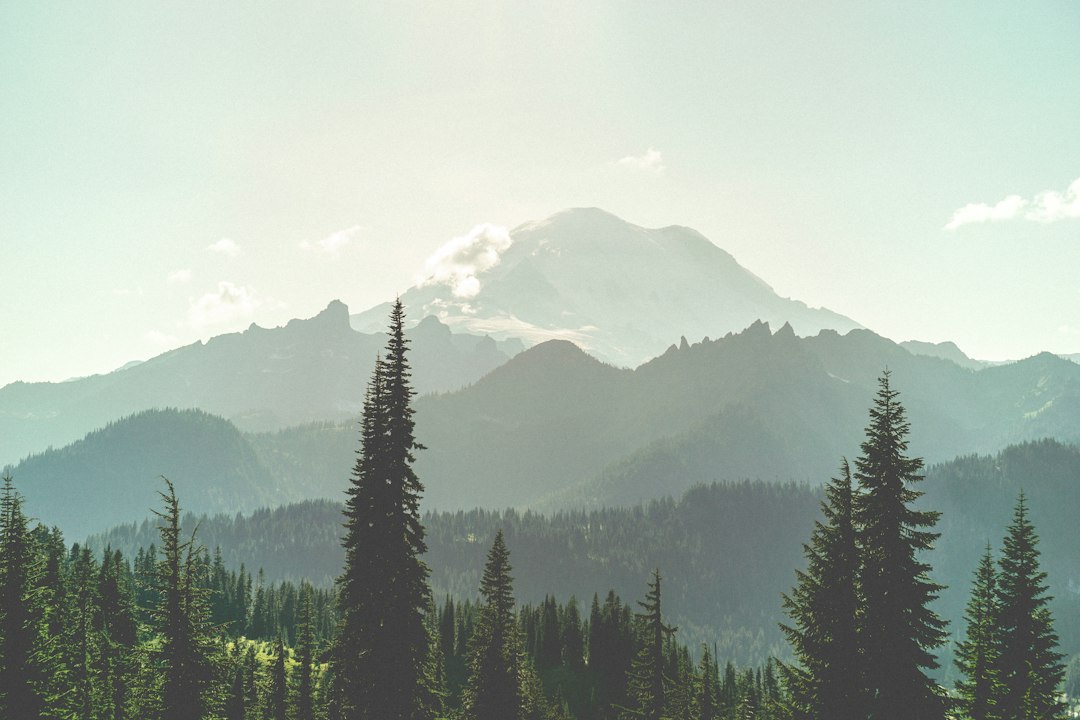
The Crystal Mountain gondola, which the resort calls the Mt. Rainier Gondola, lifts you nearly 2,500 vertical feet in about 12 minutes to the 6,872-foot Summit House. From there, Mt. Rainier fills the west-southwest skyline 13.5 miles away. It is the easiest way to get a high-alpine Rainier view without hiking.
There is a catch the ticket page states plainly: tickets are non-refundable and cannot be exchanged because of rain, wind or clouds. You are betting $35 to $54 a head that the mountain will be out. This guide covers the 2026-27 prices and hours. It also covers three things the price doesn't tell you: how often Rainier is actually visible from the top, which hours give the best odds, and what you will (and won't) see from the cabin on the way up.
The Basics at a Glance
| Detail | Mt. Rainier Gondola |
|---|---|
| Ride time | About 12 minutes each way |
| Climb | Base ~4,400 ft to Summit House 6,872 ft (nearly 2,500 vertical ft) |
| Cabins | Up to 8 seats, enclosed |
| Opened | New Year's Day 2011 (AP via KOMO) |
| Adult ticket (23-69) | $49 bought online 2+ days ahead, $54 otherwise, plus tax |
| Rides included | Two round trips, same day, same person |
| Dogs | Leashed dogs in summer only; no dogs in ski season |
| From Seattle | ~82 miles, about 2 hours |
Crystal Mountain Gondola Tickets and Prices
Crystal Mountain gondola tickets cost $49 for adults when bought online at least two days ahead, and $54 for walk-up or short-notice purchases. Tax is added on top (about 8%). The prices below come from the resort's booking calendar for winter 2026-27 dates; summer 2027 prices had not been posted as of October 2026, and the resort notes that prices are subject to change.
| Age | Advance (2+ days) | Standard / walk-up |
|---|---|---|
| Adult (23-69) | $49 | $54 |
| Young adult (13-22) | $44 | $49 |
| Child (5-12) | $35 | $39 |
| Senior (70+) | $35 | $39 |
| 4 and under | Free with a paying adult | Free |
A few ticket rules matter more than the price:
- Two rides, one person. Each ticket covers two same-day round trips, but the second scan is checked against a photo from the first, so tickets can't be shared.
- Hiked up? A download-only ticket to ride down costs $19 plus tax at Tower 16 (at the summit) or Guest Services. Upload-only tickets don't exist.
- Pass holders ride free. Ikon Pass and most Crystal season passes include summer gondola access. The Afternoon Pass does not.
- Discounts. Military, first responders, teachers and medical workers save 35% on up to two midweek tickets when they validate and buy online.
- Weather is your risk. If the resort closes the gondola for safety reasons, it will reschedule you within the same season. If it is open but you are staring into fog, that is not a closure.
Current fares and the full FAQ are on the official Mt. Rainier Gondola page.
Crystal Mountain Gondola Hours: Summer and Winter
The gondola runs in two seasons. Summer runs from late May to mid-September. Winter starts when the ski area opens, usually late November or December, and runs into spring. As of late October 2026 it is closed between seasons.
Summer 2026 schedule (from the resort's hours page):
| Period | Days | Hours |
|---|---|---|
| Early summer (May 22-June 21) | Fri-Sun + Memorial Day | 10 AM-5 PM |
| Peak summer (June 26-Aug 30) | Daily | Mon-Thu 10-5, Fri 9-6, Sat 9-8, Sun 9-6 |
| Late summer (Sept 4-20) | Fri-Sun + Labor Day | 10 AM-5 PM |
Last download is 30 minutes after the last ride up. The Summit House takes walk-ins only and closes early (last seating 1:30 PM) on a handful of private-event dates each summer.
Winter 2026-27. Scenic (non-skier) gondola tickets are already on sale for dates from November 28, 2026, but the actual opening depends on snow. Winter hours are shorter than summer hours, so check the hours page for your date. Dogs are not allowed in ski season. Parking rules change in winter; check the parking page before driving up.
How Often Is Mt. Rainier Visible From the Gondola?
In peak summer, Mt. Rainier is clearly visible from the top of the Crystal Mountain gondola on about 65% of days. In winter that drops to about 19%. Those figures come from 10 years (2016-2025) of hourly modeled cloud data from Open-Meteo. We counted a "view" when cloud over Rainier's summit was 30% or less and the gondola top was not inside low cloud, and a "view day" needed at least two straight clear hours while the gondola runs.
| Operating period | Days with a clear Rainier view | Ticket cost per clear view (adult, $49) |
|---|---|---|
| Early summer (May 22-June 21) | 28% | ~$175 |
| Peak summer (June 26-Aug 30) | 65% | ~$75 |
| Late summer (Sept 4-20) | 44% | ~$111 |
| Winter (Dec 1-Apr 15) | 19% | ~$258 |
The early-summer number is the surprise. The gondola opens Memorial Day weekend and charges the same price in June as in August, but late May and June bring the Northwest's "June gloom." Rainier is out at the top on fewer than three days in ten. If your schedule is flexible, wait for July.
Winter has a second problem. On about 40% of winter days the gondola top itself sits inside low cloud at noon, so you ride up into a white room. Crystal can rise above a valley inversion, and those days are spectacular, but they are the exception.
These odds are climatology, not a forecast. For a specific day, the live Mt. Rainier visibility forecast scores the same summit cloud conditions hour by hour using our weighted atmospheric model. That is the number to check before you buy.
What You See on the 12-Minute Ride
Rainier is hidden for almost the entire ride up. The gondola runs due west up the face of Crystal Mountain, and the mountain's own ridges sit between the cabin and Rainier, which lies at a bearing of about 245 degrees (west-southwest).
We ran a line-of-sight check from points every 25 meters along the cable, using public elevation data, Earth's curvature and an assumed cabin height of 8 to 15 meters above the slope. Treat the timings as approximate; the model is only as good as the terrain data and that height assumption. The result:
- Minutes 0-6: No Rainier. The ridge directly ahead blocks it completely.
- Around minute 7: Possibly a brief look, roughly 10 to 30 seconds, at the top few hundred feet of Rainier's summit cone through a gap in the mid-mountain ridge. Look slightly left of straight ahead.
- Minutes 8-12: Hidden again behind the final summit slope.
- The last 20 seconds: Rainier rises over the ridge as you reach the top station.
So sit facing uphill, on the left if you can, and don't blink near the halfway point. On the way down Rainier is behind you and disappears within seconds. The ride's own scenery is forest, ski runs and the Silver Creek basin. The payoff is the summit.
At the top, Rainier's summit stands about 6 degrees above the horizon, and the visible mountain spans roughly 5 degrees of sky. That is several times taller in your field of view than the classic view from Kerry Park in Seattle, 60 miles away. You are looking at the northeast face, dominated by the Emmons Glacier, which the National Park Service ranks as the largest glacier by area in the contiguous United States.
Which other peaks can you see?
On a clear day, six Cascade volcanoes plus the granite summit of Mt. Stuart are in range, but not all from one spot. Nearby ridges block different peaks from different places, so we checked every point within a 400-meter walk of the top station:
| Peak | Distance | Direction | Visible from the summit area? |
|---|---|---|---|
| Mt. Rainier | 13.5 mi | WSW | Yes, from about 60% of spots |
| Mt. Adams | 51 mi | S | From parts of the ridge (about 20%) |
| Mt. St. Helens | 61 mi | SW | From parts of the ridge (about 23%) |
| Mt. Stuart | 47 mi | NE | From parts of the ridge (about 28%) |
| Glacier Peak | 83 mi | NNE | Only from the high ground north of the station (about 11%) |
| Mt. Baker | 128 mi | N | From parts of the ridge (about 26%) |
| Mt. Hood | 108 mi | S | Barely; the tip clears the terrain from only a few spots |
Walk the ridge rather than standing on the deck. Distant peaks also need clean air, which rules out most late-summer smoke days. Our Mt. Rainier visibility guide explains how wildfire smoke affects views. Cloud data can't capture smoke, so the August and September odds above are a ceiling, not a floor.
Best Time of Day to Ride
The best time to ride the Crystal Mountain gondola in summer is the first run of the morning. The second best is the late Saturday session. Mid-afternoon is the weakest.
| Hour (peak summer) | 9 AM | 10 AM | Noon | 2 PM | 4 PM | 6 PM | 8 PM |
|---|---|---|---|---|---|---|---|
| Chance Rainier is clear | 61% | 60% | 55% | 51% | 55% | 57% | 62% |
In the modeled data, afternoon hours are cloudier over the summit and evenings clear again. The pattern is sharper in late summer (September weekends): 42% from 9 AM to noon, falling to 29% at 2-3 PM.
Light favors the morning too. Rainier sits west-southwest of the summit. In summer the sun swings to that same bearing (around 245 degrees) at about 4 PM. From then until sunset, you are looking at a backlit, hazy silhouette with the sun on the far side of the mountain. In the morning the sun is behind you, lighting the Emmons Glacier face head-on. Photographers should take the first ride.
The Saturday late session (open until 8 PM through August) is the exception for mood rather than detail. At 7-8 PM in July the modeled odds climb back to 64-67%, and the lower sun warms the light on the surrounding ridges.
Don't count on the second ride
The two-ride ticket looks like a weather hedge, but the data says otherwise. When Rainier is clear at 10 AM in peak summer, it is still clear at 2 PM 73% of the time. When Rainier is hidden at both 10 and 11 AM, it opens up for two clear hours later that afternoon only 20% of the time. In September, that drops to 6%. Morning cloud on Rainier tends to be the day's weather, not a passing patch.
Buy Ahead or Walk Up? A Forecast-First Approach
Buy ahead only when the forecast two days out looks good. Otherwise, pay the extra $5 at the window on the day.
The $5 advance discount requires buying at least two days ahead, and an advance ticket is non-refundable for clouds. At peak-summer odds, a $5 saving covers very little of a $49 bet. A sensible routine:
- Two or three days out: Check the hourly scores on the Rainier visibility forecast. If they're strong for your morning, buy online and save $5 per person.
- If it's uncertain: Don't buy. Decide on the morning, when the forecast is far more reliable.
- Morning of: Look at the live Mt. Rainier webcams and the resort's own summit cameras. If Rainier's summit is cloud-free at 8 AM, go.
A gray Seattle morning is not a reason to cancel. In peak summer, on days when Seattle woke up under low overcast, Rainier was still clear from the gondola top 56% of the time (versus 69% on brighter mornings). Marine stratus often stops well below 6,872 feet. In early summer it's a worse sign: 23%. Our Mt. Rainier weather guide explains why the coast and the mountain so often disagree.
Crystal Mountain Gondola vs. Sunrise
Sunrise, inside the national park, is the other high viewpoint on Rainier's northeast side, and the two are about an hour's drive apart. Which one to pick depends on your group and the season.
| Crystal gondola | Sunrise (national park) | |
|---|---|---|
| Elevation | 6,872 ft | 6,400 ft |
| Distance to Rainier's summit | 13.5 mi | about 7 mi |
| Cost | $35-$54 per person | $30 per car (park fee) |
| Effort | Seated ride | Drive to the lot |
| Season | Late May-Sept, plus winter | Usually late June or early July to late Sept or early Oct |
| Dogs | Leashed, summer only | Not allowed on park trails (NPS) |
| Food | Summit House restaurant | Day lodge snacks |
Sunrise puts you twice as close, so Rainier fills more of the sky and the glaciers show more detail; see our Sunrise guide. Crystal wins for anyone with limited mobility, for dog owners, for a sit-down lunch with a view, and for the weeks before the Sunrise road opens, usually in late June or early July.
They also pair well. Ride the first gondola, eat at the Summit House, then drive about half an hour south on SR 410 to Tipsoo Lake for an evening reflection shot. You'll need the park entrance fee for the Tipsoo leg; check WSDOT's Chinook Pass page first, because SR 410 over Chinook Pass is a seasonal road that closes for winter.
Getting to the Crystal Mountain Gondola
Crystal Mountain is about 82 miles and 2 hours from downtown Seattle, 66 miles from Tacoma and 69 miles from Sea-Tac Airport. Take SR 410 east through Enumclaw and Greenwater, then turn onto Crystal Mountain Boulevard and climb to the base area.
- Spotty cell signal. Coverage gets unreliable on SR 410 east of Enumclaw. Download your tickets and maps first.
- No gas up high. Fill up in Enumclaw.
- Winter driving. Carry chains in snow season and check traction requirements before you leave. Chinook Pass is closed in winter, so there is no shortcut east past the resort.
For more drive-time comparisons, see how far Mt. Rainier is from Seattle.
Crystal Mountain Gondola FAQ
How much does the Crystal Mountain gondola cost?
For winter 2026-27 dates, adult tickets (ages 23-69) cost $49 bought online at least two days ahead and $54 otherwise, plus tax. Young adults (13-22) pay $44 or $49, children 5-12 and seniors 70+ pay $35 or $39, and kids 4 and under ride free with a paying adult.
How long is the Crystal Mountain gondola ride?
The ride takes about 12 minutes each way and climbs nearly 2,500 vertical feet from the base area to the Summit House at 6,872 feet.
Do you need a national park pass for the Crystal Mountain gondola?
No. Crystal Mountain is outside Mount Rainier National Park, so you only need a gondola ticket. The park entrance fee applies only if you continue to Sunrise or Tipsoo Lake.
Is the Crystal Mountain gondola open in winter?
Yes. It runs during ski season for skiers and scenic riders, with scenic tickets on sale for dates from November 28, 2026. Winter hours are shorter than summer hours, and dogs are not allowed in ski season.
Before You Go
The ticket is non-refundable for clouds, so let the Rainier forecast decide your day. Aim for July or August, take the first ride, and walk the ridge at the top for the distant volcanoes.
More Articles
Mt. Rainier Sunrise: Complete Guide to the Park's Highest Viewpoint
Your complete guide to Mt. Rainier Sunrise: road dates, best hikes, wildflowers, and how to time your visit for clear views of the mountain.
Tipsoo Lake Mt. Rainier: Reflection Guide, Trail & Best Time
Tipsoo Lake at Mt. Rainier delivers the park's best east-side reflection. Learn the road window, where the mirror really is, and when to go.