Hakone Open Air Museum: Tickets, Kusama and the Rain Plan
The Hakone Open Air Museum in 2026: ¥1,800 online tickets, the new Kusama pumpkin, what rain closes, and why Mt. Fuji stays hidden from the grounds.

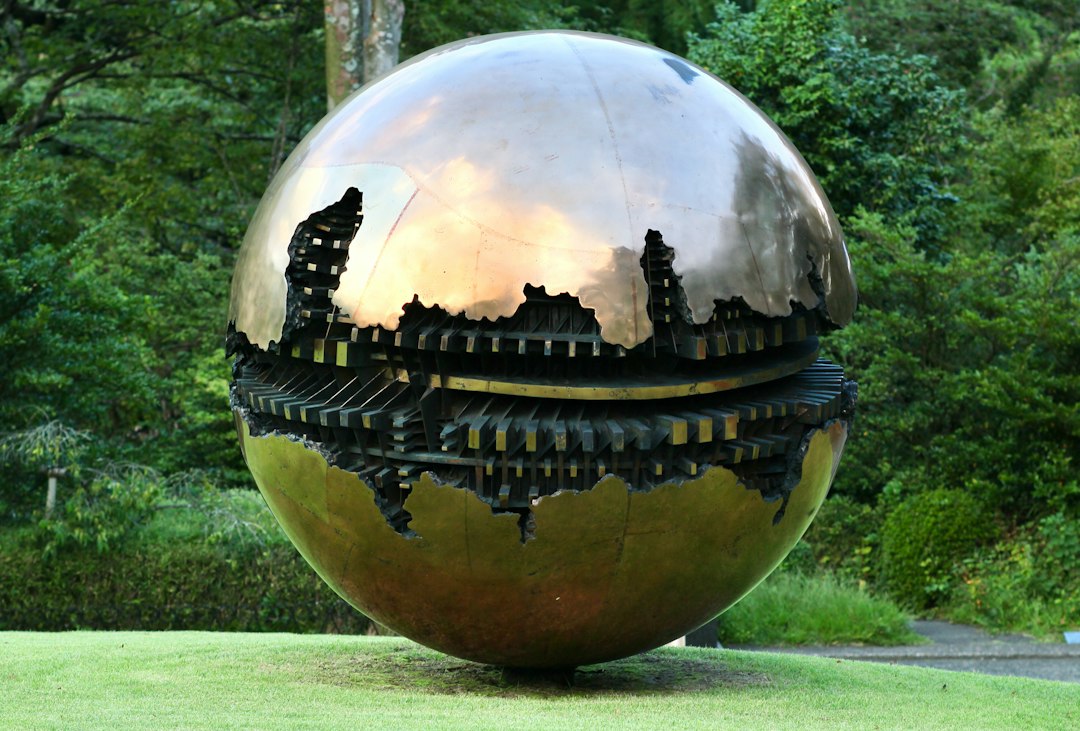
The Hakone Open Air Museum (Chokoku-no-Mori Bijutsukan) is a hillside sculpture park in Gora, opened in 1969 by the Fujisankei group to bring sculpture to a wider public in Japan. It holds about 120 modern and contemporary sculptures across roughly 7 hectares of lawn and forest. There is also a Picasso Pavilion, a stained-glass tower you can climb, and a hot-spring foot bath fed from a source on the museum's own grounds.
In 2026 it also has something new: Yayoi Kusama's first stone sculpture, installed in April, four months before the artist died. This guide covers what tickets actually cost, how to split two or three hours, what still works in Hakone's heavy rain, and a terrain check on whether Mt. Fuji is visible from the grounds. It isn't.
| Hakone Open Air Museum at a glance | |
|---|---|
| Hours | 9:00 to 17:00 every day of the year, last entry 16:30 |
| Adult ticket | ¥2,000 at the gate, ¥1,800 online |
| Time needed | 2 to 3 hours; 90 minutes feels rushed |
| Nearest station | Chokoku-no-Mori on the Hakone Tozan Railway, 2 minutes' walk |
| Luggage | Free lockers at the entrance (¥100 coin, returned) |
| Mt. Fuji from the grounds | No. A ridge to the west-northwest hides it everywhere on site. |
Hakone Open Air Museum Tickets: Online Is the Cheapest Way In
The cheapest Hakone Open Air Museum ticket is the online one at ¥1,800 for adults, which beats the Hakone Freepass discount by ¥100. These are the museum's published fees as of October 2026:
| Ticket | Adult | High school / university | Elementary / junior high |
|---|---|---|---|
| At the gate | ¥2,000 | ¥1,600 | ¥800 |
| Gate with Hakone Freepass or the museum's web coupon | ¥1,900 | ¥1,500 | ¥700 |
| Online ticket | ¥1,800 | ¥1,400 | ¥600 |
Preschool children enter free. The coupon is simply a page on the museum's website that you show at the counter. It takes ¥100 off each ticket for a group of up to 14 people and cannot be combined with other discounts.
The Freepass catch is worth spelling out. The Hakone Freepass lists the museum among its discount partners at ¥1,900, so many visitors with a pass assume they are getting the best deal. They are not. Buy the online ticket anyway and keep the pass for the trains. Our Fuji Hakone Pass breakdown covers which pass makes sense for the rest of the trip.
Drivers pay ¥500 for up to three hours in the museum car park, then ¥500 per extra hour. The car park is for museum visitors only. Settle the fee at the machine inside the museum before you leave, because the exit gate does not apply the visitor rate.
The free lockers are the most underrated detail. Hakone day-trippers often arrive with a suitcase between hotels, and the coin lockers at Chokoku-no-Mori Station charge a fee. The museum's lockers at the entrance take a ¥100 coin that you get back, so they cost nothing. Ask the desk if your bag is too big for them.
What to See, and How Long Each Part Takes
Most visitors need 2 to 3 hours at the Hakone Open Air Museum: about an hour for the outdoor sculptures, 30 to 45 minutes in the Picasso Pavilion, and the rest for the tower, the galleries and the foot bath. Here is a rough budget.
| Stop | What it is | Allow |
|---|---|---|
| Sculpture garden | About 120 works by Rodin, Bourdelle, Henry Moore and dozens of others, set on sloping lawns | 60 minutes |
| Picasso Pavilion | Rotating displays from a 310-work Picasso collection | 30 to 45 minutes |
| Symphonic Sculpture | An 18 m stained-glass tower with a spiral staircase inside | 10 to 15 minutes |
| Kusama's I Am a Pumpkin | A granite pumpkin by the café, new in April 2026 | 10 minutes |
| Indoor galleries | Main Gallery, Art Hall and Multi Hall exhibitions | 20 to 40 minutes |
| Forest Footbath | A 28 m hot-spring foot bath and hand bath | 15 to 20 minutes |
The Picasso Pavilion opened in 1984 for the museum's 15th anniversary and was renovated in 2019 for the museum's 50th. The core of the collection is 188 ceramics bought from Picasso's daughter Maya. Paintings, drawings, prints, sculpture, tapestry and gemmaux (fused-glass pictures) fill it out to 310 works, or 405 counting David Douglas Duncan's photographs of Picasso and the lithograph posters. Only part of it is on show at any time. A full Japanese catalogue of the collection is now on sale in the museum shop, and the museum says an English edition is due at the end of November 2026.
The Symphonic Sculpture is Gabriel Loire's 1975 tower: 18 metres tall, 8 metres across inside, and built entirely from chunks of glass 2 to 3 cm thick, broken by hand with a mallet. Climb the spiral stairs and the walls light up around you. At the top you get a lookout over the grounds and the surrounding Hakone mountains, but not Mt. Fuji (more on that below).
The galleries change. In 2026 the Main Gallery holds Unique Collection, 27 works by 25 artists from the museum's stores, open since 31 January. The Art Hall shows a Masterpiece Collection from the museum's holdings, and the Multi Hall keeps three permanent pieces, including Jonathan Borofsky's Man with a Heart, whose chest lamp blinks in time to a recording of the artist's heartbeat.
For children, Toshiko Horiuchi MacAdam's Woods of Net (2009) is the big draw. It is a huge hand-crocheted net in a timber dome that children climb and bounce in. Only children aged 12 and under may go in, shoes come off, and adults stay off the mat. Peter Pearce's Curved Space-Diamond Structure, the clear-bubble climbing frame, is currently closed for maintenance, so don't promise it to anyone.
The Forest Footbath reopened on 27 July 2024 after a redesign by Torafu Architects. It runs about 28 metres, seats 39 people, and adds a hand bath plus wheelchair-accessible seats. The water is Ninotaira Onsen, a clear, odourless sodium-chloride spring from a source on the museum grounds. Bring a small towel. If you are deciding whether to make time for a full soak as well, our Hakone onsen guide compares the day baths nearby.
Yayoi Kusama's Stone Pumpkin, New in 2026
The Hakone Open Air Museum added Yayoi Kusama's granite sculpture I Am a Pumpkin (2013) to its permanent outdoor collection on 19 April 2026. It is the museum's first Kusama work. According to the museum, it was also her first work made in stone, and it is now the only place in Japan to see one of her stone sculptures.
The piece spent about 12 years in the Marunouchi Street Gallery in central Tokyo, a public sculpture walk the museum curates, before moving to Hakone. It now sits in a corner of the sculpture garden next to the museum café, on a new mosaic-tile floor laid for it.
Then, on 14 August 2026, Kusama died in Tokyo at the age of 97. A museum that had held her work for four months suddenly owned part of her memorial. In a short tribute, the museum says it will look after the work and keep showing it to visitors.
There is also a limited extra. Until 1 November 2026, an inflatable balloon version of her Pumpkin (2017) is installed at the Kitoki log plaza and the café, alongside a 2013 interview video with Japanese and English subtitles. If you are visiting in October, that is the one thing on this page with a deadline.
Can You See Mt. Fuji from the Hakone Open Air Museum?
You cannot see Mt. Fuji from the Hakone Open Air Museum. Rising ground 0.6 to 1.4 km to the west-northwest, toward Gora, sits above the line to the summit from every part of the grounds, including the top of the Symphonic Sculpture.
We checked this the same way we checked Hakone's ryokan districts: a line-of-sight calculation on Japan's GSI 10-metre elevation model, sampling the ground every 20 metres toward Fuji's 3,776 m summit and allowing for Earth's curvature and normal refraction. Fuji is 32 km away at a compass bearing of 294 degrees. From the museum, its summit would sit only 5.6 degrees above the horizon, which is low enough for nearby hills to cover it.
| Where you stand | Eye height | What blocks the summit |
|---|---|---|
| Central lawns | 2 m | Ground about 1.3 km away, roughly 25 m above the sightline |
| Woods of Net, south-east lawns | 2 m | Ground about 1.4 km away, roughly 20 m above the sightline |
| Top of the Symphonic Sculpture | about 18 m | A hillside 0.6 km away, plus ground at 1.4 km about 13 m above the sightline |
| Platform edge by Chokoku-no-Mori Station | 2 m | Ground about 1.1 km away, only a few metres above the sightline |
The margins are small, which is why the exact spot matters. The station end comes closest: there the bare-ground margin is within the error of a 10-metre elevation model, but the real line also crosses forest and buildings, which add far more height than that. The tower helps less than you would expect, because the hillside that blocks it is only 600 metres away and about 90 metres higher than the tower's base.
This matters for planning because the museum sits on the classic Hakone loop, and the loop is where most people hope to see Fuji. The good Fuji views in Hakone are higher up and farther west: Owakudani by ropeway, the Ubako area, and the Lake Ashi shore. Our Mt. Fuji from Hakone guide ranks them.
What the Rain Changes
The Hakone Open Air Museum stays worth visiting in rain, but you may lose the children's net, and you lose some comfort on the slopes and the best of the stained glass. Plan for rain here. Hakone is very wet: the Japan Meteorological Agency's 1991-2020 normals for its Hakone gauge average about 3,560 mm of rain a year, and September (449 mm) is the wettest month of the year, wetter even than the June and July rainy season. October (404 mm) is not far behind.
What still works in a downpour:
- The Picasso Pavilion and the three indoor galleries. That is 60 to 90 minutes under a roof on its own.
- The foot bath. Warm water in cold rain is the best version of it.
- The sculptures in mist. The bronzes go dark and glossy, and the crowds thin out.
What rain takes away:
- Woods of Net may close in bad weather. The museum says so on its family page. If you are travelling with young children, that is the main loss.
- The Symphonic Sculpture's colour. The tower works by letting daylight through the glass. On a dark, wet afternoon it is dimmer, so climb it in the brightest part of the day if you can.
- Footing. The grounds slope, and paths mix paving with gravel. Wear shoes with grip.
The museum also bans tripods, selfie sticks, flash and video in its indoor galleries, and you may not eat outside the designated areas.
Where the Museum Fits in a Hakone Day
The best time to visit the Hakone Open Air Museum is whenever Mt. Fuji is least likely to be out. That means the afternoon on a clear day, or the morning on a cloudy one. The museum is a sure thing in any weather; the Fuji viewpoints are not, so give them the hours with the better odds.
Mornings often carry those odds. One of the longest public records comes from Fuji City, which has logged the mountain from city hall since 1990. Across 1991 to 2025, Fuji was fully visible at 8 AM on 36.6% of days but at 4 PM on only 22.5%. That is one viewpoint on the mountain's south side, not a Hakone measurement, so treat it as a rough guide to the daily pattern rather than Hakone odds.
In practice:
- The night before, check the live Mt. Fuji visibility score. It comes from our weighted atmospheric model, which weighs visibility distance, cloud cover at the summit's height, rain chance and humidity.
- If tomorrow scores well, go up to the lake or Owakudani first. Ride the Hakone Ropeway while the view lasts, then come back down through Gora and spend the afternoon at the museum. Last entry is 16:30.
- If it scores badly, start at the museum at 9:00 when it opens. Do the Picasso Pavilion and the galleries while the paths are quiet, then decide on the lake once you see what the afternoon is doing. The webcam feeds show the real sky in a few seconds.
Our Hakone overview covers which direction to ride the loop for each of these plans, and the trade-off on the ropeway seats.
Getting to the Hakone Open Air Museum
The Hakone Open Air Museum is a 2-minute walk from Chokoku-no-Mori Station, one stop below Gora on the Hakone Tozan Railway. The train climbs from Hakone-Yumoto through the switchbacks and is covered by the Freepass. If you come down the Hakone Tozan Cable Car from the ropeway, get off at Gora and walk downhill, or take the train one stop.
By bus, routes H, J and Z run from Odawara Station (east exit, stops 3 and 5) through Hakone-Yumoto to Ninotaira-iriguchi, which is a 6-minute walk from the museum, according to the museum's access page. Drivers leave National Route 1 at the Miyanoshita crossing and follow Prefectural Road 723 toward Gora for about 500 metres.
Common Questions
Is the Hakone Open Air Museum worth it? Yes, if you give it at least two hours. It is one of the few places in Hakone that does not depend on the weather or on Mt. Fuji being out. That makes it the natural anchor for a cloudy day.
Is the Hakone Open Air Museum good for kids? Very, for children aged 12 and under, mainly because of Woods of Net and the open lawns. Check the weather first, since the net may close when it is bad, and the bubble climbing frame is shut for maintenance.
Can I bring luggage? Yes. Free lockers are at the entrance, and the desk will advise on bags that do not fit. Hakone's luggage delivery service between Yumoto and inns is covered in our ryokan guide.
Can I bring my dog? No. Pets are not allowed; only assistance dogs are admitted.
If you are building a whole Hakone day around the museum, check tomorrow's Mt. Fuji forecast first. It decides which half of the day belongs to the sculptures.
More Articles
Hakone: Where Fuji Shows, How the Loop Runs, When to Go
Hakone is a volcanic caldera 80 minutes from Tokyo. Which parts actually see Mt. Fuji, which way to ride the loop, and 2026 prices for each leg.
Mt. Fuji from Hakone: Best Viewpoints and Visibility Guide
Can you see Mt. Fuji from Hakone? Yes, on about half of all days. Here are the best viewpoints, when to go, and how to check conditions.
Hakone Onsen: Day Baths, Fuji Views and Tattoo Rules
A Hakone onsen guide for day visitors: 2026 prices, which baths can see Mt. Fuji, the hours that matter, and which places accept tattoos.