Fuji Hakone Pass: What It Covers, the Cost Math, and the Leg It Misses
The Fuji Hakone Pass costs 11,100 yen for three days across both regions. Here is the break-even math and the return leg it quietly leaves out.

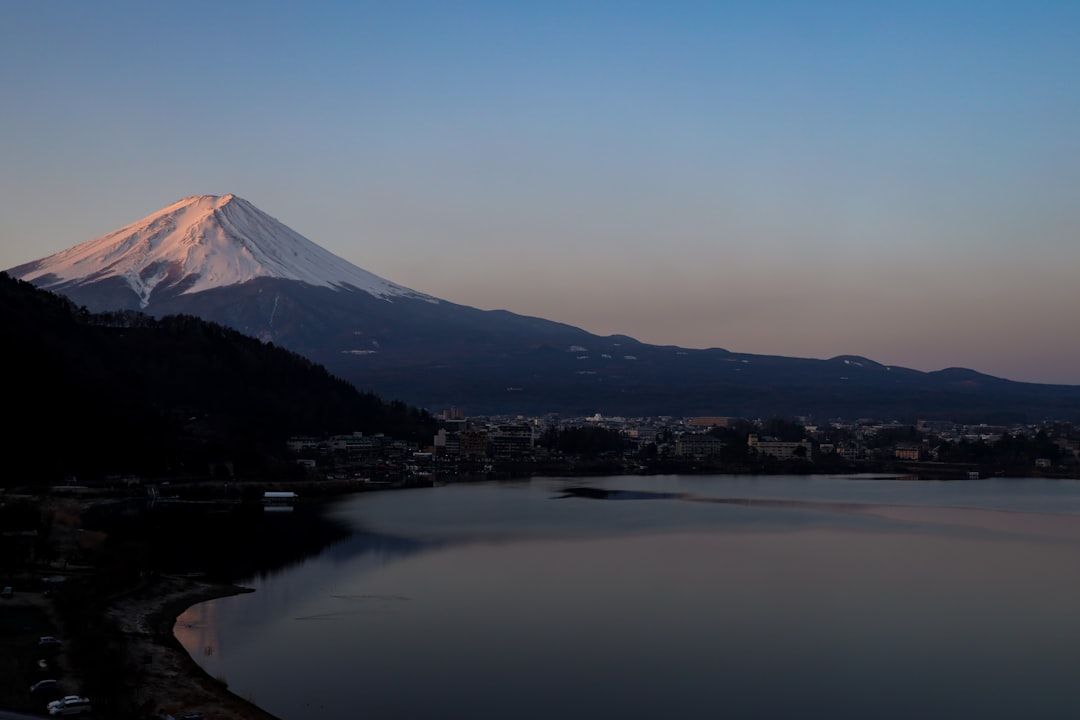
What Is the Fuji Hakone Pass?
The Fuji Hakone Pass is a three-day Odakyu ticket, sold only to non-Japanese passport holders, that bundles transport in two regions: Hakone and the Fuji Five Lakes. It costs ¥11,100 for adults and ¥3,600 for children aged 6 to 11, and includes a discounted round trip between Shinjuku and Odawara, all eight Hakone transport networks, the buses across to Gotemba and Kawaguchiko, and the entire Fujikyu Railway line.
Almost every page about the Fuji Hakone Pass reprints the same coverage list and stops there. That list is on Odakyu's own website, and it does not answer the question you actually have, which is whether ¥11,100 beats the alternatives for the trip you are planning.
So here is the arithmetic instead. Three days of walk-up fares priced against the pass, a head-to-head against the two competing tickets, and one structural gap in the coverage that will cost you either two extra hours or ¥2,200 if you do not plan around it before you buy.
Table of Contents
- What the Fuji Hakone Pass Covers
- The Loop Does Not Close
- Is the Fuji Hakone Pass Worth It? The Only Number That Matters
- Fuji Hakone Pass vs the Mt. Fuji Pass
- What the Pass Does Not Cover
- Three Days, Two Faces of the Mountain
- Route Order and the Three-Day Clock
- Where to Buy the Fuji Hakone Pass
- Frequently Asked Questions
What the Fuji Hakone Pass Covers
The Fuji Hakone Pass covers eleven transport operators across two regions on three consecutive days. On the Hakone side it is identical to the Hakone Freepass; on the Fuji side it adds the cross-region buses and the whole Fujikyu network.
According to the official Odakyu pass page, the included services are:
| Region | Covered services |
|---|---|
| Tokyo to Hakone | Odakyu Line, discounted round trip Shinjuku to Odawara |
| Hakone | Hakone Tozan Train, Hakone Tozan Cable Car, Hakone Ropeway, Hakone Sightseeing Cruise, Hakone Tozan Bus (designated areas), "Kanko Shisetsu-Meguri" sightseeing bus |
| Crossing | Odakyu Highway Bus and Tokai Bus (designated areas), including Togendai or Sengoku to Gotemba |
| Fuji Five Lakes | Entire Fujikyu Railway (Otsuki to Kawaguchiko), Fujikyu Bus in designated Mt. Fuji areas |
That Fujikyu Railway inclusion is worth more than it looks. It runs the full 26.6 km line through Shimoyoshida, the station for the Chureito Pagoda, and on to Mt. Fuji Station and Fuji-Q Highland. Our guide to the Fujikyu Railway covers which side of the carriage to sit on.
A small detail nobody mentions: the pass also covers the Fujikyu buses from Gotemba up to the Gotemba New 5th Station, plus Grinpa and the Yeti ski area. That is a covered route onto the volcano itself, though at 1,440 metres the Gotemba trailhead is the lowest and least scenic of the four.
The Loop Does Not Close
The Fuji Hakone Pass has no covered route back to Tokyo from the Fuji Five Lakes. This is the single most important thing to understand before you buy it, and no reseller listing mentions it.
Odakyu's own terms exclude two specific sections: the JR Chuo Line between Shinjuku and Otsuki, and the Chuo Expressway highway bus from the Shinjuku Expressway Bus Terminal to Kawaguchiko, Fuji-Q Highland or Mt. Fuji Station. The Odakyu Highway Bus from Shinjuku to Tomei-Gotemba is excluded too, with only the short Tomei-Gotemba to Gotemba Station segment included.
Picture the coverage as a letter J. The pass runs from Shinjuku down to Odawara, through Hakone, west across to Gotemba, north to Kawaguchiko and east along the Fujikyu line to Otsuki. Otsuki is roughly an hour from Shinjuku by train. That last hour is the one piece missing.
Your three options from Kawaguchiko, all real:
| Way back to Tokyo | Rough time | Extra cost |
|---|---|---|
| Backtrack via Gotemba, Hakone and Odawara on the pass | 4 hours or more | ¥0 |
| Fujikyu Railway to Otsuki (covered), then JR Chuo Line | 2.5 to 3 hours | about ¥1,410 |
| Highway bus direct to Shinjuku | about 2 hours | ¥2,000 to ¥2,200 |
Most people take the third option and never think about it again. That is fine, but budget for it, and understand that doing so forfeits the ¥910 Odawara to Shinjuku return leg baked into the pass price. Our guide to getting from Tokyo to Kawaguchiko compares those routes in detail.
Is the Fuji Hakone Pass Worth It? The Only Number That Matters
The Fuji Hakone Pass is worth it if you cross between Hakone and the Fuji Five Lakes and use the local buses at the far end, because the Fuji extension costs ¥3,600 and a single round-trip crossing costs ¥3,500 on its own.
Here is why that framing is the right one. The Hakone half of the Fuji Hakone Pass is identical to the Hakone Freepass, which any visitor to Hakone would buy anyway. So the real question is never "is ¥11,100 good value for two regions." It is "is the Fuji half worth its premium over the ticket I was already going to buy."
| Three-day pass from Shinjuku | Adult | Child (6-11) |
|---|---|---|
| Hakone Freepass | ¥7,500 | ¥1,850 |
| Fuji Hakone Pass | ¥11,100 | ¥3,600 |
| Premium for the Fuji half | ¥3,600 | ¥1,750 |
Now price what that ¥3,600 replaces. The Hakone-to-Gotemba bus is excluded from this table because the Hakone Freepass already covers it. Everything below it does not.
| Leg only the Fuji Hakone Pass covers | Walk-up fare |
|---|---|
| Gotemba to Kawaguchiko, Fujikyu bus | ¥1,750 |
| Kawaguchiko to Gotemba, return | ¥1,750 |
| Fujikyu Railway, Kawaguchiko to Shimoyoshida and back | ¥620 |
| Kawaguchiko / Saiko / Motosuko two-day sightseeing bus pass | ¥2,000 |
| Total | ¥6,120 |
Against a ¥3,600 premium, that is ¥2,520 in your favour, and it assumes a fairly modest single day in the Fuji area. The bus fares come from japan-guide's Hakone access page and the rail fare from the Fujikyu Railway fare table.
The margin narrows sharply in one common case. If you cross one way only, staying in Kawaguchiko and heading back to Tokyo from there, you use ¥1,750 of bus, ¥1,170 of Fujikyu rail to Otsuki, and ¥2,000 of local bus pass: ¥4,920 against a ¥3,600 premium, minus the ¥910 Odakyu return leg you never use. Net gain, roughly ¥410. On a one-way itinerary the pass is a coin flip, not a bargain.
One note for families. The child pass is ¥3,600 against ¥11,100 for an adult, which is 32 percent rather than the usual 50. Two adults and two children pay ¥29,400 instead of the ¥33,300 a straight half-price rule would produce.
Fuji Hakone Pass vs the Mt. Fuji Pass
The Fuji Hakone Pass is a transport ticket with discounts attached. Fujikyu's Mt. Fuji Pass is a transport ticket with free admissions attached. That distinction decides which one you want, and travellers routinely buy the wrong one.
| Fuji Hakone Pass | Hakone Freepass 3-day + Mt. Fuji Pass 2-day | |
|---|---|---|
| Price | ¥11,100 | ¥7,500 + ¥10,200 = ¥17,700 |
| Hakone coverage | Full | Full |
| Fuji transport | Full, plus the Gotemba crossing | Full, plus the Gotemba crossing |
| Subaru Line 5th Station bus | Not covered | Covered |
| Panoramic Ropeway, lava caves, lake cruises | Discounts only | Free entry |
| Days | 3 | 3 + 2, overlapping |
The stack costs ¥6,600 more. What it buys, if you use all of it, is the Panoramic Ropeway (¥1,000), the Wind and Ice Caves (¥600 combined), two lake cruises (about ¥2,000), one Fuji-Q Highland attraction (up to ¥2,000) and a round trip on the Subaru Line 5th Station bus (¥3,400). That comes to roughly ¥9,000, so the stack wins on paper.
On the ground it usually does not, because ticking every one of those items inside the two-day Mt. Fuji Pass window is a sprint, and the single biggest line item is the 5th Station bus, which eats close to four hours on its own. Our full breakdown of the Mt. Fuji Pass runs the same arithmetic from the Yamanashi side.
The practical rule: if the Subaru Line 5th Station is a must-do, buy the two passes separately. If it is not, the Fuji Hakone Pass is the cheaper and simpler ticket by a wide margin.
What the Pass Does Not Cover
Four exclusions catch people out, and one of them is the best Mt. Fuji viewpoint in Hakone.
The Komagatake Ropeway. The cable car to the 1,356-metre summit above Lake Ashi delivers the single best panorama of Fuji anywhere in Hakone, and it belongs to Izuhakone, a rival operator. Japan Guide lists the fare at ¥2,200 round trip, with only a 10 percent discount for pass holders. The Izuhakone buses and boats that reach the base station are not covered either. If Komagatake is on your list, budget about ¥2,700 for the ropeway plus the bus from Togendai.
The Romancecar. The pass covers the Odakyu fare but not the limited express surcharge, which is ¥1,200 one way from Shinjuku to Hakone-Yumoto or ¥1,000 to Odawara, half for children, and ¥50 less if bought through Odakyu's online service. Regular Odakyu express trains cost nothing extra and take about 30 minutes longer.
The Subaru Line 5th Station bus. As noted above, the climbers' bus from Kawaguchiko up the toll road is a Mt. Fuji Pass inclusion, not a Fuji Hakone Pass one. It runs about ¥2,000 one way and ¥3,400 return.
Admission fees. The pass gives discounts at roughly 70 Hakone facilities and 40 more in the Fuji area, not free entry. Museums, onsen and observation decks all still cost money. Odakyu also notes that a portion of ticket sales is donated to Mt. Fuji conservation.
Three Days, Two Faces of the Mountain
Three consecutive days across two regions is the strongest weather hedge any Mt. Fuji ticket offers, because Hakone and Kawaguchiko look at opposite sides of the mountain through different local weather.
Fuji is not a reliable sight. Fuji City's municipal observers, who log the summit three times a day from the eighth floor of city hall, recorded a fully visible peak on 136 mornings in 2025, about 37 percent of the year, with another 95 mornings showing only part of the cone. A single-day trip is close to a coin flip and worse than that in summer.
The two regions are not the same bet. Hakone sits inside a volcanic caldera 30 to 40 km southeast of the summit and generates its own cloud and sea fog; Kawaguchiko sits 20 to 25 km north at 830 metres and sees the classic north face. Historically Kawaguchiko carries slightly better odds, roughly 50 to 55 percent against 45 to 50 percent from Hakone, but the correlation between them is far from perfect. A grey morning at Lake Ashi does not mean a grey morning at Lake Kawaguchi.
Three days and a free hand to reorder them is exactly what you want against those odds. The routing rule is simple:
- High visibility score: be at Kawaguchiko. The north-face lakeshore views and the Chureito Pagoda are the highest-payoff sights on the whole pass, and they are worth nothing in cloud.
- Mediocre score: be on the Hakone Ropeway between Owakudani and Togendai, where you get the volcanic valley regardless and Fuji if the summit clears.
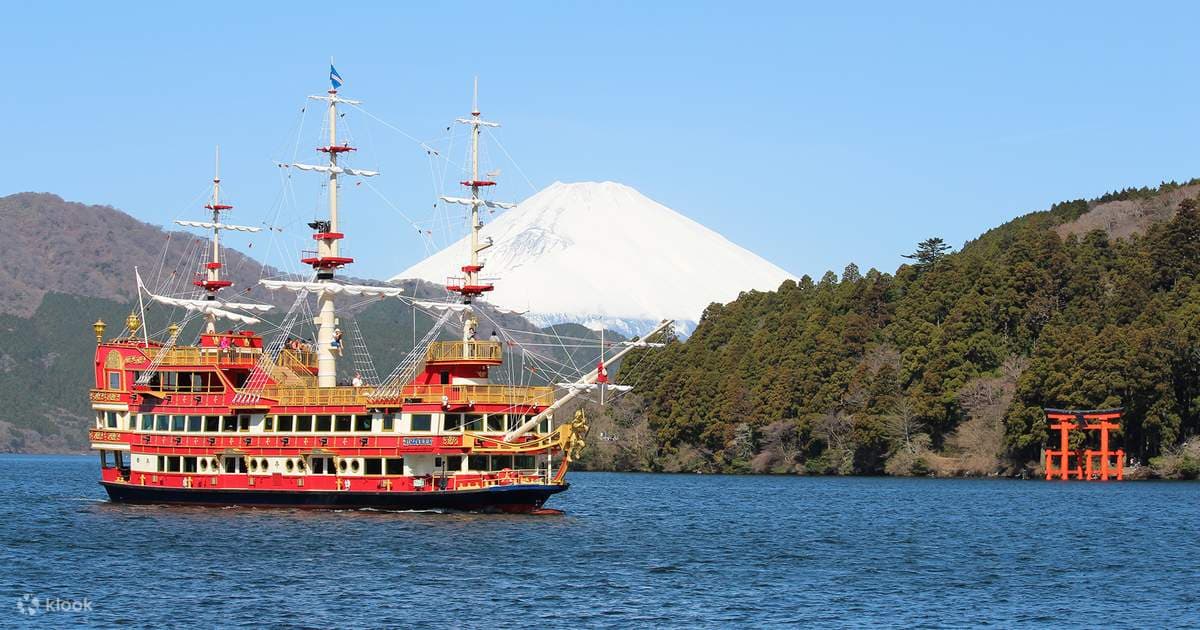
- Low score: stay in Hakone. Onsen, the Open-Air Museum, the Pola Museum and the pirate ships all work in rain. Kawaguchiko in cloud is a much thinner day, though the lava caves around Lake Saiko are a decent weather-proof fallback.
Check the live score on our Mt. Fuji visibility tracker each evening for the following morning. It combines cloud cover, humidity, atmospheric visibility and precipitation into a 0-100 reading using our weighted atmospheric model, and the ten-day trend view is what you want when deciding which of your three pass days to spend where.
Route Order and the Three-Day Clock
The pass expires at the end of the third calendar day from purchase, not 72 hours after activation. Odakyu is explicit about this: the date of purchase counts as day one regardless of the time. Buy it at 5pm on a Friday and you have lost most of a third of the ticket before you board anything.
Buy on the morning you travel. Not the night before, not on arrival day if you are staying in Tokyo first.
Direction matters too. The covered entry point is Shinjuku to Odawara, so the default is Hakone first, Fuji second. If the forecast says day one is the clear one and days two and three are grey, that default puts you in the wrong region on the best morning.
The fix costs about ¥1,410. Buy the pass at Fujikyu's Otsuki or Kawaguchiko station counter, ride the JR Chuo Line out to Otsuki at your own expense on day one, and run the loop in reverse: Kawaguchiko first, then Gotemba, then Hakone, then home to Shinjuku on the pass's Odakyu leg. You spend the clearest morning on the north face and you close the loop properly on the way back, which the standard direction never does. For a fourteen-hundred-yen ticket that is a good trade, and it is the single most useful thing you can do with a three-day forecast in hand.
Whichever direction you run it, the months matter more than the hours. December through February is the reliable window and the rainy season is the one to avoid, which our month-by-month guide to seeing Mt. Fuji breaks down.
Where to Buy the Fuji Hakone Pass
You cannot buy the Fuji Hakone Pass online or from a ticket machine. Odakyu confirms this in its own FAQ: unlike the Hakone Freepass, this one is sold only in person, and a paper ticket is issued.
The counters are:
- Odakyu Sightseeing Service Center, Shinjuku West Exit (English and Chinese support)
- Odakyu Sightseeing Service Center, Odawara Station
- Fujikyu Railway, Otsuki Station and Kawaguchiko Station, per Japan Guide and Hakone's official tourism site
Bring your passport. The pass is restricted to non-Japanese passport holders and staff check. Odakyu accepts Visa, Mastercard, American Express, China UnionPay, Alipay and WeChat Pay. If you buy a voucher from a third-party reseller, you are still collecting a paper ticket at one of those counters, so check the opening hours against your first bus.
Frequently Asked Questions
How much is the Fuji Hakone Pass?
The Fuji Hakone Pass costs ¥11,100 for adults and ¥3,600 for children aged 6 to 11, valid for three consecutive days. The price is the same whether you buy it in Shinjuku or Odawara, and it includes the discounted Odakyu round trip between Shinjuku and Odawara either way.
Is the Fuji Hakone Pass better than the Hakone Freepass?
Only if you actually cross into the Fuji Five Lakes. The Fuji half adds ¥3,600 over the three-day Hakone Freepass, and one round-trip Gotemba to Kawaguchiko bus journey costs ¥3,500 at walk-up fares. If you are staying in Hakone the whole time, the Hakone Freepass is the cheaper ticket and covers exactly the same eight networks.
Does the Fuji Hakone Pass include the bus to the Mt. Fuji 5th Station?
No. The Fuji Subaru Line 5th Station bus from Kawaguchiko is not covered and costs about ¥3,400 return. The pass does cover buses from Gotemba to the lower Gotemba New 5th Station at 1,440 metres. For the popular Subaru Line trailhead, Fujikyu's own Mt. Fuji Pass is the ticket that includes it.
Can you do Hakone and Mt. Fuji in one day?
Not comfortably. The crossing alone takes about two hours each way via Gotemba, which leaves very little of a day for either region. The pass is three days for a reason. Two nights, one in each area, is the itinerary it is built around.
The Verdict
Buy the Fuji Hakone Pass if you are sleeping in both regions and crossing between them. On that itinerary it beats the three-day Hakone Freepass plus à la carte Fuji fares by roughly ¥2,500, and it beats stacking the Hakone Freepass with a Mt. Fuji Pass unless the Subaru Line 5th Station is non-negotiable. On a one-way itinerary that ends in Kawaguchiko, it is close to break-even and you should buy it for the convenience rather than the savings.
Then do two things that cost nothing. Buy it in the morning so you get three full days instead of two and a half, and check the forecast before you decide which region gets which day. The pass gives you three shots at a mountain that is fully out on barely a third of mornings, and the only way to waste that flexibility is to lock your itinerary in before you look at the sky. We run the same visibility model for Mount Rainier and Denali, two more peaks that hide far more often than the brochures suggest.
Planning your Mt. Fuji trip?
Top-rated tours and transport from Tokyo to Fuji
Affiliate links: we may earn a commission at no extra cost to you.
More Articles
Mt. Fuji Pass: What It Covers and Whether It's Worth Buying
The Fuji Pass costs 7,500 to 12,400 yen and covers Fujikyu trains, buses, the ropeway and lake cruises. Here is the break-even math before you buy.
Mt. Fuji from Hakone: Best Viewpoints and Visibility Guide
Can you see Mt. Fuji from Hakone? Yes, on about half of all days. Here are the best viewpoints, when to go, and how to check conditions.
Kawaguchiko from Tokyo: Transport, Timing, and the View Most Visitors Miss
How to get to Kawaguchiko from Tokyo by bus, train, or car, plus the timing trick that decides whether you see Mt. Fuji.