Mishima Skywalk: Fuji Views, Tickets, and When to Go
Mishima Skywalk puts Mt. Fuji 32 km to the northwest. Tickets, bus access, wind closures, and when the mountain is actually out.

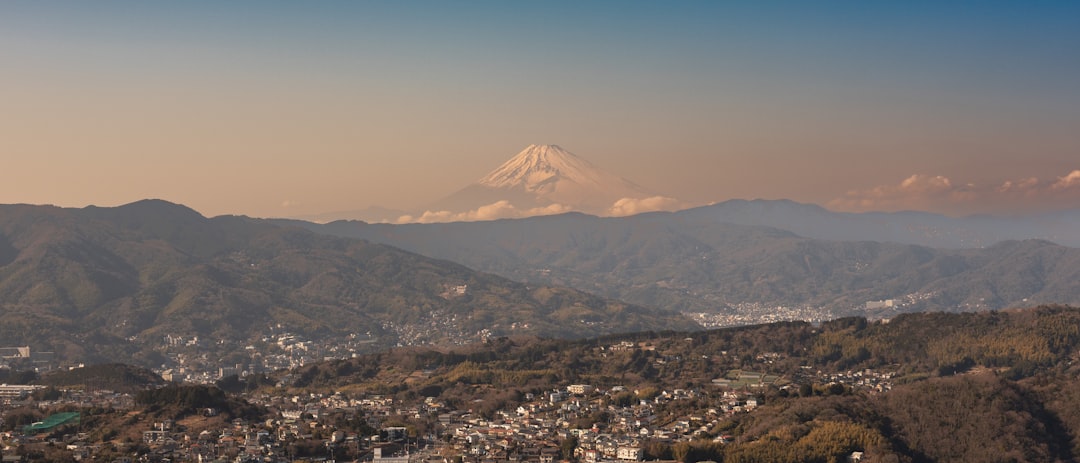
The Mishima Skywalk is a 400-metre pedestrian suspension bridge on the western slope of the Hakone caldera, built for one reason: to hang you in mid-air with Mt. Fuji on one side and Suruga Bay on the other. It opened on 14 December 2015, cost around 4 billion yen, and sits at 415 metres above sea level in Sasahara-shinden, Mishima, Shizuoka Prefecture.
It is also, bluntly, a paid view. The ticket buys you a walkway and a horizon. If the mountain is hidden, you have spent 1,100 yen and an hour of bus time on a nice but unremarkable stroll over a wooded valley.
That is the part nearly every guide skips. This one starts there.
Table of contents
- What you actually see from Mishima Skywalk
- When Mt. Fuji is visible from Mishima Skywalk
- Wind, fog, and closures
- Mishima Skywalk tickets and opening hours
- How to get to Mishima Skywalk
- Beyond the bridge
- Mishima Skywalk vs other Fuji viewpoints
- Is Mishima Skywalk worth it?
- Common questions about Mishima Skywalk
Quick facts
| Detail | Figure |
|---|---|
| Length | 400 m (span), 1.6 m wide deck |
| Height above floor | 70.6 m at the deepest point |
| Main towers | 44 m |
| Opened | 14 December 2015 |
| Site elevation | 415 m above sea level |
| Distance to Fuji | About 32 km, bearing 329 degrees (NNW) |
| Admission | From 1,100 yen (adults), variable pricing |
| Hours | 9:00-17:00, weather permitting |
| Typical visit | 1-2 hours, 5-20 minutes to cross |
What you actually see from Mishima Skywalk
From Mishima Skywalk you look at Mt. Fuji's south-southeast flank from about 32 kilometres away, at a bearing of roughly 329 degrees, north-northwest. The summit sits about six degrees above the skyline, roughly the width of three fingers held together at arm's length. That is a genuinely large mountain in the frame, but not an overwhelming one. If you have seen the wall-filling Fuji of Lake Kawaguchiko, this is a different, wider composition.
The angle is what makes it interesting.
Because you are south-southeast of the mountain, you look straight at the Hoei crater, the ragged bite taken out of Fuji's otherwise perfect cone during the Hoei eruption of 1707. From Kawaguchiko and the Chureito Pagoda on the north side, the cone looks symmetrical and untouched. From Mishima it does not. The bulge of Hoeizan on the right-hand slope is one of the clearest naked-eye reminders anywhere that Fuji is an active volcano.
Turn 180 degrees and you get the other half of the pitch: Suruga Bay, the deepest bay in Japan at roughly 2,500 metres, with the Izu Peninsula running off to the southeast. Japan's highest point and its deepest water, from one 1.6-metre-wide deck. That combination is rarer than the suspension-bridge gimmick suggests.
One caveat on the snow. The southeast face loses its snow earlier and holds it less thickly than the northern face. Between mid-July and late September the summit is usually bare rock, and the first snowfall of the season is typically declared in early October. A July visit can be perfectly clear and still deliver a grey-brown cone rather than the postcard.
When Mt. Fuji is visible from Mishima Skywalk
There is no official Mishima Skywalk-specific annual visibility rate. The best nearby public benchmark comes from Fuji City on the mountain's south side: its observers recorded a completely visible Fuji at 8am on 136 of 365 days in 2025, plus 95 partially visible days. That is regional context, not a promise for the bridge. Morning is still the most useful window at every time of year.
Here is the seasonal picture from Fuji City's official 2025 observation record. The observers check at 8am from Fuji City, not Mishima Skywalk, so treat it as a transparent regional benchmark rather than site-specific odds. Our weighted atmospheric model is for the live forecast; it is not the source of these annual figures.
| Season | Completely visible at 8am in 2025 | What you get at the Skywalk |
|---|---|---|
| Dec-Feb | 60 of 90 mornings (67%) | Best benchmark, full snow cap, sharpest air. Coldest and windiest on deck. |
| Mar-May | 31 of 92 mornings (34%) | Snow cap intact into May, but spring haze softens the distant view. |
| Jun | 2 of 30 mornings (7%) | Rainy season. The weakest month in the 2025 record. |
| Jul-Aug | 8 of 62 mornings (13%) | Weak odds and a bare summit. Cloud often builds after morning. |
| Sep-Nov | 35 of 91 mornings (38%) | Conditions improved into late autumn in the 2025 record. |
The time-of-day rule matters more here than it does at the lakes. Mishima Skywalk sits on the seaward side of the mountain, and the daily sea breeze off Suruga Bay pushes moist air inland and up Fuji's southern flank as the land heats. That air condenses into cap and banner clouds over the summit, often while the sky below stays blue. It is why local guidance consistently points at around nine in the morning: you want to be on the bridge before the sea breeze has had three hours to work.
Practically, that means the 9:00 opening is not a suggestion. Arriving at 14:00 on a summer afternoon and finding a cloud-capped summit above clear skies is the single most common disappointment at this site, and it is entirely predictable.
Two things to do before you commit:
- Check the live Mt. Fuji visibility forecast the evening before and again on the morning of. The score updates every 15 minutes and runs 10 days ahead, so you can move the visit by a day rather than gamble on it.
- Confirm with your own eyes. Shizuoka Prefecture runs an official Mt. Fuji live camera network covering viewpoints across the prefecture, and we maintain a curated set of Mt. Fuji webcams as well. A forecast tells you the odds; a camera tells you the answer.
If the score is under 40 on the morning of, the honest advice is to spend the day in Hakone or Mishima town and try again tomorrow. The bridge is not going anywhere.
Wind, fog, and closures
Mishima Skywalk can close in high winds, and its aerial activities close for wind, lightning and dense fog independently of the bridge. This is the operational risk that competitor guides almost never mention, and it correlates awkwardly with the exact weather that produces the best views.
The structure itself is not fragile. The operator states the bridge is engineered for winds of 65 metres per second (around 234 km/h), uses an open-grating deck and wind-resistant stay cables to cut wind load, and carries viscous dampers sized against earthquakes on the scale of Kobe 1995 and Tohoku 2011. The deck is rated for 200 kilograms per square metre. It sways gently and deliberately; that is design, not distress.
The limit is human comfort, not engineering. A 1.6-metre walkway 70 metres above a valley floor becomes unpleasant well before the cables care, and operations pause accordingly.
Here is the tension. The clearest Fuji days in winter come from the Siberian high pushing cold, dry northwesterly air across Honshu. That same pressure gradient is what makes the Hakone ridgeline windy. The perfect-visibility day and the uncomfortable-crossing day are frequently the same day, and mid-winter mornings on this deck are genuinely cold with nothing to break the wind.
Dress for it: the bridge is roughly 400 metres higher than Mishima Station and fully exposed. Bring a hat that will not blow off, and a strap for anything you plan to hold over the railing. Phones and lens caps do fall.
For the treetop courses, Forest Adventure suspends operations for lightning, strong wind and heavy fog. If the zipline is your main reason for coming, call ahead on a marginal day rather than paying admission first and finding out at the counter.
Mishima Skywalk tickets and opening hours
Mishima Skywalk admission starts at 1,100 yen for adults, 500 yen for junior and senior high school students, and 200 yen for elementary students, with preschool children free. Opening hours are 9:00 to 17:00, subject to weather.
The important nuance: the operator uses variable pricing. The figures published on the official Mishima Skywalk site are floors, not fixed rates, and they move with demand on peak weekends, holidays and event days. Older guides still quoting a flat 1,000 yen are out of date. Budget 1,100 to 1,500 yen per adult and you will not be surprised.
| Ticket | Price from |
|---|---|
| Adult | 1,100 yen |
| Junior / senior high school | 500 yen |
| Elementary school | 200 yen |
| Preschool | Free |
Admission covers crossing the bridge in both directions and access to the grounds on either side, including the shops, cafés, restaurants and the Sky Garden photo area. Everything with a harness or a motor costs extra.
One more correction worth making. The Mishima Skywalk was Japan's longest pedestrian suspension bridge for nine years, having taken the title from the 390-metre Kokonoe Yume bridge in Kyushu. It lost it on 17 March 2025, when the 420-metre GODA BRIDGE opened at Gravitate Osaka in Ibaraki City, Osaka Prefecture. Mishima is now second. A great deal of English-language travel content, including pages updated in 2026, still says otherwise.
How to get to Mishima Skywalk
Mishima Skywalk is reached by a 20-minute Tokai Bus ride from stop 5 at the south exit of JR Mishima Station, which is itself about 50 to 60 minutes from Tokyo Station on the Tokaido Shinkansen.
From Tokyo. Take a Kodama or Hikari service to Mishima: roughly 45 to 60 minutes, about 4,500 to 5,000 yen one way. Because Mishima is a Shinkansen stop, the Skywalk is one of the easiest Fuji viewpoints in the country to reach without a car, and a legitimate half-day detour on a Tokyo-Kyoto run.
The bus. Tokai Bus route N departs from the south exit of Mishima Station and takes about 20 minutes for roughly 570 yen each way. Departures are approximately hourly, which is the real constraint on your day. Photograph the return timetable at the stop before you board; there is no useful alternative if you miss the last one.
Passes. The Mishimaru 1-Day Ticket gives unlimited Tokai Bus travel within Mishima for 1,500 yen (750 yen for children, 500 yen via the EMot app). Since a plain return trip costs about 1,140 yen, the pass only pays off if you add Mishima Taisha or the Rakujuen gardens. The Hakone Freepass covers the connecting bus from the Hakone side but not Skywalk admission, a distinction that catches people out regularly; our Hakone pass comparison covers which pass suits which itinerary.
From Hakone. The N65 service links Hakone-machi Port and Mishima Station via the Skywalk in about 25 minutes, which makes it an easy add-on to a Hakone loop. If you are already planning that loop, the Mt. Fuji viewpoints around Hakone pair naturally with this one on the same day.
By car. Roughly 80 minutes from central Tokyo via the expressway, with a large car park on site. Driving frees you from the hourly bus, which matters if you are chasing a clearing window.
Beyond the bridge
The bridge takes five minutes to cross at a brisk walk and 15 to 20 minutes with photo stops, so the operator has built a small adventure park around it to keep the average visit closer to two hours.
The headline activity is the Long Zip Slide, a 560-metre round trip on three parallel lines, so a group of three can launch side by side toward the bridge with Fuji on the horizon. It is sold within the Forest Adventure courses and, on some days, as a standalone ride.
| Forest Adventure course | Price from | Restrictions |
|---|---|---|
| Adventure Course | 3,900 yen | 1.40 m or age 10+, max 110 kg |
| Canopy Course | 2,900 yen | 1.10 m minimum, max 110 kg |
| Zip Trip Course | 2,000 yen | 1.40 m or age 10+, max 100 kg |
| Kids Course | 1,500 yen | 0.90 m minimum, up to 3rd grade |
Elsewhere on site there is a treetop tower attraction, a dinosaur maze for younger children, a dog run and dog cart rental, Segway tours, e-bike rental, and the usual cluster of shops and cafés. The Sky Garden photo area on the north side puts the bridge itself in frame with Fuji behind, which is the shot most people actually want and cannot take from the deck.
Seasonal events extend the hours. The June hydrangea display and periodic Night Skywalk illuminations run to around 20:30 with last admission at 20:00. The bridge lighting is genuinely good, but Fuji becomes a silhouette at best.
Mishima Skywalk vs other Fuji viewpoints
Mishima Skywalk is the most convenient Fuji viewpoint reachable directly from a Shinkansen station, but it delivers a smaller, more distant mountain than the classic north-side locations.
| Viewpoint | Distance to Fuji | Face | Access from Tokyo | Best for |
|---|---|---|---|---|
| Mishima Skywalk | ~32 km | SE | ~1h 20m | Fuji plus Suruga Bay, half-day trip |
| Chureito Pagoda | ~18 km | N | ~2h 30m | The iconic pagoda-and-cone shot |
| Lake Kawaguchiko | ~15 km | N | ~2h | Reflections, biggest apparent size |
| Lake Ashi, Hakone | ~30 km | SE | ~2h | Torii gate framing, onsen pairing |
Mishima wins on convenience and loses on drama. Fuji from Kawaguchiko is roughly twice as large in your field of view, and the Chureito Pagoda supplies a foreground Mishima cannot match. What Mishima offers instead is the bay, the Hoei crater, the bridge itself, and a round trip from Tokyo Station of about four hours including the walk. For the full set, see our guide to the best Mt. Fuji viewing locations.
If Fuji photography is the whole point of your trip, go north. If you want a good Fuji view slotted into a travel day you were already having, Mishima is hard to beat.
Is Mishima Skywalk worth it?
Mishima Skywalk is worth the 1,100 yen when the mountain is out and hard to justify when it is not. That is an unusually binary verdict for an attraction, and it is the reason to treat the visibility forecast as part of the booking process rather than an afterthought.
Reviews split along exactly this line. Visitors who arrived on clear mornings call it well worth the stop off the bullet train. Visitors who drove an hour and found cloud describe a five-minute walk over a valley for the price of a meal. Both are accurate descriptions of the same bridge on different days.
So make it conditional. Keep it as a flexible slot in a Hakone or Izu itinerary rather than a fixed booking, and go on the morning the forecast is good. Pair it with Mishima Taisha and the Rakujuen gardens near the station for a full day in town, or run it as a 90-minute detour between Shinkansen services.
Common questions about Mishima Skywalk
How long should I spend at Mishima Skywalk?
Budget 60 to 90 minutes for the bridge, the north-side viewpoints and a coffee. Add two to three hours if you are doing a Forest Adventure course. With the hourly bus, most visitors coming from Mishima Station end up committing about three hours door to door.
Is the Mishima Skywalk scary?
It sways, noticeably and by design, and the open-grating deck lets you see 70 metres straight down. Most visitors find it fun rather than frightening, but people with a real fear of heights consistently report it as unnerving. Children and wheelchairs cross without difficulty; the deck is 1.6 metres wide specifically to allow passing.
Can you see Mt. Fuji from Mishima Skywalk every day?
No. There is no official annual rate for the bridge itself. As a nearby south-side benchmark, Fuji City recorded a complete 8am view on 136 of 365 days in 2025 and a partial view on another 95, with winter strongest and June weakest. Cloud can cap the summit while the sky at the bridge stays clear, so check whether Mt. Fuji is visible today before travelling rather than judging by the weather where you are.
Is Mishima Skywalk still Japan's longest suspension bridge?
Not since March 2025. The 420-metre GODA BRIDGE in Ibaraki City, Osaka Prefecture, now holds the title for pedestrian suspension bridges. At 400 metres, Mishima Skywalk is Japan's second longest, and it remains the longest with a Mt. Fuji view.
Check the Mt. Fuji visibility forecast the night before you go. If tomorrow morning scores well, take the 9:00 opening. If it does not, move the visit and keep the 1,100 yen.
Planning your Mt. Fuji trip?
Top-rated tours and transport from Tokyo to Fuji
Affiliate links: we may earn a commission at no extra cost to you.
More Articles
Mt. Fuji from Hakone: Best Viewpoints and Visibility Guide
Can you see Mt. Fuji from Hakone? Yes, on about half of all days. Here are the best viewpoints, when to go, and how to check conditions.
Best Mt. Fuji Viewing Locations: Kawaguchiko vs Tokyo vs Hakone Compared
Compare the best places to see Mt. Fuji with real visibility data. Find out which location offers the best views for your trip.
Is Mt. Fuji Visible Today? How to Check Real-Time Conditions
Is Mt. Fuji visible today? Check real-time forecasts, live cameras, and visibility scores to plan your best Fuji viewing trip.