Mt Fuji Sunrise: When, Where, and How to See Goraiko
Plan your Mt Fuji sunrise experience with summit times, base-level viewing spots, and visibility tips by season.
The Mt Fuji sunrise is one of Japan's most revered natural spectacles. Called goraiko (御来光), meaning "the arrival of light," this sunrise tradition draws hundreds of thousands of visitors each year to either the summit or the surrounding lakes. But seeing it well requires more than just showing up. Timing, season, location, and atmospheric conditions all determine whether you get a fiery orange horizon or a wall of grey cloud.
This guide covers both experiences: watching the sunrise from Mt Fuji's summit, and watching the sunrise illuminate the mountain from base-level viewpoints. They are two fundamentally different encounters with the same peak.
Mt Fuji Sunrise Times by Month
Sunrise times at Mt Fuji shift by nearly two hours across the year. The table below shows approximate times for the Fuji Five Lakes area at the mountain's base, which is what most visitors need.
| Month | Sunrise | Sunset | Notes |
|---|---|---|---|
| January | 6:50 AM | 4:45 PM | Coldest, clearest skies |
| February | 6:30 AM | 5:15 PM | Excellent winter visibility |
| March | 5:55 AM | 5:45 PM | Spring haze begins |
| April | 5:15 AM | 6:10 PM | Cherry blossom season |
| May | 4:40 AM | 6:35 PM | Increasingly humid |
| June | 4:25 AM | 7:00 PM | Rainy season, poor visibility |
| July | 4:35 AM | 7:00 PM | Climbing season opens |
| August | 4:55 AM | 6:35 PM | Peak climbing season |
| September | 5:25 AM | 5:55 PM | Clearing skies, crisp mornings |
| October | 5:50 AM | 5:10 PM | Autumn color season |
| November | 6:15 AM | 4:35 PM | Low sun angle, dramatic light |
| December | 6:45 AM | 4:30 PM | Shortest days, best clarity |
For summit climbers during the official season (July to early September), sunrise arrives earlier than at the base due to the elevated horizon. Summit goraiko times run roughly 4:30 AM in early July, 4:50 AM by August 1, and 5:15 AM by late August.
What Goraiko Actually Looks Like from the Summit
Goraiko from Mt Fuji's 3,776-meter summit is not a gentle sunrise. The sun breaks above a horizon of clouds rather than land, and the color shift happens fast. Within about ten minutes, the sky moves from deep indigo through salmon pink to blinding gold. If conditions are right, your shadow projects onto the cloud layer below in a phenomenon called a Brocken spectre, where it appears ringed by a rainbow halo.
The term goraiko has Buddhist roots. Raiko (来迎) means "welcoming," referring to Amida Buddha descending in a halo of light. For centuries, pilgrims climbed Fuji specifically for this spiritual experience. Today the spiritual weight has faded for most visitors, but the visual spectacle has not.
The best summit viewing position is Kengamine, Japan's true highest point at 3,776 meters. It takes about 40 minutes on the Ohachi-meguri crater rim trail from where the Yoshida Trail reaches the summit. Jojudake on the southern rim is another popular spot, offering unobstructed eastern views over a sea of clouds.
Climbing Mt Fuji for Sunrise: What to Know in 2026
Reaching the summit for goraiko requires an overnight climb or a mountain hut stay. The days of "bullet climbing," an all-night push without rest, are over. Both Yamanashi and Shizuoka prefectures now ban the practice, and trailhead gates close from 2:00 PM to 3:00 AM to enforce it.
Here is what the current regulations look like:
| Rule | Details |
|---|---|
| Entrance fee | 4,000 yen per climber (cash only) |
| Daily cap (Yoshida Trail) | 4,000 climbers |
| Gate closure | 2:00 PM to 3:00 AM |
| Hut reservation | Required for overnight climbers |
| Climbing season | Early July to early September |
The standard approach for sunrise: arrive at the 5th Station by early afternoon, begin climbing around 1:00 PM, reach your reserved mountain hut by evening, sleep a few hours, then depart for the summit around 1:00-2:00 AM. The Goraiko-kan hut at 3,450 meters is the closest to the top and books out months in advance.
The Yoshida Trail is best for sunrise seekers. It ascends the north side of the mountain, meaning you face east during much of the climb and get expanding views as dawn approaches. The Fujinomiya Trail on the south side faces away from the sunrise for most of the ascent.
Summit temperatures regularly drop below freezing even in July and August, so bring proper layers. Tokyo might be 38 degrees Celsius while the summit hovers around 3 degrees.
Watching Mt Fuji Sunrise Without Climbing
You do not need to climb Mt Fuji to experience its sunrise. In fact, watching the first light hit the snow-capped peak from one of the surrounding lakes can be equally striking, and far more accessible year-round.
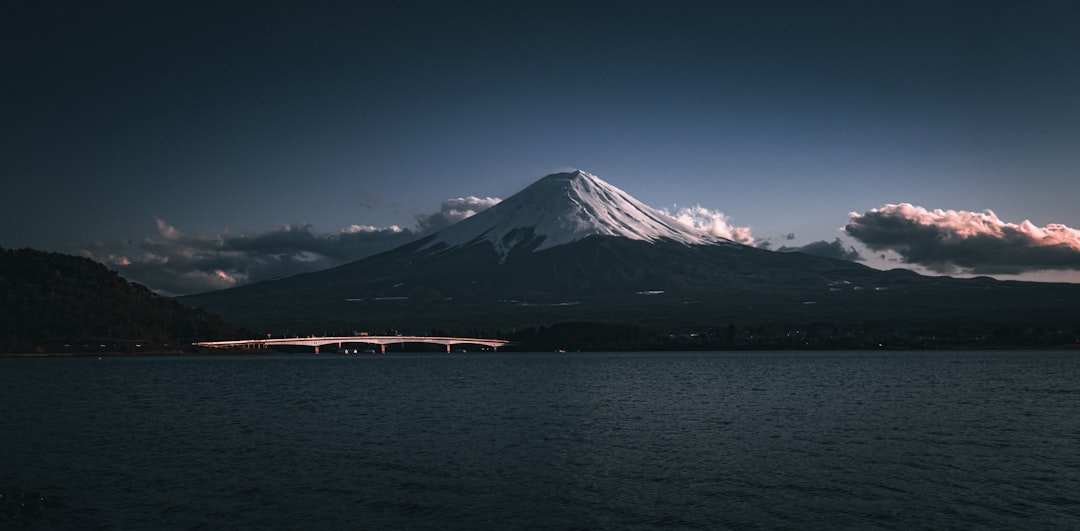
The key difference: from the summit, you watch the sun rise. From the base, you watch the mountain transform. Pre-dawn, Fuji is a dark silhouette. Then the summit catches the first pink light while the base remains in shadow. Over the next 15-20 minutes, that band of warm light slides down the slopes until the entire mountain glows.
Lake Kawaguchiko
The north shore of Lake Kawaguchiko is the most popular sunrise spot outside the mountain itself. On still mornings, the lake surface mirrors the mountain perfectly. Arrive by 5:30 AM in summer or 6:15 AM in winter to set up. The Ubuyagasaki peninsula and Oishi Park both offer unobstructed sightlines with free 24-hour parking.
Lake Motosu
Lake Motosu is the clearest and deepest of the Fuji Five Lakes. The view from its north shore is the one printed on the 1,000-yen bill. Fewer tourists make the trip here, so you will often have the shoreline to yourself at dawn.
Chureito Pagoda
The Chureito Pagoda in Fujiyoshida frames Fuji behind a five-story pagoda and 398 stone steps. Sunrise here works best in autumn and winter when the air is dry and the mountain carries its snow cap. During cherry blossom season (late March to mid-April), the combination of blossoms, pagoda, and pink-lit Fuji draws serious crowds. Arrive at least an hour before sunrise to claim a spot.
Lake Tanuki and Asagiri Highland
These western viewpoints are the place to witness Diamond Fuji, a phenomenon where the rising sun aligns precisely with the summit. At Lake Tanuki, the "Double Diamond" effect adds a water reflection, creating two suns balanced on the peak. The dates are narrow: roughly one week around April 20 and one week around August 20.
Why Sunrise Is the Best Time for Mt Fuji Visibility
Early morning consistently delivers the clearest views of Mt Fuji. Visibility scores from our weighted atmospheric model confirm what photographers and locals have known for generations: the window between 6:00 AM and 9:00 AM offers the highest probability of an unobstructed view.
The physics are straightforward. Overnight, the air cools and moisture condenses as dew rather than hanging as haze. Wind speeds drop, and convective clouds have not yet formed. By late morning, solar heating creates rising air currents that build cumulus clouds around the summit. Humidity climbs. Haze thickens. After 11:00 AM, visibility drops sharply on most days.
This pattern holds year-round but matters most in the transitional seasons. A September morning might score 80+ on our Mt Fuji visibility forecast, then fall below 40 by afternoon as clouds develop. If you see Fuji clearly at 7:00 AM but decide to come back after lunch, there is a good chance the mountain will be gone.
Winter is the exception that proves the rule. November through February, cold dry air and low humidity keep the mountain visible for longer stretches. A clear winter day might hold visibility from dawn until well past sunset.
Season-by-Season Sunrise Guide
Winter (December to February): The Photographer's Season
Winter sunrise over Mt Fuji is slow and theatrical. The low sun angle means long golden light that rakes across the snow-covered slopes for up to 30 minutes. The air is dry and visibility rates exceed 75% on many days. Sunrise times around 6:30-6:50 AM are forgiving for anyone who does not want a 4:00 AM alarm.
The tradeoff: bitter cold at the lakeshore. Temperatures around Kawaguchiko drop to -5 to -10 degrees Celsius before dawn. Bring chemical hand warmers and dress in proper winter layers.
Spring (March to May): Blossom Light
Spring brings cherry blossoms to the foreground and increasingly early sunrises. The signature shot is Chureito Pagoda in late March or early April, with blossoms catching the first pink light. Visibility is moderate. March mornings can be crisp and clear, but by May, humidity begins to creep in and reduce long-distance clarity.
Summer (June to September): Summit Season
June is largely a washout. The tsuyu rainy season blankets the region in cloud and makes clear views rare. July and August open the climbing season, but base-level visibility drops below 30% on many days due to heat and humidity. If you want to see Fuji from below during summer, your only real option is a pre-dawn wake-up.
September improves rapidly as the rainy season ends and autumn air arrives. Late September mornings can rival winter for clarity.
Autumn (October to November): Peak Conditions
October and November combine reasonable sunrise times (5:50-6:15 AM) with excellent visibility and the mountain's first fresh snowfall. Autumn foliage around Kawaguchiko adds reds and oranges to the foreground. This is arguably the best overall season for a Mt Fuji sunrise from the base, balancing comfort, accessibility, and visual drama.
Frequently Asked Questions
What time should I arrive for a Mt Fuji sunrise?
Arrive at your chosen viewpoint 30-45 minutes before the listed sunrise time. Pre-dawn color begins about 20 minutes before the sun breaks the horizon, and you need time to set up and let your eyes adjust. For summit goraiko, plan to reach the crater rim at least one hour before sunrise to account for crowds on the final approach.
Can I see Mt Fuji sunrise from Tokyo?
On exceptionally clear winter mornings, you can see Mt Fuji from elevated spots in western Tokyo. But the distance (roughly 100 km) means haze usually obscures the mountain. For a reliable sunrise view, travel to the Fuji Five Lakes area or Hakone instead. Check our live visibility score before making the trip.
Is the Mt Fuji sunrise better from the summit or the base?
They are different experiences. The summit offers a once-in-a-lifetime above-the-clouds spectacle, but requires a multi-day climb during a short summer season. Base-level viewpoints let you see the mountain itself bathed in sunrise light, work year-round, and are free and accessible to everyone. Many photographers prefer the base for the simple reason that you cannot photograph Mt Fuji from the top of Mt Fuji.
What is Diamond Fuji?
Diamond Fuji occurs when the sun aligns precisely with the summit, appearing to balance on the peak like a diamond. Sunrise Diamond Fuji is visible from western viewpoints like Lake Tanuki during narrow windows around April 20 and August 20. Sunset Diamond Fuji is more commonly seen from eastern locations including Lake Yamanaka from mid-October through February.
Check Today's Visibility Before You Go
Clear skies at sunrise are never guaranteed, especially outside winter. Before setting an alarm for 4:00 AM, check the Mt Fuji visibility forecast to see whether atmospheric conditions favor a clear view. The forecast updates every 15 minutes and extends 10 days ahead, so you can plan around the best window during your trip.
More Articles
Hakone: Where Fuji Shows, How the Loop Runs, When to Go
Hakone is a volcanic caldera 80 minutes from Tokyo. Which parts actually see Mt. Fuji, which way to ride the loop, and 2026 prices for each leg.
Hakone Weather: Temperatures by Altitude, Rain and Closures
Hakone weather by month and altitude: why Owakudani runs about 6°C colder than Yumoto, the wettest months, and the 200 mm rule that shuts roads.
What Causes the Northern Lights? The Science Behind the Aurora Borealis
What causes the northern lights? The sun sends charged particles that hit our atmosphere near the poles. The full science, in plain English.