Mt Fuji in Spring: March to May Visibility, Weather & Travel Guide
Plan your Mt Fuji spring visit with month-by-month visibility rates, weather data, cherry blossom timing, Golden Week tips, and the best times to see the mountain clearly.

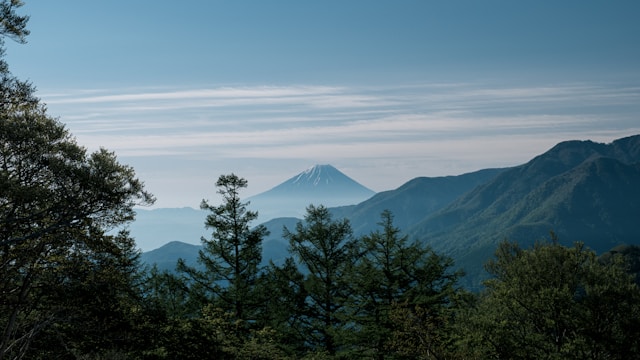
What is Mt Fuji like in spring?
Mt Fuji in spring offers a mix of clear winter-like views in March, cherry blossoms in April, and lush greenery in May. Visibility ranges from 48% in March to 32% in May, with early mornings between 6-9 AM providing the best chance of seeing the mountain. Spring also brings Golden Week crowds and the Shibazakura Festival, making planning essential.
Spring is many visitors' first choice for seeing Mt Fuji, and for good reason. The snow-capped peak, cherry blossoms, and mild weather create ideal conditions for sightseeing. But spring also brings a steady decline in visibility as humidity rises and cloud cover increases through the season.
The key to a successful Mt Fuji spring trip is understanding how conditions change month by month. March still carries winter's clarity. April delivers cherry blossoms but more clouds. May offers warm weather but the lowest spring visibility. This guide breaks down each month so you can plan around the weather, not despite it. Check our real-time visibility forecast for current conditions.
Table of Contents
- Month-by-Month Spring Visibility
- March: Late Winter Clarity
- April: Cherry Blossom Season
- May: Golden Week and Shibazakura
- Best Time of Day for Spring Viewing
- What to Wear and Bring
- Frequently Asked Questions
- Check Current Visibility
Month-by-Month Spring Visibility
Spring visibility decreases steadily from March through May as Japan transitions from dry continental air to humid Pacific conditions.
| Month | Visibility Rate | Avg. High (Base) | Avg. Low (Base) | Key Events |
|---|---|---|---|---|
| March | ~48% | 9-13°C | -4 to 2°C | Late winter clarity, snow cap prominent |
| April | ~40% | 14-18°C | 4-8°C | Cherry blossoms, increasing cloud cover |
| May | ~32% | 18-22°C | 10-14°C | Golden Week, Shibazakura Festival |
For comparison, winter months (December-February) average 55-65% visibility, while summer (June-August) drops below 20%. Spring sits in between, offering decent odds if you plan around the morning window. For the full seasonal breakdown, see our best time to see Mt Fuji guide.
March: Late Winter Clarity
March is the overlooked gem of spring. It carries much of winter's atmospheric clarity while offering milder temperatures and longer daylight hours.
Weather Conditions
- Base area temperatures: Highs of 9-13°C, lows around -4 to 2°C
- Rainfall: Increasing to approximately 115mm for the month
- Snow cap: Thick and prominent, extending well down the slopes
- Daylight: Roughly 11.5-12 hours
Why March Works
Visibility at 48% is significantly higher than April or May. The mountain's snow cap is at its most photogenic, and tourist crowds have not yet arrived for cherry blossom season. March visitors often get the clear views that April visitors hope for.
The trade-off is cold mornings, especially at the Fuji Five Lakes elevation (800-1,000m). Early morning photography requires warm layers. But if your priority is seeing Mt Fuji clearly rather than combining it with cherry blossoms, March offers the best spring odds.
What to Do in March
- Visit viewing locations around Kawaguchiko with smaller crowds
- Early plum blossoms at some lower-elevation locations
- Fewer tourists means easier access to popular viewpoints like Chureito Pagoda
- Check live camera feeds to confirm conditions before heading out
April: Cherry Blossom Season
April is the most popular spring month for Mt Fuji visits. The combination of sakura and a snow-capped mountain draws enormous crowds, particularly to the Fuji Five Lakes region.
Cherry Blossom Timing
The Fuji Five Lakes area blooms 7-10 days after Tokyo due to higher elevation. In 2026, full bloom is expected between April 6 and April 13 at Lake Kawaguchiko, with Chureito Pagoda peaking slightly later around April 10-16.
For the complete cherry blossom guide with specific spots and photography tips, see our dedicated Mt Fuji cherry blossom guide.
Weather Conditions
- Base area temperatures: Highs of 14-18°C, lows of 4-8°C
- Visibility rate: ~40%, declining through the month
- Cloud behavior: Morning clarity gives way to afternoon cumulus clouds forming around the summit
April weather is changeable. A visitor might see a perfectly clear Fuji at 8 AM only to find it completely hidden by 10 AM. This pattern repeats more frequently as the month progresses and humidity increases.
Key April Events
Fuji-Kawaguchiko Cherry Blossom Festival: March 28 - April 12 along the northern shore of Lake Kawaguchiko. Food stalls, local crafts, and illuminated cherry trees in the evening.
Shibazakura Festival opening: The Fuji Shibazakura Festival begins around April 11, though moss phlox blooms peak later in late April to early May.
April Planning Tips
- Book accommodation 3-4 months in advance for cherry blossom week
- Arrive at viewpoints before 7 AM for clear views and manageable crowds
- Have 2-3 backup days built into your itinerary
- Consider weekday visits to avoid weekend crowds
May: Golden Week and Shibazakura
May brings the warmest spring temperatures and the lowest spring visibility. It is also when Golden Week, Japan's busiest holiday period, drives massive domestic tourism.
Golden Week 2026
Golden Week runs from April 29 to May 6, 2026 (8 days). This holiday period transforms the Fuji Five Lakes area into one of the most crowded destinations in Japan.
What to expect during Golden Week:
- Road traffic to Kawaguchiko can increase journey times by 2-3x
- Hotels and ryokans charge premium rates (50%+ increase)
- Popular viewpoints have long waits
- Public transport runs at higher frequency but is often full
Tips for Golden Week:
- Book everything 3-6 months in advance: hotels, restaurants, Shinkansen seats
- Take the earliest possible train or bus to beat crowds
- Consider visiting just before (April 27-28) or just after (May 7-8) Golden Week for similar weather with fewer people
- For transport details, see our day trip from Tokyo guide
Shibazakura Festival
The Fuji Shibazakura Festival runs from April 11 to May 24, 2026 at Fuji Motosuko Resort near Lake Motosu. Approximately 500,000 moss phlox plants carpet the ground in pink, white, and purple with Mt Fuji as the backdrop.
| Detail | Information |
|---|---|
| Peak bloom | Late April to mid-May |
| Admission | 1,100-1,300 yen (varies by bloom stage) |
| Hours | Approximately 8:00 AM - 4:00 PM (extended during peak) |
| Access | Shibazakura Liner shuttle from Kawaguchiko Station (round-trip + admission: 2,500 yen) |
The festival is most photogenic on clear mornings when both the flowers and Mt Fuji are visible. Arrive at opening time for the best combination of light, visibility, and manageable crowds.
May Weather Conditions
- Base area temperatures: Highs of 18-22°C, lows of 10-14°C
- Visibility rate: ~32%
- Snow cap: Still visible but beginning to recede
- Humidity: Rising steadily, reducing long-range visibility
May is when the transition from spring to summer becomes noticeable. By mid-morning, clouds typically form around the peak even on otherwise sunny days. The morning viewing window becomes even more critical.
Best Time of Day for Spring Viewing
Regardless of which spring month you visit, the morning window is your best opportunity.
| Time Window | Visibility | Notes |
|---|---|---|
| 6:00 - 9:00 AM | Highest | Clear skies before thermal clouds form |
| 9:00 AM - 12:00 PM | Declining | Cumulus clouds often develop around summit |
| 12:00 - 3:00 PM | Lowest | Mountain frequently obscured |
| 3:00 - 6:00 PM | Slight recovery | Occasional clearing as thermals weaken |
This pattern intensifies from March to May. In March, you might see Fuji through midday. By May, the 6-9 AM window is often your only chance.
Practical advice: If you are on a day trip from Tokyo, take the earliest available train. The first Fuji Excursion departs Shinjuku around 7 AM, arriving at Kawaguchiko by 9 AM. This still catches the tail end of the best visibility window, but staying overnight gives you a significant advantage. Our weather forecast guide covers the atmospheric science behind these patterns.
What to Wear and Bring
Spring temperatures at the Fuji Five Lakes are cooler than Tokyo due to the 800-1,000m elevation.
March Clothing
- Winter jacket for early mornings (can feel below freezing before dawn)
- Warm layers that you can remove as the day warms
- Gloves and hat for sunrise photography sessions
April Clothing
- Medium-weight jacket or fleece
- Long-sleeved layers for morning, t-shirt by afternoon
- Rain jacket (April showers are common)
May Clothing
- Light jacket for mornings, comfortable daywear
- Sun protection (hat, sunscreen) for midday
- Rain gear remains essential
For all spring months: Comfortable walking shoes are necessary for areas like Chureito Pagoda's 398 steps and lakeside walking paths. Bring a portable umbrella as spring weather changes quickly.
Frequently Asked Questions
Is spring a good time to see Mt Fuji?
Spring offers moderate visibility (32-48%) with the bonus of cherry blossoms in April and warm weather in May. March provides the best spring visibility, while April adds sakura but more clouds. Check our real-time forecast before visiting, as conditions vary significantly day to day.
Can I climb Mt Fuji in spring?
No. The official climbing season runs from early July to early September. Outside this window, trails are closed, mountain huts are shut, and conditions are dangerous. See our climbing season guide for dates and preparation details.
Is Golden Week a good time to visit Mt Fuji?
Golden Week (April 29 - May 6) offers warm weather but brings Japan's largest crowds to the Fuji area. If you visit during Golden Week, book everything months ahead, arrive at viewpoints before 7 AM, and expect significant crowds throughout the day. Visiting the week before or after Golden Week provides similar conditions with fewer people.
What is the best spring month to see Mt Fuji?
March offers the highest visibility (~48%) and smallest crowds, making it the best month for simply seeing the mountain. April is best if you want cherry blossoms with Fuji, though visibility drops to ~40%. May suits those who prefer warmer weather and the Shibazakura Festival, but visibility is lowest at ~32%.
Check Current Visibility
Ready to see if Mt Fuji is visible right now?
Check Mt Fuji Visibility - Real-time visibility score updated every 15 minutes.
Also explore visibility for Mt. Rainier in Seattle and Denali in Alaska.
More Articles
Lake Motosu: The 1,000-Yen View, and When It Actually Appears
Lake Motosu is the deepest, clearest Fuji Five Lake and home of the 1,000-yen note view. Access, camping, costs, and when the reflection appears.
Mt. Fuji from Hakone: Best Viewpoints and Visibility Guide
Can you see Mt. Fuji from Hakone? Yes, on about half of all days. Here are the best viewpoints, when to go, and how to check conditions.
Hakone Ropeway: Fares, Route, Mt. Fuji Views and When It Closes
The Hakone Ropeway now charges one flat fare. Real 2026 prices, exactly where Mt. Fuji appears, and the closures nobody warns you about.