Mt Fuji Sunset: Best Spots, Timing, and the Red Fuji Phenomenon
Find the best spots and times to watch an Mt Fuji sunset, from lakeside reflections to the Aka Fuji and Diamond Fuji phenomena.

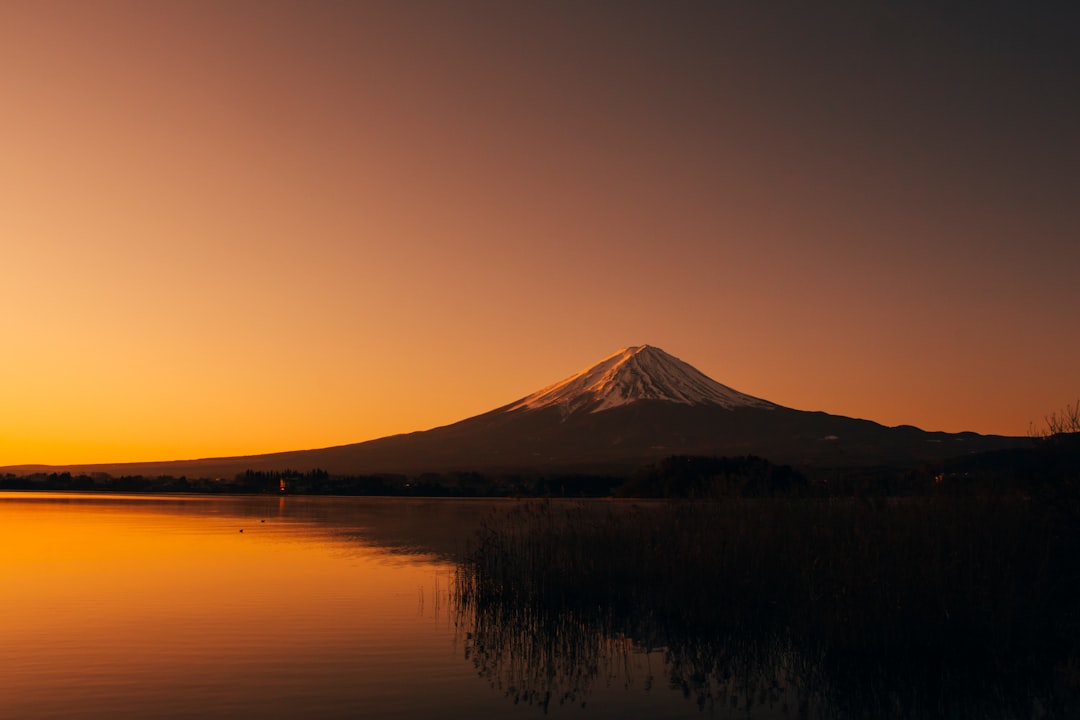
An Mt Fuji sunset is a fundamentally different experience from its famous sunrise. While goraiko at dawn draws climbers to the summit and photographers to the north shores, sunset transforms the mountain from the opposite direction. The setting sun hits Fuji's western slopes head-on, turning the entire peak orange, pink, and sometimes deep crimson. The Japanese have a name for this: Aka Fuji, Red Fuji, the same phenomenon Hokusai immortalized in his woodblock prints over 200 years ago.
But capturing a great Mt Fuji sunset requires understanding where to stand, when to go, and why the mountain sometimes turns red and sometimes disappears behind clouds. This guide covers the viewing spots, seasonal timing, and atmospheric science that separate a forgettable evening from an unforgettable one.
Mt Fuji Sunset Times by Month
Sunset times in the Fuji Five Lakes region shift by over two hours across the year. The table below shows approximate times for the lake-level viewpoints most visitors use.
| Month | Sunset | Golden Hour Starts | Best Season? |
|---|---|---|---|
| January | 4:45 PM | 4:15 PM | Yes, excellent clarity |
| February | 5:15 PM | 4:45 PM | Yes, cold but clear |
| March | 5:45 PM | 5:15 PM | Moderate haze |
| April | 6:10 PM | 5:40 PM | Cherry blossoms possible |
| May | 6:35 PM | 6:05 PM | Humidity building |
| June | 7:00 PM | 6:30 PM | Rainy season, poor odds |
| July | 7:00 PM | 6:30 PM | Hot, hazy, occasional Aka Fuji |
| August | 6:35 PM | 6:05 PM | Peak Aka Fuji season |
| September | 5:55 PM | 5:25 PM | Clearing skies, strong colors |
| October | 5:10 PM | 4:40 PM | Autumn color + snow cap |
| November | 4:35 PM | 4:05 PM | Superb visibility |
| December | 4:30 PM | 4:00 PM | Earliest sunsets, crisp air |
For sunset photography, the golden hour (roughly 30 minutes before the sun touches the horizon) is when the light turns warm and Fuji's slopes catch color. Arrive at your viewpoint at least 45 minutes before sunset to set up and watch the full transition.
Why Sunset Viewing Means Standing East of Fuji
The single most important thing to understand about an Mt Fuji sunset is directional. The sun sets in the west. Fuji needs to be between you and the sunset, or lit by the setting sun from behind you. These produce two completely different experiences.
East-side viewpoints (Lake Yamanaka, Lake Kawaguchiko's east shore, Gotemba) put the sun behind you. You face west toward Fuji, and the last light illuminates the mountain directly. This is where Aka Fuji happens. This is where the mountain glows.
West-side viewpoints (Lake Shoji, Lake Motosu, Lake Tanuki) put Fuji between you and the sun. The mountain becomes a dark silhouette against a blazing sky. Dramatic in a different way, but you lose the surface color.
Most first-time visitors do not think about this. They go to whichever lake is most convenient without considering which direction they will be facing. For sunset, the east side wins if you want to see color on the mountain itself. The west side wins if you want a silhouette shot with a fiery sky behind the peak.
Best Mt Fuji Sunset Viewing Spots
Lake Yamanaka (East Side)
Lake Yamanaka is the best overall sunset spot near Mt Fuji. Positioned directly east of the mountain, the setting sun illuminates Fuji's slopes with warm light while you face west. On calm evenings, the lake mirrors the lit-up mountain perfectly.
The Yamanakako Panorama Dai observation deck, opened in November 2024, offers elevated views from a well-maintained platform. The south shore near Mama no Mori park is another strong option with free parking. Lake Yamanaka also hosts the most accessible sunset Diamond Fuji in autumn and winter (more on that below).
Lake Kawaguchiko (North Shore)
The north shore of Kawaguchiko works for both sunrise and sunset, though sunrise is its stronger suit. At sunset, the angle is slightly oblique rather than direct, meaning Fuji catches good light but not the full-face illumination you get from Yamanaka. That said, the infrastructure here is better: hotels, restaurants, the Kachi Kachi Ropeway up Mount Tenjo, and the lakeside promenade at Oishi Park all make it easy to enjoy a sunset without roughing it.
For photographers, the Ubuyagasaki peninsula is the sweet spot. The shoreline curves to give you a slightly eastern angle on Fuji, and on still evenings the reflection stretches unbroken across the water.
Mount Tenjo (Kachi Kachi Ropeway)
The ropeway takes you to 1,000 meters elevation on the east shore of Lake Kawaguchiko. From the observation deck, you look across the lake and directly at Fuji. At sunset, the combination of altitude and unobstructed sightline makes this one of the most dramatic viewpoints in the area. The last ropeway down runs at 5:00 PM in winter and 5:30 PM in summer, so check the schedule carefully if you want to catch a late sunset in spring or summer.
Chureito Pagoda
Chureito Pagoda faces southwest toward Fuji, making it more of a midday and early afternoon spot than a pure sunset location. However, in autumn and winter when the sun sets further south, late afternoon light can paint the pagoda and Fuji in warm tones simultaneously. The 398 steps are less crowded at the end of the day than at dawn, which is a genuine advantage.
Lake Shoji and Lake Motosu (West Side Silhouettes)
These western lakes give you Fuji as a silhouette against sunset colors. Lake Shoji is the smallest of the five lakes and draws serious photographers who want the classic "dark mountain, bright sky" composition. Lake Motosu is deeper and clearer, and its north shore view appears on the 1,000-yen bill. Neither location shows Aka Fuji because you are looking into the sun rather than at a sun-lit mountain, but the silhouette shots can be extraordinary.
Aka Fuji: When the Mountain Turns Red
Aka Fuji (赤富士) is the phenomenon where Mt Fuji's slopes turn deep red or crimson at sunset. It is not a daily occurrence. Specific atmospheric and seasonal conditions must align.
The conditions: clear skies, low humidity, and a snow-free or mostly snow-free summit. This last point is why Aka Fuji occurs primarily between late July and early October. During these months the snow cap has melted, exposing the dark volcanic rock and red-brown scoria on Fuji's upper slopes. When low-angle sunset light hits this bare volcanic surface, the mountain absorbs the blue wavelengths and reflects the reds and oranges back, creating the distinctive crimson glow.
In winter, when the summit is covered in white snow, sunset light turns the mountain pink or orange rather than red. Beautiful, but not Aka Fuji in the traditional sense.
Hokusai's famous woodblock print Gaifu Kaisei (Fine Wind, Clear Morning), created around 1831 as part of his Thirty-six Views of Mount Fuji series, depicts exactly this phenomenon. The print shows a snow-free, deeply red Fuji under wispy clouds. It is one of the most reproduced images in Japanese art history, and it captures a real atmospheric event that you can still witness today from the same vantage points Hokusai used.
The best viewing locations for Aka Fuji are on the east side of the mountain. Lake Yamanaka and the eastern shore of Lake Kawaguchiko provide direct western views of the illuminated slopes. Lake Motosu is also historically noted as an Aka Fuji spot, though from the west side you see the effect more subtly.
How to Predict an Aka Fuji Evening
You cannot guarantee Aka Fuji, but you can stack the odds. Check the Mt Fuji visibility forecast in the afternoon. A visibility score above 70 on our weighted atmospheric model combined with humidity below 50% and clear skies to the west gives you a strong chance. Cloud cover is the primary killer. Even thin cirrus clouds diffuse the direct light enough to mute the red effect.
August and September offer the best combination of bare rock and stable evening weather. Late July works too, but afternoon thunderstorms are more common and can spoil an otherwise clear evening.
Diamond Fuji at Sunset
Diamond Fuji occurs when the sun aligns precisely with Fuji's summit, appearing to balance on the peak like a gemstone. While sunrise Diamond Fuji happens from western viewpoints, sunset Diamond Fuji is visible from locations to the east and northeast.
Lake Yamanaka Dates
Lake Yamanaka offers the longest and most accessible sunset Diamond Fuji window. The alignment occurs twice per year as the sun's setting position migrates along the horizon:
| Period | Approximate Dates | Sunset Time |
|---|---|---|
| Autumn | October 25 to November 25 | 4:20-4:45 PM |
| Winter | January 18 to February 20 | 4:40-5:15 PM |
Specific spots along the lake shore align on different dates. The Yamanakako Koryu Plaza Kirara lines up around February 18-19 and October 23-24. The Shinsui Park viewpoint aligns around February 14-15 and October 26-27. The Panorama Dai deck works around February 22-23 and October 18-19.
Diamond Fuji from Tokyo
On clear winter days, several Tokyo observation decks offer sunset Diamond Fuji views. The alignment dates shift by location because each building sits at a slightly different angle relative to Fuji's summit.
| Location | Date (approx.) | Time |
|---|---|---|
| Sunshine 60 (Ikebukuro) | Jan 27 / Nov 14 | 4:50 PM / 4:21 PM |
| Tokyo Metropolitan Gov't Building | Feb 1 / Nov 9 | 4:55 PM / 4:25 PM |
| Shibuya Scramble Square | Feb 6 / Nov 3 | 5:03 PM / 4:30 PM |
| Tokyo Tower | Feb 8 / Nov 2 | 5:03 PM / 4:32 PM |
| Mount Takao | Dec 16-26 | ~4:20 PM |
Mount Takao deserves special mention. Unlike the observation deck experiences, this is an outdoor hilltop with an unobstructed western horizon. The hike to the summit takes about 90 minutes, or you can ride the cable car. During the December window, sunset Diamond Fuji from Takao draws large crowds, so arrive at least two hours early to secure a position with a clear sightline.
The challenge with Tokyo Diamond Fuji is distance. At roughly 100 km away, even slight haze can obscure the summit alignment. Check the live visibility forecast the morning of your attempt. A score below 50 usually means the mountain will not be visible from Tokyo at all.
Sunset vs. Sunrise: Which Is Better for Mt Fuji?
This is not a simple question. They reward different things.
Sunrise advantages: Clearer air, higher visibility scores, calmer lake surfaces for reflections, fewer crowds at most viewpoints. The atmospheric science favors morning. Overnight cooling settles dust and moisture, and convective clouds have not yet formed. Our visibility data consistently shows morning scores 10-15 points higher than afternoon scores during spring and summer.
Sunset advantages: Warmer light on the mountain's face (from east-side viewpoints), the Aka Fuji phenomenon, Diamond Fuji from accessible Tokyo locations, more comfortable timing (no 4:00 AM alarm), and the chance to combine sunset viewing with a lakeside dinner.
The honest answer: if visibility is your top priority, sunrise wins. If you want warm color on the mountain and a more relaxed experience, sunset is the better choice. Winter evenings offer the closest thing to "best of both worlds," with cold dry air keeping the mountain crisp well into the late afternoon.
Photographing Mt Fuji at Sunset
The technical challenge of sunset photography at Fuji is dynamic range. The sky is bright. The mountain is darker. And if you are shooting from the west side, the mountain is a near-silhouette against a blazing horizon.
For east-side shots (Aka Fuji, warm-lit mountain), use a graduated neutral density filter to balance the sky against the foreground. Shoot at f/8 to f/11 for maximum sharpness across the frame. A 70-200mm telephoto lens compresses the scene and makes Fuji fill the frame from Kawaguchiko or Yamanaka. For wider compositions that include the lake reflection, a 24-70mm or even 16-35mm works better.
For west-side silhouettes (Shoji, Motosu), expose for the sky and let the mountain go dark. This is where dramatic oranges and purples live. Bracket your exposures: the light changes fast in the final ten minutes before the sun drops below the horizon.
One tip most guides miss: stay for 15-20 minutes after the sun disappears. The afterglow phase often produces the deepest colors as the sky shifts through magenta and violet. If you are on the east side, this is also when the Belt of Venus appears: a pink band above the horizon opposite the sunset, with the Earth's shadow rising below it. Fuji centered in that pink band, with the dark blue shadow underneath, is one of the rarest and most striking compositions in Japanese landscape photography.
Best Seasons for an Mt Fuji Sunset
Winter (November to February) is the top season. Visibility rates from our forecast model exceed 70% on many days, the air is dry and still, and the snow-capped mountain catches sunset light beautifully. The tradeoff is early sunset times (as early as 4:30 PM in December) and genuinely cold temperatures at the lakeshore.
Autumn (September to October) combines pleasant weather with strong visibility and the first snowfall on the summit. Autumn foliage around Kawaguchiko peaks in mid-November, meaning you can catch maple trees and a sunset-lit Fuji in the same frame. This is also the start of the Diamond Fuji window at Lake Yamanaka.
Summer (July to August) is Aka Fuji season. Visibility is generally lower due to humidity, but when conditions align, the bare volcanic rock produces colors no other season can match. Stick to days with visibility scores above 60, and accept that you may need several attempts. Day trips from Tokyo make repeat visits feasible.
Spring (March to May) is the weakest sunset season. Increasing humidity and spring haze reduce visibility, and the mountain's snow cap is in transition. Cherry blossom season in late March and early April is the exception: if the skies cooperate, blossoms in the foreground with sunset light on Fuji is a legendary combination.
June is essentially a write-off. The tsuyu rainy season drops visibility below usable levels on most days. Do not plan a sunset trip to the Fuji area in June unless you have backup plans.
Frequently Asked Questions
Can you see Mt Fuji at sunset from Tokyo?
On clear winter days, yes. The best locations are elevated observation decks in western Tokyo and the Tama Hills area. Sunshine 60 in Ikebukuro, the Tokyo Metropolitan Government Building in Shinjuku, and Shibuya Scramble Square all offer Fuji views at sunset. Distance and haze make this unreliable outside of November through February. Check the visibility forecast before making plans.
What is the difference between Aka Fuji and Diamond Fuji?
Aka Fuji (Red Fuji) is a color phenomenon where the entire mountain turns red or crimson at sunset, caused by low-angle light hitting bare volcanic rock. It occurs mainly July through October. Diamond Fuji is an alignment phenomenon where the sun sits precisely on Fuji's summit, and it occurs on specific dates depending on your viewing location. Both happen at sunset, but they are separate events driven by different conditions.
What is the best lake for Mt Fuji sunset?
Lake Yamanaka is the best overall choice. It sits directly east of Fuji, providing the warmest and most direct sunset light on the mountain, plus the longest Diamond Fuji viewing window. Lake Kawaguchiko is a strong second choice with better tourist infrastructure and food options.
Is Mt Fuji visible at sunset in summer?
Visibility is lower in summer due to heat and humidity, but clear evenings do occur, especially in late August and September as conditions improve. Summer is also the only season for true Aka Fuji. Check the Mt Fuji forecast on the day of your visit for real-time conditions.
Check Today's Conditions
Before heading out for an evening at the lakes, check whether the mountain is actually visible. Our Mt Fuji visibility forecast updates every 15 minutes and shows current conditions plus a 10-day outlook. A visibility score above 60 in the late afternoon suggests good odds for a sunset view. Anything below 40 means clouds or haze will likely hide the peak.
More Articles
Hakone: Where Fuji Shows, How the Loop Runs, When to Go
Hakone is a volcanic caldera 80 minutes from Tokyo. Which parts actually see Mt. Fuji, which way to ride the loop, and 2026 prices for each leg.
Hakone Weather: Temperatures by Altitude, Rain and Closures
Hakone weather by month and altitude: why Owakudani runs about 6°C colder than Yumoto, the wettest months, and the 200 mm rule that shuts roads.
What Causes the Northern Lights? The Science Behind the Aurora Borealis
What causes the northern lights? The sun sends charged particles that hit our atmosphere near the poles. The full science, in plain English.