Shibazakura Festival at Mt. Fuji: Dates, Bloom Guide, and Visitor Tips
Plan your visit to the Fuji Shibazakura Festival with bloom dates, ticket prices, and tips for seeing Mt. Fuji.

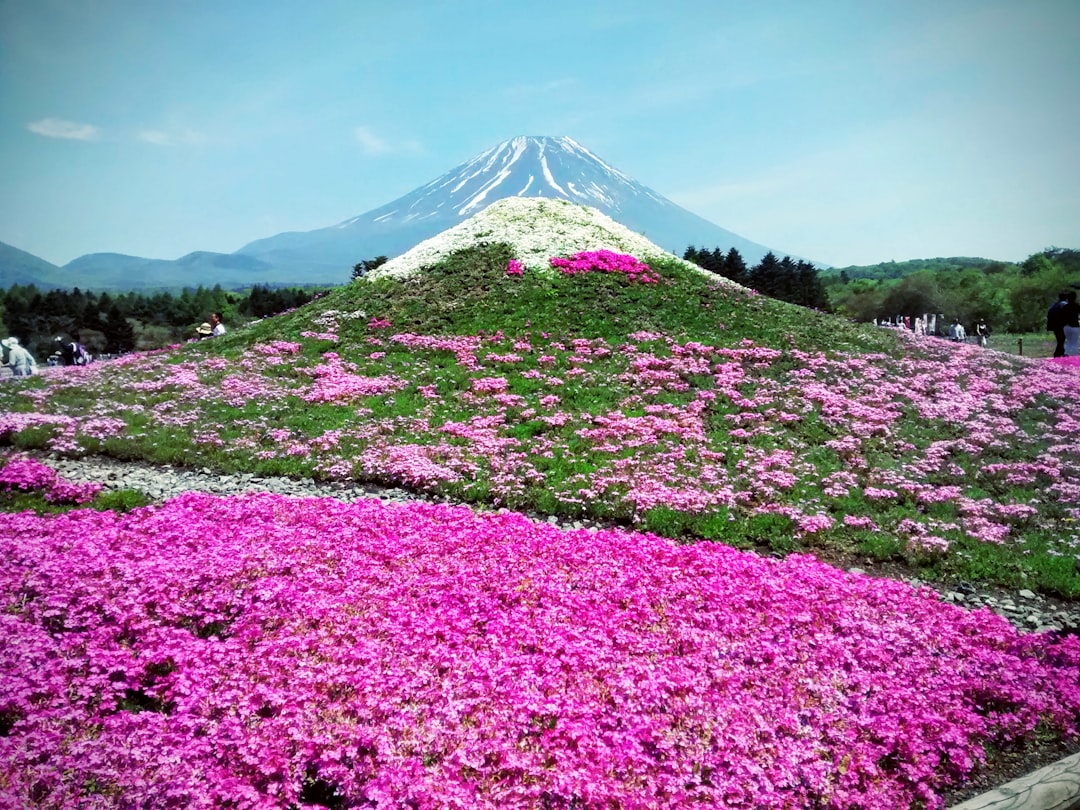
Every spring, roughly 500,000 to 800,000 stalks of shibazakura (moss phlox) bloom in a carpet of pink, white, and purple at the base of Mt. Fuji. The Shibazakura Festival at Fuji Motosuko Resort is one of Japan's most photographed spring events, drawing visitors who come for the flowers but stay for the chance to frame them against a clear view of the mountain. That second part is trickier than most guides let on.
The festival runs from mid-April through late May each year, overlapping with the tail end of cherry blossom season and the start of the rainy season. Getting the timing right means juggling bloom peaks, crowd levels, and Mt. Fuji visibility, three factors that rarely align on the same day unless you plan carefully.
2026 Shibazakura Festival Dates and Hours
The 2026 Fuji Shibazakura Festival runs from April 11 to May 24, with hours and admission varying by period:
| Period | Dates | Hours | Adult Admission |
|---|---|---|---|
| Early season | April 11 - 24 | 8:00 AM - 4:00 PM | ¥1,000 |
| Peak bloom | April 25 - May 10 | 8:00 AM - 4:00 PM | ¥1,300 |
| Golden Week | April 29 - May 6 | 6:00 AM - 5:00 PM | ¥1,300 |
| Late season | May 11 - 24 | 8:00 AM - 4:00 PM | ¥1,000 |
Children (ages 3 and up) pay ¥500 during peak bloom and ¥400 at other times. Advance tickets purchased online save ¥100 off the gate price. Parking is ¥1,000 per vehicle during peak dates and ¥500 otherwise.
The venue is Fuji Motosuko Resort, located about 3 kilometers south of Lake Motosuko in the Fuji Five Lakes area.
When the Bloom Actually Peaks
The best time to visit the Shibazakura Festival is during the last week of April through the first week of May, when the highest density of flowers reaches full bloom. But "peak bloom" is not a single moment. Different varieties open at different times, and the carpet of color shifts week by week.
The festival showcases six to eight named varieties of moss phlox, each with a distinct color and bloom window:
| Variety | Color | Bloom Timing |
|---|---|---|
| McDaniel's Cushion | Deep pink | Early (mid-April) |
| Scarlet Flame | Red-pink | Early to mid |
| Oakington Blue Eyes | Pale purple-blue | Mid (late April) |
| Mont Blanc | White | Mid |
| Autumn Rose | Soft pink | Mid to late |
| Tama no Nagare | White with pink streaks | Late (early May) |
This staggered blooming means visiting in late April gives you vivid pinks and reds, while early May delivers the fullest color range with the late-blooming whites and pastels filling in the gaps. The festival grounds look noticeably different depending on which week you visit.
If the bloom is running early or late due to weather, the festival organizers adjust the schedule. Check the official Fuji Motosuko Resort site for bloom status updates before booking.
Mt. Fuji Visibility During the Festival
Here is the part that most shibazakura guides gloss over. The entire appeal of this festival is the combination of flowers and mountain. Without a clear view of Fuji, you are looking at a nice flower field. With it, you are looking at one of the most iconic spring landscapes in Japan.
Spring visibility at Mt. Fuji is mediocre compared to winter. But the odds vary significantly week by week across the festival window. Based on historical atmospheric data from our visibility model, here is what each week of the festival looks like:
| Festival Week | Dates | Morning Visibility (before 8 AM) | All-Day Visibility |
|---|---|---|---|
| Week 1 | Apr 11-17 | 40% | 28% |
| Week 2 | Apr 18-24 | 38% | 26% |
| Week 3 | Apr 25-May 1 | 35% | 24% |
| Week 4 (Golden Week) | May 2-6 | 33% | 22% |
| Week 5 | May 7-14 | 36% | 25% |
| Week 6 | May 15-24 | 32% | 20% |
The pattern is clear: visibility declines as spring progresses toward the rainy season, with a slight recovery in the post-Golden Week window before dropping again in late May. Morning visibility runs 10-14 percentage points higher than the all-day average because thermal clouds build around the summit after 10:00 AM.
The best time of day to see Mt. Fuji clearly is before 8:00 AM, when morning air is cooler, drier, and less prone to cloud formation. This lines up well with the festival's opening time, especially during Golden Week when gates open at 6:00 AM.
You can check current conditions on our Mt. Fuji visibility tracker, which uses a weighted atmospheric model combining cloud cover, humidity, and precipitation data to score visibility in real time. Checking the evening before your planned visit gives you the best read on whether tomorrow morning will deliver a clear mountain backdrop.
For a deeper look at seasonal visibility patterns, our Mt. Fuji visibility guide breaks down the odds month by month.
The Sweet Spot: When Bloom and Visibility Overlap
Most visitors optimize for either flowers or mountain views. The table below combines both, scoring each week on bloom fullness and visibility odds to identify the best windows:
| Festival Week | Bloom Coverage | Morning Visibility | Combined Rating |
|---|---|---|---|
| Apr 11-17 | 30% (early pinks only) | 40% | Fair |
| Apr 18-24 | 60% (pinks and purples) | 38% | Good |
| Apr 25-28 (weekdays) | 85% (near full) | 35% | Best overall |
| Apr 29-May 6 (Golden Week) | 90% (full bloom) | 33% | Best bloom, worst crowds |
| May 7-10 (weekdays) | 80% (whites filling in) | 36% | Strong second choice |
| May 11-24 | 50% (fading) | 32% | Late season only |
The optimal window is April 25-28, specifically a weekday morning. You get near-peak bloom (85% coverage with the vivid pinks, reds, and purples all open), reasonable visibility odds (35% morning clear view), and manageable crowds since Golden Week has not started. If you can only visit during Golden Week, arrive at the 6:00 AM opening to maximize your mountain odds before clouds build.
The post-Golden Week window of May 7-10 is the underrated second choice. Early varieties are fading but the late-blooming whites and pastels (Tama no Nagare, Autumn Rose) create the fullest color range. Visibility ticks up slightly compared to Golden Week, and crowds drop sharply once the holiday ends.
The Golden Week Problem (and How to Avoid It)
Golden Week (April 29 to May 6) falls directly on top of peak bloom. This creates a perfect storm of maximum flowers and maximum crowds.
How bad does it get? The festival draws roughly 500,000 total visitors across its six-week run. During Golden Week, daily attendance spikes to an estimated 15,000-20,000 visitors per day, compared to 2,000-4,000 on a typical weekday. The drive from Kawaguchiko to the festival venue, normally under an hour, can stretch to three hours in traffic. The parking lot fills before mid-morning. Lines form at the gate before it opens. The festival grounds, while spacious, feel packed by 10:00 AM.
Three strategies that actually work:
Arrive before the gates open. During Golden Week, the festival opens at 6:00 AM. Arriving by 5:30 AM puts you ahead of the tour buses and gives you the best light for photography. You will also have the best Mt. Fuji visibility at this hour.
Visit on a weekday outside Golden Week. The window from April 25-28 catches excellent bloom before the holiday crush. May 7-10 works too, though some early varieties will be past their peak by then.
Take public transit. The Shibazakura Liner shuttle bus from Kawaguchiko Station takes about 40 minutes and costs ¥3,000 for adults (round trip plus admission included). It runs roughly hourly with departures starting at 7:50 AM. This completely sidesteps the parking nightmare. A regular route bus from Kawaguchiko costs ¥1,450-1,900 one way but does not include admission.
Getting to the Festival
The Shibazakura Festival venue is not close to any train station. Most visitors reach it through Kawaguchiko Station, which serves as the regional transport hub for the Fuji Five Lakes.
From Tokyo to Kawaguchiko:
| Route | Duration | Cost |
|---|---|---|
| JR Chuo Line + Fuji Excursion limited express from Shinjuku | ~1 hour 54 min | ~¥4,130 |
| Highway bus from Shinjuku Expressway Bus Terminal | ~2 hours | ~¥2,200 |
| Highway bus from Tokyo Station | ~2 hours 30 min | ~¥2,200 |
Our Kawaguchiko Station guide covers the full range of options, including luggage storage and connecting bus routes.
From Kawaguchiko to the festival:
The Shibazakura Liner is the simplest option. It runs directly from the station with no intermediate stops, takes 40 minutes, and the ¥3,000 fare covers round-trip transport and admission. Children pay ¥1,500.
If you are driving, follow Route 139 south from Kawaguchiko toward Lake Motosuko. Expect significant delays during weekends and Golden Week.
Trip Budget at a Glance
Costs vary significantly depending on how you get there and when you visit. Here is what the full trip looks like for three common scenarios:
| Expense | Budget Solo (public transit, off-peak) | Mid-Range Couple (public transit, peak) | Driving (peak, per car) |
|---|---|---|---|
| Tokyo to Kawaguchiko | ¥2,200 (highway bus) | ¥8,260 (train x2) | ¥3,000-4,000 (fuel + tolls) |
| Kawaguchiko to festival | ¥3,000 (Liner, incl. admission) | ¥6,000 (Liner x2, incl. admission) | ¥1,000 (parking) |
| Festival admission | Included in Liner | Included in Liner | ¥2,600 (peak, x2) |
| Food at festival | ¥1,000 | ¥2,500 | ¥2,500 |
| Day trip total | ¥6,200 (~$42) | ¥16,760 (~$112) | ¥9,100-10,100 (~$65) |
The Shibazakura Liner is the best value option since it bundles round-trip transport and admission for ¥3,000 per person. Driving saves money for groups of three or more but costs you time during peak periods.
What to Do at the Festival
Plan for two to three hours at the festival grounds. The main walking loop through the flower fields takes 30-45 minutes at a relaxed pace, but you will want time for photos, food, and the garden areas.
The flower fields are the main draw. Paved paths wind through the grounds, making it accessible for strollers and wheelchairs on most routes. Different sections feature different shibazakura varieties, so walking the full loop gives you the complete color range.
The Peter Rabbit English Garden is a landscaped area within the festival grounds, included with admission. It is a quieter space with themed plantings that works well for a break from the main crowds.
Food stalls line the central area, selling regional specialties from Yamanashi Prefecture. Look for Fujiyoshida udon (thick, chewy wheat noodles), local fruit desserts, and shibazakura-themed sweets. Potted moss phlox plants are also for sale if you want to bring the bloom home.
The festival is pet-friendly, which is unusual for Japanese flower events. For broader trip planning, the Japan National Tourism Organization has seasonal guides covering the Fuji Five Lakes area.
Photography Tips for Shibazakura and Mt. Fuji
The classic shot frames the pink flower carpet in the foreground with Mt. Fuji rising behind it. Getting this right depends more on timing than technique.
Morning light (6:00-8:00 AM) gives you the best chance at a clear mountain and soft, directional light that brings out the phlox colors. The sun rises behind you when facing Fuji from the festival grounds, which means front-lit flowers and a well-exposed mountain.
Afternoon light offers warmer tones and side-lighting that adds depth to the flower fields, but cloud cover around the summit becomes increasingly likely after 10:00 AM. If you are shooting in the afternoon, focus on close-up flower compositions rather than counting on a clear Fuji backdrop.
A low angle, shooting from just above the flowers, creates the "carpet stretching to the mountain" effect. Bring a wide-angle lens or use your phone's ultra-wide mode. For composition ideas around the Fuji Five Lakes, our Mt. Fuji photography guide covers lens choices, golden hour timing, and location-specific tips.
Combining Shibazakura with Other Spring Activities
The festival sits in the middle of the Fuji Five Lakes region, so it pairs well with a full day or overnight trip.
Same-day additions:
- Lake Motosuko is just 3 km north of the venue. This is the lake featured on the ¥1,000 bill, and the Fuji view from its north shore is one of Japan's most recognizable.
- Fuji Five Lakes sightseeing through Kawaguchiko, Yamanakako, and Saiko all offer distinct Mt. Fuji viewing angles.
- Mt. Fuji 5th Station is accessible by bus from Kawaguchiko (outside climbing season) and gives you a perspective from 2,300 meters up the mountain.
Seasonal overlap:
The shibazakura bloom overlaps with the very end of cherry blossom season at higher elevations around the lakes. In mid-April, you can sometimes catch both spring flowers and lingering sakura on the same trip.
Frequently Asked Questions
Is the Shibazakura Festival worth visiting if Mt. Fuji is not visible?
The flower fields are beautiful on their own, with half a million or more moss phlox in bloom across the grounds. But the combination of flowers and mountain is what makes this festival unique. If the visibility forecast shows poor conditions, consider rescheduling to a clearer day if your itinerary allows it.
Can I visit the Shibazakura Festival as a day trip from Tokyo?
Yes. The round trip from Shinjuku to the festival takes about 5-6 hours including transit time, leaving 2-3 hours at the festival itself. Depart Tokyo by 7:00 AM at the latest to arrive before midday crowds. Our Mt. Fuji day trip guide covers the logistics.
What is the difference between shibazakura and cherry blossoms?
Shibazakura (moss phlox) is a ground-cover plant that blooms in carpets of pink, white, and purple. Cherry blossoms (sakura) grow on trees. The name shibazakura literally means "lawn cherry blossom" because the petal shape resembles sakura, but they are unrelated species. Shibazakura blooms later, from mid-April through May, while most cherry blossoms peak in late March to early April at lower elevations.
How crowded is the Shibazakura Festival?
Outside Golden Week, weekday mornings are manageable. Arrive when the gates open at 8:00 AM and you will have space to photograph without crowds in your shots. Golden Week and weekends are extremely crowded, with multi-hour traffic delays and packed walking paths by mid-morning.
More Articles
Best Mt. Fuji Viewing Locations: Kawaguchiko vs Tokyo vs Hakone Compared
Compare the best places to see Mt. Fuji with real visibility data. Find out which location offers the best views for your trip.
Fuji Hakone Pass: What It Covers, the Cost Math, and the Leg It Misses
The Fuji Hakone Pass costs 11,100 yen for three days across both regions. Here is the break-even math and the return leg it quietly leaves out.
Hakone Ropeway: Fares, Route, Mt. Fuji Views and When It Closes
The Hakone Ropeway now charges one flat fare. Real 2026 prices, exactly where Mt. Fuji appears, and the closures nobody warns you about.