Fuji Five Lakes: Which Lake Has the Best View of Mount Fuji
A data-backed guide to the Fuji Five Lakes: how each lake compares for Mt. Fuji views, timing, and access, so you pick the right one.

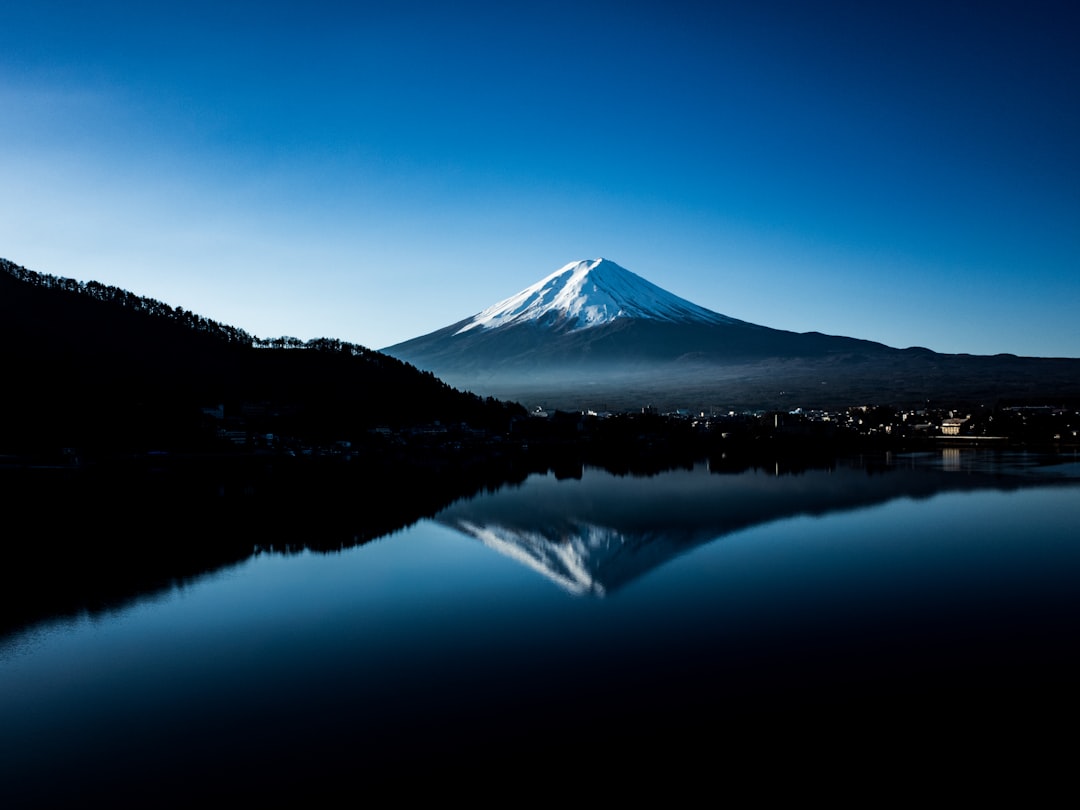
The Fuji Five Lakes are five bodies of water at the northern base of Mount Fuji: Kawaguchiko, Yamanaka, Sai, Shoji, and Motosu. Known in Japanese as Fujigoko, they sit at elevations between 830 and 980 meters and form the most popular region for viewing the mountain up close. But they are not interchangeable. Each lake offers a different view, a different crowd, and different odds of actually seeing Fuji when you arrive.
Most guides list the five lakes and stop there. This one ranks them by view quality, backs the ranking with elevation and size data, and connects each lake to the one factor that decides whether your trip works at all: whether the mountain is visible that morning.
Which of the Fuji Five Lakes has the best Mt. Fuji view? Lake Kawaguchiko offers the best all-around views and the easiest access, making it the top pick for first-time visitors. Lake Shoji and Lake Motosu deliver the most photogenic reflections on calm mornings, while Lake Yamanaka gives the widest, most open panorama. Lake Sai has the weakest view, mostly blocked by surrounding hills. Whichever you choose, Fuji is most reliably visible before 9:00 AM, so plan an early arrival.
Table of Contents
- What Are the Fuji Five Lakes?
- The Five Lakes Compared: Size, Depth, and Elevation
- Ranking the Fuji Five Lakes by Mount Fuji View
- When Mt. Fuji Is Actually Visible from the Lakes
- How to Choose Your Lake
- Getting to and Around the Fuji Five Lakes
- Frequently Asked Questions
What Are the Fuji Five Lakes?
The Fuji Five Lakes are a cluster of lakes in Yamanashi Prefecture, roughly 100 kilometers southwest of Tokyo, formed by Mount Fuji's own eruptions. They are not natural depressions that happened to fill with water. Lava flows dammed valleys and rivers over thousands of years, and the pooled water became the lakes visitors photograph today.
The most dramatic example is a single event. Before the year 864, a large lake called Senoumi covered much of the area now occupied by the three western lakes. During the Jogan eruption of 864, lava poured down Fuji's northern flank and split Senoumi apart, filling the middle and leaving three separate lakes: Sai, Shoji, and Motosu. The same lava flow created the Aokigahara forest that now blankets the plain between them.
That geology still shows. Sai, Shoji, and Motosu remain connected by underground channels through the porous lava rock, so their water levels rise and fall together at almost exactly 900 meters. Kawaguchiko and Yamanaka, the two eastern lakes, formed separately and sit at their own elevations. Understanding this split helps explain why the western lakes feel wilder and less developed while the eastern pair carry most of the tourism.
The Five Lakes Compared: Size, Depth, and Elevation
The five lakes differ more than most guides admit. The following figures come from geographic survey data and reveal how distinct each lake really is.
| Lake | Elevation | Surface Area | Max Depth | Signature Trait |
|---|---|---|---|---|
| Kawaguchiko | 833 m | 6.13 km² | 15.2 m | Most accessible, most to do |
| Yamanaka | 982 m | 6.46 km² | 13.5 m | Largest and highest, wide open views |
| Sai (Saiko) | 901 m | 2.1 km² | 71.7 m | Quiet, borders Aokigahara forest |
| Shoji (Shojiko) | 900 m | 0.5 km² | 15.2 m | Smallest, mirror-flat reflections |
| Motosu (Motosuko) | 900 m | 4.7 km² | 121.6 m | Deepest, clearest, the 1,000-yen view |
A few numbers reshape how you think about these lakes. Yamanaka is the largest by area and the highest in elevation, yet it is also the shallowest at just 13.5 meters. Motosu holds the opposite record: modest surface area but a maximum depth of 121.6 meters, roughly the height of a 40-story building, which is why its water stays cold, clear, and a deep blue-green year round.
Shoji is tiny, half a square kilometer, small enough to walk around in under an hour. That compactness is exactly why its surface goes glassy on still mornings and produces the cleanest reflections of the group.
Ranking the Fuji Five Lakes by Mount Fuji View
Not every lake shows Mount Fuji equally. Here is an honest ranking based on view quality, framing, and reliability, from best to weakest.
1. Lake Kawaguchiko: The Best All-Around Choice
Kawaguchiko earns the top spot for one reason: it combines a strong view with genuine ease of access. The northern shore looks straight across the water at Fuji, and it is lined with the region's most famous viewpoints. Oishi Park frames the mountain behind seasonal flower beds, and the nearby Chureito Pagoda delivers the postcard shot of a five-story pagoda with Fuji rising behind it.
It is the only one of the five lakes with a direct rail connection. Trains run to Kawaguchiko Station, and buses fan out from there to the rest of the region. If you have one day and want to be certain you see the mountain from a good angle, this is the lake to pick. For a full breakdown of specific vantage points, see our guide to the best Mt. Fuji viewing locations.
2. Lake Motosu: The 1,000-Yen View
Motosu holds a claim no other lake can match. The image of Mount Fuji reflected in its waters appears on the back of the Japanese 1,000-yen banknote, based on a 1935 photograph by Okada Koyo titled "Kohan no Haru." You can stand in the exact spot the photo was taken by hiking up to the Nakanokura Pass observation deck on the lake's western side.
The water clarity here is the best of the five lakes, and on calm days the reflection is startling. The trade-off is distance. Motosu is the farthest lake from the towns and has the thinnest public transport, so it rewards visitors who plan ahead or drive. The Fuji Shibazakura Festival, with its carpets of pink moss phlox against the mountain, takes place near this lake each spring.
3. Lake Shoji: Best Reflection, Smallest Crowd
Shoji is the smallest lake and the connoisseur's pick. Its calm, sheltered surface produces the mirror-image "Sakasa Fuji," the upside-down Fuji reflected in still water, more reliably than the larger lakes where wind ripples the surface. From the northern bank you also get the "Ko-mochi Fuji," or child-bearing Fuji, where the smaller peak of Mount Omuro sits in front of the main summit.
Crowds are thin and development is minimal. If you value a quiet shoreline and a clean reflection over restaurants and shops, Shoji delivers. Our full guide to Lake Shoji works through the geometry behind that Kodaki Fuji alignment and why the smallest lake holds the steadiest mirror.
4. Lake Yamanaka: The Widest Panorama
Lake Yamanaka is the largest and highest of the five, and its scale gives you a broad, open sweep of the mountain rather than a tightly framed shot. The northern and eastern shores are the viewing sides. Because the lake sits on Fuji's eastern flank, it is a prime spot for Diamond Fuji, when the sun sets directly on the summit, visible here from mid-October through late February.
Yamanaka is popular for cycling, water sports, and a slower pace. The view is genuine, just more panoramic than intimate. It ranks below the top three only because the mountain sits a little farther back in the frame.
5. Lake Sai: The Weakest View
Sai is the quiet outlier. Its view of Mount Fuji is partly blocked by the hills of the surrounding terrain, and a clear line to the summit only opens up near the lake's western tip around Nenba. That does not make it worthless. Sai borders the Aokigahara forest, offers excellent camping and kayaking, and sits near the lava caves formed in the same 864 eruption. Come here for nature and calm, not for the headline photo.
When Mt. Fuji Is Actually Visible from the Lakes
Picking the right lake means nothing if the mountain is hidden behind cloud. Mount Fuji is most reliably visible in the early morning, roughly between 6:00 and 9:00 AM, and visibility tends to decline as the day warms up. This pattern holds at all five lakes.
The reason is physics. As the ground heats through the morning, warm air rises up Fuji's slopes carrying moisture with it. That moisture condenses near the summit and builds the cap of cloud that so often erases the peak by early afternoon. Visibility data from our weighted atmospheric model shows scores at Fuji viewpoints commonly dropping 15 to 25 points between the morning and afternoon readings on the same day.
Elevation adds a subtle wrinkle. The higher western and eastern lakes, especially Yamanaka at 982 meters, can sit closer to the cloud base on humid days, while lower Kawaguchiko occasionally holds a clearer line to the summit. None of this is guaranteed, which is the point. Before you commit to a departure time or a specific lake, check whether the mountain is out. Our live Mt. Fuji visibility tracker gives a current score and a 10-day forecast, so you can align your trip with the clearest window rather than gambling on the timetable.
Winter delivers the best odds overall. Cold, dry air after a passing front produces the crispest views of the year, which is why December through February, despite the cold, is prime season for photographers chasing the mountain across these lakes.
How to Choose Your Lake
The best Fuji Five Lakes destination depends on what you want from the day. Match your priority to the lake below.
- First visit, limited time, no car: Choose Kawaguchiko. Direct trains, the most viewpoints, and the densest cluster of things to do.
- The iconic reflection photo: Choose Motosu for the banknote view or Shoji for the most reliable mirror surface. Arrive at dawn on a windless day.
- Wide open scenery, cycling, and Diamond Fuji: Choose Yamanaka. Rent a bike and ride the lakeside path with the mountain in view.
- Quiet, camping, and forest: Choose Sai. Pair it with an Aokigahara walk and the lava caves nearby.
- Serious photography across several lakes: Base yourself in Kawaguchiko or Yamanaka and drive west at first light to Motosu and Shoji.
For a deeper look at how to plan around the mountain's moods across seasons, our guide to the best time to see Mt. Fuji breaks down the odds month by month.
Getting to and Around the Fuji Five Lakes
Kawaguchiko is the transport hub of the Fuji Five Lakes, and nearly every itinerary routes through it. Direct highway buses run from Shinjuku's Busta terminal to Kawaguchiko Station in about 1 hour 45 minutes to 2 hours, and the direct Fuji Excursion train reaches Kawaguchiko from Shinjuku in around two hours. From the station, the Fujikyu sightseeing bus lines loop the region.
Yamanaka is reachable by direct highway bus from Shinjuku as well. Our detailed guide covers every option for reaching Lake Yamanaka from Tokyo, including which bus stop to pick on arrival. For getting to the main hub, see our full breakdown of the routes from Kawaguchiko to Tokyo.
The three western lakes are harder. Sai, Shoji, and Motosu have sparse bus service, and Motosu in particular is best reached by car. If seeing all five lakes matters to you, renting a car in Kawaguchiko turns a difficult multi-bus day into a straightforward loop. The Yamanashi tourism board publishes current bus routes and seasonal timetables worth checking before you go.
Once you are in the region, the Japan National Tourism Organization and Japan Guide both maintain up-to-date lists of attractions, from the Fuji-Q Highland amusement park to lakeside onsen. To time your shots, our Mt. Fuji photography guide covers light, composition, and the reflection windows specific to these lakes.
Frequently Asked Questions
How many lakes are in the Fuji Five Lakes?
There are five: Kawaguchiko, Yamanaka, Sai, Shoji, and Motosu. Together they are called Fujigoko in Japanese. They sit at the northern base of Mount Fuji in Yamanashi Prefecture at elevations between 830 and 980 meters.
Which Fuji lake is best for first-time visitors?
Lake Kawaguchiko. It has the easiest access, including a direct train from Tokyo, the widest range of viewpoints such as Oishi Park and Chureito Pagoda, and the most restaurants, hotels, and activities. It is the logical base for exploring the rest of the region.
Which lake is on the 1,000-yen note?
Lake Motosu. The reflection of Mount Fuji on the back of the Japanese 1,000-yen banknote is based on a 1935 photograph by Okada Koyo, taken from what is now the Nakanokura Pass observation deck on the lake's western side.
When is the best time to see Mount Fuji from the lakes?
Early morning, between about 6:00 and 9:00 AM, offers the clearest views before cloud builds around the summit. Winter months from December to February give the best odds overall thanks to dry, stable air. Check the current conditions on our live Fuji visibility tracker before you set out.
Before you lock in a lake and a departure time, look at whether the mountain is actually out. A clear morning at Kawaguchiko or a mirror-still dawn at Shoji is worth planning your whole day around, and the real-time Fuji visibility forecast tells you when that window is coming.
More Articles
Lake Yamanaka: Mt. Fuji's Closest Lake and the Fuji Five Lakes' Best-Kept Secret
Lake Yamanaka is the largest and highest of the Fuji Five Lakes, with unmatched Mt. Fuji views, cycling, and Diamond Fuji.
Kawaguchiko Station: Tokyo Trains, Buses and Fuji Access
Plan your arrival at Kawaguchiko Station: compare Tokyo trains and buses, understand rail-pass coverage, and arrange local travel and your return.
Best Mt. Fuji Viewing Locations: Kawaguchiko vs Tokyo vs Hakone Compared
Compare the best places to see Mt. Fuji with real visibility data. Find out which location offers the best views for your trip.