Fuji Subaru Line: Tolls, Gate Hours, and the Summer Car Ban
The Fuji Subaru Line toll road to Mt. Fuji's 5th Station: tolls, seasonal gate hours, the summer car ban, and where the summit is actually visible.
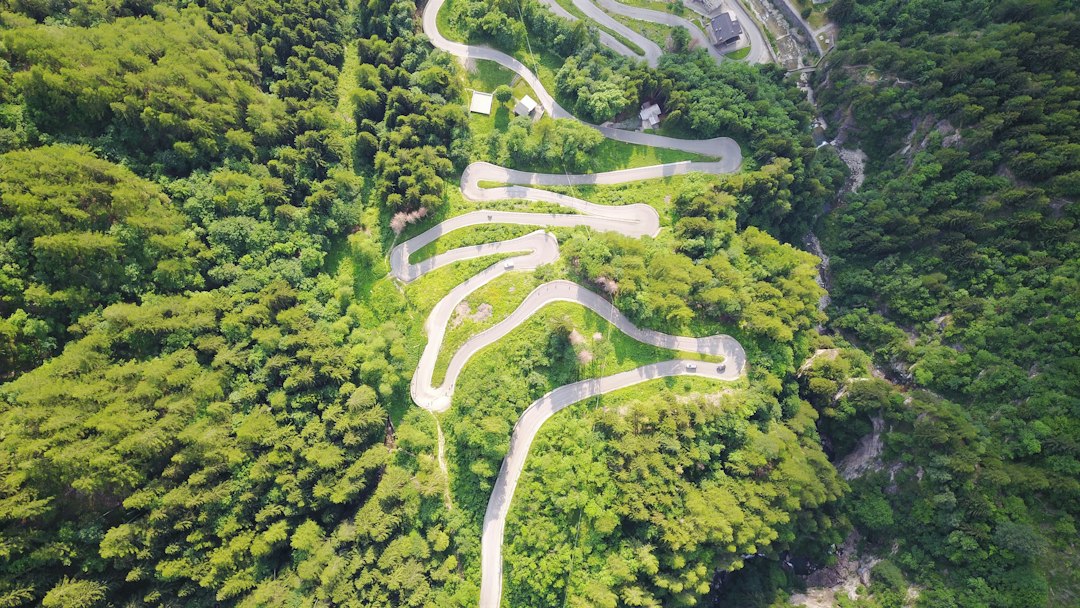
The Fuji Subaru Line is the 29.5 km toll road that climbs Mt. Fuji's northern flank from the Fuji Five Lakes basin to the 5th Station at 2,305 meters. It is the only paved road on the Yamanashi side that gets a normal car above 2,000 meters, it costs ¥2,800 round trip for a standard vehicle, and for roughly ten weeks every summer private cars are banned from it entirely.
Most guides stop at those three facts. The details that matter for a visit are the seasonal gate hours, weather-related closures, where the true summit is visible from the road, and the summer private-car restriction. Opening hours can rule out a winter sunrise drive even when Fuji itself is clear.
What the Fuji Subaru Line Is
The Fuji Subaru Line (officially the Mt. Fuji Toll Road) opened on 1 April 1964, the year of the Tokyo Olympics, as Yamanashi Prefecture's first toll road. Construction began in September 1961. Before it existed, reaching the 5th Station meant close to three hours on an unpaved, steeply graded track that washed out in rain and closed in snow.
The name has nothing to do with the car company. "Subaru" is the old Japanese word for the Pleiades star cluster, a name that appears in the Kojiki and the Man'yoshu, and it was chosen for the road on its own merits. The route was named one of Japan's 100 Best Roads in 1987.
| Detail | Figure |
|---|---|
| Total length | 29,520 m (about 29.5 km) |
| Tolled section | 24.1 km, toll gate to 5th Station |
| Free approach section | About 5.4 km |
| Elevation at start | 857 m |
| Elevation at toll gate | 1,088 m |
| Elevation at 5th Station | 2,305 m |
| Average gradient (tolled section) | About 5.0% |
| Drive time, gate to 5th Station | About 40 minutes |
| Parking at the 5th Station | About 824 cars plus 92 buses |
The 1,217 meters you gain between the toll gate and the 5th Station is worth about 7°C of cooling at the standard atmospheric lapse rate. A 26°C August afternoon at Kawaguchiko is a 19°C afternoon at the top, and a January morning that starts at 2°C down in the basin is well below freezing at the summit car park. That is the single most underestimated thing about this road.
One small pleasure to know about before you pay: on the free approach section below the toll gate, a stretch of pavement has been cut with grooves 3 to 6 mm deep and spaced about 3 meters apart, so that tyre noise plays the children's song "Fuji no Yama." Hold 50 km/h and it comes out clearly. The uphill lane plays the first half of the song and the downhill lane the second half.
Fuji Subaru Line Tolls in 2026
A standard car pays ¥2,800 for the full round trip on the Fuji Subaru Line. There is no separate uphill charge: you pay once at the gate on the way up and drive back down without stopping. One-way tolls exist at half the round-trip rate, which mainly matters if someone drops you off.
| Vehicle class | Full line (round trip) | Partial section |
|---|---|---|
| Standard car | ¥2,800 | ¥1,200 |
| Kei car, motorcycle over 125 cc | ¥2,300 | ¥1,000 |
| Bicycle, moped under 125 cc | ¥280 | ¥120 |
| Medium (microbus, 11-29 seats) | ¥4,600 | ¥1,900 |
| Large bus | ¥6,400 | ¥2,600 |
| Extra large | ¥10,700 | ¥4,300 |
Two details from the Yamanashi Prefectural Road Public Corporation catch visitors out every year.
First, the "partial section" rate is not a choice you make. It is charged automatically when snow, ice or roadworks have closed the road above the lower car parks, so you are paying to drive to Ichigome-shita or Jukai-dai and no further. If the road is open as far as Osawa or the 5th Station, you pay the full-line rate.
Second, payment is cash or coupon booklet only. No credit cards. No ETC. No travel agency vouchers. Arriving at a mountain toll gate in 2026 with nothing but a phone and a Visa card is a genuinely bad afternoon, and rental car pickups in Japan do not always leave you with ¥2,800 in notes.
The Gate Hours Are the Real Constraint
The Fuji Subaru Line is not open around the clock outside the climbing season. Gate hours change roughly every two weeks through spring and autumn, and in midwinter the road does not open until 9:00 AM. Outside operating hours, neither people nor vehicles are permitted to remain anywhere on the toll road, so sleeping in the 5th Station car park is not an option except during the official climbing season.
| Period | Gate open | Last descent |
|---|---|---|
| January, February, December | 9:00-16:00 | 17:00 |
| March 1-15 | 9:00-16:00 | 17:00 |
| March 16-31 | 9:00-17:00 | 18:00 |
| April 1-19 | 9:00-17:00 | 18:00 |
| April 20-30 | 6:00-18:00 | 19:00 |
| May | 3:00-18:00 | 19:00 |
| June | 3:00-20:00 | 21:00 |
| July, August, September | 24 hours | n/a |
| October | 3:00-18:00 | 19:00 |
| November 1-15 | 4:30-17:00 | 18:00 |
| November 16-30 | 9:00-17:00 | 18:00 |
Now put those hours next to sunrise. Mt. Fuji is most reliably clear in the first couple of hours after dawn, before thermal convection lifts moisture up the slope and builds the cap cloud. Add the 40-minute drive to the gate opening, and you get the earliest moment you can physically be standing at the 5th Station.
| Month | Gate opens | Sunrise at the base | Earliest arrival at 5th Station | Prime window |
|---|---|---|---|---|
| January | 9:00 | 6:50 AM | 9:40 AM | Missed by 2h50m |
| February | 9:00 | 6:30 AM | 9:40 AM | Missed by 3h10m |
| March (1-15) | 9:00 | 5:55 AM | 9:40 AM | Missed by 3h45m |
| April (from 20th) | 6:00 | 5:15 AM | 6:40 AM | Missed by 1h25m |
| May | 3:00 | 4:40 AM | 3:40 AM | 1 hour before sunrise |
| June | 3:00 | 4:25 AM | 3:40 AM | 45 min before sunrise |
| July-September | 24 hours | 4:35-5:25 AM | Any time | Full access |
| October | 3:00 | 5:50 AM | 3:40 AM | 2h10m before sunrise |
| November (1-15) | 4:30 | 6:15 AM | 5:10 AM | 1 hour before sunrise |
| December | 9:00 | 6:45 AM | 9:40 AM | Missed by 2h55m |
Sunrise figures come from our Mt. Fuji sunrise guide, which uses base-elevation times for the Five Lakes area.
Here is the scheduling trade-off. From 16 November through 19 April, the published gate hours begin at 9:00, so a sunrise visit by car is not normally possible even though winter often brings clearer Fuji views. Summer access is longer, but cloud and rain can still hide the mountain. Our weighted atmospheric model is useful for checking a particular day; its scores are not measured probabilities that the summit will be fully visible in each month. Weather can also close or restrict the road regardless of the published schedule.
If you want the road's access and the mountain's mood to line up, October is the answer. A 3:00 AM gate, a 5:50 AM sunrise, dry post-typhoon air, larch turning gold along the upper slopes, and no car ban. Early November is a close second until the 9:00 opening returns on the 16th.
Where You Can Actually See Mt. Fuji from the Road
The summit of Mt. Fuji is visible from exactly one point on the Fuji Subaru Line: the Osawa Parking Area at 2,020 meters, at the 4th Station. Yamanashi's tourism authority states it plainly, that Kengamine, the true summit, can be seen here and nowhere else on the road.
This surprises people, and the reason is geometry rather than weather. Fuji is a near-perfect convex cone. Once you are driving on its flank, the slope immediately above you rises at a steeper angle than your line of sight to the peak, so the mountain hides its own summit. You are too close and too low at the same time. The road spends most of its length inside forest on that convex shoulder, and even at the 5th Station the crown is tucked behind the ridge above you.
| Stop | Elevation | What you actually get |
|---|---|---|
| Toll gate | 1,088 m | Flush toilets, payment, weather board |
| Ichigome-shita (below 1st Station) | Forest level | Quick photo stop, toilet, deep woodland |
| Jukai-dai (2nd Station area) | 1,663 m | The Aokigahara sea of trees and Lake Kawaguchi laid out below |
| Osawa (4th Station) | 2,020 m | The summit, the Southern Alps, Yatsugatake, Suruga Bay on clear days |
| Okuniwa | 2,227 m | Bonsai-like ancient larches, Japanese serow, rhododendrons mid-June to late July |
| 5th Station | 2,305 m | Fuji Five Lakes below, shops, shrine, trailhead |
So build in ten minutes at Osawa. It is the one stop on the road that most itineraries skip and the only one that gives you the shot you came for. The Jukai-dai viewpoint is the other genuinely different vista, looking straight down into the forest that fills the lava flow.
The climb can sometimes take you above a low cloud layer that hides Fuji from the lakes, but not all cloud sits below the 5th Station. Check the live Mt. Fuji visibility forecast, the webcams and the road status before setting out; a favourable webcam view is more useful than assuming elevation alone will solve a poor forecast.
The Summer Car Ban and What It Costs You
Private vehicles are banned from the Fuji Subaru Line from 18:00 on 3 July 2026 until 18:00 on 10 September 2026. The restriction exists to cut congestion and exhaust damage to the roadside trees during the Mt. Fuji climbing season, and it is enforced at the gate.
Route buses, taxis, mountain hut vehicles and disability permit holders are exempt. So are pure electric and fuel cell vehicles, but only after you collect an EV confirmation slip at Fujisan Parking, and it is valid for two hours. Hybrids do not count and are turned away, which is the single most common mistake made by visitors in rental cars.
During the ban, you have two ways up, and the fares are identical either way. Fujikyu Bus charges ¥3,400 adult round trip and ¥2,000 one way, with elementary students at half price, on rates effective 1 July 2026. Round-trip tickets are valid for two days; one-way tickets only on the day. Older guides quoting ¥2,800 are out of date.
| Party | Drive yourself (outside the ban) | Route bus from Kawaguchiko | Park and ride during the ban |
|---|---|---|---|
| 1 adult | ¥2,800 | ¥3,400 | ¥4,400 |
| 2 adults | ¥2,800 | ¥6,800 | ¥7,800 |
| 2 adults, 2 children | ¥2,800 | ¥10,200 | ¥11,200 |
| 4 adults | ¥2,800 | ¥13,600 | ¥14,600 |
Park and ride adds the ¥1,000 per vehicle fee at Fujisan Parking, the prefectural lot at the northern foot, on top of the same shuttle fare.
Two conclusions fall out of that table. Outside the ban, driving wins for everyone, including a solo traveller, who saves ¥600 against the bus, while a family of four saves more than ¥10,000. And during the ban, if you are starting from Kawaguchiko Station or Mt. Fuji Station, take the route bus. Driving to Fujisan Parking to catch the shuttle costs the same fare plus ¥1,000 for the privilege of parking, so it only makes sense if you are arriving from a direction that does not pass a station.
Climbers face a separate charge that has nothing to do with the road. Yamanashi now collects ¥4,000 per person at the Yoshida trailhead, with a daily cap of 4,000 climbers and the gate shut between 2:00 PM and 3:00 AM for anyone without a mountain hut booking. Reserve through the official Fujisan climbing portal before you travel.
Cycling the Fuji Subaru Line
Bicycles pay ¥280 for the round trip, the cheapest legal way onto the road, and every June the climb hosts Japan's largest hill climb race. The 22nd Mt. Fuji Hill Climb runs on 7 June 2026: 24 km, 1,255 meters of ascent, an average gradient near 5.2%, and a planned field of 8,500 riders. Overseas entry is ¥20,000. Cut-off gates sit at 11:00 for 10.5 km and 11:30 for 17.2 km, with the finish closing at noon.
One toll quirk to note if you are carrying the bike up by car and riding only the descent, or the reverse: you are charged the full round-trip bicycle toll regardless. There is no one-way bicycle rate in practice.
Outside race day the climb is a steady, non-brutal grind with almost no flat and no hairpin drama, which is why it suits first-time hill climbers. The descent is the dangerous half. Cold, fast, and shared with tour coaches.
A Proposed Change to Future Access
Yamanashi Prefecture has discussed new ways to manage access to Fuji's 5th Station. Its earlier railway concept considered light rail along the Subaru Line; a different proposal, provisionally called Fuji Tram, is now being discussed. These are proposals, not an announced closure date for private cars.
The prefecture's Fuji Tram programme describes a rubber-tyred guided vehicle using the road corridor. Its FAQ and consultations show that details remain under discussion. Future rules for general traffic, project timing and construction are not settled.
For a trip now, use the current road operator's access rules and status page. Do not plan around a hypothetical future tram opening or assume the right to drive will end on a particular date.
Common Questions
How much does the Fuji Subaru Line cost?
¥2,800 round trip for a standard car, ¥2,300 for a kei car or a motorcycle over 125 cc, and ¥280 for a bicycle. Payment is cash or coupon booklet only, with no credit cards or ETC accepted at the gate.
Is the Fuji Subaru Line open in winter?
Yes, but on short hours and with no guarantee. From December through mid-March the gate opens at 9:00 and closes at 16:00, and the road closes entirely without warning for snow, ice, heavy rain or high wind. Winter tyres or chains are essential, and winter is also when Fuji is at its clearest, so the gamble often pays off.
Can you drive to the Mt. Fuji 5th Station?
You can for most of the year, and the Fuji Subaru Line is the road that takes you there. Between 3 July and 10 September 2026 private cars are banned and you must use the route bus or the Fujisan Parking shuttle. For what waits at the top, see our guide to the Mt. Fuji 5th Station.
How long does the drive take?
About 40 minutes each way between the toll gate and the 5th Station, covering 24.1 km. Allow longer on autumn weekends, when foliage traffic can back the road up and the 5th Station car park fills by mid-morning.
Before You Set Off
Three things to do the night before, in order. Confirm the road is open on the road corporation's status page, because heavy rain closed the entire line as recently as 9 September 2026. Check the gate hours for the exact half-month you are travelling, since a 16 November arrival works very differently from a 15 November one. Then look at the visibility forecast for Mt. Fuji and decide which way the cloud is pointing.
If the score is high, leave at the gate opening and take your time at Osawa. If the score is low but the cloud base is below 2,000 meters, go anyway, because that is the sea-of-cloud day. And if it is low with cloud right up over the summit, spend the ¥2,800 somewhere else and save the road for a better morning.
More Articles
Mt. Fuji 5th Station: What to Expect, How to Get There, and What Most Guides Miss
Plan your visit to the Mt. Fuji 5th Station with this guide to access, views, trails, and tips for clear skies.
Mt Fuji Climbing Season 2026: Dates, Trails & Essential Guide
Plan your Mt Fuji climb with official 2026 season dates, trail comparisons, permit requirements, and essential gear. Everything you need to know before climbing Japan's highest peak.