Mt Fuji Autumn Leaves: 2026 Peak Dates, Best Spots, and the Snowcap Problem
Mt Fuji autumn leaves peak mid-November at the Five Lakes. Festival timing, nine spots ranked by forecast, and why the snowcap shot keeps failing.

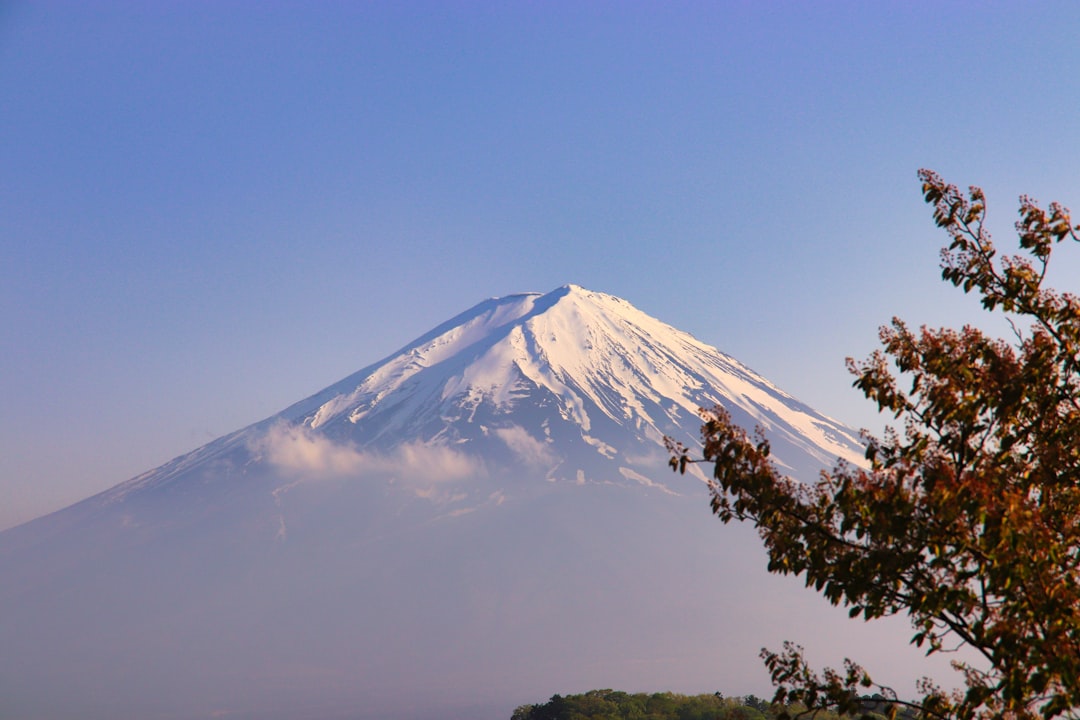
The shot everyone comes for in autumn is the same one: burning red maples in the foreground, a fresh white snowcap on the summit, and Mount Fuji itself standing clear behind both. Mt Fuji autumn leaves season delivers that composition more reliably than any other time of year, and the Fujikawaguchiko festivals are built around it.
Here is what the guides skip. That photo needs three separate things to happen on the same morning, and only one of them is predictable. The maples peak on a schedule. The snowcap does not, and it has arrived a month late twice in recent years. Fuji itself hides on roughly four mornings in ten even at the best time of year. This guide gives you the spots and the timing, then covers the two variables nobody else writes about.
Mt Fuji autumn leaves peak from early October at the 5th Station down to mid-November around the Fuji Five Lakes, with the best colour along Kawaguchiko's Momiji Corridor between November 10 and 20. The Fujikawaguchiko Autumn Leaves Festival covers that window, running November 1 to 30 in 2025. Expect the full cone on roughly four autumn mornings in ten, with another four offering only a partial view where the summit stays capped in cloud. Check the live Mt Fuji visibility tracker before you set your alarm.
Table of Contents
- When Mt Fuji Autumn Leaves Peak
- The Snowcap Problem Nobody Warns You About
- Momiji Corridor and the Fujikawaguchiko Festival
- Lake Yamanaka's Sunset Shore Festival
- Nine More Autumn Viewpoints Worth the Detour
- Autumn Visibility: What the Numbers Say
- Choosing Your Spot by the Forecast Score
- How to Plan the Trip
- Frequently Asked Questions
When Mt Fuji Autumn Leaves Peak
Autumn colour does not arrive across the Fuji region at once. It descends the mountain, starting near the treeline in early October and reaching the lakeshores about six weeks later. Knowing that ladder is what lets you catch peak colour on almost any date between early October and late November.
| Elevation | Location | Peak colour | What turns |
|---|---|---|---|
| 2,300 m | Mt Fuji 5th Station | Early October | Larch, alpine shrubs |
| 1,100 to 1,200 m | Koyo-dai, Mt Mitsutoge trails | Mid to late October | Maple, birch |
| 900 to 1,000 m | Lake Yamanaka, Lake Saiko | Late Oct to mid Nov | Japanese maple |
| 830 m | Lake Kawaguchi, Oshino Hakkai | November 10 to 20 | Maple, ginkgo |
The practical read: if you are visiting in October, go up. If you are visiting in November, stay at lake level. Travellers who book mid-October expecting the postcard maple tunnels at Kawaguchiko arrive three weeks early and find green leaves, which is the single most common autumn planning mistake in this region.
The colour window at any one spot lasts roughly 10 to 14 days, and a strong typhoon or an early frost can strip it in a weekend. The koyo front moves south and downhill from mid-September onward, and japan-guide's running colour reports track it location by location through October and November. Checking one the week before you travel is worth more than any long-range forecast.
The Snowcap Problem Nobody Warns You About
The red-leaves-plus-white-summit composition depends on Fuji's first snowcap, called hatsukansetsu, arriving before the maples turn. For most of the last century that was a safe assumption. It no longer is.
The Kofu Local Meteorological Observatory has recorded the first snowcap since 1894, and the long-run average date is October 2. Recent seasons have run dramatically late:
| Season | First snowcap | vs. average |
|---|---|---|
| Average since 1894 | October 2 | Baseline |
| 2024 | November 7 | 36 days late, latest on record |
| 2025 | October 23 | 21 days late |
In 2024 the summit stayed bare past the end of October for the first time in 130 years of observation, as reported when the snow finally arrived in November. Anyone who booked that autumn for the classic snowcap-and-maples frame got maples and a bare brown cone.
Two things follow for planning. First, late November now carries a better chance of both elements than late October does, which inverts the advice in most older guides. Second, the snowcap is not something you can check a forecast for. It is announced after the fact, so watch news from the Kofu observatory in October and treat an early cap as a bonus rather than the basis of your itinerary. Our guide to Mt Fuji's snow cap covers how the cap builds through the season and when it becomes permanent.
If the cap has not landed by your travel dates, the fallback composition is maples against the bare volcanic cone, which is a genuinely striking image and one far fewer people have.
Momiji Corridor and the Fujikawaguchiko Festival
The Fujikawaguchiko Autumn Leaves Festival is the centrepiece of the season and the reason November hotel rates around the lake climb sharply.
| Detail | Most recently confirmed |
|---|---|
| Dates | November 1 to 30 (2025, the 27th edition) |
| Hours | 9:00 to 19:00 |
| Illumination | Sunset until 21:30 |
| Peak colour | November 10 to 20 |
| Admission | Free |
| Access | 5-minute walk from the Itchiku Kubota Art Museum bus stop |
One honest caveat that other guides gloss over: as of August 2026, the Fujikawaguchiko tourism association has not yet published this year's dates, and the details above are the 2025 edition's confirmed figures. Do not assume they carry over exactly. The window moves by roughly a week from year to year: 2025 ran November 1 to 30, but 2024 ran October 26 to November 20 and 2022 ran October 29 to November 23. The safe read is that the festival always covers the November 10 to 20 peak, and the edges are what shift. Confirm the exact dates with the organiser before you book anything time-sensitive. Aggregator sites that already display "2026" dates are extrapolating, not reporting.
The Momiji Corridor, or Momiji Kairo, runs along the Nashi River on the lake's north shore, lined with mature maples that lean across the water into a closed red tunnel. The walk was originally about 160 metres one way and was roughly doubled in autumn 2022 with the addition of the Oku no Hosomichi stretch, so plan for somewhere north of 300 metres end to end. Tree counts vary by source: Yamanashi Prefecture cites around 70 maples, some of them over a century old, while the town's own tourism federation counts about 150 along the wider festival stretch. The uplighting under the canopy after sunset is what makes the corridor famous, rather than the daytime view.
One tactical note for photographers. The corridor faces away from the mountain, so the classic Fuji-plus-maples frame is not shot inside the tunnel itself. It is shot from the lakeside path just north of the corridor, looking back across the water. Plan for the tunnel at night and the mountain frame at dawn, when the lake is calmest and the reflection is sharpest. The nearby Oishi Park sits on the same north shore and its kochia beds turn crimson from mid-October, which gives you a second red foreground a few weeks before the maples arrive.
Lake Yamanaka's Sunset Shore Festival
The quieter alternative sits 25 minutes east. Lake Yamanaka runs its own Sunset Shore Autumn Leaves Festival at Asahigaoka on the lake's southern shore, typically from the last day of October to around the middle of November, with maples peaking in the second week of November.
Sunset Shore, or Yuyake no Nagisa, is named for its west-facing aspect and is listed among Japan's 100 most beautiful shorelines. The Yamanakako tourism association publishes the lake's foliage spots and illumination timings each October. The geometry is what makes it worth the detour: you get Fuji, the lake, and illuminated maples in a single frame at dusk, which is not possible at Kawaguchiko because of how the shorelines are oriented. Access is via a local bus from Fujisan Station to the Asahigaoka stop.
Crowds here run a fraction of Kawaguchiko's. If your dates fall in the overlap window of November 10 to 16, you can do the Yamanaka illumination one evening and the Momiji Corridor the next.
Nine More Autumn Viewpoints Worth the Detour
Most guides stop at the two festivals. These are the spots worth building a day around, sorted by what each one does that the others cannot.
For an unobstructed mountain (go on a high-score morning):
- Lake Tanuki. The best autumn spot nobody outside Japan writes about, and the only one on this list on the Shizuoka side. This reservoir near Fujinomiya is famous for Sakasa Fuji, the upside-down reflection, and the observation deck on the western shore sits directly opposite the mountain so the reflection and the maples land in one frame. Peak colour is mid-to-late November, and sunrise is the moment: the water is glass, and the south face catches first light.
- Oishi Park. The classic north-shore panorama, covered in full in our Oishi Park guide. Its kochia beds turn crimson from mid-October, which gives you a red foreground several weeks before the maples arrive.
- Momiji Tunnel. A short drive west of the main festival venue, this roadside stretch of overhanging maples on Lake Kawaguchi's north-west shore frames Fuji directly through the canopy. It peaks with the corridor.
For height, when low cloud is the problem:
- Koyo-dai. The name literally means "Autumn Leaves Plateau." At 1,165 metres on the northern edge of Aokigahara, it looks across the forest canopy to Fuji, with maples turning red against dark evergreen from late October to mid-November. Autumn mornings here also produce temperature-inversion fog that fills the basin below, which turns the Sea of Trees into a literal sea.
- Nijumagari Pass Observation Terrace. Opened in September 2022 above Oshino village at 1,150 metres, and still uncrowded. Pines frame the mountain, and the elevation puts you above the low cloud that ruins lakeside mornings.
- Chureito Pagoda. The five-storey pagoda is famous for cherry blossom, but the surrounding maples turn in mid-November and the crowds are a fraction of April's. Arrive before 7:00 AM regardless.
- Fuji Subaru Line. Driving the toll road up toward the 5th Station in early to mid October takes you through the colour band while the lakes are still green. It is the best October option in the region, and the one time of year when going up beats going to the lakes.
For a cloudy day, when the mountain is a write-off:
- Momijidai. A dedicated maple viewing area above Kawaguchiko, open roughly 8:30 to 17:30 in season. The colour is the attraction, and it holds up with no mountain at all.
- Oshino Hakkai. The spring-fed pools of this UNESCO component site sit at 930 metres, with thatched roofs, water clear enough to read the bottom, and maples peaking around mid-November. It photographs well in flat light, which is exactly when the lakeshores do not.
Autumn Visibility: What the Numbers Say
Colour timing is the easy half. Whether Fuji is out at all is the half that decides your trip, and it is where nearly every autumn guide waves its hands.
Fuji City has logged the mountain three times a day since 1990 from the eighth floor of its city hall, recording each observation as fully visible, partially visible, or not visible at all. It is the longest continuous record that exists. Here is what it shows for autumn, using the 2024 figures at the 8:00 AM observation.
| Month | Fully visible | Partially visible | Hidden |
|---|---|---|---|
| October | 12 days (39%) | 12 days (39%) | 7 days (23%) |
| November | 11 days (37%) | 12 days (40%) | 7 days (23%) |
| December (for contrast) | 27 days (87%) | 3 days (10%) | 1 day (3%) |
The middle column is the one that matters and the one nobody quotes. On roughly four autumn mornings in ten, Fuji is partially visible: the base is clear, the foothills are sharp, and the summit is sitting in its own cap of cloud. That is not a near miss. It is precisely the morning that ruins the autumn photograph, because the maples are lit, the lake is glass, and the mountain has no top.
Add the two together and you get the honest headline: about four autumn days in ten give you the complete cone, and about eight in ten give you something. Guides quoting 60% or higher for October are counting partial views as successes.
That is also why the December column sits in the table. If your trip is flexible and the photograph matters more than the maples, December is a different sport: nearly nine days in ten deliver the full mountain. Autumn buys you the foreground at the cost of roughly half the mountain days. For the season that follows, see Mt Fuji in winter.
One caveat on all of the above: Fuji City sits on the Shizuoka side, so these are south-face observations. The Kawaguchiko side has its own weather, and a clear morning in Fuji City is a strong signal rather than a guarantee for the lakes.
The daily pattern matters as much as the monthly one. Fuji is most often clear shortly after sunrise, and cloud builds over the summit through the late morning as the slopes warm. An autumn day that is hopeless at noon is frequently perfect at 6:30 AM. Our scoring model weights cloud cover at multiple altitudes, humidity, and haze to produce a single visibility score, which is a better guide than a raw cloud percentage. For the full year-round picture, see our guide to the best time to see Mt Fuji.
Choosing Your Spot by the Forecast Score
This is the step every other autumn guide leaves out. The spots above are not interchangeable, and the right one depends on what the mountain is doing that morning.
| Forecast score | What it means | Where to go |
|---|---|---|
| 70 and above | Full cone clear | Lake shores: Oishi Park, Lake Tanuki, Sunset Shore. Reflection shots only work here |
| 40 to 70 | Partial, summit uncertain | Elevated spots: Koyo-dai, Nijumagari Pass, Chureito. Height buys you a chance above low cloud |
| Below 40 | Mountain hidden | Go colour-only: Momiji Corridor, Momijidai, Oshino Hakkai. These work with no mountain at all |
The corridor illuminations are the reason a bad forecast never has to cancel an autumn trip. They are lit from sunset regardless of cloud, and a low-visibility evening is often the best time to shoot them, because the crowds chasing the mountain have gone home.
How to Plan the Trip
Book the second week of November if you have a free choice of dates. October and November are tied on visibility, so the tiebreakers are everything else, and that week takes all of them: lakeside peak colour, both festivals running at once, and the best odds that the snowcap has arrived.
Build the itinerary around mornings. Reach your viewpoint before 7:00 AM, treat the middle of the day as travel and indoor time, and use the evening for the illuminations, which do not depend on the mountain being visible at all. That structure means a cloudy day still delivers the corridor at night.
Stay overnight rather than day-tripping. Autumn's clear windows are early and short, and a day trip from Tokyo on the first bus reaches the lakes around 10:00 AM, well after the best light has gone. If you are coming from the city, our Kawaguchiko Station guide covers the transport options and where each one drops you.
Check the forecast the night before and choose your spot accordingly. A high score sends you to the lakeshore for the Fuji frame. A low score sends you to Koyo-dai, the caves, or Oshino Hakkai, all of which work with the mountain hidden. Check the live Mt Fuji visibility tracker before you commit to a 5:00 AM alarm.
Frequently Asked Questions
When do Mt Fuji autumn leaves peak?
Colour descends by elevation. The 5th Station peaks in early October, mid-elevation trails in late October, and the Fuji Five Lakes including Kawaguchiko between November 10 and 20. The Fujikawaguchiko Autumn Leaves Festival is timed to cover that window. It ran November 1 to 30 in 2025, though the edges shift by about a week from year to year.
Will Mt Fuji have snow during autumn leaves season?
Usually, but it is no longer reliable. The average first snowcap date is October 2, yet the summit stayed bare until November 7 in 2024, the latest since records began in 1894, and October 23 in 2025. Mid-to-late November gives you the best chance of catching both snow and red maples.
Is Kawaguchiko or Lake Yamanaka better for autumn leaves?
Kawaguchiko has the famous Momiji Corridor and the larger festival, which ran the full month of November in 2025. Lake Yamanaka's Sunset Shore festival, roughly the end of October to mid-November, is far less crowded, and its west-facing shore lets you frame Fuji, the lake, and illuminated maples together at dusk.
What are the chances of seeing Mt Fuji in November?
About 37% of November days deliver the full cone, based on Fuji City's 2024 observation record, with a further 40% giving a partial view where the summit stays capped. October is almost identical. December is far better at 87%, so if the photograph matters more than the maples, travel later. Early mornings beat afternoons in every month, because summit cloud builds as the slopes warm through the day.
Autumn is the one season where the foreground and the mountain both work in your favour, but only if you get the timing right on all three variables. Check the live Fuji visibility forecast the evening before you travel, and let the score decide whether tomorrow is a lakeshore morning or a forest one.
The same problem shows up on every mountain we track. Autumn colour peaks on a schedule you can look up, while the mountain behind it does not, so the forecast is what turns a good foreground into a good photograph. Run the numbers before you travel with our live trackers for Mount Fuji, Mount Rainier, and Denali.
More Articles
Mt Fuji in Winter: Best Season for Clear Views & What to Do
Winter offers the best Mt Fuji visibility with 50-68% clear days. Discover why December to February is ideal for viewing, plus winter events, activities, and planning tips.
Best Time to See Mt. Fuji: A Complete Visibility Guide
Planning to see Mt. Fuji? Learn the best months, times of day, and weather conditions for clear views of Japan's iconic mountain.
Oishi Park, Mt. Fuji: Flower Calendar and When the Mountain Is Out
Oishi Park frames Mt. Fuji behind lavender and kochia on Lake Kawaguchi. Get the flower calendar and learn when the mountain is actually visible.