Hakone Weather: Temperatures by Altitude, Rain and Closures
Hakone weather by month and altitude: why Owakudani runs about 6°C colder than Yumoto, the wettest months, and the 200 mm rule that shuts roads.

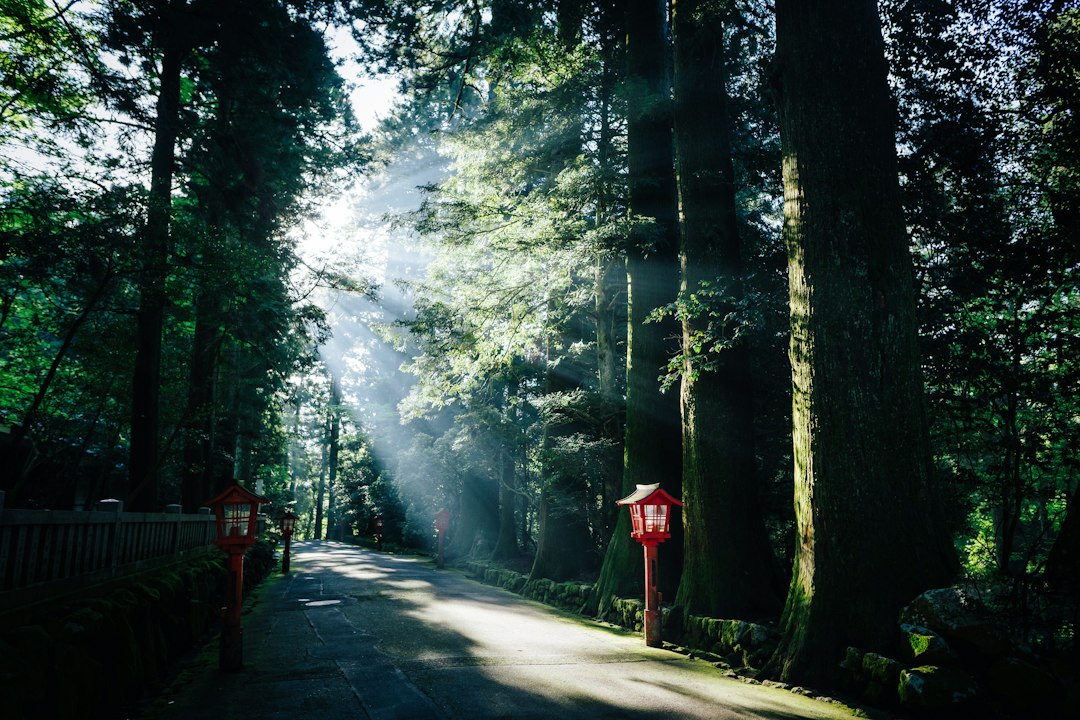
Hakone weather is really three climates stacked on top of each other. Hakone-Yumoto, where the train arrives, sits about 100 m above sea level and feels much like Tokyo. Lake Ashi sits at about 723 m and Owakudani at 1,044 m, and up there the air runs about 4 to 6°C colder all year. The upper caldera is also far wetter than Tokyo, with more than twice the city's annual rainfall.
This guide breaks Hakone's weather down by altitude and by month, using Japan Meteorological Agency records. It also covers the rain thresholds that close Hakone's roads and buses, and why a sunny day in Hakone is not the same as a day with Mt. Fuji in view. For the mountain itself, the live Mt. Fuji visibility forecast answers that question directly.
Hakone Weather Changes With Every 100 Metres You Climb
Air typically cools by about 0.6°C for every 100 m of height, so the top of the standard sightseeing loop is about 6°C colder than the station where it starts. Hakone is built inside a volcanic caldera, and the Hakone hub guide shows how the town climbs like a staircase from the Hayakawa valley to the lake and the volcanic vents.
That staircase matters more than the season for deciding what to wear. In January the average daytime high is about 10°C at Yumoto, 7°C at Gora, 5°C at the lake and 3°C at Owakudani. Nights are colder still. In the modelled data below, Lake Ashi's overnight low drops below freezing on about 26 of January's 31 nights, and Owakudani's on almost all of them.
The forecast you check is probably for the bottom step. The Japan Meteorological Agency's forecast for western Kanagawa, which covers Hakone, gives its temperatures for Odawara, a coastal city east of Hakone. If a weather app does not say which part of Hakone it means, assume the low end: the town office and the station most visitors arrive at are both in Yumoto, near the bottom of the caldera. If you are heading for the ropeway, take about 5°C off the forecast high for Lake Ashi and 6 to 7°C for Owakudani, where the wind on the open decks makes it feel colder still.
Hakone Weather by Month
Hakone is coldest in January, hottest in August and wettest from June through October. The temperatures below are modelled daily averages for 2016 to 2025 from the Open-Meteo historical archive, adjusted to each spot's elevation. As a check, the same model's values for Odawara land within about 2°C of JMA's measured normals there, and they run a little warm at night. Treat the Yumoto lows as the mild end: JMA's measured January low at Odawara is 0.6°C, so valley nights can sit near freezing in midwinter. The rain columns are measured: wet days are from JMA's daily records at its Hakone gauge in Ashinoyu (855 m) for 2016 to 2025, and the monthly rainfall is the official 1991-2020 normal for the same gauge.
| Month | Yumoto (100 m) high / low | Lake Ashi (723 m) high / low | Owakudani (1,044 m) high / low | Days with 1 mm+ rain | Avg. rainfall |
|---|---|---|---|---|---|
| Jan | 10 / 3°C | 5 / -3°C | 3 / -6°C | 5.5 | 128 mm |
| Feb | 10 / 3°C | 6 / -2°C | 4 / -5°C | 7.8 | 151 mm |
| Mar | 14 / 6°C | 10 / 1°C | 8 / -1°C | 12.8 | 285 mm |
| Apr | 18 / 11°C | 14 / 6°C | 12 / 3°C | 12.2 | 322 mm |
| May | 21 / 15°C | 18 / 10°C | 16 / 8°C | 12.6 | 327 mm |
| Jun | 24 / 19°C | 21 / 14°C | 19 / 12°C | 15.2 | 420 mm |
| Jul | 28 / 23°C | 25 / 19°C | 23 / 17°C | 14.4 | 425 mm |
| Aug | 30 / 24°C | 26 / 20°C | 24 / 18°C | 14.2 | 346 mm |
| Sep | 27 / 22°C | 23 / 17°C | 21 / 15°C | 15.4 | 449 mm |
| Oct | 21 / 16°C | 17 / 11°C | 15 / 9°C | 14.0 | 404 mm |
| Nov | 17 / 11°C | 13 / 5°C | 11 / 3°C | 8.5 | 197 mm |
| Dec | 12 / 5°C | 8 / 0°C | 6 / -3°C | 6.5 | 108 mm |
A few patterns stand out once the numbers sit side by side.
Winter is cold but dry. December to February average five to eight wet days a month. January 2026 brought just 2.5 mm to the Ashinoyu gauge, the second-driest month in its records since 1976. Expect frost on the upper loop and clear, sharp air.
March is the surprise. Rainfall nearly doubles from February to March, and wet days jump from about 8 to 13. Spring in Hakone is greener and milder than winter, and much wetter.
Summer is the escape from Tokyo, not from rain. Owakudani's August high of about 24°C is 7°C below Tokyo's 31.3°C normal. Yumoto is barely cooler than the city. The catch is rain on roughly every other day from June through October.
Autumn starts wet and ends dry. September is the wettest month by volume. November drops to 8 or 9 wet days and brings the autumn colours, which follow the altitude downhill: Owakudani usually turns from late October, the lake in early to mid November, and Yumoto and the Hayakawa gorge from late November into early December.
How Wet Is Hakone?
Hakone is very wet: JMA's gauge at Ashinoyu averages 3,561 mm of rain a year, against 1,598 mm in central Tokyo and 1,997 mm in Odawara. Over the ten years from 2016 to 2025 it recorded at least 1 mm of rain on 139 days a year, or about three days in every eight.
The reason is the caldera rim. Moist air flowing in off Sagami Bay and Suruga Bay is forced up over the ridges, cools and drops its water on the high ground. That same lift is why the upper caldera can sit inside cloud while Yumoto, 600 m lower, is merely overcast.
Hakone also holds Japan's national record for rain in a single day. On 12 October 2019, exactly seven years before this post, Typhoon Hagibis made landfall on the Izu Peninsula and the Hakone gauge recorded 922.5 mm in one calendar day. That figure still tops JMA's all-time national ranking for daily rainfall. The storm washed out sections of the Hakone Tozan Railway, and trains between Hakone-Yumoto and Gora did not run again until 23 July 2020, more than nine months later.
Big months still happen. September 2026 brought 1,068 mm to the gauge, the fourth-wettest month since the gauge's records began in 1976, including 183.5 mm on 6 September alone.
When Weather Closes Hakone's Roads, Buses and Ropeway
Hakone's roads can close once rain reaches 200 mm since it started, or 50 mm in a single hour, and when the roads close the buses stop too. That rule comes from Hakone town's traffic page and matches the Kanagawa Prefecture criteria for Route 1 between Tonosawa and Moto-Hakone, the main road up to the lake. Route 138 through Sengokuhara and the roads to Owakudani have their own closure sections with the same thresholds.
How often does that happen? The official decision uses rain gauges on Mt. Myojin and Byobuyama, not JMA's. But JMA's Ashinoyu gauge gives a fair sense of frequency. From January 2016 to September 2026 it logged 24 separate heavy-rain events in which a single calendar day, or two consecutive days together, reached 200 mm. That is roughly two a year, and 19 of the 24 fell between June and October.
Other services have their own weather limits:
| Service | What stops it | Where to check |
|---|---|---|
| Route buses (Tozan, Izuhakone) | Road closures at 200 mm total or 50 mm/hour | Hakone town traffic page |
| Hakone Ropeway | Strong wind, volcanic gas, maintenance | Hakone Navi status page |
| Pirate ships on Lake Ashi | Strong wind or thick fog | Hakone Navi status page |
| Owakudani Nature Trail tour | Weather and volcanic gas readings | Hakone town tourist association |
| Hakone Tozan Railway | Heavy rain; the line has been shut for months after storm damage | Hakone Navi status page |
The ropeway's gas sensors work separately from the weather, so a section can close on a calm, sunny day. The Hakone Ropeway guide explains how that works and what the substitute buses cover. If you hold a Freepass and a service is suspended, the Hakone Freepass guide lists the fixed refund for each suspended service you have not yet ridden.
Snow is the winter version of the same problem. It usually arrives with low-pressure systems tracking along the Pacific coast, the same setup that brings occasional snow to Tokyo. Heavy snow can close the Hakone Shindo bypass and the upper roads, sometimes as a precaution before it settles. If you are driving between December and March, carry chains or fit winter tyres; the upper roads ice over on clear nights even without snow.
Good Hakone Weather Is Not the Same as Seeing Mt. Fuji
A clear sky over Hakone does not guarantee a view of Mt. Fuji, especially in summer. Fuji's summit is about 28 to 33 km from the viewpoints around Lake Ashi and Owakudani and 3,776 m high, so it often makes its own cloud when the sky over the lake is blue.
The best long-run evidence comes from Fuji City, which has logged both the weather and the mountain from city hall at 8 AM every day since 1990. Across 1991 to 2025, the city's records count 7,050 mornings that were clear at ground level but only 4,684 mornings with the whole mountain visible, about two-thirds as many, according to the 1991-2025 totals in its 2025 observation report. The city publishes the two as separate monthly counts, not as a cross-tabulation, so this is a ratio of totals rather than the exact odds for any clear morning. The gap swings hard by season:
| Season | Fully visible 8 AM mornings per 100 clear 8 AM mornings (Fuji City, 1991-2025) |
|---|---|
| December to February | 81-87 |
| March to May | 60-76 |
| June to August | 25-34 |
| September to November | 54-83 |
Fuji City watches from the south side of the mountain, not from Hakone, so read this as the seasonal pattern rather than exact odds for the lake. The pattern is still clear. In winter the number of fully visible mornings nearly matches the number of clear ones. In July the city logs only about one fully visible morning for every four clear ones. The city attributes the summer gap to cloud and fog around the mountain on days that are fine on the flat ground.
This is the gap a general weather app cannot close. The Fuji visibility score combines cloud cover, haze and humidity in a weighted atmospheric model that predicts whether the mountain will be visible, not just whether it will rain.
For where to stand when it is, see Mt. Fuji from Hakone, and for the month-by-month odds, the best time to see Mt. Fuji.
What to Wear in Hakone, Season by Season
Dress for Owakudani, not for Yumoto, and add a waterproof layer from March to October. Layers beat one heavy coat, because a loop day moves from a heated train to a windy ropeway deck to a warm onsen.
- December to February: a warm coat, hat and gloves. Lake Ashi and Owakudani sit below freezing most nights, and the pirate ship's open deck is cold even at noon. Shoes with grip help on icy mornings at Moto-Hakone and around Hakone Shrine.
- March to May: a light down jacket or fleece under a rain shell. March can feel like winter at the lake while Yumoto feels like spring.
- June to September: breathable clothes plus a compact umbrella or rain jacket. Bring one long-sleeved layer for Owakudani and for air-conditioned trains.
- October and November: a sweater and a mid-weight jacket. Late November evenings at the lake approach freezing.
Rain does not ruin a Hakone trip. The Hakone Open Air Museum keeps most of its art outdoors but has indoor galleries and a hot-spring footbath, and the Hakone onsen guide covers day baths that are at their best in drizzle and fog.
Hakone Weather FAQ
When is the rainy season in Hakone?
The rainy season in Hakone usually runs from early June to mid-July. JMA's 1991-2020 average for the Kanto-Koshin region is a start around 7 June and an end around 19 July. The rain does not stop there. Typhoons and autumn fronts keep the Ashinoyu gauge above 340 mm a month through October, and September is the wettest month of the year.
Does it snow in Hakone?
Yes. Snow falls on the upper caldera around Lake Ashi, Sengokuhara and Owakudani several times in a typical winter, mostly in January and February, while Hakone-Yumoto usually gets rain or sleet. JMA's Hakone gauge measures rain only, so there is no official snow-depth record for the town.
Is Hakone colder than Tokyo?
Only the upper part is. Hakone-Yumoto stays within a degree or two of central Tokyo, while Lake Ashi runs about 4 to 5°C colder and Owakudani 6 to 7°C colder. In August that puts Owakudani's average high near 24°C against Tokyo's 31.3°C.
What is the best month to visit Hakone?
November to February is best for dry weather and Mt. Fuji. Those months average five to nine wet days, and Fuji City's 1991-2025 records show the whole mountain at 8 AM on 53 to 62% of mornings, against 10 to 15% from June to August. November adds the autumn colours and the biggest crowds.
How to Read a Hakone Forecast
A good Hakone forecast check takes three steps, and it is worth doing the evening before, not on the morning train.
- Correct for altitude. Start with the Odawara or Yumoto figure, then subtract about 5°C for the lake and 6 to 7°C for Owakudani.
- Look at rain totals, not the rain icon. A 60% chance of light showers is a normal Hakone day. A forecast of 100 mm or more, or a typhoon track toward the Izu Peninsula or Sagami Bay, is the signal to watch for closures: the caldera usually gets far more rain than the coast, and the roads and buses stop at 200 mm. The Lake Ashi guide has the boat timetables if you need to rearrange around a suspension.
- Check Fuji separately. If the mountain is the point of the trip, the sky over Hakone is the wrong thing to look at. Look at the summit.
For that last step, the 10-day Mt. Fuji visibility forecast rates each day and picks out the best viewing windows, so you can put the ropeway and the lake on the day the mountain is most likely out and save the museums and the baths for the rain.
More Articles
Hakone: Where Fuji Shows, How the Loop Runs, When to Go
Hakone is a volcanic caldera 80 minutes from Tokyo. Which parts actually see Mt. Fuji, which way to ride the loop, and 2026 prices for each leg.
Mt. Fuji from Hakone: Best Viewpoints and Visibility Guide
Can you see Mt. Fuji from Hakone? Yes, on about half of all days. Here are the best viewpoints, when to go, and how to check conditions.
Hakone Ropeway: Fares, Route, Mt. Fuji Views and When It Closes
The Hakone Ropeway now charges one flat fare. Real 2026 prices, exactly where Mt. Fuji appears, and the closures nobody warns you about.