The Mountain Is Out Meaning: Seattle's Favorite Phrase Explained
What does the mountain is out mean? The iconic Seattle phrase about Mt. Rainier visibility, its origins, and when the mountain is most likely out.

What Does "The Mountain Is Out" Mean?
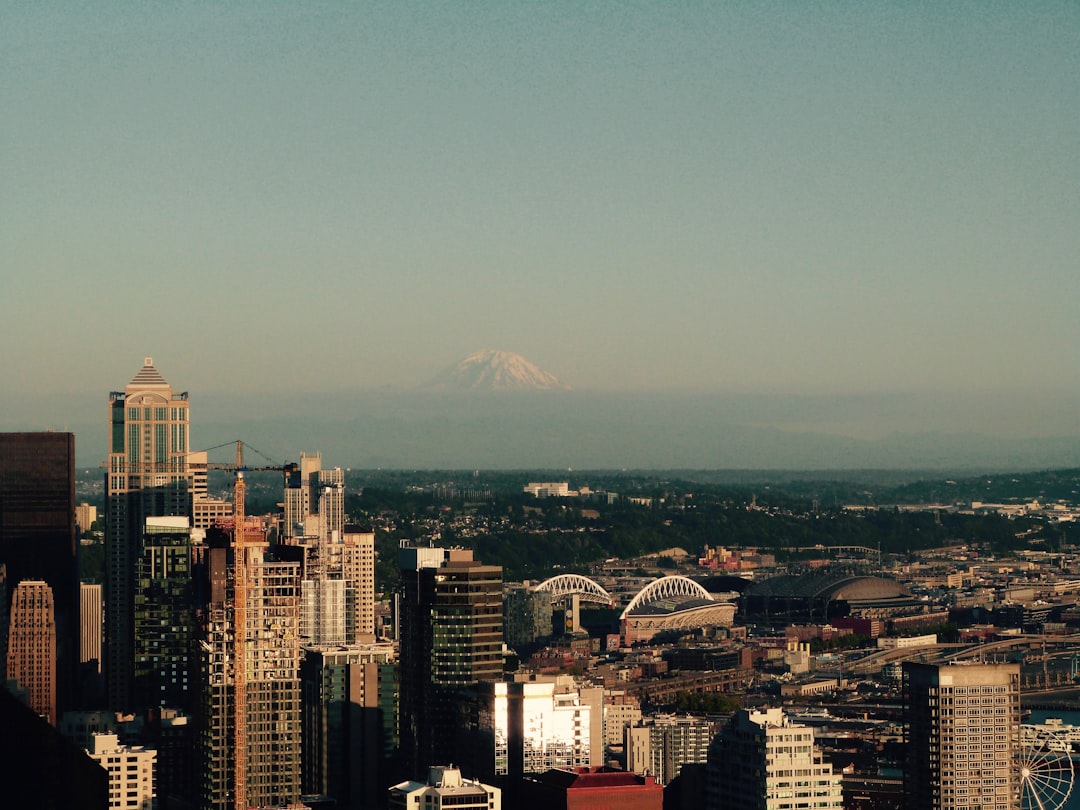
"The mountain is out" is a Pacific Northwest phrase meaning Mt. Rainier is visible on the horizon. In Seattle, where clouds obscure the peak roughly 280 days per year, a clear sighting of the 14,411-foot volcano is an event worth announcing. Check our real-time Mt. Rainier visibility score to see if the mountain is out right now.
If you spend any time in Seattle, you will hear someone say it. A coworker glances out the window and announces, "The mountain is out." A stranger on the bus points southeast. A barista nods toward the door. No one needs to specify which mountain. In the Puget Sound region, there is only one.
The mountain is out meaning, at its simplest: Mt. Rainier is visible. But the phrase carries more weight than a weather observation. It is a shared moment of civic joy, a signal that the gray ceiling has lifted and something enormous and ancient is watching over the city.
Why Seattle Needs This Phrase
Seattle averages just 71 fully sunny days per year. Clouds cover more than three-quarters of the sky on roughly 226 days annually, making it the cloudiest major city in the contiguous United States. From October through April, overcast skies are the default. Rain falls on about 150 of those days. The gray is relentless, and it is the backdrop against which "the mountain is out" becomes meaningful.
Mt. Rainier stands 14,411 feet tall and sits roughly 59 miles southeast of downtown Seattle. On a clear day, it dominates the horizon so completely that newcomers sometimes gasp. The peak appears impossibly large, floating above the cityscape like something that should not exist at that scale. Then the clouds roll back in, and the mountain disappears for days or weeks at a time.
That disappearing act is what gives the phrase its power. You cannot miss what is always there. But a mountain that hides makes every appearance feel like a gift.
How Often Is the Mountain Actually Out?
Mt. Rainier is visible from Seattle approximately 83 days per year, or roughly once every 4.4 days. That number comes from a 2012 project by researcher Sameer Halai, who photographed the view from Kerry Park at 3 PM every day for an entire year and counted the days Rainier was visible.
The visibility rate swings dramatically by season:
| Season | Approximate Visibility | Notes |
|---|---|---|
| June - September | 50-70% of days | High-pressure ridges push clouds north |
| October - November | 20-30% of days | Storm systems return |
| December - February | 10-15% of days | Persistent overcast and rain |
| March - May | 25-40% of days | Gradually improving |
July and August are the best months. During a good summer stretch, the mountain might be out for two or three weeks straight. Winter sightings are rarer and more prized, because cold post-storm air can produce the sharpest, most detailed views of the year. Fresh snow on the summit against a deep blue sky, with the entire peak visible from base to glacier, is something residents never stop photographing.
Our Mt. Rainier visibility forecast uses a weighted atmospheric model that factors in cloud cover, humidity, precipitation, and wind to predict viewing conditions up to 10 days ahead. The score updates every 15 minutes, which is more useful than checking once at 3 PM.
The Science Behind Disappearing
Mt. Rainier does not actually go anywhere, of course. Several atmospheric factors conspire to hide it.
Marine layer and low clouds. Moist Pacific air flowing over the cooler waters of Puget Sound creates persistent low cloud decks, especially in autumn and winter. These clouds typically sit between 2,000 and 5,000 feet, more than enough to mask a mountain 60 miles away even if the summit pokes above them.
Orographic cloud generation. Rainier is so massive that it manufactures its own weather. Moist air forced upward along the mountain's flanks cools and condenses, forming lenticular clouds that cap the summit even on days when Seattle skies are blue. You can have a perfectly sunny afternoon downtown and still not see the peak because it has wrapped itself in cloud.
Wildfire smoke. An increasingly common factor from late July through September. Smoke from fires across Washington, Oregon, and British Columbia can reduce visibility to single-digit miles, turning the horizon into a featureless haze. The Mt. Rainier weather patterns section on smoke explains this in more detail.
Humidity and haze. Even without full cloud cover, high humidity scatters light and reduces contrast. The mountain may technically be "there" but too faint to distinguish from the sky. This is a common frustration in shoulder seasons.
Understanding these factors is exactly why we built the visibility scoring system. A simple sunny-or-cloudy forecast does not capture whether a mountain 59 miles away will be sharp against the horizon or dissolved into murk.
Before "The Mountain," It Had a Name
Long before Seattle existed, the mountain had names. The Puyallup people call it Tacoma or Tahoma, meaning "mother of waters" or "frozen water," recognizing the glaciated peak as a vital water source. A 2023 linguistic study by the Puyallup Tribe identified at least 20 different indigenous names used by seven distinct tribal languages, with 18 of Salishan origin.
The Lushootseed name təqʷubəʔ was anglicized as "Tahoma" and eventually became "Tacoma," the name of the city at the mountain's feet. British explorer George Vancouver imposed the name "Rainier" in 1792, honoring Rear Admiral Peter Rainier, who never visited the Pacific Northwest and had fought against the American colonies during the Revolutionary War.
The naming debate continues. But when Seattleites say "the mountain," they sidestep the controversy entirely, using a phrase that predates any English name on any map.
The Phrase Beyond Seattle
Seattle did not invent the concept of announcing a mountain's appearance. The phrase travels wherever volcanoes loom over cloudy cities along the Pacific coast.
Portland and Mt. Hood. Portlanders use the same construction for Mt. Hood, visible to the east on clear days. The excitement is identical. A 50-mile sightline through Oregon's Willamette Valley haze produces the same gasps when the 11,249-foot peak materializes.
Tacoma and Rainier. Tacoma sits closer to Rainier than Seattle does, and the mountain looms even larger from there. Tacomans arguably have more claim to the phrase, though Seattle's cultural gravity means most outsiders associate it with the larger city. The Washington State Historical Society in Tacoma ran an entire exhibition called "The Mountain Was Out" in 2024-2025 celebrating the mountain's cultural significance.
Alaska and Denali. Anchorage residents experience the same phenomenon with Denali, North America's tallest peak at 20,310 feet. Clear views of Denali from Anchorage (130 miles away) are even rarer than Rainier sightings from Seattle, making each appearance that much more electric.
Japan and Mt. Fuji. Tokyoites share an almost identical relationship with Mt. Fuji. The 12,388-foot volcano sits roughly 60 miles from central Tokyo, visible on clear days and hidden by clouds and haze the rest of the time. The best months for Fuji visibility mirror Seattle's pattern in reverse: winter brings the clearest skies, while summer humidity makes sightings rare. We track Mt. Fuji visibility with the same scoring model.
The pattern holds worldwide. Anywhere a massive peak shares a skyline with a cloudy city, people develop rituals around its appearance.
The Mountain Is Out Meaning in Seattle Culture
The phrase has spawned its own ecosystem in Seattle.
Rainier Watch. Founded in 2013 by David Lindahl, Rainier Watch grew from a simple Twitter account into a community of over 50,000 followers who share photos and alerts when the mountain appears. The account started because Lindahl, commuting through Seattle by bus, wanted a way to notify people when the mountain was out.
@IsMountRainierOut. Rob Ousbey launched this account in 2014, using the Space Needle's Panocam to post daily visibility updates. The single-purpose dedication captures something essential about the phrase: it is a question Seattle never stops asking.
Merchandise and art. "The mountain is out" appears on t-shirts, mugs, stickers, and prints across Seattle. It is a civic slogan as recognizable as "Sleepless in Seattle" and considerably more useful.
A philosophy. A Seattle Times column urged readers to "live like the mountain is out," turning the meteorological phrase into a life philosophy. The idea: do not wait for perfect conditions. Act as though the sky is clear and the view is wide, even on gray days.
How to Check If the Mountain Is Out
You do not need to walk outside and squint southeast. Several tools give you real-time answers.
Our Mt. Rainier visibility forecast calculates a visibility score from 0-100 using cloud cover, humidity, wind speed, and precipitation data. It updates every 15 minutes and includes a 10-day forecast so you can plan ahead. This is the fastest way to answer the question before you even leave bed.
If you are planning a trip around peak visibility, our best time to see Mt. Rainier guide breaks down monthly odds. And if you want to understand the broader weather patterns that drive visibility, we track those too.
For the best vantage points when the mountain IS out, Kerry Park, Columbia Center, and José Rizal Bridge are among the top spots in the city. Outside Seattle, Paradise at 5,400 feet puts you on the mountain itself.
Frequently Asked Questions
What does "the mountain is out" mean? It means Mt. Rainier is visible from Seattle. Because clouds hide the peak roughly 280 days per year, locals announce its appearance as a shared moment of excitement. The phrase requires no further explanation in the Puget Sound region.
How often is Mt. Rainier visible from Seattle? Approximately 83 days per year, based on a year-long daily photography study. Visibility peaks in July and August at 50-70% of days, and drops to 10-15% during winter months.
Where did the phrase originate? There is no single origin point. The phrase evolved naturally among Seattle residents as a shorthand for Rainier's sporadic appearances. It predates social media, hashtags, and weather apps. Locals have been saying it for generations.
Can I check if the mountain is out right now? Yes. Our Mt. Rainier visibility forecast calculates a real-time score from 0-100 using atmospheric data, updated every 15 minutes. You can also check Rainier Watch for community photo reports.
The next time someone in Seattle tells you "the mountain is out," you will know exactly what they mean. And you will understand why they said it with a smile.
More Articles
Paradise Mt Rainier: The Complete Visitor Guide for Every Season
Plan your trip to Paradise at Mt Rainier with trail details, parking tips, wildflower timing, and visibility forecasts.
How Far Is Mt. Rainier from Seattle? Distance, Drive Times, and Routes
Mt. Rainier is 59 miles from Seattle. Get drive times, routes to every entrance, and total trip costs.
Mount Rainier National Park Guide: Seasons, Areas and Odds
Mount Rainier National Park guide: fall 2026 closures, fees, the five park areas, and 10 years of cloud data on when you will actually see the mountain.