Northern Lights Cruise: What a Ship Buys You, and What It Cannot
A northern lights cruise buys dark hours and a moving sky, not aurora. Compare its high-latitude nights before you compare brochures.

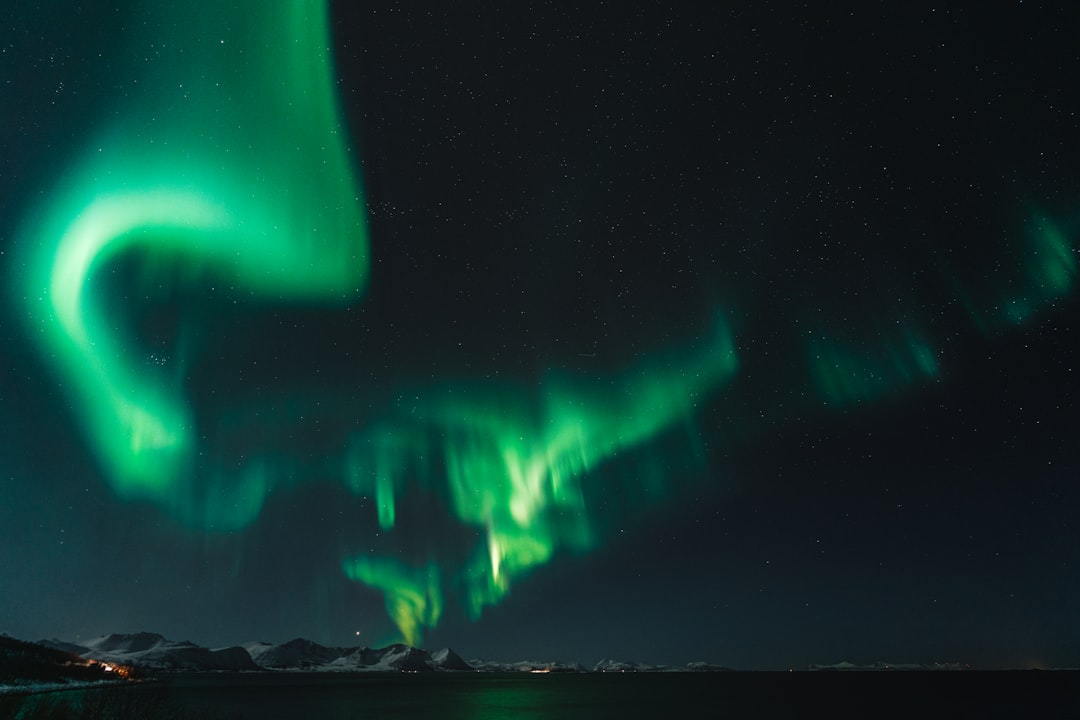
Every northern lights cruise brochure sells the same picture: a green sky above a ship's rail, a hot drink, a blanket, nobody standing in a frozen car park at 1am. The comfort part is real and it is genuinely worth paying for. The rest of the pitch deserves harder questions, because a ship cannot produce aurora any more than a minibus can.
What a ship can do is put you inside the auroral zone for every hour of darkness, night after night, while you sleep. That is a real advantage and it is not the one the marketing leads with. It also comes with a problem no cruise line mentions: a modern ship is a floating light dome, and the deck you are standing on may be the brightest object for 50km.
This guide covers how to count the nights that actually matter on a given itinerary, why the Arctic Circle is the wrong line to plan around, how to photograph the aurora from a deck that will not hold still, and what the "northern lights promise" schemes really commit their operators to.
Is a northern lights cruise worth it?
A northern lights cruise is worth it when the itinerary spends most of its nights inside or near the auroral zone, because a ship banks every dark hour without you having to travel to a viewing site. It is poor value when the aurora is a marketing label on a route that barely reaches 60 degrees north. Use nights above the Arctic Circle as a simple itinerary proxy—not an aurora boundary—and check the live northern lights forecast for your ports before you commit.
Table of Contents
- What a Northern Lights Cruise Actually Changes
- Count the Nights, Not the Days
- The Arctic Circle Is a Sun Line, Not an Aurora Line
- Norway, Iceland or Alaska
- The Ship Is Its Own Light Pollution Problem
- Photographing the Aurora From a Moving Deck
- Reading the Northern Lights Promise
- Best Time for a Northern Lights Cruise
- The Rough Stretches Nobody Warns You About
- Who Should Book, and Who Should Stay on Land
What a Northern Lights Cruise Actually Changes
A northern lights cruise strongly improves one of the four conditions required to see the aurora, partly improves a second, cannot touch a third, and often makes the fourth worse. Our aurora forecast checks any location on those four factors independently, and running a cruise brochure through them is clarifying.
Darkness: fully banked. This is the ship's real edge and nobody sells it properly. On land you decide each evening whether to drive out, and on the fourth cloudy night in a row most people stay in the hotel bar. On a ship you are already at the viewing site for every hour of the night, with no drive home. Eleven nights aboard means eleven nights of exposure to whatever the sky does, which is a much bigger deal than one comfortable coach ride.
Cloud: partly improved, but not steerable. A coastal ship at a service speed near 15 knots covers something like 250 to 300km of coastline between 9pm and 7am. That is enough to move you into a different weather system overnight, which is why "you sail under a different sky every night" is a fair claim. What you cannot do is aim. A guided chase van in Tromsø can turn inland toward Skibotn or cross into Finland because that is where the hole in the overcast is. A ship follows a published schedule down a coastline that is, climatologically, the cloudiest strip in the region.
Geomagnetic activity: unchanged. No hull, fare class or itinerary moves the auroral oval. If the Kp index sits flat for a week, a $7,000 suite and a free bus stop deliver the same result.
Sky washout: usually worse than land. This is the factor competitors skip entirely. Deck floodlights, lifeboat lighting, lit promenades, muster-station signage and glowing cabin windows sit within metres of your eyes. A dark rural pull-off outside Reykjavík is darker than the average cruise deck, and much darker than a large ship's aft pool area.
So the honest scoring is one factor strongly improved, one partly improved, one untouched, one degraded. That ratio explains almost every disappointed cruise review you will read: people expect the ship to find the aurora, when what it really does is make sure you are outdoors and awake when it arrives.
Count the Nights, Not the Days
The single most useful number for comparing northern lights cruises is the count of high-latitude nights, and almost no cruise line publishes it. Nights above the Arctic Circle are an easy itinerary proxy—not because the line controls aurora, but because many routes spend sustained time near the oval once they cross it. A 14-day voyage advertised as an aurora trip may contain three such nights. An 11-night coastal voyage may contain six. The brochure headline number tells you nothing.
Here is the arithmetic for several published itineraries, derived from each operator's own day-by-day schedule.
| Voyage | Nights on board | Nights north of 66.5° (route proxy) | Share |
|---|---|---|---|
| Coastal Express round voyage, Bergen to Kirkenes to Bergen (12 days) | 11 | about 6 | 55% |
| Coastal Express northbound, Bergen to Kirkenes (7 days) | 6 | about 3 | 50% |
| Coastal Express southbound, Kirkenes to Bergen (6 days) | 5 | about 3 | 60% |
| Fred. Olsen 10-night round trip from Newcastle (Feb 2027) | 10 | about 4 | 40% |
| Alaska Inside Passage round trip from Vancouver | 7 | 0 | 0% |
The Norwegian coastal ships do well here because the route is built for mail and freight, not sightseeing: Hurtigruten states that 22 of its 34 ports lie above the Arctic Circle. Northbound, the ship passes the globe monument on the islet of Vikingen at around 7am on day four, near the Arctic Circle marker on the Helgeland coast, and does not drop back below the line until the tenth morning of a round voyage.
An ocean liner sailing from a British or northern European port spends a very different night budget. On Fred. Olsen's 10-night February 2027 Newcastle round trip aboard Bolette, the itinerary reads: sea day, Ålesund, Arctic Circle crossing, Narvik, Sortland, Tromsø, then two sea days and Molde on the way home. Four nights of that trip are genuinely in the zone. The other six are transit across the North Sea and up a coast at Scottish latitudes.
Neither is wrong. A liner buys you a big-ship product with an aurora chance attached; a coastal ship buys you aurora exposure with a modest cabin attached. Just know which one you are paying for, and compare the fare against high-latitude nights rather than total nights when you compare quotes.
The Arctic Circle Is a Sun Line, Not an Aurora Line
The Arctic Circle marks where the sun stays below or above the horizon for a full day at the solstices. It has nothing to do with the aurora, and crossing it is a ceremony rather than a threshold.
The auroral oval is a ring centred on the geomagnetic pole, which sits over northwest Greenland and is a different point from the wandering magnetic pole that compasses track, as NOAA's geomagnetic pole records show. What matters for your night is geomagnetic latitude, and the two numbers can diverge sharply.
Tromsø sits at 69.6 degrees geographic but roughly 67 degrees geomagnetic, which is why it is so reliable: the quiet-time oval sits at about 67 to 68 degrees geomagnetic, essentially overhead. Yellowknife, at only 62.5 degrees geographic, comes out near 68 degrees geomagnetic and is arguably better placed than several ports 700km further north. Iceland is another case where the geography misleads: Reykjavík at 64.1 degrees never crosses the Arctic Circle on a circumnavigation, yet it works, which is why the Iceland aurora forecast carries a low activity threshold despite the modest latitude.
The practical consequence for cruise shopping is simple. Do not reward an itinerary for the crossing ceremony. Reward it for hours spent between roughly 65 and 72 degrees, which is where the Alaska Geophysical Institute and every other aurora service put the band you want to be under.
Norway, Iceland or Alaska: Which Routes Hold Up
Norway's coastal route is the strongest mainstream northern lights cruise product, Iceland works despite its latitude, and the standard Alaska cruise is the weakest aurora proposition of the three by a wide margin.
Norway. The Bergen to Kirkenes corridor puts you under the oval for days at a time and passes Lofoten, Senja and Tromsø, where activity is almost never the limiting factor. Cloud is. That is the trade: the highest odds of aurora being present, on one of Europe's wettest coastlines.
Iceland. Circumnavigations and expedition sailings out of Reykjavík stay just south of the circle but well inside the useful geomagnetic band. The sea is rougher, the ports are fewer, and the weather is at least as changeable, but the Reykjavík forecast and the north-coast ports both sit in workable territory, needing roughly Kp 2 rather than the Kp 5 or 6 a mid-latitude location demands.
Alaska. This is where the category gets oversold. Mainstream Alaska cruises run the Inside Passage and Gulf of Alaska, calling at Ketchikan (55.3 degrees), Juneau (58.3) and Skagway (59.5). None of those is inside the auroral zone. Juneau at 58.3 degrees sits well below the oval and needs a genuine geomagnetic storm to show anything, while our thresholds put Anchorage at around Kp 3 and the Alaskan interior at around Kp 2 for naked-eye aurora under a dark sky. Worse, the Alaska cruise season is built around summer, when there is barely any darkness to work with. A mid-September sailing in a strong storm can absolutely deliver, and people do post photographs. But if aurora is the reason for the trip, a land-based week in the interior of Alaska beats an Inside Passage cruise on every one of the four factors.
The Ship Is Its Own Light Pollution Problem
Deck lighting is the most underrated failure mode on a northern lights cruise, and it is the one thing you can personally do something about at 11pm. Faint aurora reads as a pale grey-green smudge to a fully dark-adapted eye. It reads as nothing at all to an eye that has been staring at a lit promenade.
Smaller expedition and coastal ships handle this better because they can kill exterior deck lights when a display starts. Large liners generally cannot, for safety and navigation reasons, so the lighting stays on and the sensible move is positional rather than hopeful.
- Find the highest forward or aft deck that is not adjacent to a bar, pool or lit walkway, and use the ship's own superstructure to block the brightest fixtures.
- Give yourself the full 20 to 30 minutes of dark adaptation the NOAA Space Weather Prediction Center recommends, and keep your phone screen off for all of it. One glance at a white screen undoes most of it.
- Never watch through a window. Interior reflections and coated glass will hide a moderate display completely.
- Sign up for the aurora wake-up call or alert service on the first day, not the fourth.
That last point carries more weight than it looks. Several operators run an opt-in cabin alert, and on Havila's coastal ships the northern lights promise is only valid if you have activated the onboard northern lights alert. A comfort feature is quietly also a contract condition.
Direction matters too, and the standard advice fails at these latitudes. From Scotland or the northern US you look north. From Tromsø, Alta or Kirkenes the oval is frequently overhead or to the south, so a passenger fixed on the northern horizon can miss a display happening behind them. Scan the whole sky, and prefer the side of the ship facing open water where the horizon is not blocked by fjord walls.
Photographing the Aurora From a Moving Deck
Aurora photography from a ship underway is a fundamentally different problem from aurora photography on land, because your tripod is useless. The standard land technique is a 10 to 20 second exposure on a rigid tripod. On a ship you have engine vibration, roll, yaw and forward motion, and every one of those smears a long exposure into mush. Bolting a tripod to a vibrating steel deck does not help; it transmits the vibration.
The workaround has two halves.
Underway, shoot short and fast. Use the widest aperture you own, ideally f/1.4 to f/2.8, push ISO to 3200 or beyond, and hold the shutter to roughly one to four seconds depending on how much the ship is moving. Brace against a stanchion rather than the rail, which vibrates more. Focus manually on a distant light or a bright star and then tape the focus ring. Modern phones in night mode can work if you can wedge them against something solid, but expect a lower hit rate than the same phone on land.
In port, shoot properly. This is the tip nobody publishes. A coastal ship alongside in Tromsø, Bodø or Kirkenes is a stationary platform, and the long port calls on the Norwegian coastal route are exactly when a tripod becomes usable again. If you care about the photograph, plan your serious attempts around the overnight and multi-hour calls, and treat underway shooting as a bonus.
Set expectations on colour before you go. Cameras record green and red that the naked eye reads as pale grey, so a photograph from the deck can look considerably more dramatic than the moment felt. That gap is normal physics, not a failure. Our field guide to seeing the northern lights covers how to set expectations, and the explainer on what causes the northern lights covers why green appears first and red only in strong displays.
Reading the Northern Lights Promise Before You Pay for It
A northern lights promise is a compensation scheme, not a sighting guarantee, and the two Norwegian coastal operators structure theirs quite differently. Read the operator's current terms rather than a summary, including this one, because both reserve the right to amend the offer.
Hurtigruten's Northern Lights Promise applies to qualifying voyages of 11 days or longer in the aurora season. If the lights do not appear, you receive a free Coastal Express Classic voyage the following season, six days southbound or seven northbound, in an unspecified inside twin cabin on a full-board basis. Two details matter more than the headline. First, a sighting is defined as one recorded by the ship's deck officers and announced to passengers on board, so the ship's log decides, not your memory. Second, the compensation is a future voyage, not a refund, and it has to be claimed within 28 days of your return.
Havila's version covers the 12-day round voyage in the winter window and offers a free 6 or 7-day voyage if you do not see the aurora, with the crucial condition that you must have activated the onboard northern lights alert system. Neither scheme covers flights or hotels.
The general point is the same one that applies to any northern lights tour sold with a guarantee: work out exactly what triggers the payout, what form the payout takes, and how long you have to claim it. A promise that hands you a second voyage is only valuable if you can realistically take a second trip to Norway next winter.
Best Time for a Northern Lights Cruise
The best time for a northern lights cruise is late September to late March, with February and March offering the best all-round balance of darkness, daylight scenery and tolerable weather. Aurora can still occur above the Arctic Circle from roughly mid-May to late July, but the midnight sun leaves no sufficiently dark sky in which to see it.
| Window | Darkness above the circle | Trade-off |
|---|---|---|
| Late Sep to Oct | Real darkness returns quickly; several usable hours by early October | Mildest of the season, plus the September equinox boost in geomagnetic activity |
| Nov to mid-Jan | Polar night; in Tromsø the sun stays down from roughly 27 Nov to 15 Jan | Maximum viewing hours, but the cloudiest and roughest weather and almost no daylight scenery |
| Late Jan to Mar | Long nights with daylight returning | The sweet spot for most people; March adds the equinox effect |
| April | Closing fast; season effectively ends mid-April | Calmer seas, but shrinking odds |
| Mid-May to late Jul | None. Midnight sun | Best weather of the year, but no visible aurora because the sky never gets dark |
On the solar cycle: Solar Cycle 25 reached its maximum around October 2024, so 2026 and 2027 sit in the declining phase. That is not the bad news it sounds like. Large geomagnetic storms often cluster in the years just after sunspot peak, and forecasters still rate this stretch as well above the quiet years earlier in the cycle. If you are booking a 2027 or 2028 sailing, you are booking into a decent, not exceptional, part of the cycle.
The Rough Stretches Nobody Warns You About
Three specific sections of the Norwegian coastal route are exposed to open ocean, and they are the ones that decide whether you spend the evening on deck or in your cabin. The rest of the route runs in sheltered water behind islands, which is why the coastal ships feel calmer than their size suggests.
- Stadhavet, off Stadlandet between Bergen and Ålesund, an exposed headland crossing usually taken on the first night northbound.
- Hustadvika, a shallow, rocky and fully exposed stretch of roughly 19km between Ålesund and Kristiansund, notorious for swell.
- Vestfjorden, the open water between Bodø and Lofoten, which is not a fjord at all and is crossed at the exact point in the itinerary where you have just entered good aurora latitudes.
That last one is the cruel one. Vestfjorden falls on the same night the ship first reaches Lofoten latitudes, so a bad crossing can cost you your first genuinely promising sky. Ships flag these stretches in the daily programme, so read it in the morning and take whatever remedy you use well before the ship reaches open water, not after. Life in Norway's guide to seasickness on the coastal route is a good primer if you are prone to it. A midships cabin on a lower deck also helps far more than any cabin upgrade.
Who Should Book, and Who Should Stay on Land
Book the cruise if you want maximum aurora exposure with minimum effort, if standing outside for four hours in a Lapland car park sounds like a punishment, if you want Arctic coastline and towns as well as sky, or if you are travelling with people who will not last three nights of dedicated chasing. Eleven consecutive nights inside the auroral zone is a serious quantity of chances, and the ship removes every excuse not to be outside.
Stay on land if the photograph is the point, if your budget is tight, or if you want the ability to drive away from cloud. A week in Abisko, Finnish Lapland or the Fairbanks area gives you a drier sky, a genuinely dark viewing site, a stable tripod and the option to move. For the price of one inside cabin on a two-week aurora liner you can fund a considerably longer land trip with a rental car.
There is also a hybrid that suits a lot of people: sail the shorter one-way coastal leg, then stay put for three or four nights at the far end. Kirkenes and Tromsø both work, and you finish the trip with the mobility a ship never gives you.
Frequently Asked Questions
Can you see the northern lights from a cruise ship?
Yes, and regularly, provided the ship is at high enough latitude in the September to March window. The limiting factors are cloud and the ship's own deck lighting rather than the aurora itself. Move to the darkest available deck, look at the whole sky rather than only north, and give your eyes half an hour to adapt.
Which cruise line is best for northern lights?
For pure aurora exposure the Norwegian coastal operators, Hurtigruten and Havila, are hard to beat because their route spends the majority of its nights at high latitude. Small expedition ships come next, mainly because they can switch off exterior deck lights. Large liners sailing from UK or European ports offer better onboard facilities but far fewer high-latitude nights.
Are northern lights cruises guaranteed?
No. The northern lights promise schemes offered by Hurtigruten and Havila pay out a free future voyage if no aurora is sighted, subject to conditions such as minimum voyage length, an official sighting log or an activated onboard alert. They compensate you for a miss; they do not guarantee a sighting.
What month is best for a northern lights cruise?
February and March are the strongest all-round months, combining long nights with returning daylight for scenery and the March equinox boost in geomagnetic activity. Late September and October are the mild alternative. Aurora viewing is effectively impossible above the Arctic Circle from mid-May to late July because the sky does not get dark enough.
Do you need a tour if you take a northern lights cruise?
Not for the aurora itself, since the ship is already inside the zone every night. Shore excursions are worth booking for daytime Arctic experiences rather than as a second attempt at the lights, although a chase tour from a long evening port call can be a useful backup on a cloudy voyage.
The One Thing to Check Before You Book
Open the day-by-day itinerary, count the high-latitude nights—using 66.5 degrees north as an easy route proxy—and compare the fare against that number. Then compare the result against what the same money buys you on land.
If the answer is six high-latitude nights out of eleven, you are buying a real aurora trip. If it is three out of fourteen, you are buying a nice cruise with a green sky in the brochure, and there is nothing wrong with that as long as you know it going in.
Whichever way you go, check the aurora forecast for your ports before you sail and again each morning on board. Knowing whether tonight's problem is the cloud or the sun is what turns eleven passive nights into eleven planned ones.
More Articles
Northern Lights Tour: How to Choose One (and When to Skip It)
A northern lights tour can only fix two of the four things that decide whether you see aurora. Here is how to choose one, and when to skip it.
How to See the Northern Lights: A Practical Field Guide
How to see the northern lights: the four-factor field checklist, activity, clouds, darkness, and moonlight, that decides every aurora night.
The Kp Index, Explained: Why the Aurora Number Is Not a Promise
The kp index is a 0 to 9 scale of geomagnetic activity. Here is what the aurora number really means, and why a high value is no promise.