Northern Lights Tour: How to Choose One (and When to Skip It)
A northern lights tour can only fix two of the four things that decide whether you see aurora. Here is how to choose one, and when to skip it.

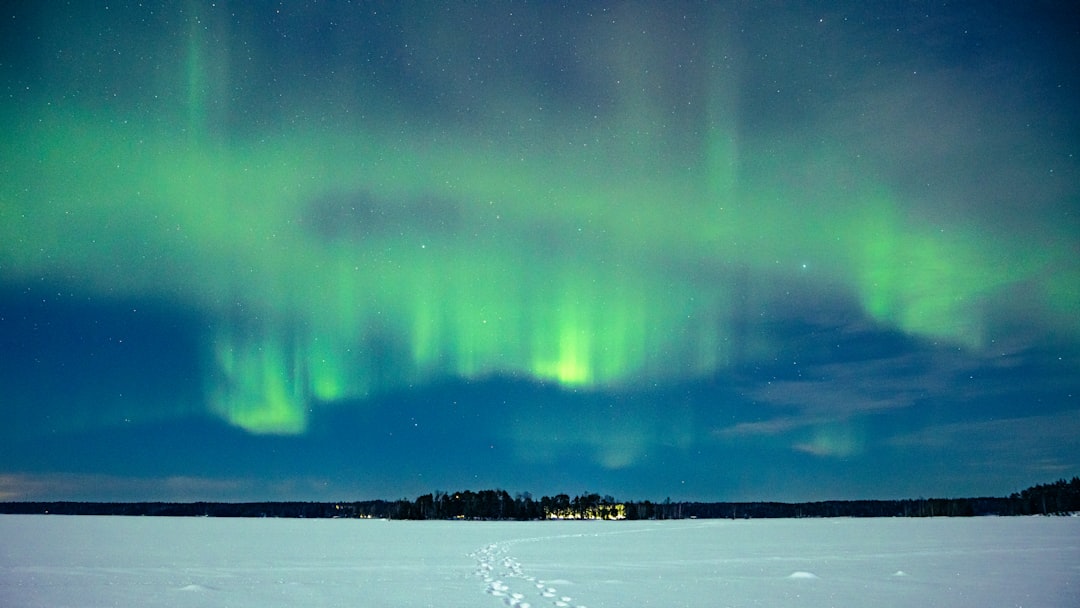
Almost every northern lights tour is sold on the same promise: local guides, warm drinks, and the best chance of seeing the aurora. That last part is the only one worth interrogating, because a northern lights tour cannot manufacture aurora. It can drive you away from clouds and away from city glow. It cannot raise the Kp index, move the auroral oval, or turn off the moon.
Once you see a tour as a purchase of mobility rather than a purchase of aurora, the whole decision gets easier. You stop asking "which company has the best reviews" and start asking "is my destination limited by weather, or by geomagnetic activity?" The answer changes whether you should spend $80 or $300, or spend nothing at all. If you have not settled on a destination yet, our ranking of the best places to see the northern lights sorts them by exactly that distinction.
This guide covers what a tour actually fixes, how to read the fine print behind "guaranteed sightings," why the standard "book three nights" advice is better than the arithmetic behind it, and where a tour is genuinely worth the money.
Is a northern lights tour worth it?
A northern lights tour is most valuable in a cloudy destination where an experienced guide can drive to clearer sky. It cannot create geomagnetic activity or darkness, so compare vehicle range, cancellation and retry terms instead of treating any tour as a sighting guarantee. Check the live northern lights forecast before choosing a night.
Table of Contents
- What a Northern Lights Tour Actually Buys You
- Decoding "Guaranteed Northern Lights"
- Why "Book Three Nights" Is Better Advice Than the Math
- Northern Lights Tour Formats and Costs
- Where a Northern Lights Tour Is Worth It
- How to Pick Which Night to Book
- What Actually Happens on the Night
- Frequently Asked Questions
What a Northern Lights Tour Actually Buys You
A northern lights tour can improve two of the four conditions required to see the aurora, and it has zero influence over the other two. Our aurora forecast checks a location on four independent factors, and it is worth walking through them one at a time with a tour operator's brochure in hand.
1. Geomagnetic activity. Whether the auroral oval expands far enough south to reach your latitude. A tour changes this by exactly nothing. No guide, vehicle, or price tier moves the oval. If the Kp forecast is flat and you are at 55 degrees north, a $300 minibus and a free bus stop produce identical results.
2. Cloud cover. This is where a tour earns its money. A guide with a vehicle, local road knowledge, and access to high-resolution cloud models can drive 100km inland to a hole in the overcast that you would never have found from a hotel window. In coastal Norway and Iceland this is often the entire difference between seeing something and seeing nothing.
3. Darkness. Sun elevation has to be low enough. A tour cannot change the calendar, which is why nowhere above the Arctic Circle sells aurora tours in June. It can, however, keep you out through the 10pm to 2am window around magnetic midnight instead of letting you give up at 11pm and go to bed.
4. Sky washout from moonlight and light pollution. A tour partially fixes half of this. Driving 45 minutes out of Reykjavík or Tromsø removes the city glow. Nothing removes a full moon.
So the honest scoring is: one factor strongly improved, one partially improved, two untouched. That ratio is the single most useful thing to know before you book, because it tells you that the value of a northern lights tour is proportional to how cloud-limited your destination is, and nothing else.
Tromsø sits directly under the oval at 69.6 degrees north, where activity is almost never the constraint and cloud almost always is. That is a near-perfect match for what a tour does well. A traveller in Seattle at 47.6 degrees north is in the opposite situation: cloud is annoying, but the binding constraint is a geomagnetic storm that may not come at all. There is no tour market in Seattle for a reason.
Decoding "Guaranteed Northern Lights"
"Guaranteed" on an aurora tour listing rarely means "you will see the northern lights." It can describe several very different policies. Read the operator's current terms, not only the headline.
| What the listing says | What it actually means | Worth paying extra for? |
|---|---|---|
| Free retry / open ticket | You can rejoin a later tour if the lights do not appear. The validity period and availability depend on the operator. | Only if you have spare nights or will return |
| Refund if the tour is cancelled | The operator cancels before departure and returns your money or offers another date. | Useful, but it does not cover a tour that runs without a sighting |
| Money back if no aurora | Some operators advertise a refund under defined no-sighting conditions. | Potentially, if the trigger and exclusions are explicit |
| Guaranteed photos | They promise you leave with an aurora photograph. | Read the next paragraph first |
| Free cancellation up to a deadline | A booking term, not a sighting guarantee. The deadline and time zone matter. | Yes, when the listing explicitly includes it |
The "guaranteed photos" tier deserves a closer look because cameras and eyes do not record a weak display in the same way. A modern phone in night mode, or a camera using a multi-second exposure, can record colour and structure that look faint or grey to the naked eye.
That means a photo promise is not a promise that the sky will look like the brochure to you. Our forecast uses "Camera only" as a separate verdict for nights when a sensor may record aurora that is difficult to distinguish by eye.
A flexible cancellation policy can be more useful than a vague sighting guarantee. It lets you reconsider the booking closer to departure, when the cloud forecast is more informative. Confirm the exact cutoff and refund terms before paying.
Why "Book Three Nights" Is Better Advice Than the Math Behind It
Booking three nights genuinely improves your odds, but not by as much as the standard calculation claims, because aurora nights are not statistically independent.
The familiar illustration assumes a 50 percent chance on each independent night. Under that assumption, three nights would produce an 87.5 percent chance of at least one success and four nights about 94 percent. Those figures are examples, not measured success rates for a destination.
It is also wrong in a specific, predictable direction, for two reasons.
Weather persists. Cloud is not re-rolled each evening. A low-pressure system parked over the Norwegian coast or the south of Iceland can hold overcast for three, four, or five consecutive nights. When your three booked nights fall inside one weather regime, you have not bought three independent chances. You have bought one chance, repeated.
Geomagnetic activity clusters too. Enhanced and quiet conditions can both persist across multiple nights, so consecutive dates are not completely independent opportunities.
Two independent variables that both persist across days means the naive independence formula overstates your multi-night odds. The correction is larger for maritime destinations, where a single Atlantic system dominates the whole visit, than for dry continental interiors.
Published destination figures need to be kept in context. Explore Fairbanks says visitors who stay at least three nights and actively watch each evening have a greater than 90 percent chance. Visit Abisko cites an 80 percent chance over three nights during aurora season. Both organisations also stress that a sighting is never guaranteed, and neither figure should be transferred to a different climate or itinerary.
Four practical corrections follow from this:
- Book more nights than the formula suggests, especially on a coast. Four to five nights in Tromsø or Reykjavík is a different trip from two.
- Buy mobility, not repetition. A chase tour with unlimited mileage that will drive inland, or cross into Finland from Norway, breaks you out of a single weather cell. Three nights of the same 40-minute bus ride to the same headland does not.
- Or pick a destination with a drier climate. Visit Abisko describes a low-precipitation microclimate with many clear nights. Explore Fairbanks similarly points to low precipitation and its inland location. Better climatology improves the baseline, but it does not guarantee any individual night.
- Split your base if the trip is long enough. Two nights coastal, two nights inland, puts you in two different weather regimes rather than one.
Northern Lights Tour Formats and What They Cost
Northern lights tours fall into six formats, ranging from roughly $65 for a coach seat in Iceland to $975 and up for a private guide in Alaska. The format matters more than the operator name, because it determines how far the vehicle can realistically chase.
| Format | Typical group | Duration | Indicative price per person | Best for |
|---|---|---|---|---|
| Large coach | 40-50 | 3-4 hours | From about ISK 8,990 (roughly $65) in Iceland | Cheapest way to get out of the city glow |
| Minibus chase | 8-16 | 5-9 hours | Roughly NOK 1,500-2,300 (about $140-215) in Tromsø | Genuine cloud chasing |
| 4x4 / super jeep | 4-8 | 5-8 hours | Premium over minibus | Rough roads, deep inland |
| Photography tour | 6-15 | 5-8 hours | Mid to high | Getting a usable image and learning settings |
| Base camp or lodge | Varies | All evening | Varies widely | Cold-weather comfort, families, long waits |
| Combo (hot springs, snowmobile, reindeer) | Varies | 10-16 hours | $240-$325 for Chena Hot Springs from Fairbanks | Filling the daytime as well |
Regional price anchors published for the 2025/26 and 2026/27 seasons are useful for sanity checking a listing. In Fairbanks, basic evening viewing runs about $75 to $85, small-group tours land around $200 to $325, and private tours start near $975. In Tromsø, Visit Tromsø lists budget options capped around NOK 1,200 to 1,500 with standard tours from roughly NOK 1,800 to 2,300. Multi-day aurora packages that bundle accommodation typically start around $800 and climb past $7,000 for lodge-based itineraries. Always confirm current pricing at the point of booking.
The meaningful distinction inside that table is not luxury, it is range. A 50-seat coach loading and unloading takes 20 minutes per stop, which caps it at one or two viewing sites within an hour of town. A minibus with eight people can stop five times, turn around when the cloud edge shifts, and drive 200km. If you are in a cloud-limited destination, that range is the product. Paying more for a smaller vehicle is not a comfort upgrade, it is buying additional coverage of factor two.
Where a Northern Lights Tour Is Worth It
A northern lights tour is worth the money in destinations under the auroral oval where cloud is the binding constraint, and close to worthless where geomagnetic activity is the constraint. The table below pairs the Kp needed for naked-eye aurora under a dark sky at each location with what actually limits you there.
| Destination | Latitude | Kp needed (naked eye) | Main limiter | Tour value |
|---|---|---|---|---|
| Tromsø, Norway | 69.6°N | 1 | Cloud | Highest |
| Lofoten, Norway | 68.2°N | 1 | Cloud | High |
| Abisko, Sweden | 68.4°N | 1 | Local cloud and cold | Optional |
| Rovaniemi, Finland | 66.5°N | 2 | Cloud and tree cover | High |
| Fairbanks, Alaska | 64.8°N | 1 | Cold and transport | Useful |
| Yellowknife, Canada | 62.6°N | 1 | Cold and transport | Useful |
| Reykjavík, Iceland | 64.1°N | 2 | Cloud and city glow | High |
| Anchorage, Alaska | 61.2°N | 3 | Activity and city glow | Marginal |
| Northern Scotland | 58.6°N | 5 | Activity | Low, few tours exist |
| Seattle, Washington | 47.6°N | 6 | Activity | None |
Those Kp thresholds come from our own location registry and reflect the fact that North America sees the oval at lower geographic latitudes than Europe does, because the geomagnetic pole sits over the Canadian Arctic. Fairbanks at 64.8 degrees needs about Kp 1. Reykjavík, only 0.7 degrees further south geographically, needs about Kp 2. If that gap is new to you, our guide to the Kp index and what it does not tell you explains where the number comes from and why it is a poor standalone predictor.
Reading the table, three groups emerge:
Under the oval, cloud-limited. Tromsø, Lofoten, Rovaniemi, Reykjavík. Book the tour. Book the small vehicle. This is the one scenario where the tour is doing exactly what a tour is good at, and the operators here have genuinely deep local weather knowledge. Tromsø guides routinely run inland to Skibotn or across the Finnish border when the coast is socked in.
Under the oval, relatively dry. Abisko, Fairbanks, Yellowknife. A tour here may buy warmth, transport and a comfortable place to wait, while extra nights may matter more than an elaborate chase. If you are equipped and experienced with winter driving, self-driving to a safe dark site can be a legitimate strategy. Explore Fairbanks reports aurora on an average of four out of five clear, dark nights during its viewing season. For Alaska specifically, our guide to northern lights Alaska tours compares Fairbanks, Arctic Circle and Anchorage trips with ten winters of clear-night data.
Below the oval, activity-limited. Scotland, the north of England, Michigan, Minnesota, Washington, Oregon, New England. There is no meaningful tour market here and you should not go looking for one. What you need is a storm alert and a 40-minute drive of your own to a dark northern horizon. Our northern lights field guide covers that scenario in detail.
How to Pick Which Night to Book
Prefer a tour with flexible cancellation, then reassess the available nights as departure approaches and short-range cloud guidance improves.
The NOAA Space Weather Prediction Center publishes a three-day geomagnetic forecast, while its longer outlook is better treated as planning context than a promise for a particular hour. Weather forecasts also become more useful closer to the date. Whether you can act on that information depends entirely on the cancellation terms of your booking.
The practical sequence for a five-night trip:
- Choose a chase tour for the middle of the stay, favouring a clearly stated flexible-cancellation policy.
- Each morning, check the verdict for your location. It combines the Kp forecast with hourly cloud, sun elevation, moon phase and local light pollution into one plain answer: "Not tonight," "Camera only," or "Yes, naked eye."
- If another night looks better and the booking terms permit changes, move the tour before the deadline.
- Keep one night in reserve at the end of the trip. That gives you room to use a retry policy if your operator offers one. For example, Reykjavík Excursions currently allows repeat attempts for two years after a tour runs without a sighting, but does not offer a refund in that situation.
Two things to watch when you do this. First, moon phase is fixed months ahead, so check it before you book flights rather than after. A full moon does not cancel an aurora but it flattens a weak one. Second, remember that a "Camera only" verdict is not a failure, it is a real classification: there is aurora present that your sensor will capture and your eye will barely register. If you are on a photography tour that night, you will be delighted. If you were expecting the postcard, you will not be.
What Actually Happens on the Night
A typical northern lights tour picks you up between 6pm and 9pm, drives 45 minutes to two hours to a dark site, waits, and returns between midnight and 3am. Most run 3 to 5 hours; genuine chase tours run 5 to 9 hours because they need the time to reposition.
Standing still in the cold is the part people underestimate. You are not hiking. You are outdoors, stationary, in wind, for one to three hours. Thermal base layer, insulated mid layer, windproof shell, insulated boots, hat, and two pairs of gloves so you can swap when the outer pair gets wet handling a tripod. Most Nordic operators lend thermal suits; most Alaskan operators do not, so check the listing.
Then there is the part nobody schedules for: dark adaptation. Your rod cells need 20 to 30 minutes in darkness to reach full sensitivity, and a single glance at a white phone screen resets much of that progress. Guides who enforce a red-light-only rule at the viewing site are not being precious. They are protecting the thing you paid for. If your tour does not enforce it, stand away from the group and keep your own screen off.
The final expectation to set is colour. To the naked eye a moderate display reads as a pale, moving grey-green arc. Strong displays go vividly green with structure and motion, and only the strongest add the reds and purples that dominate photographs. The physics behind that colour ladder, and why green comes first, is covered in our explainer on what causes the northern lights.
Frequently Asked Questions
How much does a northern lights tour cost?
Northern lights tour prices range from about $65 for a large coach tour out of Reykjavík to $200-$325 for a small-group tour in Fairbanks, with private tours starting near $975 and multi-day packages from roughly $800. Price mostly tracks group size, and smaller groups buy you a vehicle that can actually chase clear sky.
What are the chances of seeing the northern lights on a tour?
There is no reliable universal percentage for one tour night. Cloud, darkness, geomagnetic activity, location and the operator's willingness to drive all matter. Explore Fairbanks reports greater than 90 percent for visitors who stay at least three nights and actively watch each evening, while Visit Abisko cites 80 percent over three nights in season. Those destination-specific, multi-night figures are not guarantees and should not be applied to a single tour elsewhere.
Do I need a tour to see the northern lights?
No. If you can drive safely in local winter conditions, dress for the cold, and reach a legal dark viewing site, you can reproduce much of the basic experience except the guide's local weather routing. Check the aurora verdict for your location first, then decide whether that routing is worth paying for.
What month is best for a northern lights tour?
Late August through mid-April is the viewing season, and September and March tend to be strongest because geomagnetic activity peaks around the equinoxes. Late September and March also offer milder temperatures than midwinter, which matters more than people expect when you are standing still outdoors at 1am.
If You Only Take One Thing From This
Work out what limits you before you spend anything.
If you are going somewhere under the oval where cloud decides the night, favour a smaller chase vehicle and flexible booking terms. If you are going somewhere dry and continental, spend the money on more nights instead of a fancier tour. And if you are below the oval, in Scotland, the Midwest or the Pacific Northwest, a scheduled tour cannot solve a quiet geomagnetic forecast; what you need is an alert when a real storm arrives.
Check tonight's verdict for your destination before you book anything. Knowing whether your problem is the sky or the sun is worth more than any operator's five-star review.
More Articles
How to See the Northern Lights: A Practical Field Guide
How to see the northern lights: the four-factor field checklist, activity, clouds, darkness, and moonlight, that decides every aurora night.
The Kp Index, Explained: Why the Aurora Number Is Not a Promise
The kp index is a 0 to 9 scale of geomagnetic activity. Here is what the aurora number really means, and why a high value is no promise.
What Causes the Northern Lights? The Science Behind the Aurora Borealis
What causes the northern lights? The sun sends charged particles that hit our atmosphere near the poles. The full science, in plain English.