Oishi Park, Mt. Fuji: Flower Calendar and When the Mountain Is Out
Oishi Park frames Mt. Fuji behind lavender and kochia on Lake Kawaguchi. Get the flower calendar and learn when the mountain is actually visible.

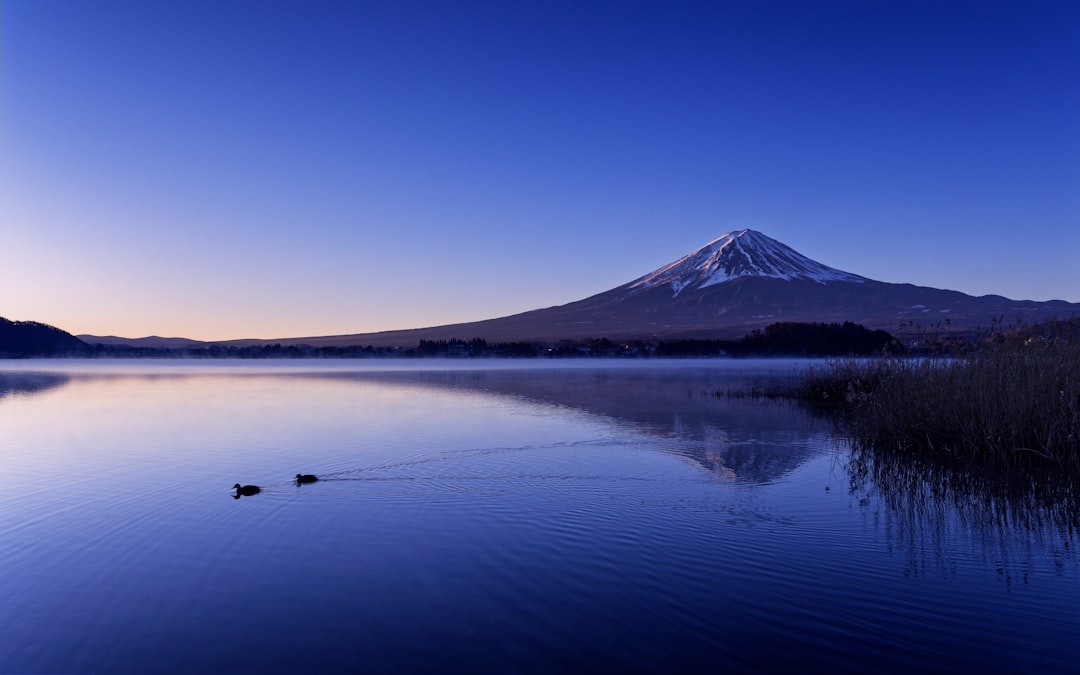
Oishi Park is the postcard you have already seen: a ribbon of lavender or crimson kochia in the foreground, the calm surface of Lake Kawaguchi behind it, and Mt. Fuji rising over the whole scene. It sits on the north shore of the lake in Fujikawaguchiko, Yamanashi, and it is free, open around the clock, and roughly 30 minutes by bus from Kawaguchiko Station. That combination of seasonal flowers and a clean, unobstructed view is why Oishi Park has become one of the most photographed Mt. Fuji viewpoints in Japan.
But there is a catch that almost every guide leaves out. The flowers are reliable. Mt. Fuji is not. The mountain hides behind cloud more than half the year, and its worst stretch collides almost perfectly with lavender season. This guide covers the full flower calendar, how to get there, and the part that actually decides whether your photo works: whether Fuji will be out at all.
Why Oishi Park Works as a Mt. Fuji Viewpoint
Oishi Park works because of geometry. The park runs along the northern shore of Lake Kawaguchi, and Mt. Fuji stands almost due south across the water. That gives you an open, ground-level sightline over the lake to the mountain with nothing tall in between: no ridgelines, no power lines cutting across the cone, no town in the frame. The lake adds the possibility of a mirror reflection on still mornings.
The flowers are the second ingredient. A landscaped strip called the Hana Kaido, or "Flower Road," stretches roughly 350 meters along the water's edge. It is replanted through the year so there is almost always something in bloom in the foreground, from tulips in spring to nearly 100,000 lavender shrubs in early summer to a sea of kochia in autumn.
Put those together and you get the layered composition that made the spot famous. Foreground flowers, mid-ground lake, background volcano. It is the same principle that makes the Chureito Pagoda a top Fuji viewpoint, just swapped from a five-story pagoda to a lakeshore garden. For a broader comparison of where to shoot the mountain, see our roundup of the best Mt. Fuji viewing locations.
Oishi Park Flower Calendar by Season
The best flowers at Oishi Park bloom from late June to mid-July (lavender) and again in mid-to-late October (crimson kochia), but the Flower Road carries color across most of the year. Here is what is out and when.
| Season | Flower | Peak window |
|---|---|---|
| Late April | Tulips, narcissus | Last week of April |
| Early May | Moss phlox (shibazakura) | First half of May |
| Late June to mid-July | Lavender (~100,000 shrubs) | First week of July |
| Late June to early October | Begonia cascade | Summer |
| September | Cosmos | Mid-September |
| Mid to late October | Kochia turning crimson | Around October 15 |
| Winter | Seed heads, berries, bare terrace | Best Fuji clarity |
Lavender is the headline act. The purple carpet peaks in the first week of July most years, and the scent carries the length of the terrace, as Yamanashi's official tourism board notes for the Lake Kawaguchi shore. This is the bloom tied to the Kawaguchiko Herb Festival, which for decades filled both Oishi Park and nearby Yagizaki Park with visitors. Note the 2026 status below before you plan around it.
Autumn is the sleeper season. From August the kochia (summer cypress) mounds sit green, then turn a deep crimson over roughly one week in mid-October. It is a shorter, more precise window than lavender, so the peak is worth timing to the day. Early May brings a burst of moss phlox, the same flower that carpets the famous Fuji Shibazakura Festival a short drive away.
The 2026 Kawaguchiko Herb Festival Is Cancelled
The Kawaguchiko Herb Festival will not be held in 2026. Organizers cancelled the event, which normally ran late June through late July across Oishi Park and Yagizaki Park, citing traffic congestion around the lake. This matters because the festival, not the flowers, was the thing being cancelled.
The lavender itself still blooms on schedule. You can walk the Oishi Park lakeshore and see the same roughly 100,000 shrubs on your own, for free, during the usual late-June-to-mid-July window, as the local Kawaguchiko visitor site confirms. What you lose is the festival infrastructure: the stalls, the herb-product market, and the extra shuttle capacity. What you gain, if you time it right, is a quieter shoreline. If you were planning a trip specifically for the festival, adjust your expectations, not your dates.
Seeing Mt. Fuji from Oishi Park: The Part Guides Skip
Here is the honest truth the flower guides gloss over: Mt. Fuji is only fully visible from the Kawaguchiko area on a minority of days each year, and lavender season is one of the worst times to catch it. The mountain is famously shy. Cloud, haze, and summer humidity keep the summit hidden far more often than travelers expect, which is why our whole Mt. Fuji visibility tracker exists in the first place.
The problem is a scheduling collision. Peak lavender at Oishi Park is late June to early July. That is also the tail of Japan's rainy season, when the sky over the Fuji Five Lakes is at its most gray and the summit spends whole days wrapped in cloud. So the single most photographed shot at the park, purple lavender under a crisp Mt. Fuji, is also one of the hardest to actually get. Plenty of visitors arrive in peak bloom and never see the mountain at all.
Clarity improves dramatically in the cold months. From December through February, dry continental air sweeps the haze away and the snow-capped cone appears on the majority of clear-weather mornings. The trade-off is obvious: winter has the best Fuji odds and the emptiest flower beds. For a full month-by-month breakdown, see our guide to the best time to see Mt. Fuji, and if you are traveling from the capital first, our notes on seeing Fuji from Tokyo explain how far ahead the clouds usually clear.
Check the Forecast Before You Commit
Because the flowers and the mountain peak in different seasons, the smart move is to let Fuji's forecast decide your day. Our visibility score blends cloud cover, humidity, atmospheric visibility distance, and precipitation into a single 0 to 100 number using a documented weighted atmospheric model, updated every 15 minutes. A score above 70 means good odds; 90 and up means the summit should be sharp.
If you have a flexible few days around the lake, watch the live Fuji forecast and go to Oishi Park on the clearest morning, whatever the flowers happen to be doing. If your dates are fixed to a bloom, treat any clear Fuji as a bonus and enjoy the flowers, the lake, and the café regardless.
Best Time of Day to Visit
The best time of day at Oishi Park is early morning, ideally the first hour or two after sunrise. Three things line up then. Fuji is statistically clearest before the day heats up and haze builds. The lake is at its calmest, giving you the best chance at a reflection. And the parking lot, which holds only about 150 cars and fills fast in peak flower seasons, is still nearly empty.
Photographers line the small stone cairns and the lake path at dawn for exactly this reason. By late morning in summer, cloud often begins to swallow the summit even on a promising day, so an early start is not just about crowds. Late afternoon and sunset can also deliver, with warm light on the west-facing slope, but mornings are the safer bet for a clear peak. Our Mt. Fuji photography guide covers composition and settings in more detail.
How to Get to Oishi Park
Oishi Park is reached from Kawaguchiko Station on the Kawaguchiko Sightseeing Bus (Red Line), which takes about 27 to 30 minutes and costs 490 yen one way. Buses run roughly every 30 minutes, and Oishi Park (the "Kawaguchiko Shizen Seikatsukan," or Natural Living Center, stop) is near the end of the Red Line loop.
If you plan to hop between lakeside spots, the unlimited two-day sightseeing bus pass at 1,500 yen for adults and 750 yen for children pays for itself quickly. Kawaguchiko Station is the hub for all of this, reachable directly from Shinjuku; our Kawaguchiko Station guide covers the bus network and the journey from Tokyo. Drivers get a free parking lot on site, but arrive early in lavender and kochia season because it saturates by mid-morning.
Oishi Park sits on the north shore, roughly opposite the busier station-and-hotel side of Lake Kawaguchi. It is one of several standout spots around the Fuji Five Lakes region, and easy to pair with a wider loop of the lake described in Japan Guide's Kawaguchiko overview.
What Else Is at Oishi Park
Beyond the Flower Road, the park centers on the Kawaguchiko Natural Living Center, a chalet-style building that leans into the region's blueberry farming. Inside you will find blueberry soft-serve, homemade jams, seasonal crafts, and, in summer, pick-your-own berry experiences. It generally opens around 9:00 and closes in the late afternoon, with reduced winter hours.
The Oishi Park Café serves lakeside drinks and light food, typically 9:00 to 16:00 in summer and closing an hour earlier in winter. The park itself has no gate, no fee, and no closing time, so the shoreline path is yours at dawn or after dark. Budget 45 to 90 minutes for photos, a slow walk along the water, and a stop for soft-serve.
Frequently Asked Questions
When is the best time to visit Oishi Park?
For flowers, aim for the first week of July (lavender) or mid-October (crimson kochia). For the clearest Mt. Fuji, visit December through February. Whatever the season, go at sunrise for the best odds of a visible summit and a calm-lake reflection, and check the Fuji visibility forecast the night before.
Is Oishi Park free?
Yes. The park and its lakeshore Flower Road are free and open 24 hours a day, and on-site parking is also free. You only pay if you buy food, jam, or crafts at the Natural Living Center or café, or the 490 yen bus fare to get there.
Is the Kawaguchiko Herb Festival happening in 2026?
No. The 2026 Kawaguchiko Herb Festival has been cancelled due to traffic congestion around the lake. The lavender still blooms at Oishi Park on its normal late-June-to-mid-July schedule, so you can view it independently for free, just without the festival stalls and shuttles.
Can you always see Mt. Fuji from Oishi Park?
No. Mt. Fuji is hidden by cloud or haze on most days, and summer, which overlaps lavender season, is the least reliable time of year. Winter mornings offer the best chance of a clear summit. Always check a real-time visibility score before you go rather than assuming the mountain will be out.
The Bottom Line
Oishi Park gives you two things that rarely share a season: a world-class flower foreground and a full-frontal Mt. Fuji. Treat them as separate decisions. Pick your window for the bloom you want, then let the mountain's forecast pick your exact morning within it. Show up at sunrise on a day the Fuji visibility tracker is reading high, and you will walk away with the shot that put this little lakeshore park on every Japan itinerary.
More Articles
Best Mt. Fuji Viewing Locations: Kawaguchiko vs Tokyo vs Hakone Compared
Compare the best places to see Mt. Fuji with real visibility data. Find out which location offers the best views for your trip.
Kawaguchiko Station: Tokyo Trains, Buses and Fuji Access
Plan your arrival at Kawaguchiko Station: compare Tokyo trains and buses, understand rail-pass coverage, and arrange local travel and your return.
Shibazakura Festival at Mt. Fuji: Dates, Bloom Guide, and Visitor Tips
Plan your visit to the Fuji Shibazakura Festival with bloom dates, ticket prices, and tips for seeing Mt. Fuji.