Mt. Fuji Weather Forecast 15 Days: Which Sources to Trust and How to Read Them
Find the best mt fuji weather forecast 15 days out. Learn which tools work, which mislead, and how to read them.

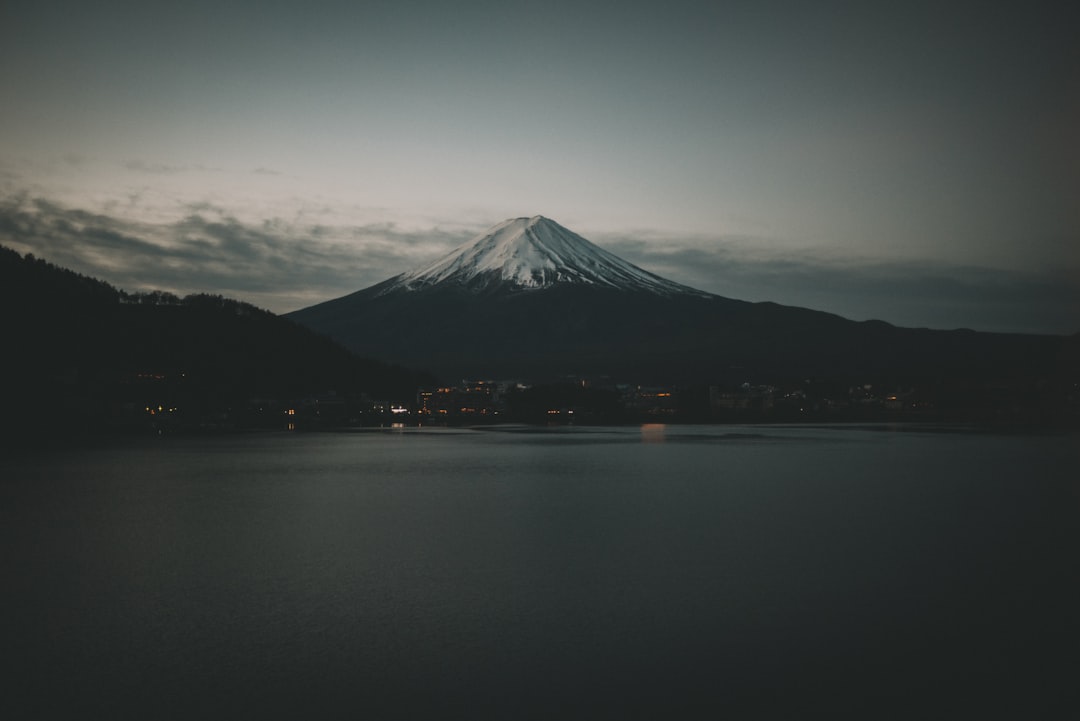
How reliable is an mt fuji weather forecast 15 days out?
A 15-day Mt. Fuji weather forecast is useful for spotting large weather patterns like storms or high-pressure ridges, but not for predicting specific viewing conditions. Days 1-3 are reliable enough to commit. Days 4-7 give directional signals. Days 8-15 are pattern indicators at best. Most services labeled "Fuji" forecast for the lowland city, not the 3,776m summit. Use our Mt. Fuji visibility forecast for scored predictions up to 10 days out.
Most people searching for an mt fuji weather forecast 15 days out want to answer one question: will I see the mountain during my trip? The problem is that most 15-day forecast tools show weather data for the wrong location, at the wrong elevation, without telling you whether any of it means a clear view of Fuji.
This guide breaks down which forecast sources actually cover Mt. Fuji (not Fuji city), how to interpret their data for visibility planning, and what to do when the extended forecast looks uncertain.
The Location Trap: "Fuji" Is Not Mt. Fuji
Most 15-day weather forecasts labeled "Fuji, Japan" report conditions for Fuji city in Shizuoka Prefecture. That is a lowland city sitting at roughly 50 meters above sea level. Mt. Fuji's summit stands at 3,776 meters. The difference matters enormously.
On a typical April day, Fuji city might show 18 degrees Celsius with partly cloudy skies. Meanwhile, the summit sits at negative 5 degrees with 80 km/h winds and a completely different cloud layer. The temperature drops approximately 0.65 degrees Celsius for every 100 meters of elevation gain, which means the summit runs about 24 degrees colder than the lowland forecast suggests.
If your goal is seeing Mt. Fuji rather than knowing whether to pack an umbrella in town, you need forecasts that report conditions at the mountain itself, or tools that translate lowland weather into visibility predictions.
Here is where the major services actually measure:
| Forecast Service | Location Measured | Elevation | Days Out | Useful for Visibility? |
|---|---|---|---|---|
| TimeandDate.com | Fuji city (lowland) | ~50m | 14 | Limited |
| Tutiempo | Fuji city (lowland) | ~50m | 15 | Limited |
| Mountain Forecast | Mt. Fuji summit | 3,776m | 6 | Yes, for summit conditions |
| isitvisible.com/fuji | Mt. Fuji area | Multi-layer | 10 | Yes, visibility score 0-100 |
| Weather Underground | Fuji city | ~50m | 10 | Limited |
The only service in this list that specifically forecasts mountain visibility is our Mt. Fuji visibility forecast, which uses a weighted atmospheric model combining cloud cover at multiple altitudes, humidity, wind speed, and precipitation probability into a single score.
Mt. Fuji Weather Forecast 15 Days: What the Data Actually Shows
A 15-day weather forecast for the Mt. Fuji region typically includes temperature highs and lows, precipitation probability, wind speed and direction, humidity, and cloud cover percentage. Some services add atmospheric pressure and moon phase data. None of the standard 15-day services include a visibility prediction.
Here is how to translate raw weather numbers into a Fuji visibility estimate:
Cloud cover below 30%: Strong chance of a clear view, especially in the morning hours. At this level, you are likely to see the full mountain from popular viewpoints around the Fuji Five Lakes region.
Cloud cover 30-60%: Variable conditions. Morning views are still possible if clouds build during the afternoon. Check whether the cloud layer sits above or below the summit elevation. High clouds (above 4,000m) often allow a partial view. Low clouds (below 2,000m) typically block everything.
Cloud cover above 60%: Poor visibility odds. Plan backup activities and check again the next day.
Humidity above 80%: Even without clouds, high humidity creates haze that obscures distant views. This is why seeing Fuji from Tokyo is much harder in summer. The 100-kilometer distance amplifies the haze effect.
Wind direction from the north or northwest: In winter and spring, north winds bring cold, dry continental air from Siberia. These are the conditions that produce the sharpest, clearest Fuji views. When the 15-day forecast shows sustained northerly winds, pay attention.
How Accurate Is a 15-Day Forecast for Mt. Fuji?
Not very. But the degree of inaccuracy varies by day.
Days 1 through 3 of any forecast are reliable enough to make firm plans. If the 3-day outlook shows clear skies, book your day trip from Tokyo with confidence. Days 4 through 7 give you useful directional signals: is a storm system approaching, or is a high-pressure ridge settling in? Days 8 through 15 are pattern indicators at best.
The European Centre for Medium-Range Weather Forecasts (ECMWF) model, which feeds many consumer weather services, drops to roughly 50% accuracy for temperature and precipitation by day 10. For mountain-specific conditions like cloud formation around Mt. Fuji's slopes, accuracy is even lower. The mountain generates its own clouds through orographic lift, and global forecast models resolve this poorly at extended ranges.
What the 15-day window is genuinely good for: spotting large-scale weather patterns. A typhoon forming south of Japan will show up in 15-day models days before it arrives. A persistent high-pressure ridge over central Japan will appear as a multi-day stretch of clear conditions. These macro patterns are useful even if the exact cloud cover on day 12 is unreliable.
For a detailed breakdown of how forecast accuracy decays, including differences between ECMWF and GFS models for Japan, see our 14-day visibility forecast guide.
Seasonal Context That Matters More Than Any Forecast
The single most important variable in whether you will see Mt. Fuji is which month you visit. No 15-day forecast overrides this.
December through February delivers visibility rates above 70%. The air is cold, dry, and stable. Even a mediocre forecast during winter usually produces at least a few clear mornings across any given week. If your trip falls in these months, the odds are already strongly in your favor.
June and July drop below 15-25% visibility due to Japan's rainy season. A 15-day forecast showing scattered clouds during tsuyu (the rainy season) should not inspire optimism. The moisture pattern is structural, not a passing system.
October and November mark the transition back to clear conditions, with visibility climbing to 50-65%. Spring months hover around 40-55%, with the added bonus of cherry blossom season in late March and April.
Our Mt. Fuji weather forecast guide has detailed monthly tables with temperatures, precipitation, and visibility rates for every season.
A Practical System for Using the 15-Day Forecast
Rather than checking one forecast source once, layer multiple sources across different time horizons. This approach gives you more signal than any single tool.
At 15 days out: Check Tutiempo or TimeandDate for the broad weather pattern. You are looking for multi-day rain events or high-pressure ridges. Do not fixate on specific days.
At 10 days out: Start monitoring the Mt. Fuji visibility score daily. The forecast now includes your travel dates. Track whether scores trend up or down across consecutive daily checks. A score that rises from 45 to 65 over three consecutive updates is a stronger signal than a single reading of 65.
At 7 days out: Cross-reference visibility scores with Mountain Forecast for summit-level conditions. If both sources agree on clear weather, your confidence should be high. Tentatively identify your best viewing day.
At 3 days out: Commit. If the visibility score is above 70, book your train, set your alarm, and go. If it is below 40, plan alternatives and recheck the following morning. For scores in between, lean toward going. A mediocre forecast sometimes produces a clear morning window.
Day of: Verify with a live camera feed before leaving. Conditions at 6 AM are often dramatically different from the forecast issued 12 hours earlier.
This layered approach works because each time horizon gives you different information. The 15-day forecast tells you whether to feel optimistic. The 3-day forecast tells you what to do. The live camera tells you whether it worked.
When the 15-Day Forecast Looks Bad
A grim extended forecast is not a death sentence for your Fuji viewing plans.
Post-storm windows are consistently the clearest viewing conditions of the year. Rain scrubs particulates from the atmosphere, and the trailing high-pressure system brings cold, dry air. If the 15-day forecast shows rain on Tuesday and Wednesday, Thursday morning could deliver an exceptional view.
Early mornings outperform every other time of day. The hours between 6 AM and 9 AM consistently produce clearer skies than afternoon. Overnight cooling drops humidity and suppresses the convective cloud buildup that wraps around the peak by midday. Our Mt. Fuji visibility page shows separate morning and afternoon scores for exactly this reason.
Higher-elevation viewpoints sometimes clear the cloud deck. When low clouds block the view from lower areas, the Kawaguchiko Ropeway at 1,075 meters or viewpoints around Hakone can sit above the overcast layer.
And if the weather truly does not cooperate, the Fuji Five Lakes region delivers hot springs, local cuisine, and cultural sites that make the trip worthwhile even without a clear summit view.
Frequently Asked Questions
Is a 15-day Mt. Fuji weather forecast accurate enough to plan a trip?
It is accurate enough to set expectations, not to make firm viewing plans. Use the 15-day window to identify large weather patterns like approaching storms or high-pressure ridges. Wait until the 3-day forecast to decide which specific day to prioritize for Mt. Fuji viewing.
What is the best website for a 15-day Mt. Fuji weather forecast?
For raw weather data extending 15 days, Tutiempo covers the Fuji area with temperature, precipitation, humidity, and cloud data. For visibility-specific predictions, our Mt. Fuji forecast scores conditions from 0 to 100 for 10 days out. Combining both gives the most complete picture.
Why does the forecast show warm temperatures when Mt. Fuji has snow?
Most services labeled "Fuji" forecast for Fuji city at sea level, not the mountain summit at 3,776 meters. The summit runs roughly 24 degrees Celsius colder than the lowland city. Always check which elevation the forecast covers before drawing conclusions about mountain conditions.
Check the current Mt. Fuji visibility forecast for real-time scores updated every 15 minutes, with separate morning and afternoon predictions.
More Articles
Best Mt. Fuji Viewing Locations: Kawaguchiko vs Tokyo vs Hakone Compared
Compare the best places to see Mt. Fuji with real visibility data. Find out which location offers the best views for your trip.
Fuji Hakone Pass: What It Covers, the Cost Math, and the Leg It Misses
The Fuji Hakone Pass costs 11,100 yen for three days across both regions. Here is the break-even math and the return leg it quietly leaves out.
Hakone Ropeway: Fares, Route, Mt. Fuji Views and When It Closes
The Hakone Ropeway now charges one flat fare. Real 2026 prices, exactly where Mt. Fuji appears, and the closures nobody warns you about.