Mt. Fuji Visibility Forecast 14 Days: How to Plan Around Extended Predictions
A Mt. Fuji visibility forecast 14 days out helps plan trips, but accuracy varies wildly by day. Here is what to trust.

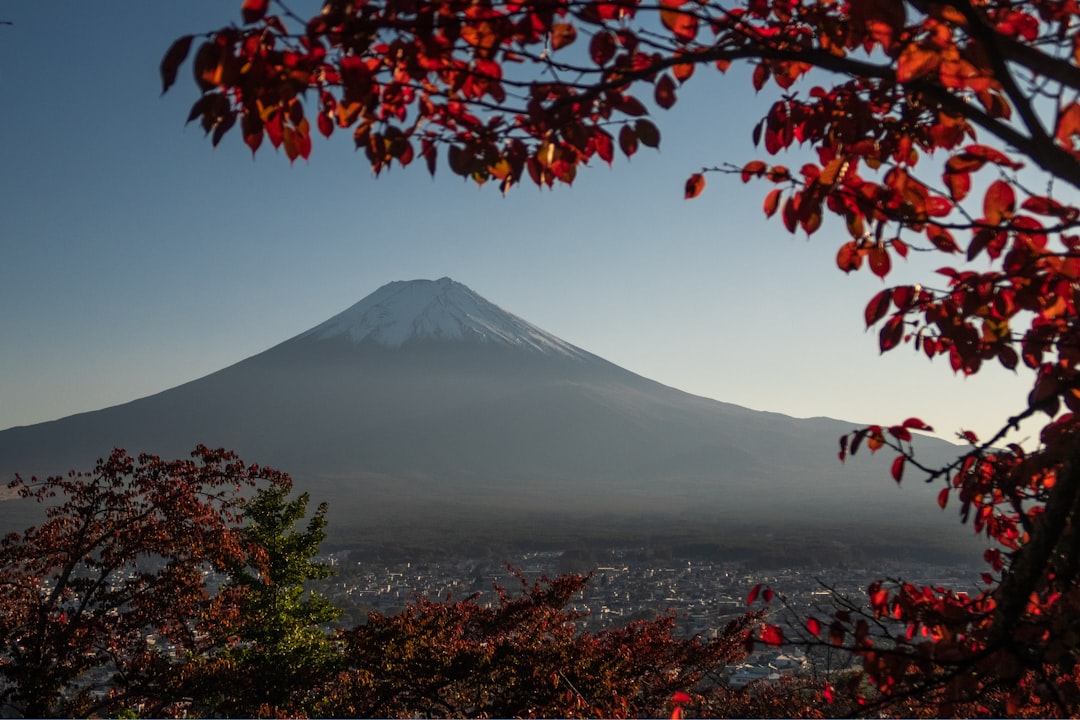
Can you get a Mt. Fuji visibility forecast 14 days out? Yes, but accuracy drops sharply after day 7. Use extended forecasts to spot broad weather patterns, then commit to your viewing plans when the 3-day forecast becomes available.
A mt fuji visibility forecast 14 days out is the first thing most travelers pull up when planning a Japan trip. You want to know whether Fuji will cooperate during your visit, and two weeks feels like the right planning horizon. But the accuracy of that forecast varies enormously depending on which day you are looking at. Days 1 through 3 are reliable. Days 4 through 7 are useful. Days 8 through 14 are barely better than checking the seasonal average.
Understanding that accuracy gradient, and adjusting your planning strategy for each window, is the difference between a well-timed Fuji sighting and a week of clouds.
Our Mt. Fuji visibility forecast uses a weighted atmospheric model that combines cloud cover, humidity, wind, and precipitation data into a single visibility score updated every 15 minutes. It currently extends 10 days out. This guide explains how to use that forecast alongside other extended sources to maximize your chances of a clear view.
Where to Find a Mt. Fuji Visibility Forecast 14 Days Out
The most useful forecast source depends on what you need: a visibility-specific prediction or raw weather data you interpret yourself.
Visibility-specific forecasts translate weather into a "will I see the mountain?" answer. Our Mt. Fuji forecast page scores visibility from 0 to 100 for the next 10 days, with separate morning and afternoon predictions. The scores account for cloud layers at multiple altitudes, not just surface conditions.
General weather forecasts from TimeandDate.com, Ventusky, and the Weather Network extend the full 14 days but only report temperature, precipitation, and wind. They leave you to guess whether 65% cloud cover at 2,000 meters means Fuji will be visible.
Mountain-specific forecasts like Mountain Forecast break down conditions by elevation, which is critical for a peak that rises 3,776 meters. Their data covers 6 days.
The Japan Meteorological Agency provides the most authoritative regional data for Japan, though their English interface takes some navigating. Most third-party services pull from JMA data feeds.
| Forecast Source | Days Out | Visibility Score | Best For |
|---|---|---|---|
| isitvisible.com/fuji | 10 days | Yes (0-100) | Deciding which morning to prioritize |
| TimeandDate.com | 14 days | No | Spotting rain patterns in week 2 |
| Mountain Forecast | 6 days | No | Elevation-specific wind and cloud data |
| Ventusky | 14 days | No | Visual weather maps and frontal movement |
| JMA | 7 days | No | Authoritative regional data |
If your goal is seeing the mountain rather than just avoiding rain, start with a visibility-specific tool. Supplement with a 14-day weather source to extend your planning horizon.
How Forecast Accuracy Decays Day by Day
A 14-day weather forecast is not uniformly inaccurate. Accuracy erodes gradually, and knowing the curve helps you calibrate your confidence.
According to NOAA, short-range forecasts (1 to 3 days) hit roughly 80-90% accuracy for temperature and precipitation. By day 7, accuracy drops to around 80%. By day 10, it is closer to 50-60%. At day 14, you are working with roughly 50% accuracy, which is barely better than the historical climate average for that date.
| Forecast Window | Accuracy | What It Is Good For |
|---|---|---|
| Days 1-3 | 80-90% | Firm plans. Book trains, wake up early, commit. |
| Days 4-7 | 70-80% | Prioritize which day to target for viewing. |
| Days 8-10 | 50-60% | Spot broad weather trends (storm systems, high pressure). |
| Days 11-14 | ~50% | Slightly better than seasonal averages. Set expectations only. |
For Mt. Fuji visibility specifically, the accuracy is even lower than these general numbers. Visibility depends on cloud layers at specific altitudes, localized humidity near the mountain, and temperature inversions that general models handle poorly. A forecast might correctly predict "no rain" on day 12 but completely miss a low cloud deck at 1,500 meters that blocks your view from Lake Kawaguchi.
Why mountains are harder to forecast
Mt. Fuji presents unique forecasting challenges. The mountain sits where cold continental air masses from Siberia collide with warm, moist air from the Kuroshio Current flowing along Japan's coast. This collision zone shifts constantly, and small changes in the boundary produce dramatically different cloud formations around the peak.
The mountain also generates its own weather through orographic lift. Moist air forced upward over Fuji's slopes cools and condenses, creating clouds that can cap the summit even when surrounding lowland skies are clear. These localized effects are difficult for global forecast models to capture at extended ranges.
ECMWF vs. GFS: which model to trust for Japan
Not all forecast sources use the same underlying model, and the differences matter.
The European Centre for Medium-Range Weather Forecasts (ECMWF) model consistently outperforms the American GFS model for medium-range predictions globally. For Japan specifically, ECMWF handles the interaction between the jet stream and Pacific moisture patterns better than GFS, particularly in the 5 to 10 day range.
Services like Ventusky and Windy let you toggle between models. When ECMWF and GFS agree on conditions for a particular day, your confidence should be higher than when they diverge. Disagreement between models at day 10 or beyond is normal and a signal that the forecast is still unstable.
A Practical Decision Timeline for Trip Planning
Most guides tell you to "stay flexible." That is good advice but not very actionable. Here is a concrete timeline for translating forecast data into trip decisions.
14 days out: set expectations
Check the extended forecast for your travel dates. You are not making decisions yet. You are looking for red flags: an incoming typhoon, a persistent rain pattern, or a high-pressure ridge that could bring clear skies. Also check the seasonal baseline. If you are visiting in winter, the odds are already 70%+ in your favor regardless of the forecast.
10 days out: start daily monitoring
Begin checking the Mt. Fuji visibility forecast daily. Track how the scores shift from day to day. The visibility trends dashboard shows historical patterns that help you calibrate expectations: if the current 7-day trend is improving, that supports a bullish forecast. If a particular date keeps showing high visibility across multiple daily updates, that is a stronger signal than a single good reading.
7 days out: tentative day selection
The forecast is now accurate enough to tentatively identify your best viewing day. If you have a multi-day trip planned, mentally rank which day looks strongest for Fuji. But do not lock in paid reservations that cannot be changed.
3 days out: commit
This is decision time. The 3-day forecast is reliable enough to:
- Book your seat on the Fuji Excursion limited express from Shinjuku to Kawaguchiko
- Set your alarm for a 5 AM departure to catch sunrise at Chureito Pagoda
- Confirm a day trip from Tokyo with a local tour operator
If the visibility score is above 70 for the morning, go. If it is below 40, shift to a backup plan. Between 40 and 70, check again the next morning.
Day of: verify with live cameras
Forecasts predict. Live cameras confirm. Check a webcam feed before leaving your hotel. Even a "clear" forecast day can surprise you with early morning fog that lifts by 9 AM, or the reverse: a clear dawn followed by cloud buildup before noon.
Seasonal Averages That Outweigh Any 14-Day Forecast
The single most important factor in seeing Mt. Fuji is when you visit. No amount of extended forecasting can overcome a trip scheduled during rainy season.
Mt. Fuji is clearly visible on roughly 80 days per year. But those days are not distributed evenly.
| Month | Visibility Rate | Clear Days | Conditions |
|---|---|---|---|
| January | ~77% | 23-24 | Cold Siberian air, very dry, excellent clarity |
| February | ~79% | 22-23 | Peak visibility month, low humidity |
| March | ~50% | 15-16 | Transitional, increasing moisture |
| April | ~40% | 12 | Spring haze, moderate humidity |
| May | ~30% | 9-10 | Rising humidity, cloud buildup |
| June | ~15% | 4-5 | Rainy season begins |
| July | ~10% | 3 | Peak rainy season, persistent cloud cover |
| August | ~19% | 6 | Humid, afternoon thunderstorms |
| September | ~25% | 7-8 | Lingering summer moisture, typhoon season |
| October | ~61% | 19 | Cooling air, stable conditions return |
| November | ~63% | 19 | Dry air, excellent late-autumn clarity |
| December | ~77% | 23-24 | Winter high pressure establishes |
If you are visiting during November through February, even a mediocre 14-day forecast deserves optimism. The best time to see Mt. Fuji is overwhelmingly during these four months. If your trip falls in June or July, prepare backup activities and consider the forecast a rough guide at best.
For a deeper look at what drives these numbers, our complete visibility guide breaks down the atmospheric factors behind each season.
What to Do When the Extended Forecast Looks Bad
A discouraging 14-day outlook does not mean all hope is lost. Forecasts at that range change constantly, and several tactics improve your odds even in unfavorable conditions.
Watch for post-storm clearing windows
The clearest Fuji views often come 24 to 48 hours after a storm passes. Rain scrubs particulates from the atmosphere, and the trailing high-pressure system pushes in cold, dry air. If the forecast shows rain ending on Tuesday, Wednesday morning could deliver extraordinary clarity. This pattern is especially rewarding for photography.
Try higher-elevation viewpoints
Cloud layers sit at specific altitudes. When low clouds block the view from Tokyo, higher viewpoints around the Fuji Five Lakes can sit above the cloud deck. The Kawaguchiko Ropeway at 1,075 meters and the Nihondaira plateau near Shizuoka sometimes clear the worst of low-altitude overcast.
Use the morning advantage
The best time of day to see Mt. Fuji is between 6 AM and 8 AM. Overnight cooling drops humidity and suppresses convective cloud formation. By noon, rising temperatures push moisture upward and clouds frequently wrap around the peak. Even on a "partly cloudy" forecast day, the early morning window can be clear. Our real-time forecast shows separate morning and afternoon scores for exactly this reason.
Pivot to other activities
If the forecast holds firm and visibility looks poor, the region around Mt. Fuji still delivers. The Fuji Five Lakes area offers onsens, local cuisine, and the Aokigahara forest. Fujinomiya has the Fujisan Hongu Sengen Taisha shrine. And if you are visiting during cherry blossom season or spring, the surrounding landscape is worth the trip even without a clear summit view.
Combining Multiple Forecast Sources
No single source tells the whole story, especially beyond 7 days. The most reliable approach layers multiple tools.
For days 1-3: The Is It Visible forecast alone is sufficient. The visibility score integrates all the variables you need.
For days 4-7: Cross-reference the Is It Visible score with one general weather source (Ventusky or TimeandDate) to understand precipitation timing and frontal movement.
For days 8-14: Check at least two general weather services and compare their predictions. When multiple independent models agree on clear conditions, your confidence is higher than when only one does. Look for model consensus: if both ECMWF and GFS show a high-pressure ridge over central Japan, that signal carries real weight even at extended range.
Day of your visit: Verify everything with a live camera feed. If the camera shows clear skies while the forecast says "cloudy," trust the camera.
For tomorrow's visibility, a single reliable source is enough. For 14 days out, it is consensus across sources that you are after.
Frequently Asked Questions
How accurate is a 14-day Mt. Fuji visibility forecast?
Roughly 50% accurate, which is barely better than the seasonal average for that date. Days 1-3 hit 80-90% accuracy, days 4-7 around 70-80%, and everything beyond day 10 drops below 60%. For mountain visibility specifically, accuracy is even lower because localized cloud formation around Mt. Fuji is difficult for forecast models to resolve at extended ranges.
What is the best website for an extended Mt. Fuji forecast?
For visibility predictions, isitvisible.com/fuji provides scored forecasts (0-100) updated every 15 minutes for 10 days. For raw weather data extending the full 14 days, TimeandDate.com and Ventusky cover the Fuji region. Combining a visibility tool with a weather service gives the most complete picture.
Should I change my travel plans based on a 14-day forecast?
Not yet. Use the 14-day outlook to set expectations, not make commitments. Wait until the 3-day window to make firm decisions about which day to prioritize for Fuji viewing. If you are visiting during winter months (November through February), the seasonal odds are already strongly in your favor regardless of what the extended forecast shows.
Can I see Mt. Fuji every day in winter?
Not every day, but close. December and January offer roughly 77% visibility rates, meaning roughly 24 out of 31 days will have a clear view. February is even slightly better at around 79%. A multi-day winter trip gives you excellent odds of at least one clear morning without needing to obsess over the forecast.
The Mt. Fuji visibility forecast 14 days out is where planning begins. The 3-day forecast is where plans become real. And the live camera check on the morning of your visit is the final confirmation.
Check the current Mt. Fuji visibility forecast for scores updated every 15 minutes.
More Articles
Best Mt. Fuji Viewing Locations: Kawaguchiko vs Tokyo vs Hakone Compared
Compare the best places to see Mt. Fuji with real visibility data. Find out which location offers the best views for your trip.
Fuji Hakone Pass: What It Covers, the Cost Math, and the Leg It Misses
The Fuji Hakone Pass costs 11,100 yen for three days across both regions. Here is the break-even math and the return leg it quietly leaves out.
Hakone Ropeway: Fares, Route, Mt. Fuji Views and When It Closes
The Hakone Ropeway now charges one flat fare. Real 2026 prices, exactly where Mt. Fuji appears, and the closures nobody warns you about.