Narada Falls: Mount Rainier's Roadside Waterfall Guide
Narada Falls is Mount Rainier's largest drive-up waterfall. Get directions, the trail, the best time to visit, and rainbow-viewing tips.

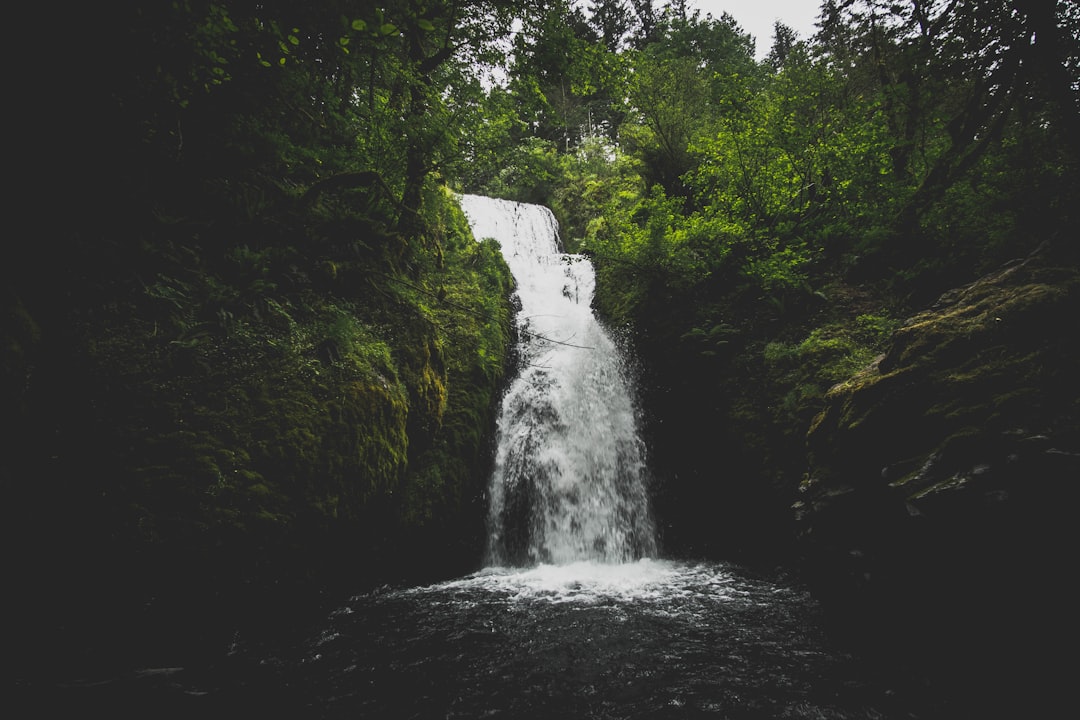
What is Narada Falls?
Narada Falls is a two-tier waterfall on the Paradise River in Mount Rainier National Park, with a dramatic 168-foot main plunge and a total drop of roughly 176 to 188 feet. Sitting just off the road to Paradise, it is the largest waterfall you can reach by car in the park. The road to Paradise actually crosses the falls between its two tiers on a stone bridge. Before you drive up, check the live Mount Rainier visibility forecast to see whether the peak will be out or hidden that day.
Table of Contents
- What Is Narada Falls?
- Can You See Mount Rainier From Narada Falls?
- How to Get to Narada Falls
- The Narada Falls Trail
- Best Time to Visit Narada Falls
- Narada Falls as Part of a Paradise Day
- Narada Falls in Winter
- Where the Name Comes From
- Frequently Asked Questions
What Is Narada Falls
Narada Falls is a powerful two-tier cascade on the Paradise River, one of the most photographed waterfalls in Mount Rainier National Park. The main plunge drops about 168 feet down a nearly sheer cliff of hard andesite lava, spreading into a horsetail of several strands. Below it, a shorter step of roughly 17 to 20 feet finishes the fall into a pool. Depending on which tiers a source counts, the total height is listed anywhere from 176 to 188 feet.
What makes Narada Falls unusual is its accessibility. The National Park Service calls it the largest waterfall in the park reachable by car, and the viewpoint sits only about 150 feet from the road. The Mount Rainier highway crosses the Paradise River on a rustic stone bridge built in the early 1900s, right between the upper and lower tiers. You are, quite literally, standing on top of the falls when you cross that bridge.
One detail most visitors miss: the water here runs clear, not the milky gray of many Rainier streams. The Paradise River is fed by snowfields rather than debris-laden glaciers, so it carries almost no rock flour. That clarity is part of what gives the falls their bright, foaming character.
Can You See Mount Rainier From Narada Falls
Narada Falls itself does not offer a clean view of Mount Rainier. The falls sit in a forested river gorge, and the surrounding hemlocks and the terrain block most of the summit. On a clear day you can catch a slice of the upper mountain from the parking area and the bridge looking up-valley, but this is a waterfall stop, not a mountain viewpoint.
That distinction actually makes Narada Falls one of the smartest stops to plan around visibility. Mount Rainier is only fully "out" roughly 20 to 30 percent of the year, and clouds routinely cap the summit while the lower forests stay clear. A waterfall does not care whether the peak is hidden. In fact, overcast and lightly rainy days produce the best waterfall photos, because soft, even light removes the harsh shadows and blown-out highlights you get in midday sun.
So the practical move is to check the real-time Mount Rainier visibility score before you leave. Our score comes from a weighted atmospheric model that combines cloud cover, humidity, precipitation, and visibility distance, updated every 15 minutes. If the mountain is forecast to be out, prioritize the classic reflection viewpoints near Paradise. If the score is low and the summit will be socked in, Narada Falls becomes the headline attraction rather than the consolation prize. Either way, the drive is worth it. For the deeper background on why the peak hides so often, our Mount Rainier weather guide breaks down the Pacific maritime patterns at play.
How to Get to Narada Falls
Narada Falls sits on the Nisqually to Paradise road, about 14 miles from the Nisqually Entrance and roughly 1 mile below the Paradise area. If you are coming from the east or from inside the park, it is about 0.8 mile west of the junction of Paradise Valley Road and Stevens Canyon Road. The turnoff is signed, and the parking lot is on the west side of the road.
The parking area holds about 40 vehicles and includes restrooms across the bridge, picnic tables, and trash bins. It fills fast on summer weekends, so arrive before mid-morning or later in the afternoon to find a spot. This is the same corridor that leads to Paradise, so the traffic patterns mirror the rest of the park.
Good news for 2026: Mount Rainier National Park will not require timed-entry reservations this year for any area, including the Paradise and Sunrise corridors, according to the park's own announcement. You simply pay the entrance fee and drive in. The standard fee is $30 per private vehicle, valid for three consecutive days. The park manages busy days through parking rather than advance booking, so the "arrive early" advice matters more than ever.
If you want to orient yourself before the drive, our Mount Rainier map guide lays out the main roads, entrances, and where the major stops fall along the Paradise corridor.
The Narada Falls Trail
There are two ways to experience Narada Falls, and they suit very different visitors.
The upper viewpoint is a short, paved path from the parking lot to a railing overlooking the top of the falls. It is essentially barrier-free and takes only a couple of minutes. If you have limited mobility, small children, or icy conditions, this is your view.
The lower trail delivers the money shot. Cross the stone bridge and follow the path that switchbacks down to the base of the main plunge. It is short, about 0.2 mile each way (0.4 mile round-trip), but it drops roughly 200 feet, so the return climb is a genuine, if brief, workout. Washington Trails Association rates it easy to moderate.
The single most important warning: the lower trail is almost always wet. Spray from the falls keeps the rocks and pavement slick, and the mist drifts across the path. Wear shoes with grip, watch your footing, and keep a firm hold on children. On a windy day you will get lightly soaked at the bottom, which is part of the fun in summer and a real hazard in freezing weather.
Narada Falls is also a trail junction. The path connects to the Lakes Trail toward Reflection Lakes and Paradise, and the 93-mile Wonderland Trail passes through here, so on a summer day you will see thru-hikers with big packs mixing in with families on a five-minute stop.
Best Time to Visit Narada Falls
The best months for Narada Falls are late May through early October, when the lower trail is reliably snow-free and the Paradise River runs full from snowmelt. Peak flow comes in late spring and early summer as the snowpack melts, which is when the falls are loudest and most powerful. By late summer the volume drops but the trail is at its driest and safest.
Time of day matters more than most people realize, and it comes down to one thing: rainbows. On a sunny afternoon, when the sun drops low enough to strike the spray at the base of the falls, a rainbow appears in the mist. Mid-to-late afternoon is the sweet spot. Photographers routinely wait 15 to 20 minutes for a cloud to clear and the light to hit at the right angle, so patience pays off.
This is where visibility data helps again. A rainbow needs direct sun on the mist, which means you want clear or partly clear skies in the afternoon, not a full overcast. Checking the hourly forecast on our Mount Rainier visibility page helps you time the drive for a sunny window. If you are chasing golden light and rainbows in the same trip, our guide to Mount Rainier at sunset covers how the afternoon light behaves across the park.
For a broader planning picture, our best time to see Mount Rainier guide maps out the months and hours when both the mountain and its waterfalls show at their best.
Narada Falls as Part of a Paradise Day
Narada Falls works best as one stop on a Paradise-area loop, not a standalone destination. Because it sits just 1 mile below Paradise and on the Lakes Trail toward Reflection Lakes, you can string together the park's signature sights in a single visibility-aware afternoon.
Here is the logic. Reflection Lakes, a couple of miles east along Stevens Canyon Road, deliver the postcard shot of Mount Rainier mirrored in still water, but that photo only works when the mountain is actually out. Narada Falls delivers no matter what the sky is doing. So build your day around the forecast:
- If the mountain is out (visibility score high): hit Reflection Lakes and the Paradise meadows first, while the summit is clear, then swing by Narada Falls on the way down.
- If the mountain is hidden (visibility score low): make Narada Falls and the forested trails your focus, since the peak views will not deliver anyway.
Before you commit either way, a quick look at a Mount Rainier webcam confirms what the forecast predicts. And if you are wondering whether the mountain will even be visible from the lowlands that morning, our guide to whether the mountain is out over Seattle explains how to read the conditions before you ever leave the city.
Early risers get a bonus: the meadows and lakes near Paradise are quietest and clearest at dawn, and our Mount Rainier sunrise guide covers where to catch first light before the crowds arrive at Narada Falls.
Narada Falls in Winter
Narada Falls takes on a completely different character in winter, and the access rules change with it. The parking and rest area stay open year-round, and you can still view the falls from the upper pullout when the road to Paradise is plowed and open. But the lower trail becomes snow-covered, icy, and genuinely hazardous, so the base viewpoint is off-limits to casual visitors for much of the cold season.
The falls themselves partly freeze. The upper cascade builds into roughly 150 feet of icicles, a spectacle that draws experienced ice climbers each winter. For everyone else, the frozen fringe framing the still-flowing water is one of the more dramatic winter sights along the Paradise road.
Winter visits require preparation: the road to Paradise often requires tire chains, gates can close for avalanche control, and conditions shift fast. Always check road status with the park before setting out. Our Mount Rainier weather guide covers what to expect from the mountain's snowbound months.
Where the Name Comes From
The name Narada has one of the more surprising backstories in the park. The falls were originally called Cushman Falls, but in 1893 a visitor named Arthur F. Knight renamed them during a week-long trip to the mountain. Knight chose the name after the Narada branch of the Theosophical Society of Western Washington, based in Tacoma.
Narada, in turn, is a figure from Hindu tradition: a wandering sage, musician, and storyteller. The Theosophists of the era interpreted the word to mean "pure" or "uncontaminated," which they felt suited the clear, snowfield-fed water tumbling over the cliff. The name stuck, and the original "Cushman" was quietly forgotten. It is a small reminder that the late-1800s vogue for Eastern philosophy reached even the remote slopes of a Cascade volcano.
Frequently Asked Questions
How tall is Narada Falls?
Narada Falls has a main plunge of about 168 feet, and with its lower tier the full cascade measures roughly 176 to 188 feet depending on which drops are counted. It is a two-tier waterfall, with the road to Paradise crossing between the upper and lower sections on a stone bridge.
How long is the Narada Falls trail?
The trail to the base of the falls is about 0.2 mile each way, or 0.4 mile round-trip, with a steep 200-foot descent and climb back out. It is short but the return is a real, if brief, workout, and the path is usually wet and slippery from spray.
Do you need a reservation to visit Narada Falls in 2026?
No. Mount Rainier National Park is not requiring timed-entry reservations in 2026 for any area, including the Paradise corridor where Narada Falls sits. You just pay the standard entrance fee of $30 per vehicle. The parking lot still fills on summer weekends, so arrive early or late in the day.
Can you see Mount Rainier from Narada Falls?
Not really. Narada Falls sits in a forested gorge, so trees and terrain block most of the summit. You can glimpse the upper mountain from the parking area on clear days, but for full mountain views head to the nearby Reflection Lakes or Paradise. Check the live visibility forecast to see whether the peak will be out before you plan around it.
When is the best time to see a rainbow at Narada Falls?
Mid-to-late afternoon on a sunny day, when the lower sun angle strikes the spray at the base of the falls. You may need to wait 15 to 20 minutes for the light and clouds to cooperate, so patience helps.
Plan Your Narada Falls Visit
Narada Falls is one of the few Mount Rainier attractions that rewards you regardless of the weather. When the summit is buried in cloud, the falls still thunder; when the sky is clear, an afternoon rainbow is the reward. The trick is knowing which kind of day you are walking into.
Check the current Mount Rainier visibility forecast before you drive up. If the score is high, chase the mountain views at Reflection Lakes and Paradise first, then finish at the falls. If it is low, let Narada Falls carry the day. Either way, you win.
More Articles
Paradise Mt Rainier: The Complete Visitor Guide for Every Season
Plan your trip to Paradise at Mt Rainier with trail details, parking tips, wildflower timing, and visibility forecasts.
Best Time to See Mt. Rainier: Seattle Visibility Guide by Month
Find the best time to see Mt. Rainier from Seattle with monthly visibility data. Learn when "the mountain is out" and how to plan your visit for clear views.
Mt. Rainier Weather: Complete Guide to Conditions and Visibility
Plan your visit with our complete Mt. Rainier weather guide covering monthly conditions, precipitation, snowfall records, and how weather affects mountain visibility.