Best Place to See Northern Lights: Compared by the Three Numbers That Matter
The best place to see northern lights is where dark nights, a low Kp threshold and clear skies overlap. We compare 17 destinations on all three.

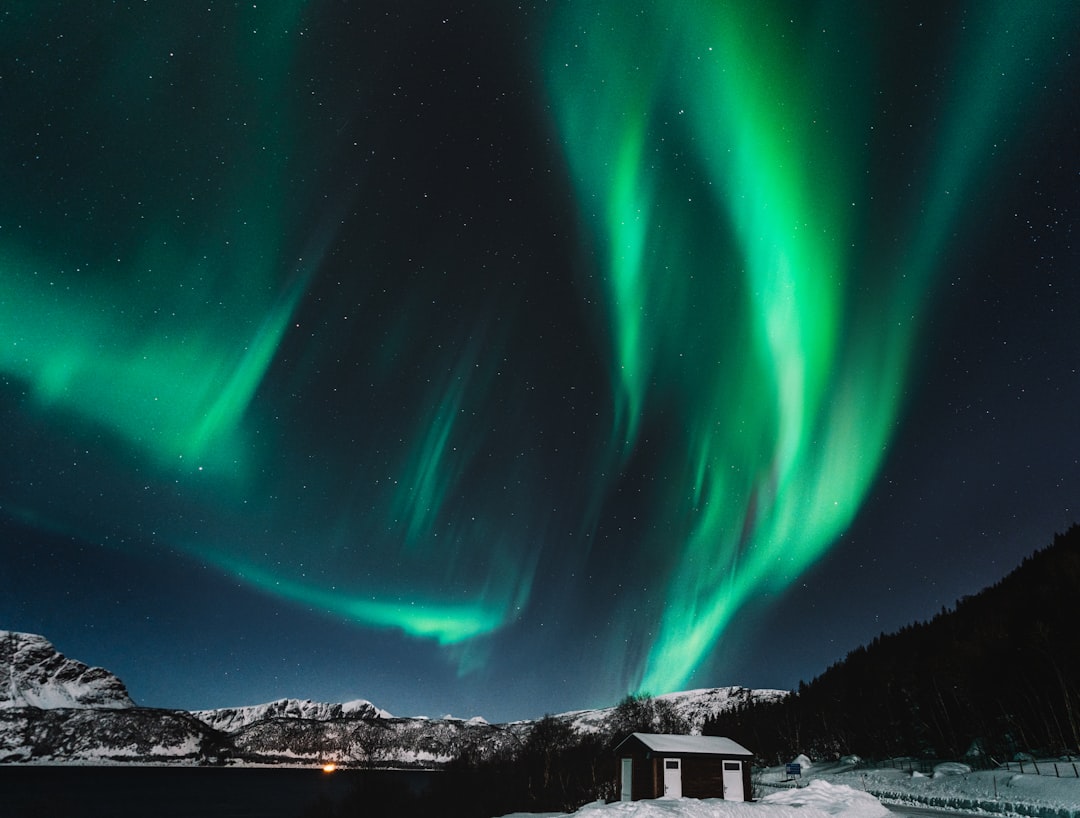
Every "best place to see northern lights" list ranks the same eight destinations in roughly the same order, and almost none of them show their work. Tromsø usually wins. Iceland is always beautiful. Somebody mentions a glass igloo.
The problem is that scenery does not put aurora over your head. Three measurable things do: how much geomagnetic activity your latitude needs, how many nights a year your sky actually gets dark, and how often clouds are in the way. Rank destinations on those three and the familiar order changes, sometimes dramatically.
This guide does exactly that. It uses NOAA's published storm frequencies, astronomical darkness calculated for each latitude, and peak-season cloud climatology, then tells you which of the three numbers is the one holding you back in each place.
Where is the best place to see the northern lights?
The best place to see northern lights is somewhere directly under the auroral oval with a continental, low-cloud climate: Fairbanks, Alaska and Yellowknife, Canada score highest, followed by Abisko in Swedish Lapland. Coastal favourites like Tromsø and Reykjavik sit under equally good aurora but lose far more nights to cloud. Check the live northern lights forecast for any of them before you commit to a date.
Table of Contents
- The Three Numbers That Decide the Best Place to See Northern Lights
- The Darkness Ceiling Nobody Publishes
- The Cloud Tax: Why the Arctic Coast Is Not the Safest Bet
- How Many Aurora Nights Your Latitude Is Even Eligible For
- The Full Destination Table
- Destinations Grouped by What Actually Limits Them
- The Best Place to See Northern Lights Without Crossing an Ocean
- Picking the Month
- Frequently Asked Questions
The Three Numbers That Decide the Best Place to See Northern Lights
Three independent numbers decide whether a destination is a good bet: the Kp index your latitude needs for naked-eye aurora, the number of nights per year your sky reaches full astronomical darkness, and the percentage of peak-season nights that are clouded over. A destination fails if any one of them is bad, and almost every published ranking only considers the first.
Kp threshold is a proxy for latitude. The auroral oval is a permanent ring around the magnetic pole, and the NOAA Space Weather Prediction Center puts its quiet-night southern edge near 66 degrees geomagnetic latitude, pushing roughly two degrees further south for every step up the Kp scale. Under the oval you need almost no activity. Below it, you are waiting for a storm. Our guide to the Kp index explains why that single number is a much weaker promise than it looks.
Dark nights is the number nobody quotes. Aurora is always there; you just cannot see it against a lit sky. The further north you go, the more of the calendar you lose to summer twilight.
Cloud is the factor that quietly ruins more trips than the other two combined, and it is the one that varies most between destinations at the same latitude. None of the three has anything to do with what causes the northern lights in the first place, which is why understanding the physics does not by itself make you good at seeing them.
There is a fourth factor that travels with you rather than with the destination: sky washout from the moon and from local light pollution. Our live aurora forecast folds all four together, and the difference is not cosmetic. A city-centre location needs roughly two extra Kp steps to reach naked-eye aurora, a suburban one needs about one, and a moon over 80 percent illuminated adds another step on top.
The Darkness Ceiling Nobody Publishes
Tromsø gets only about 183 nights a year with three or more hours of true astronomical darkness. Michigan's Upper Peninsula gets 332. That is the single most under-reported fact in aurora travel: the further north you go, the better your aurora odds per dark night, and the fewer dark nights you get.
We calculated hours of astronomical darkness (sun more than 18 degrees below the horizon) for every latitude in this guide, for the fifteenth of each month.
| Location (latitude) | Aug | Sep | Oct | Nov | Dec | Jan | Feb | Mar | Apr |
|---|---|---|---|---|---|---|---|---|---|
| Tromsø (69.6°N) | 0.0 | 0.0 | 8.1 | 11.8 | 13.5 | 12.7 | 9.6 | 5.0 | 0.0 |
| Abisko (68.4°N) | 0.0 | 2.0 | 8.3 | 11.7 | 13.3 | 12.6 | 9.7 | 5.5 | 0.0 |
| Fairbanks (64.8°N) | 0.0 | 4.4 | 8.8 | 11.6 | 13.0 | 12.3 | 9.9 | 6.6 | 0.0 |
| Reykjavik (64.1°N) | 0.0 | 4.7 | 8.8 | 11.6 | 12.9 | 12.3 | 9.9 | 6.7 | 0.0 |
| Yellowknife (62.6°N) | 0.0 | 5.3 | 9.0 | 11.5 | 12.7 | 12.2 | 10.0 | 7.1 | 0.0 |
| Shetland (60.1°N) | 0.0 | 6.0 | 9.2 | 11.5 | 12.6 | 12.0 | 10.1 | 7.5 | 2.8 |
| N Scotland (58.6°N) | 0.0 | 6.3 | 9.2 | 11.4 | 12.5 | 11.9 | 10.2 | 7.7 | 3.7 |
| Upper Michigan (46.6°N) | 5.8 | 8.0 | 9.7 | 11.1 | 11.7 | 11.4 | 10.3 | 8.8 | 6.7 |
Hours of full astronomical darkness on the 15th of each month, calculated from solar declination. A zero means the sun never drops far enough below the horizon for the sky to go properly black.
Two things fall out of that table and neither appears in the usual destination guides.
The "season starts in late August" advice is wrong for the far north. On 15 September, the sun at Tromsø only reaches about 17.5 degrees below the horizon at solar midnight. It never quite makes astronomical darkness. Abisko manages two hours. Upper Michigan, 23 degrees further south, gets a full eight. If you book Tromsø for early September because a listicle told you the season had opened, you are paying Arctic prices for a sky that is still faintly blue at midnight.
The Arctic wins the middle of winter and only the middle of winter. From November through January, Tromsø and Abisko hold a comfortable 12 to 13.5 hours of blackness a night, and Tromsø adds the polar night, roughly 27 November to 15 January, when the sun does not clear the horizon at all. That is the payoff. By 15 March it is already down to five hours, and by mid-April it is gone entirely.
Add it up across the year and the ceiling is stark. Tromsø, Senja and the Lofoten coast get 183 to 189 usable nights. Fairbanks gets 206. Yellowknife 217. Northern Scotland 238. Upper Michigan 332. If your trip is short, the per-night quality is what matters and the Arctic wins easily. If you live somewhere the aurora occasionally reaches, the calendar is on your side in a way no Arctic resident enjoys.
The Cloud Tax: Why the Arctic Coast Is Not the Safest Bet
Tromsø is the cloudiest of the major aurora destinations in peak season, overcast or mostly cloudy 79 percent of the time in December. Fairbanks, at 64 percent, is the clearest. That 15-point gap is the difference between the two places most often named the best place to see northern lights, and it runs in the opposite direction to their usual ranking.
The figures below come from Weather Spark's reanalysis-based climatology, using each location's cloudiest month within aurora season so the comparison is apples to apples.
| Destination | Cloudiest in-season month | Overcast or mostly cloudy | Climate type |
|---|---|---|---|
| Fairbanks, Alaska | December | 64% | Continental interior |
| Yellowknife, Canada | November | 71% | Subarctic interior |
| Kiruna, Sweden | December | 73% | Inland, lee of mountains |
| Marquette, Michigan | December | 67-75% | Great Lakes |
| Reykjavik, Iceland | January | 77% | North Atlantic maritime |
| Tromsø, Norway | December | 79% | Arctic coastal |
The pattern is geography, not luck. Warm, moist Atlantic air runs straight into the Norwegian coast and the Icelandic south shore, is forced up, and turns into cloud. Fairbanks sits several hundred miles from any ocean behind two mountain ranges, and Explore Fairbanks attributes its record specifically to low precipitation and distance from the coast. Its stated figures are that aurora appears on an average of four out of five nights when the sky is clear and dark enough, and that visitors who stay at least three nights and go out in the late evening hours exceed a 90 percent chance of a sighting.
Abisko deserves a correction here, because the internet has flattened it into a myth. The rain shadow is real: Swedish meteorological data puts Abisko near 350 mm of annual precipitation, less than half of what falls at Riksgränsen on the other side of the mountains, making it one of the driest places in Sweden. But dry is not the same as clear. The same climate record describes Abisko as very cloudy by Swedish standards, and nearby Kiruna still sits at 73 percent overcast in December. Abisko is a genuinely good bet. It is not a hole in the sky.
The practical takeaway: cloud is the only one of the three numbers you can actively fight, and you fight it by being mobile. That is the entire case for booking a northern lights tour in a maritime destination, and the reason a tour is much poorer value in Fairbanks or Yellowknife, where the sky is more often clear to begin with.
How Many Aurora Nights Your Latitude Is Even Eligible For
If you live below the auroral oval, your ceiling is set by storm frequency, and NOAA publishes the numbers. Averaged over an 11-year solar cycle, a Kp 5 threshold gives you roughly 132 eligible days a year, Kp 6 gives about 50, and Kp 7 gives about 18.
Those come straight from the NOAA geomagnetic storm scale, which lists average frequency per cycle: G1 (Kp 5) on 900 days, G2 (Kp 6) on 360, G3 (Kp 7) on 130, G4 (Kp 8) on 60, and G5 (Kp 9) on four. Summing everything at or above each level and dividing by 11 gives the annual figures.
| Kp needed for naked eye | Roughly who that is | Eligible days per year (cycle average) |
|---|---|---|
| Kp 1-2 | Fairbanks, Tromsø, Yellowknife, Abisko | Activity is rarely the limiting factor |
| Kp 3 | Shetland | NOAA's G-scale gives no comparable count |
| Kp 5 | N Scotland, Upper Michigan, N Minnesota | ~132 |
| Kp 6 | Washington State, N England, Minneapolis | ~50 |
| Kp 7 | Boston, Colorado, Pennsylvania | ~18 |
Two honest caveats, because this number gets misused constantly. First, a "storm day" is not a storm night over your longitude. Kp is reported in eight three-hour blocks per day, and a day that peaks at Kp 6 might have done so at three in the afternoon your time. Second, these are cycle averages. Storm days cluster heavily around solar maximum, which Solar Cycle 25 reached in October 2024, so the current few years run well above the long-run mean and the early 2030s will run well below it.
Treat the number as a ceiling on eligibility, then knock it down for darkness and cloud. That is what the next table does.
The Full Destination Table
This table is a planning ceiling, not a sightings ranking. The second-to-last column combines the published storm-frequency ceiling where NOAA provides one with each place's dark-night ceiling. For Kp 1-3 destinations, where NOAA's G-scale supplies no comparable frequency, it shows the dark-night ceiling only. Cloud, moon, timing within each storm day and local light pollution all reduce the real number.
| Destination | Latitude | Kp for naked eye | Nights/yr with 3h+ darkness | Planning ceiling before cloud | Limiting factor |
|---|---|---|---|---|---|
| Shetland | 60.1°N | 3 | 229 | ≤229 dark nights | Cloud, wind |
| Whitehorse, Yukon | 60.7°N | 2 | 226 | ≤226 dark nights | Cloud |
| Yellowknife, Canada | 62.6°N | 1 | 217 | ≤217 dark nights | Cold, access |
| Reykjavik, Iceland | 64.1°N | 2 | 209 | ≤209 dark nights | Cloud |
| Fairbanks, Alaska | 64.8°N | 1 | 206 | ≤206 dark nights | Cold |
| Kiruna, Sweden | 67.9°N | 1 | 191 | ≤191 dark nights | Cloud |
| Abisko, Sweden | 68.4°N | 1 | 189 | ≤189 dark nights | Access |
| Lofoten, Norway | 68.2°N | 1 | 189 | ≤189 dark nights | Cloud |
| Ivalo, Finland | 68.7°N | 1 | 187 | ≤187 dark nights | Cloud |
| Tromsø, Norway | 69.6°N | 1 | 183 | ≤183 dark nights | Cloud |
| Upper Michigan | 46.6°N | 5 | 332 | ~120 | Activity |
| Northern Minnesota | 47.8°N | 5 | 316 | ~114 | Activity |
| Northern Scotland | 58.6°N | 5 | 238 | ~86 | Activity, cloud |
| Minneapolis | 45.0°N | 6 | 365 | ~50 | Activity, glow |
| Washington State | 48.8°N | 6 | 304 | ~42 | Activity |
| Northern England | 55.2°N | 6 | 256 | ~35 | Activity |
| Boston | 42.4°N | 7 | 365 | ~18 | Activity |
Read the planning-ceiling column as an upper bound, not expected sightings. Nobody sees 217 auroras a year in Yellowknife. What the column does show cleanly is the shape of the problem: above about 62 degrees north the constraint stops being activity and becomes weather and daylight, and below about 55 degrees it is almost entirely activity.
Shetland appearing first is an artifact of sorting by the dark-night ceiling, not a recommendation to skip Lapland. NOAA's storm table begins at Kp 5, so it cannot tell us how often Shetland's Kp 3 threshold is met; the table deliberately does not invent that frequency. Its aurora also sits lower on the horizon and its Atlantic weather is brutal. Numbers narrow the field. They do not make the choice.
Destinations Grouped by What Actually Limits Them
The most useful way to compare aurora destinations is by which factor is holding you back, because that determines what a tour can change. In a cloud-limited place, a mobile guide may drive to clearer sky. In an activity-limited place, a tour can add comfort and local knowledge but cannot create geomagnetic activity.
Activity-secure and comparatively clear
Fairbanks, Alaska. The strongest all-round bet in the world on the numbers. Directly under the oval, continental climate, the lowest peak-season cloud of any major destination, and a real airport with daily jet service. Season runs 21 August to 21 April, though the darkness table says do not bother before mid-September. Cold is the price: interior Alaska routinely drops below minus 30. The same dry, clear interior air is why Denali is so often out from the highway on winter mornings.
Yellowknife, Northwest Territories. Latitude 62.6, subarctic interior, flat terrain with wide-open northern horizons over frozen lakes. Slightly cloudier than Fairbanks but with 11 more dark nights a year and a well-developed viewing industry. Harder and pricier to fly into.
Abisko and Kiruna, Swedish Lapland. The driest corner of the Scandinavian Arctic thanks to the rain shadow, with a train line running through it. Genuinely better odds than the Norwegian coast 90 km away, just not the guaranteed clear sky the marketing implies.
Activity-secure but cloud-limited
Tromsø, Norway. Under the oval at 69.6 degrees, so activity is essentially never the issue. Clouds are, 79 percent of the time in December. Tromsø's saving grace is that it is the best-connected Arctic city in the world for chasing: roads run in three directions, guides know where the gaps open, and a mobile chase genuinely fixes the one factor that limits it. This is the destination where a tour earns its price.
Lofoten, Senja and coastal Norway. Same aurora, same cloud problem, better foregrounds. Fewer roads out means less room to escape a weather system.
Iceland. Reykjavik is at 64.1 degrees with a Kp 2 threshold, so the whole country qualifies on activity. January is 77 percent cloudy and Atlantic systems move fast, which cuts both ways: a clouded-out evening can clear by one in the morning. Iceland rewards patience and a rental car more than any other destination on this list.
Activity-limited: you are waiting for a storm
Upper Michigan and northern Minnesota. Kp 5 territory, roughly 120 eligible dark nights a year, and some of the darkest certified skies in the eastern United States. Nobody flies here for aurora and that is exactly the point. You watch the forecast and you drive north when it fires.
Northern Scotland and Shetland. The Mirrie Dancers appear over the Caithness and Orkney coasts on Kp 5 nights, and Shetland at 60 degrees needs only Kp 3. The limiting factor changes as you move north through the islands.
Washington, northern England, the northern tier states. Kp 6 country, around 35 to 50 eligible nights a year. Realistically a handful of naked-eye events per year even in a strong solar cycle, and often low, pale and better on a camera than in the eye.
The Best Place to See Northern Lights Without Crossing an Ocean
For most searchers the honest answer to "best place to see northern lights" is not an Arctic city, it is the darkest north-facing spot within a three-hour drive of home, on the right night. Across a solar cycle, NOAA's global scale averages roughly 130 storm days a year that reach at least Kp 5; only a subset peak during darkness at your longitude, and the skill is being ready for those that do.
That changes what you optimise for. You are not booking a trip; you are pre-scouting a location and then reacting. Three things matter, in this order.
An open northern horizon beats everything, including darkness. At mid-latitudes the aurora sits low, often only 10 to 20 degrees above the horizon, so a treeline or a ridge to the north deletes the whole display. Open water on the north side is close to ideal, which is why Lake Superior's north shore, the Puget Sound beaches and the Great Lakes shorelines dominate every regional list.
Distance from city glow comes second. Thirty to sixty minutes out of a major metro is usually enough to turn a grey smudge into visible green. Our forecast engine bakes this in directly: a city location needs about two more Kp steps than a rural one at the same latitude to reach naked-eye visibility.
Moon phase comes third, and it is the one people forget. A moon over 80 percent illuminated costs you roughly a full Kp step. In a Kp 6 region that is the difference between a handful of chances a year and almost none.
Set expectations honestly before you drive out. In activity-limited regions the most common real outcome is not "nothing" and not a curtain of green, it is a faint grey arc that your phone renders in vivid colour on a three-second exposure. That gap between sensor and eye is why our per-location forecasts return three verdicts rather than a percentage: "Not tonight", "Camera only", and "Yes, naked eye". Our field guide to seeing the aurora covers what to do once you are out there in the dark.
Seattle readers, incidentally, already have the right instincts for this. Checking whether the aurora will clear the northern horizon is the same daily habit as checking whether Mount Rainier is out, a phrase with its own local history.
Picking the Month
The best months to see the northern lights are late September to late March, with the strongest odds clustering around the two equinoxes and, at high latitudes, the November-to-January darkness peak. The month you choose should follow whichever factor limits your destination.
If you are going somewhere cloud-limited (Tromsø, Iceland, coastal Norway), weight toward the driest window rather than the darkest. Late February and March combine returning darkness with slightly better cloud statistics and much more civilised temperatures, and you also get afternoon daylight to do something else with.
If you are going somewhere activity-limited (the lower 48, the UK, southern Scandinavia), go for the equinoxes. Earth's magnetic field couples more efficiently with the solar wind near the equinoxes, an effect EarthSky explains well, so the same solar conditions produce bigger storms in September and March. September also gives mid-latitude viewers eight solid hours of darkness while the Arctic still has almost none.
If you want maximum darkness, December and January at 65 degrees north or above, accepting the cloud odds and the cold.
Whatever month you pick, book more than one night. Explore Fairbanks' own three-night figure of better than 90 percent is the most rigorously stated version of this advice, and it is destination-specific rather than a universal rule. The broader principle is simply that multiple nights reduce the chance that one cloudy evening ruins the trip.
Frequently Asked Questions
Where is the best place in the world to see the northern lights?
On the combination of latitude, darkness and cloud, Fairbanks, Alaska and Yellowknife, Canada come out ahead: both sit under the auroral oval and both have continental climates with less cloud than the Arctic coasts. Tromsø has equally reliable aurora overhead but loses far more nights to weather, and gets the fewest dark nights per year of any major destination.
What is the best place to see the northern lights in the US?
Alaska, without close competition. Fairbanks is directly under the oval at 64.8 degrees north, needs almost no geomagnetic activity, and has around 206 nights a year with real darkness. In the lower 48, the Upper Peninsula of Michigan and northern Minnesota are the strongest options, needing roughly Kp 5 and delivering on the order of 120 eligible dark nights a year.
What month is best for seeing the northern lights?
Late September through March. At Arctic latitudes the sky is not properly dark until mid-September at the earliest, and darkness disappears again by mid-April. September and March get an extra boost from the equinox effect, while November to January gives the longest nights but the worst cloud statistics in coastal destinations.
Is 2026 still a good year to go?
Yes. Solar Cycle 25 peaked in October 2024 and activity is now easing off that maximum, but the first years of a decline still run well above the long-run average, and some of the largest historical storms have arrived one to two years after a peak. The window closes gradually toward 2030, not suddenly.
If You Are Choosing Right Now
If you can only take one trip and you want the best odds the numbers can buy, go to Fairbanks in early March. You get the lowest cloud percentage of any major destination, a Kp 1 threshold, six-plus hours of full darkness, the equinox effect starting to build, and temperatures that will not end the evening for you after twenty minutes.
If you want the trip to be beautiful as well as productive, go to Tromsø or Lofoten in late February, budget for a chase vehicle or a guide, and accept that you are buying mobility rather than certainty.
And if you are not going anywhere, that is fine. Pick a dark spot with clean sky to the north, learn what your region's Kp threshold is, and set an alert. Our aurora forecasts already know the threshold for each location and will tell you plainly whether tonight is worth the drive.
More Articles
How to See the Northern Lights: A Practical Field Guide
How to see the northern lights: the four-factor field checklist, activity, clouds, darkness, and moonlight, that decides every aurora night.
Northern Lights Tour: How to Choose One (and When to Skip It)
A northern lights tour can only fix two of the four things that decide whether you see aurora. Here is how to choose one, and when to skip it.
The Kp Index, Explained: Why the Aurora Number Is Not a Promise
The kp index is a 0 to 9 scale of geomagnetic activity. Here is what the aurora number really means, and why a high value is no promise.