Lake Saiko: The Quiet Fuji Five Lake of Caves, Forest, and Fish
Lake Saiko is the quietest Fuji Five Lake, with Fuji visible only from its western tip. A guide to views, caves, the kunimasu fish, and camping.

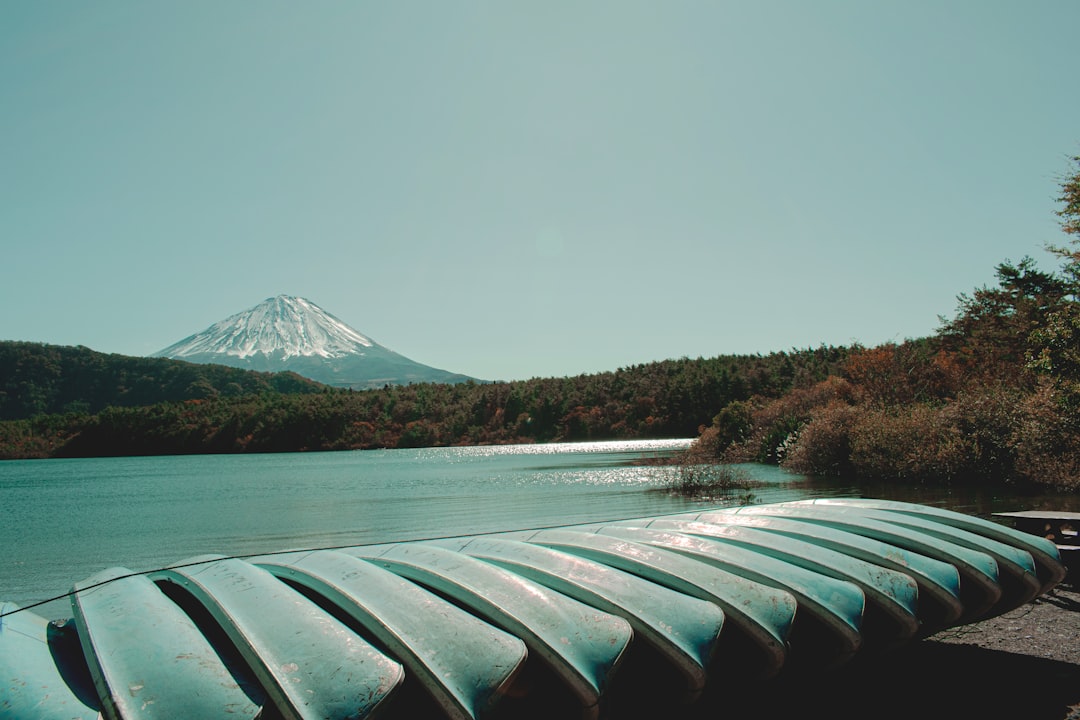
Lake Saiko is the quietest and least developed of the Fuji Five Lakes, tucked between wooded ridges just west of busy Kawaguchiko. Known in Japanese as Saiko, meaning "West Lake," it is the lake most people drive past without stopping. That is a mistake, but a specific one: Lake Saiko rewards a completely different visitor than the one chasing the postcard Fuji shot.
Here is the honest truth that most guides bury. Mount Fuji is visible from only one small stretch of Lake Saiko, the western tip. The rest of the shoreline is walled off from the mountain by forested slopes. So if a flawless reflection of Fuji is your only goal, Kawaguchiko or Yamanaka will serve you better. What Saiko offers instead is lava caves, a resurrected "extinct" fish, thatched-roof craft villages, and a shoreline that stays calm when the others are crowded. This guide covers all of it, and shows you how to plan the visit around whether the mountain will actually be out.
Table of Contents
- What Makes Lake Saiko Different
- Can You See Mount Fuji from Lake Saiko?
- The Kunimasu: Lake Saiko's Resurrected Fish
- The Lava Caves Around Lake Saiko
- Saiko Iyashi no Sato Nenba and Koyodai
- Camping and Outdoor Activities
- How to Get to Lake Saiko
- Planning Your Visit Around the Forecast
- Frequently Asked Questions
What Makes Lake Saiko Different
Lake Saiko is the fourth largest of the Fuji Five Lakes by surface area but the second deepest, a combination that shapes everything about the place. Here is how it stacks up against its neighbors.
| Detail | Lake Saiko |
|---|---|
| Japanese name | 西湖 (Saiko, "West Lake") |
| Elevation | 900 m (2,953 ft) |
| Surface area | 2.1 km² (4th of the five lakes) |
| Maximum depth | 71.7 m (2nd deepest, after Motosu) |
| Shoreline | ~10 km |
| Mt. Fuji view | Western tip only (Nenba area) |
| Character | Forested, quiet, outdoor-focused |
The depth matters more than it looks. At 71.7 meters, Saiko holds a large body of cold, dark water that stays stable year round, and that detail is the reason a fish thought extinct for 70 years turned up here. More on that below.
The lake's shape and setting come straight from a volcanic catastrophe. Before the year 864, a single large lake called Senoumi covered this whole basin. During the Jogan eruption of 864, lava poured down Mount Fuji's northern flank and split Senoumi into three: Saiko, Shoji, and Motosu. That is why all three still share an almost identical surface elevation of roughly 900 meters and are thought to be connected by underground channels through the porous lava rock. The same lava flow created the Aokigahara forest that presses against Saiko's southern shore, along with the cave systems that are now the lake's main draw. For the wider story of how these lakes formed, see our guide to the Fuji Five Lakes and to Mount Fuji's eruption history.
Can You See Mount Fuji from Lake Saiko?
Mount Fuji is visible from Lake Saiko only from the lake's western tip, near the Nenba shoreline and the Iyashi no Sato village. Steep wooded ridges block the mountain from the eastern two-thirds of the shore, so unlike Kawaguchiko or Lake Yamanaka, you cannot simply pull over anywhere and expect a view. You have to be in the right place.
That single sightline is genuinely beautiful when it works. From the western end, Fuji rises centered above the water, and the classic composition places the mountain behind the thatched roofs of Iyashi no Sato. This vantage has long been counted among the celebrated views of Fuji. But the narrow geometry makes Saiko a higher-risk choice for a guaranteed photo, because you need two things to line up at once: clear weather on the mountain, and yourself standing at the western tip rather than anywhere else on the lake.
Weather is the harder of the two. Mount Fuji hides behind cloud more often than it shows, and the odds swing hard by season. Cold, dry winter air after a passing front delivers the crispest views of the year, while the humid summer months bury the summit in cloud most mornings. The table below shows the approximate share of mornings with a clearly visible Fuji from the Saiko basin, based on our weighted atmospheric model.
| Season | Clear-Morning Odds | Notes |
|---|---|---|
| Winter (Dec–Feb) | ~75% | Best clarity, cold dawns, thin crowds |
| Spring (Mar–May) | ~50% | Improving into cherry-blossom season |
| Summer (Jun–Aug) | ~20% | Rainy season and haze, weakest odds |
| Autumn (Sep–Nov) | ~55% | Clarity returns as foliage peaks |
Two practical rules follow from this. First, visibility is best in the early morning, roughly 6:00 to 9:00 AM, before the ground warms and pushes moist air up the slopes to form the summit cloud that so often erases the peak by midday. Second, because you have to commit to reaching the western tip, it is worth checking conditions before you go. Our live Mt. Fuji visibility tracker gives a current score and a 10-day forecast, so you can decide whether Saiko is a "chase the view" day or a "come for the forest" day. For a month-by-month breakdown of the odds, our guide to the best time to see Mt. Fuji goes deeper.
The Kunimasu: Lake Saiko's Resurrected Fish
Lake Saiko is home to one of the most remarkable conservation stories in Japan. The kunimasu, a black landlocked salmon known to scientists as Oncorhynchus kawamurae, was declared extinct in 1940 and then rediscovered alive in Saiko in 2010, seventy years later.
The fish was originally found only in Lake Tazawa, a deep crater lake in Akita Prefecture more than 400 kilometers to the north. In 1940 a hydroelectric project diverted acidic water into Tazawa, the pH crashed, and the entire population died. What saved the species was a quiet experiment. Around 1935, roughly 100,000 kunimasu eggs had been shipped south and released into Lake Saiko and Lake Motosu as a backup. Nobody expected much, and for decades the transfer was forgotten.
Then in 2010, a research team led by ichthyologist Tetsuji Nakabo, working with the TV personality and honorary Tokyo University researcher Masayuki Miyazawa (better known as Sakana-kun), confirmed that black salmon caught in Saiko were the long-lost kunimasu. The National Geographic Society and the journal Ichthyological Research documented the find, which made headlines worldwide as an "extinct" species walking back from the dead.
Saiko's depth is the hero of the story. The kunimasu is a cold, deepwater spawner, and the lake's 71.7-meter maximum depth provided the cold, stable layer the fish needed to survive when its original home was destroyed. To protect the population, local authorities banned bass fishing in the lake in 2023. You will not catch a kunimasu on a casual trip, but you can see specimens and learn the full story at the small exhibits around the lake, and the story alone reframes Saiko from "the lake with the weak view" into something far more interesting.
The Lava Caves Around Lake Saiko
The caves near Lake Saiko are lava tubes formed by the same 864 eruption that created the lake, and three of them are developed for visitors. They sit within or beside the Aokigahara forest on the lake's southern side and stay cold year round, which makes them a reliable stop no matter what the sky is doing.
- Narusawa Ice Cave (Narusawa Hyoketsu): A vertical lava tube that stays below freezing all year, with ice pillars that persist into summer. It was used to store ice and even silkworm eggs before refrigeration. Admission is around 350 yen for adults.
- Fugaku Wind Cave (Fugaku Fuketsu): A horizontal tube that holds a constant near-freezing temperature and once served as a natural cold-storage room; historic displays of stored seeds and cocoons remain inside. Admission is also around 350 yen, and a combination ticket covering both caves is usually available.
- Saiko Bat Cave (Saiko Komori Ana): The longest of the three at more than 350 meters, making it the largest cave at the base of Mount Fuji. Named for the bats that hibernate here, it has low passages that require ducking and a helmet, which the site provides. Adult admission is roughly 300 yen; hours are reduced in winter, so call ahead if visiting off-season.
The Japan National Tourism Organization and Japan Guide both maintain current details on the caves. Bring a jacket even in August; the Ice Cave in particular runs 30 degrees colder than the parking lot.
Saiko Iyashi no Sato Nenba and Koyodai
Saiko Iyashi no Sato Nenba is an open-air museum of reconstructed thatched-roof farmhouses on the western shore, and it is the single best place to combine a Mount Fuji view with traditional architecture at Lake Saiko. The village recreates a Nenba hamlet that stood here until a 1966 typhoon and landslide destroyed the original. Today around 20 gassho-style houses hold craft workshops, small galleries, local food stalls, and a shop or two, arranged so that Fuji rises directly behind the roofline on a clear day.
Admission is 500 yen for adults and 250 yen for children. The village opens daily, 9:00 AM to 5:00 PM from March through November and 9:30 AM to 4:30 PM in winter, with last entry 30 minutes before closing, per the official Iyashi no Sato site. Late April brings weeping cherry blossoms framed against the mountain, one of the more photogenic windows of the year. If you time a visit to the wider region for spring flowers, our roundup of the best Mt. Fuji viewing locations and the Shibazakura Festival guide cover the nearby options.
For an elevated angle, hike Koyodai, a small hill just south of the lake with a paid observation deck (around 300 yen). The 30-minute climb delivers a wide view of Mount Fuji rising over the dark green expanse of the Aokigahara "Sea of Trees," a perspective you cannot get from lake level. Autumn foliage peaks here in early November.
Camping and Outdoor Activities
Lake Saiko is one of the best camping bases in the Fuji Five Lakes, precisely because it stayed undeveloped. Several campgrounds line the northern and western shores, ranging from free first-come sites to full-service resorts.
- Saiko Kohan Camping Ground: Basic, inexpensive, first-come-first-served, popular in summer.
- PICA Saiko: A full-amenity site with cabins, glamping tents, and rentals, good for families and first-time campers.
- Hamayou Resort: Activity-focused, with lake access for paddling.
Because the water is calm and motorboats are limited, Saiko is well suited to kayaking, stand-up paddleboarding, and canoeing, with rentals available in season. Fishing remains popular for trout and other species, though bass fishing is now prohibited to protect the kunimasu. Cyclists can ride the roughly 10-kilometer shoreline loop, and hikers can link the lake to trails through Aokigahara and up to the caves and Koyodai. Summer weekends and Golden Week fill fast, so book ahead or arrive early; weekdays are usually open and blissfully quiet.
How to Get to Lake Saiko
Lake Saiko has no train station of its own, so nearly every visitor routes through Kawaguchiko Station, the transport hub for the whole region. From there you have two main options.
The Omni Bus (Saiko Green Line) loops from Kawaguchiko Station around Lake Saiko, stopping at Iyashi no Sato, the caves, and the campgrounds. The ride takes 20 to 40 minutes depending on the stop, and a two-day sightseeing bus pass covering the Kawaguchiko, Saiko, and Aokigahara loops costs around 1,500 yen, which pays for itself quickly if you plan several stops. Fujikyu publishes current bus routes and timetables online.
By car, Saiko is about two hours from central Tokyo via the Chuo Expressway to the Kawaguchiko interchange, then 15 to 20 minutes west on local roads. Driving is the most flexible way to reach the caves and the far western viewpoints, which the bus serves less frequently. For the full range of ways into the region from the capital, our guide to reaching Kawaguchiko from Tokyo breaks down the trains and highway buses.
Planning Your Visit Around the Forecast
The smartest way to plan a Lake Saiko trip is to decide, the morning of, whether you are chasing the mountain or the forest. This is where Saiko's mixed personality becomes an advantage rather than a drawback.
If the Fuji visibility forecast is strong, get to the western tip at dawn. Head straight for the Nenba shoreline or Iyashi no Sato, catch the mountain before the summit cloud builds, then work back east through the caves and campgrounds as the light flattens out. On a clear winter morning this is one of the more serene Fuji experiences in the region, without the crowds that swarm Kawaguchiko's north shore.
If the forecast is poor, do not cancel. This is the key insight competitors miss: almost everything worth doing at Saiko works with the mountain hidden. The Ice, Wind, and Bat caves are indoors and cold regardless of the sky. Iyashi no Sato's crafts and food do not need a clear summit. The kunimasu story, the forest trails, and the paddling all hold up on a gray day. Saiko is the Fuji Five Lake you visit when the mountain is socked in and you want a full day anyway. Serious photographers can plan the whole trip this way: use the live Mt. Fuji visibility tracker and our Mt. Fuji photography guide to pick the clear window for the western tip, and keep the caves and village as the weatherproof backup.
Frequently Asked Questions
Can you see Mount Fuji from Lake Saiko?
Yes, but only from the lake's western tip near the Nenba shoreline and Saiko Iyashi no Sato. Wooded ridges block the mountain from the rest of the shore. Views are best on clear winter mornings; check the live Fuji visibility forecast before committing to the trip.
Why is Lake Saiko famous for a fish?
Lake Saiko is where the kunimasu, a black salmon declared extinct in 1940, was rediscovered alive in 2010. Eggs had been transferred here from Lake Tazawa in Akita around 1935, and the lake's deep, cold water allowed the species to survive after its original habitat was destroyed.
What caves are near Lake Saiko?
Three lava-tube caves formed by Mount Fuji's 864 eruption are open to visitors: the Narusawa Ice Cave, the Fugaku Wind Cave, and the Saiko Bat Cave. The Bat Cave, over 350 meters long, is the largest at the base of Mount Fuji. All stay cold year round and sit near the Aokigahara forest.
Is Lake Saiko worth visiting?
Lake Saiko is worth visiting if you want a quiet, nature-focused day rather than a guaranteed Fuji photo. Its caves, the thatched-roof Iyashi no Sato village, camping, paddling, and the kunimasu story all reward a stop, and the western-tip view of Fuji is excellent when the mountain is out.
How do you get to Lake Saiko?
Take the Omni Bus (Saiko Green Line) from Kawaguchiko Station, which loops the lake and stops at the main attractions; a two-day bus pass costs around 1,500 yen. By car, Saiko is about two hours from Tokyo via the Chuo Expressway plus 15 to 20 minutes on local roads.
Before you set out for Lake Saiko, check whether Mount Fuji is actually visible right now with our live Fuji visibility tracker. A clear morning turns the quiet western shore into one of the best-kept views in the Fuji Five Lakes, and knowing the forecast tells you whether to chase the mountain or settle in for the forest.
More Articles
Fuji Five Lakes: Which Lake Has the Best View of Mount Fuji
A data-backed guide to the Fuji Five Lakes: how each lake compares for Mt. Fuji views, timing, and access, so you pick the right one.
Lake Yamanaka: Mt. Fuji's Closest Lake and the Fuji Five Lakes' Best-Kept Secret
Lake Yamanaka is the largest and highest of the Fuji Five Lakes, with unmatched Mt. Fuji views, cycling, and Diamond Fuji.
Aokigahara: Complete Guide to Mt. Fuji's Sea of Trees
Explore Aokigahara, the ancient forest born from Mt. Fuji's lava. Trails, caves, Fuji views, and practical tips.