Haneda to Kawaguchiko: The Direct Bus Runs Twice a Day. Here Is Plan B.
The direct Haneda to Kawaguchiko bus runs only twice a day. Here are the real 2026 timetables, fares, and the fastest backup for every arrival time.

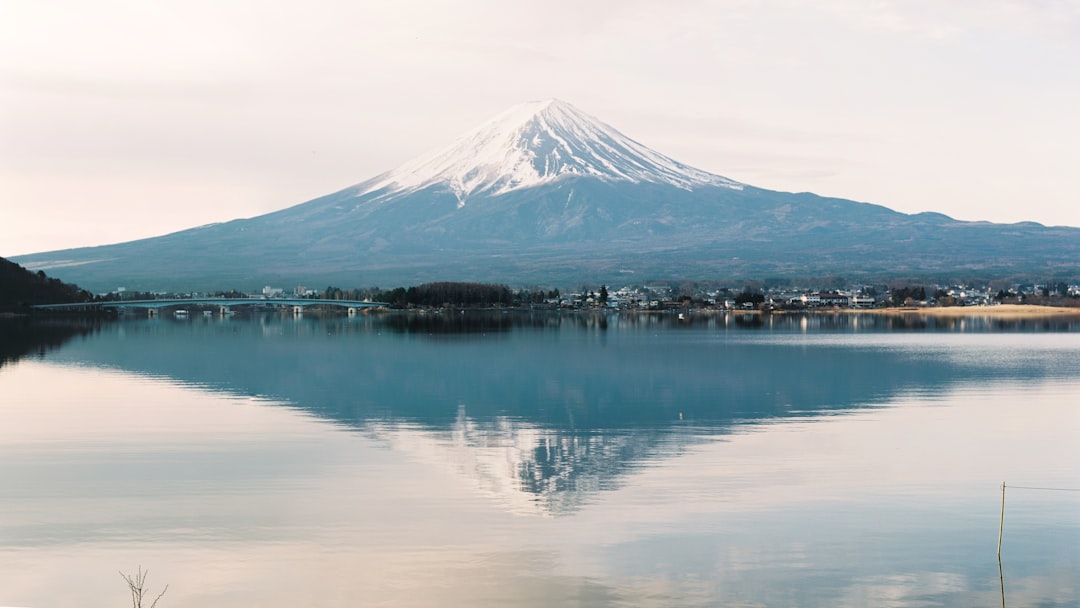
There is a direct bus from Haneda to Kawaguchiko. It takes 2 hours 50 minutes from Terminal 3, costs ¥3,300, and requires no transfers at all. It also departs exactly twice a day, at 11:50 and 16:50, and the last one back to the airport leaves Kawaguchiko at noon.
Almost every route planner and travel guide leads with "there is a direct bus" and stops there. That single omitted detail is what strands people. If your flight lands at 18:20, the direct Haneda to Kawaguchiko bus is not an option, and the honest answer is that you need a different plan entirely.
Below are the actual timetables, taken from the operator's own published schedules, a decision table keyed to your landing time, and a comparison of what each route really costs door to door. At the end, the part nobody covers: what your arrival time means for whether you will actually see Mt. Fuji.
The Direct Haneda to Kawaguchiko Bus: Full Timetable
The direct Haneda to Kawaguchiko bus leaves Terminal 3 at 11:50 and 16:50, reaching Kawaguchiko Station at 14:40 and 19:40. It is operated jointly by Keikyu Bus and Fujikyu Bus, and a reduced temporary timetable has been in effect since 1 April 2026, with no announced end date.
Haneda and Shinagawa to the Fuji Five Lakes
| Stop | Departure 1 | Departure 2 |
|---|---|---|
| Haneda Terminal 3 | 11:50 | 16:50 |
| Haneda Terminal 2 | 12:00 | 17:00 |
| Haneda Terminal 1 | 12:05 | 17:05 |
| Shinagawa Station | 12:35 | 17:35 |
| Fuji-Q Highland | 14:30 | 19:30 |
| Kawaguchiko Station | 14:40 | 19:40 |
| Mt. Fuji Station | 14:47 | 19:47 |
Fares are ¥3,300 for adults and ¥1,650 for children from any Haneda terminal, and ¥2,300 / ¥1,150 from Shinagawa. The bus cannot be used for the Haneda to Shinagawa leg alone, or for the Mt. Fuji Station to Fuji-Q Highland leg alone, so do not treat it as a local shuttle.
Reservations are required, and they open one month before travel. Departing from Haneda you must pay in advance: buy at the Keikyu ticket machines in the arrival lobbies at Terminals 1 and 2, or at the bus ticket counter on the second floor of Terminal 3. If you would rather not queue after a long flight, Keikyu sells an online ticket, but only on the day of travel, up to ten minutes before departure. On the Fuji side, Fujikyu handles bookings through its own reservation system and call centre.
The Trap on the Way Back
The return service is the part that catches people out. There are only two departures, and the second one leaves before lunch.
| Stop | Departure 1 | Departure 2 |
|---|---|---|
| Mt. Fuji Station | 7:10 | 11:50 |
| Kawaguchiko Station | 7:20 | 12:00 |
| Fuji-Q Highland | 7:30 | 12:10 |
| Shinagawa Station | 9:23 | 14:03 |
| Haneda Terminal 2 | 9:55 | 14:35 |
| Haneda Terminal 1 | 10:00 | 14:40 |
| Haneda Terminal 3 | 10:07 | 14:47 |
If you are flying out of Haneda in the evening and want a final morning by the lake, the last direct bus back leaves Kawaguchiko at 12:00. Anything later means relaying through Shinjuku or Tokyo Station, which is entirely doable but adds a transfer you had not budgeted for. Plan the return leg before you book the outbound one.
Which Route to Take Based on When You Land
Your landing time, not your budget, is what decides this route. Allow roughly 60 minutes between wheels down and standing at a bus stop on an international arrival at Haneda, and about 25 minutes on a domestic one. Then read across.
| You land at | Direct bus? | What to do instead |
|---|---|---|
| 05:00 - 10:45 | Yes, the 11:50 | Going via Shinjuku usually gets you there 1-2 hours sooner |
| 10:45 - 15:45 | Yes, the 16:50 | Almost always beatable via Shinjuku; take the direct bus only if you want the quiet |
| 15:45 - 20:30 | No | Train or Limousine Bus to Shinjuku, then a highway bus |
| 20:30 - 05:00 | No | Sleep near Haneda or in Tokyo and travel in the morning |
The critical number for the second column is this: highway buses leave Busta Shinjuku for Kawaguchiko roughly 50 times a day, from 06:45 until 22:25, at ten-minute intervals through the morning peak. The direct airport bus leaves twice. That is a 25-to-1 difference in flexibility, and it is why the "direct" option is so often the wrong one.
A 22:25 departure from Shinjuku does reach Kawaguchiko, at 00:11. It is also a bad idea if your accommodation has a front desk that closes, which most guesthouses around the lake do. If you land after about 20:30, take the loss and start fresh in the morning.
Four Routes Compared, Door to Door
Riding time is not journey time. These figures include the transfer and a realistic wait, measured from a Haneda terminal to Kawaguchiko Station.
| Route | Door-to-door | Cost | Transfers | Departures/day |
|---|---|---|---|---|
| Direct highway bus | 2h 50m | ¥3,300 | 0 | 2 |
| Train to Shinjuku + highway bus | 3h - 3h 30m | ~¥2,740 | 2 | ~50 |
| Limousine Bus to Shinjuku + highway bus | 3h - 3h 30m | ¥3,600 | 1 | ~50 |
| Keikyu to Shinagawa + Shinkansen via Mishima | 3h 30m | ~¥7,100 | 2 | Hourly |
Train to Shinjuku, then the highway bus. The Keikyu Line runs from Haneda Terminal 3 to Shinagawa in about 11 minutes for ¥330, and JR gets you from Shinagawa to Shinjuku for roughly ¥210. Total to Shinjuku: around ¥540 and 30 minutes. The Shinjuku to Kawaguchiko highway bus is ¥2,200 and takes about 1 hour 45 minutes. Combined, that is ¥2,740, which undercuts the direct bus by ¥560 and gives you fifty departures instead of two. It costs you two transfers with luggage.
Limousine Bus to Shinjuku, then the highway bus. This is the version I recommend to most people arriving with big suitcases. The Airport Limousine Bus charges ¥1,400 to Shinjuku, and, crucially, one of its stops is Busta Shinjuku itself, the same building the Kawaguchiko buses leave from. Your case goes in the hold at Haneda, comes out at Busta, and goes straight into the hold of the next bus. One transfer, no stairs, no Yamanote Line crush. The first departure leaves Terminal 3 at 06:15.
Via Tokyo Station. Worth knowing as a backup: Keikyu reaches Tokyo Station in about 20 minutes from Terminal 3, and highway buses run from Tokyo Station to Kawaguchiko from 06:20 to 18:10. Fewer departures than Shinjuku, but if your hotel is on that side of the city it is the cleaner relay.
The Shinkansen route. Haneda sits 11 minutes from Shinagawa, which is a Tokaido Shinkansen station, so this route looks tempting on a map. Shinagawa to Mishima is ¥4,070 unreserved, 35 minutes by Hikari or about 45 by Kodama. Then the Mishima-Kawaguchiko Liner bus is ¥2,700 and takes roughly 1 hour 25 minutes. Total: about ¥7,100 and, with transfers, no faster than the ¥2,740 option. We ran the same arithmetic in detail for the Tokyo to Mt. Fuji bullet train route, and the conclusion was identical. It is the wrong tool for Kawaguchiko.
None of these are covered by a Japan Rail Pass beyond the JR legs, and the Fujikyu Railway into Kawaguchiko is a private line. If you plan to move around the Five Lakes for several days afterwards, the Mt. Fuji Pass is a separate calculation worth doing at the Kawaguchiko counter once you arrive.
Three Things the Route Planners Get Wrong
Journey aggregators are the top results for this route, and they are not reliable on it. Three corrections, all verifiable against the operators' own pages.
"There is one direct bus a day." There are two, at 11:50 and 16:50 from Terminal 3. Some planners show only one because they index a single terminal's stop time and miss the second run. Two is still very few, but if you are trying to decide whether to wait, the difference matters.
"The bus takes 2 hours 35 minutes." That is the Terminal 1 figure. From Terminal 3, where nearly all international arrivals land, it is 2 hours 50 minutes, because Terminal 3 is the first stop on the route. Quote the number for the terminal you are actually standing in.
"Mishima to Kawaguchiko is about ¥2,150." The limited express liner is ¥2,700. The lower figure appears to be an old fare that has propagated across route pages. It changes the Shinkansen route's total by enough to matter when you are comparing it against a ¥2,740 relay.
You Can See Mt. Fuji Before You Leave the Airport
Haneda is one of Tokyo's genuine Mt. Fuji viewpoints, which is a strange thing to say about an airport, but the official Tokyo travel guide lists it alongside Tokyo Skytree and the Metropolitan Government Building.
The best spot has a name: Fujimidai, literally "Fuji-viewing platform," at the far north end of the fifth-floor observation deck in Terminal 3. Terminal 1 has a view from the sixth floor, and Terminal 3's rooftop deck works too. Sunny winter mornings are the conditions to hope for, which is the same advice that applies everywhere in the Kanto plain.
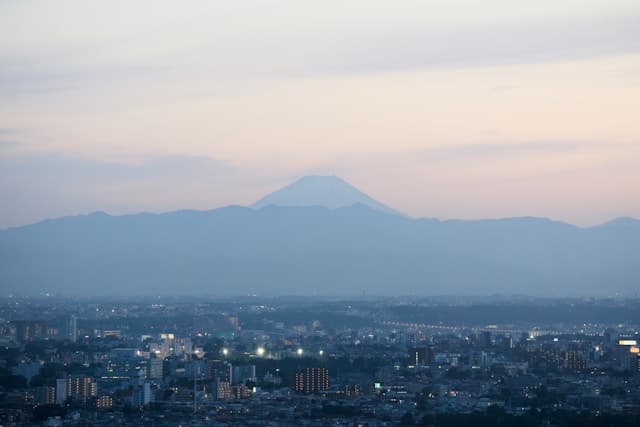
It is worth ten minutes before you board the bus, for a practical reason as much as a sentimental one. If the cone is sharp from Haneda, the air mass over the whole region is dry and clear, and your odds at the lake that evening are good. If the horizon is a white smear, expect the same at Kawaguchiko, and adjust your plans for the next morning rather than the next hour.
Timing the Transfer Around Whether Fuji Is Actually Out
Here is the thing no transfer guide mentions: both direct buses deposit you at Kawaguchiko Station at the two worst times of day for seeing the mountain.
Mt. Fuji is clearest around dawn, when the air is coolest and driest and convective cloud has not yet built over the summit. By mid-afternoon, cloud has usually collected around the peak even on days that started perfectly clear. The 14:40 arrival lands you squarely in that window. The 19:40 arrival lands you after dark.
The base rate is sobering. Fuji City has observed the mountain three times a day from the eighth floor of its city hall since 1990, and its published record shows the summit fully visible on 136 mornings in 2025, roughly 37% of the year, with another 95 mornings offering a partial view. Roughly a third of the year the mountain is not visible at all. Those are south-side numbers, but the pattern holds on the Kawaguchiko side: December through February are the reliable months, and June through August are the worst.
So treat the transfer and the viewing as two separate decisions. Getting to Kawaguchiko is a logistics problem with a fixed answer. Seeing Fuji is a probability problem that resets every morning. Our live Mt. Fuji visibility forecast scores the next ten days using a weighted atmospheric model that combines cloud cover, humidity, visibility distance and precipitation, and it is the thing to check the night you arrive, not the day you book flights.
Practically, that means: arrive in the afternoon, do the indoor and lakeside things that work in any weather, and set an alarm. If the forecast is strong, the Kawaguchiko sunrise window from the north shore is the payoff for the whole trip. If it is weak, Kawaguchiko Station is the hub for buses to Oishi Park, the caves and the ropeway, none of which need the summit to be out, and an onsen with a lake view is a perfectly good way to spend a grey morning.
Frequently Asked Questions
Is there a direct bus from Haneda Airport to Kawaguchiko?
Yes. Keikyu Bus and Fujikyu Bus jointly run two departures a day from Haneda, at 11:50 and 16:50 from Terminal 3, arriving at Kawaguchiko Station at 14:40 and 19:40. The fare is ¥3,300 for adults and reservations are required, with payment in advance when boarding at Haneda.
How long does it take to get from Haneda to Mount Fuji?
Two hours 50 minutes on the direct bus from Terminal 3 to Kawaguchiko Station. Every other realistic route takes 3 to 3.5 hours door to door once you include the transfer in central Tokyo. The road distance is about 120 km and can be driven in roughly 1 hour 40 minutes, which is why a private transfer is the only genuinely faster option and also by far the most expensive one.
Can I use a Japan Rail Pass from Haneda to Kawaguchiko?
Only partially, and not usefully. The pass covers the JR legs in Tokyo and the Shinkansen to Mishima, but not the Keikyu Line from Haneda, not the highway buses, and not the Fujikyu Railway into Kawaguchiko. Chaining JR-only segments to reach Kawaguchiko takes longer than the bus and saves nothing on the parts that actually cost money.
Should I go straight to Kawaguchiko from Haneda, or stay in Tokyo first?
If you land before mid-afternoon, go straight there: you gain a full evening plus a morning by the lake, and mornings are when the mountain shows itself. If you land in the evening, stay in Tokyo and take the first bus out of Shinjuku the next day. Our guide to Kawaguchiko from Tokyo covers that leg on its own, and the day-trip version is worth reading if you are only committing one day.
The Short Version
If you land before 10:45 and want the simplest possible arrival, book the 11:50 direct bus from Terminal 3 and pay the ¥3,300 for zero transfers.
Everyone else should go via Shinjuku. Take the Airport Limousine Bus to Busta Shinjuku for ¥1,400 if you are travelling heavy, or the Keikyu and JR combination for around ¥540 if you are not, then step onto whichever of the fifty daily Kawaguchiko departures is next. It is cheaper, it runs from early morning until late at night, and it never leaves you sitting in an arrivals hall doing arithmetic about a bus that left an hour ago.
Then, once you have a room and a plan, check whether Fuji is forecast to be out tomorrow morning. That is the only number left that you cannot control.
Planning your Mt. Fuji trip?
Top-rated tours and transport from Tokyo to Fuji
Affiliate links: we may earn a commission at no extra cost to you.
More Articles
Kawaguchiko from Tokyo: Transport, Timing, and the View Most Visitors Miss
How to get to Kawaguchiko from Tokyo by bus, train, or car, plus the timing trick that decides whether you see Mt. Fuji.
Kawaguchiko Station: Tokyo Trains, Buses and Fuji Access
Plan your arrival at Kawaguchiko Station: compare Tokyo trains and buses, understand rail-pass coverage, and arrange local travel and your return.
Mt Fuji Day Trip from Tokyo: Complete Planning Guide
Plan the perfect Mt Fuji day trip from Tokyo with transportation options, best viewing spots, and timing tips to maximize your chances of seeing Japan's iconic mountain.